Artwork
Gefechtsstück
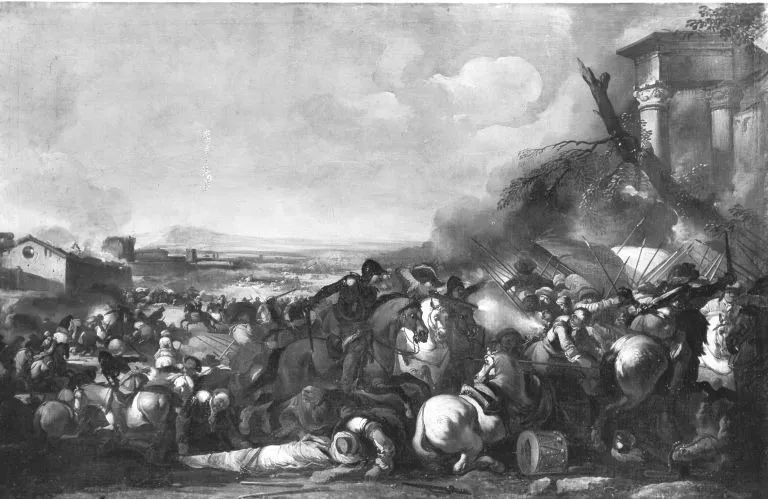
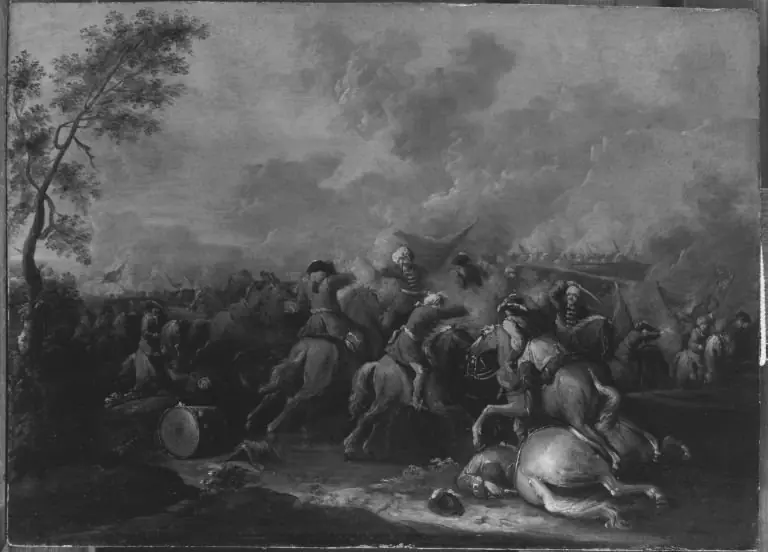
Gefechtsstück is an unspecified painting by the Rococo painting artist Christian Ludwig von Loewenstern. It dates from 1727 and is held in the collection of the Bavarian State Painting Collections.
About this work
Overview
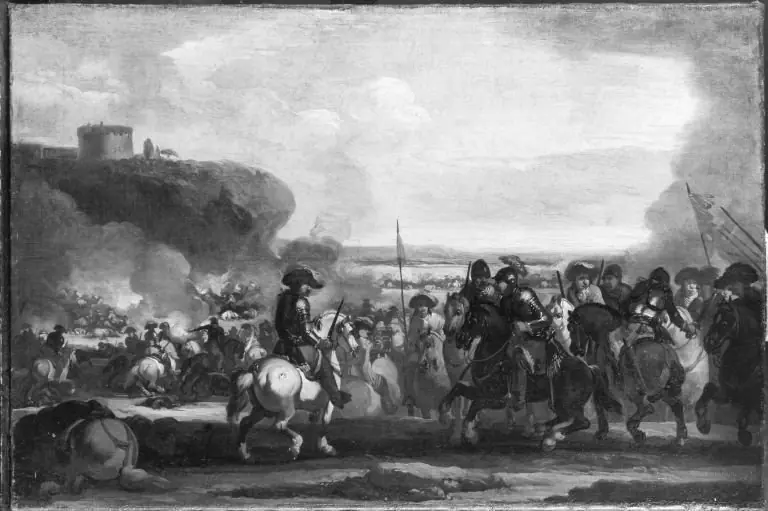
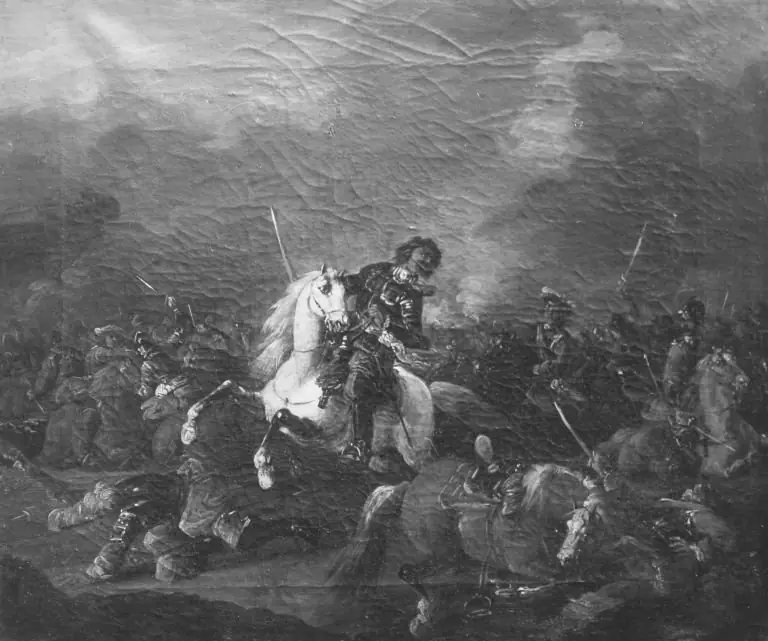
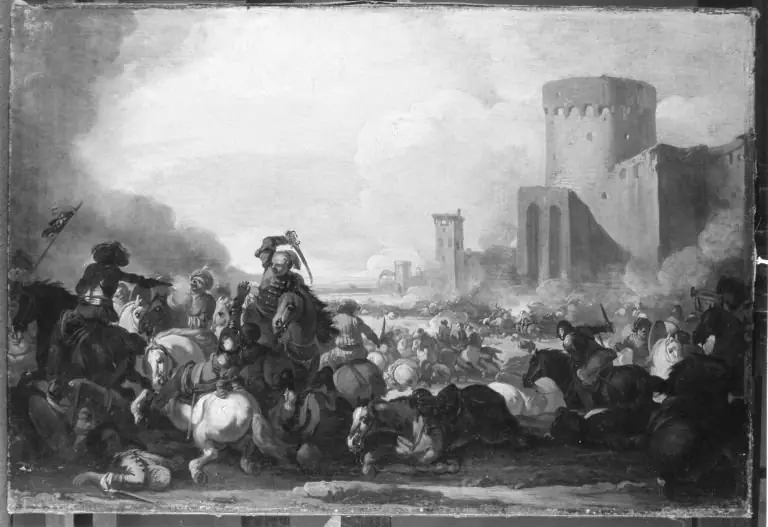
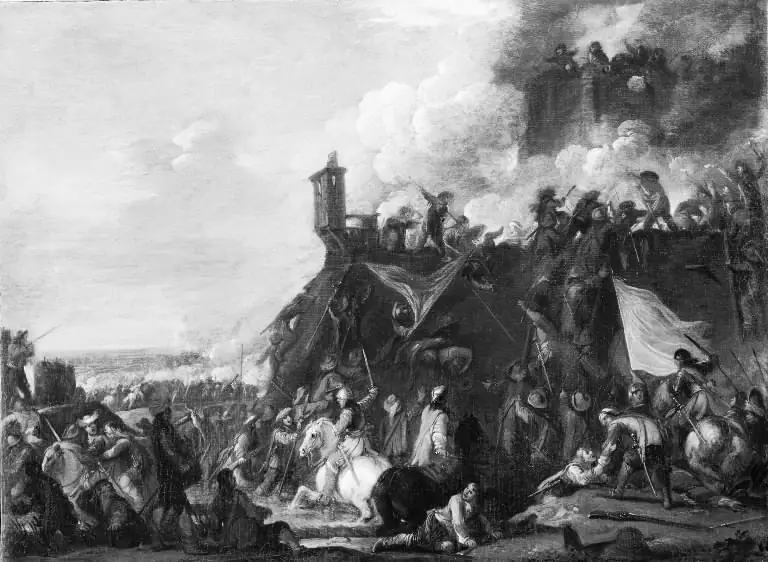
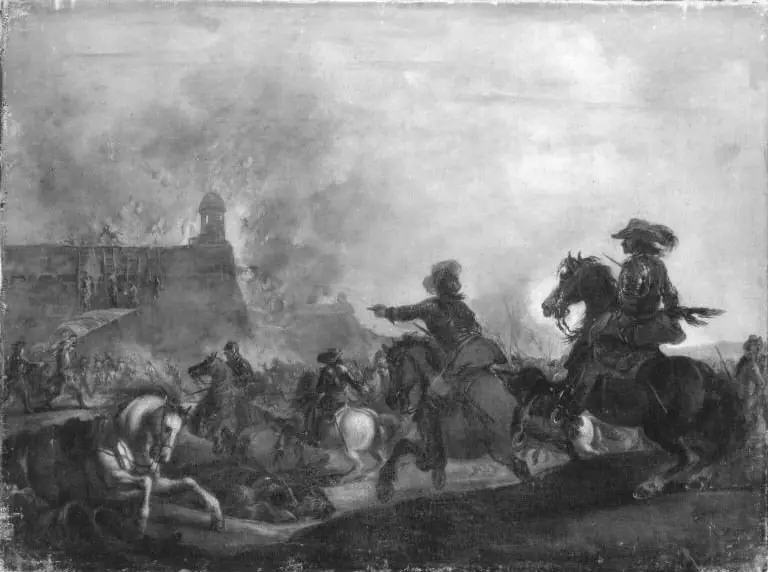
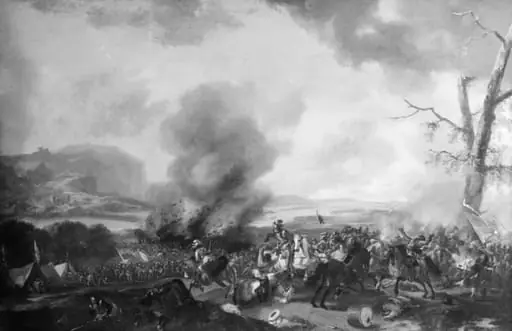
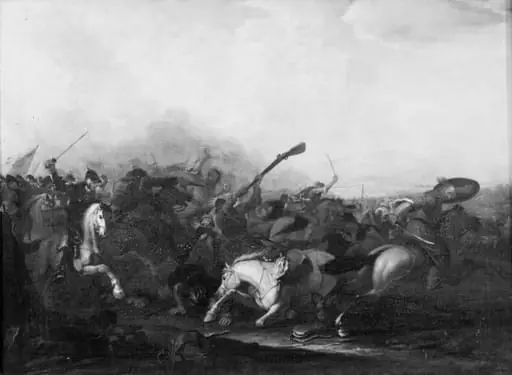
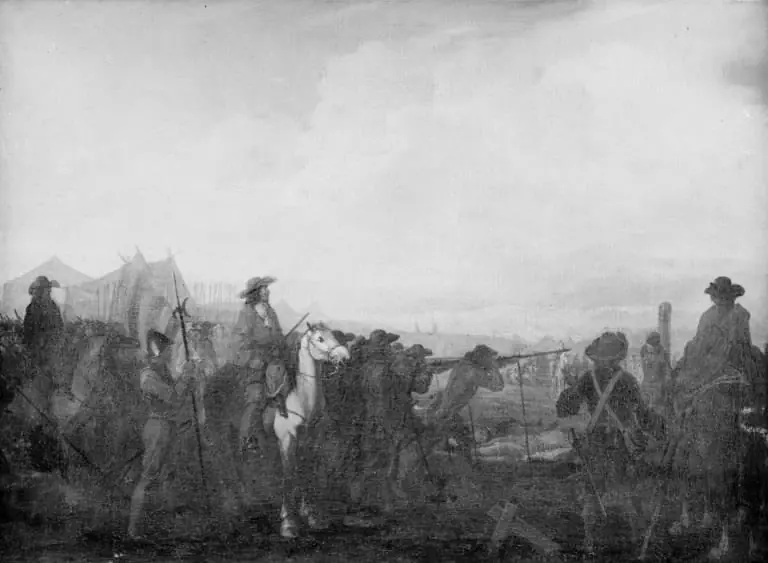
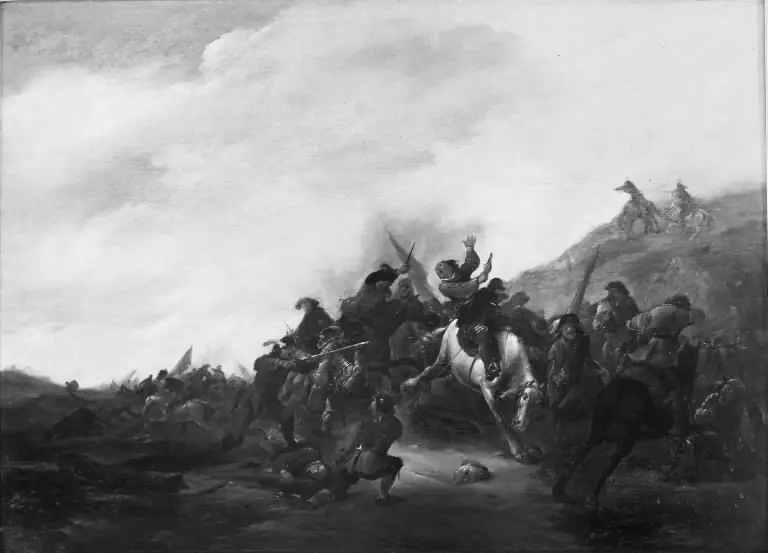
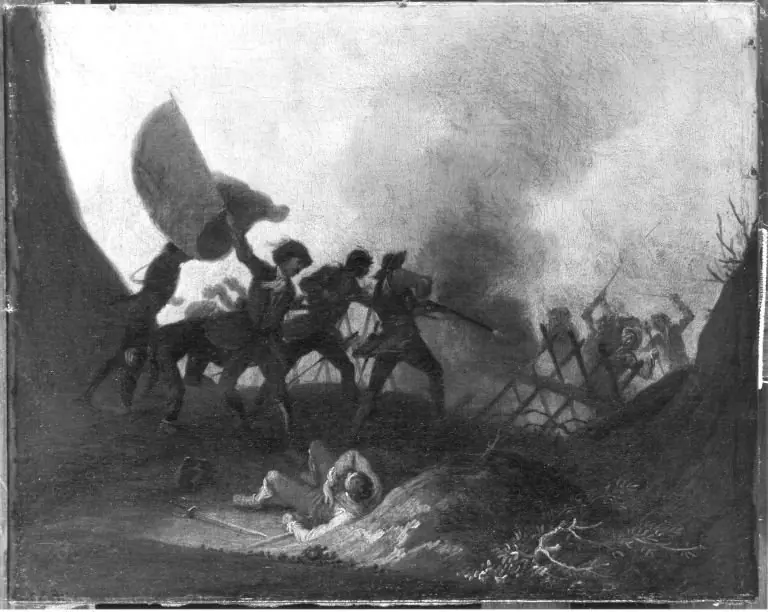
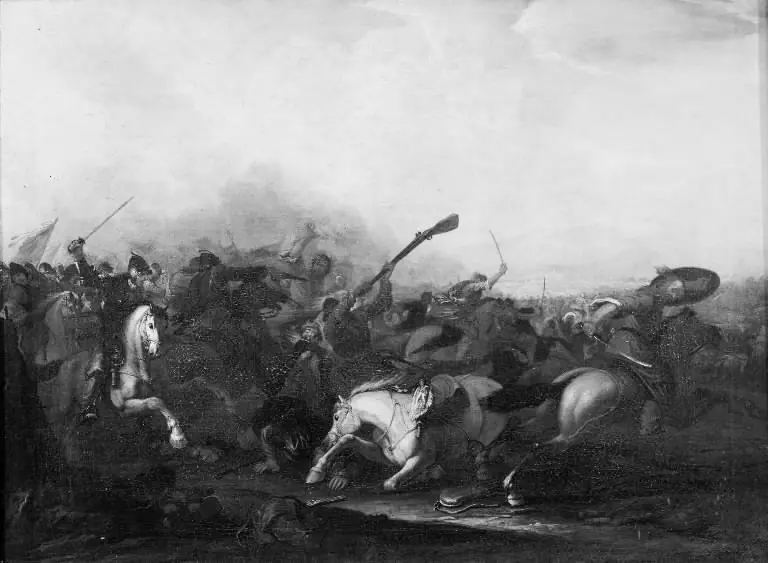
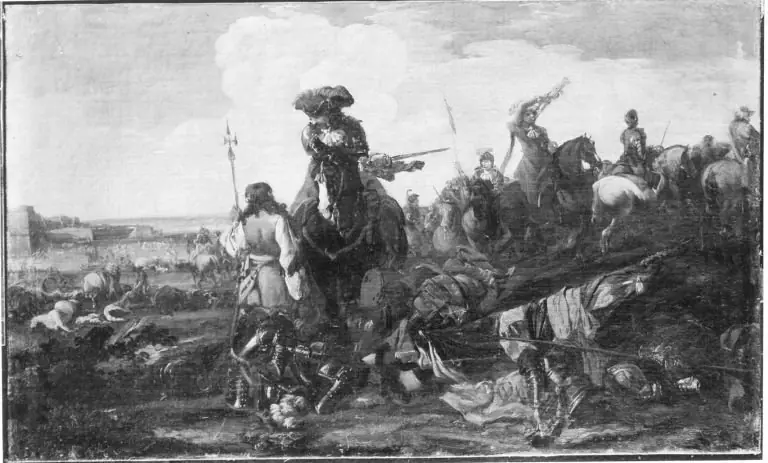
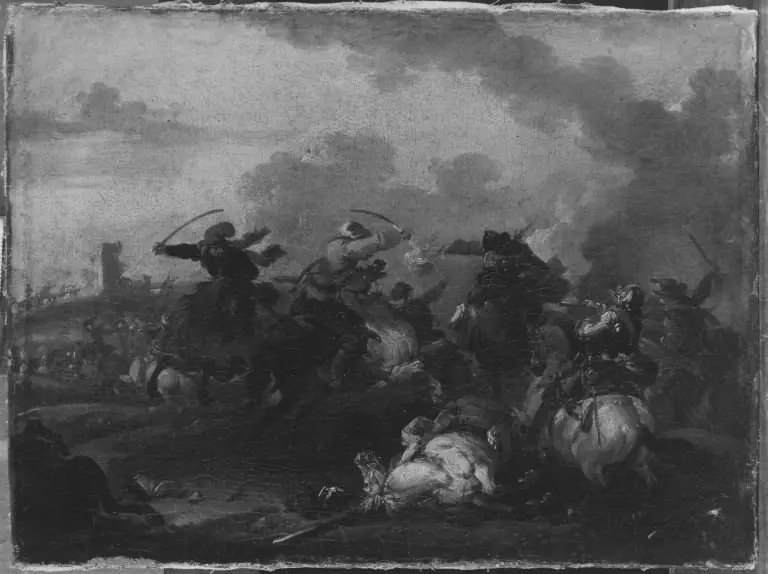
Painted in 1727 by Christian Ludwig von Loewenstern, Gefechtsstück is a battle scene rendered in oil on canvas. It resides in the Alte Pinakothek in Munich, where it is cataloged as part of the museum’s 18th-century German holdings. The work captures a moment of violent conflict, emphasizing movement and disorder rather than narrative clarity or heroic idealization.
Subject & Meaning
The painting portrays a disordered cavalry engagement amid urban ruins, with riders and horses entangled in combat. Fallen soldiers and rearing steeds dominate the foreground, suggesting the brutality and confusion of war. No clear allegiance or historical event is identified; the focus lies in the visceral experience of battle rather than its political or strategic context.
Technique & Style
Loewenstern employs strong chiaroscuro to heighten the drama, contrasting deep shadows with patches of light that catch armor, flesh, and hooves. Bold, loose brushwork conveys motion and urgency, while the palette leans toward somber browns, grays, and muted reds. The composition is deliberately unbalanced, reinforcing the sense of chaos through diagonal thrusts and overlapping forms.
History & Provenance
The painting entered the Alte Pinakothek’s collection in the 19th century, likely through royal or aristocratic acquisitions common in Bavaria at the time. Its origin before that is undocumented, though Loewenstern’s known patrons included military elites. No significant alterations or restorations are recorded, preserving its original tonal and textural qualities.
Context
Created during the early 18th century, the work reflects a European tradition of battle painting that prioritized emotional intensity over historical accuracy. While Italian and Flemish artists influenced German painters, Loewenstern’s approach remains distinctly regional—less theatrical than Rubens, more grounded in observed violence than allegorical.
Legacy
Gefechtsstück stands as a rare surviving example of German battle painting from the early 1700s. Though Loewenstern is not widely known today, this work contributes to understanding how regional artists interpreted war without the grandeur of state-sponsored commissions. It remains a quiet testament to the chaos of military conflict in an era before modern documentation.
Artist & collection
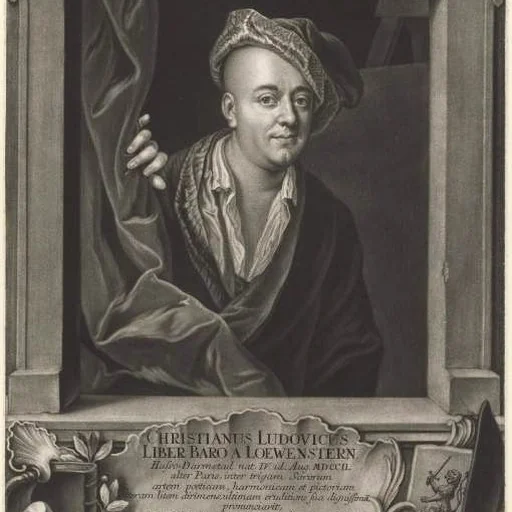
Artist
Christian Ludwig von Loewenstern
Christian Ludwig von Loewenstern (1701–1754) was an artist, born in Darmstadt.