Artwork
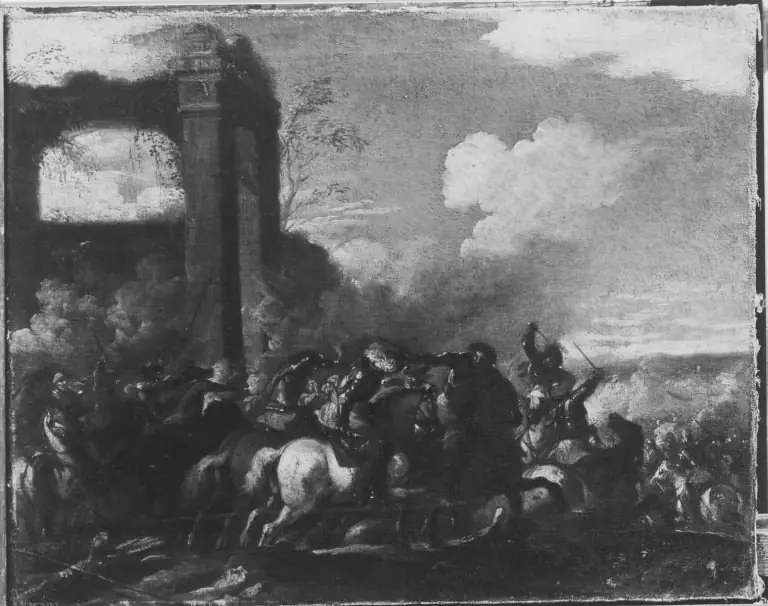
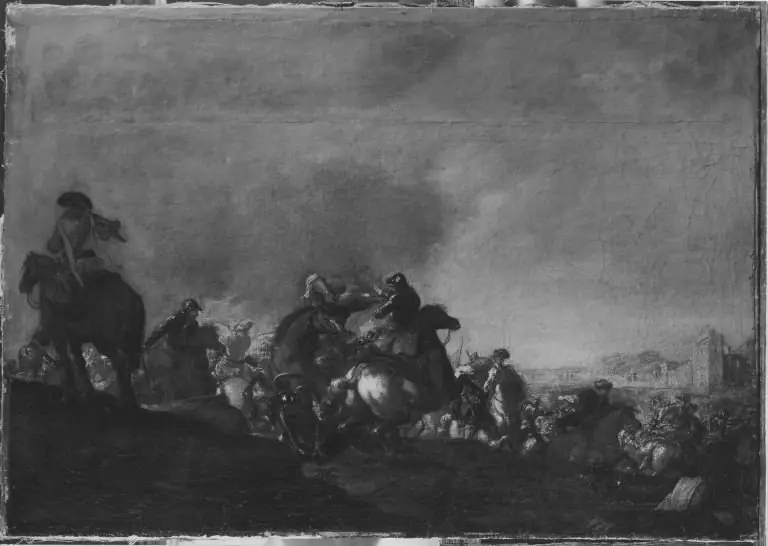
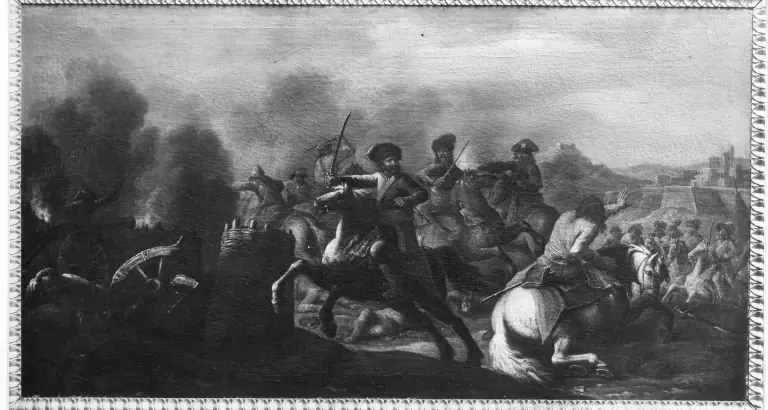
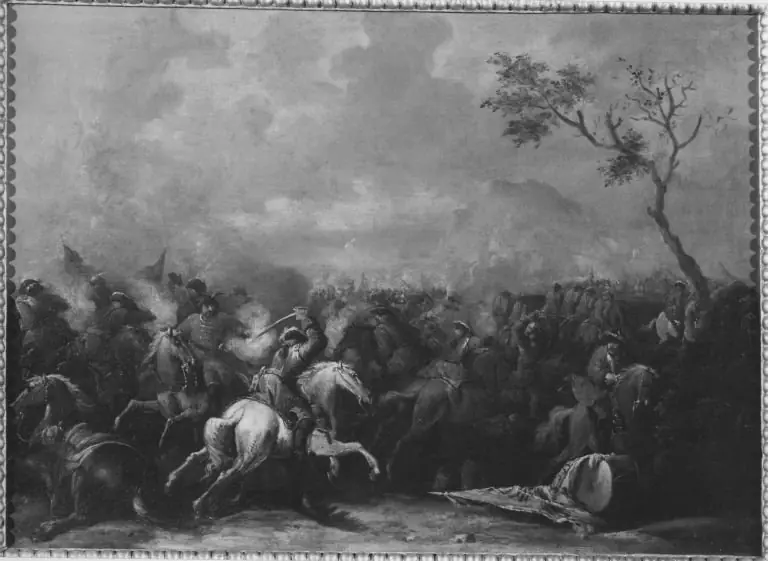
Reitergefecht
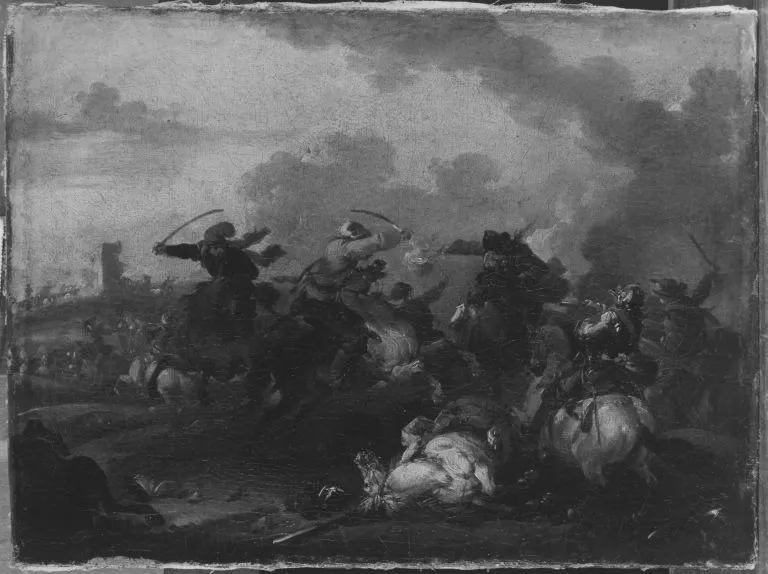
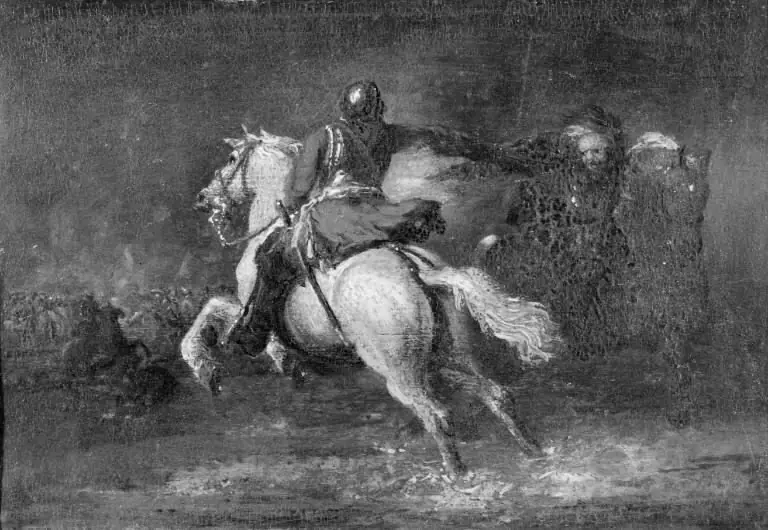
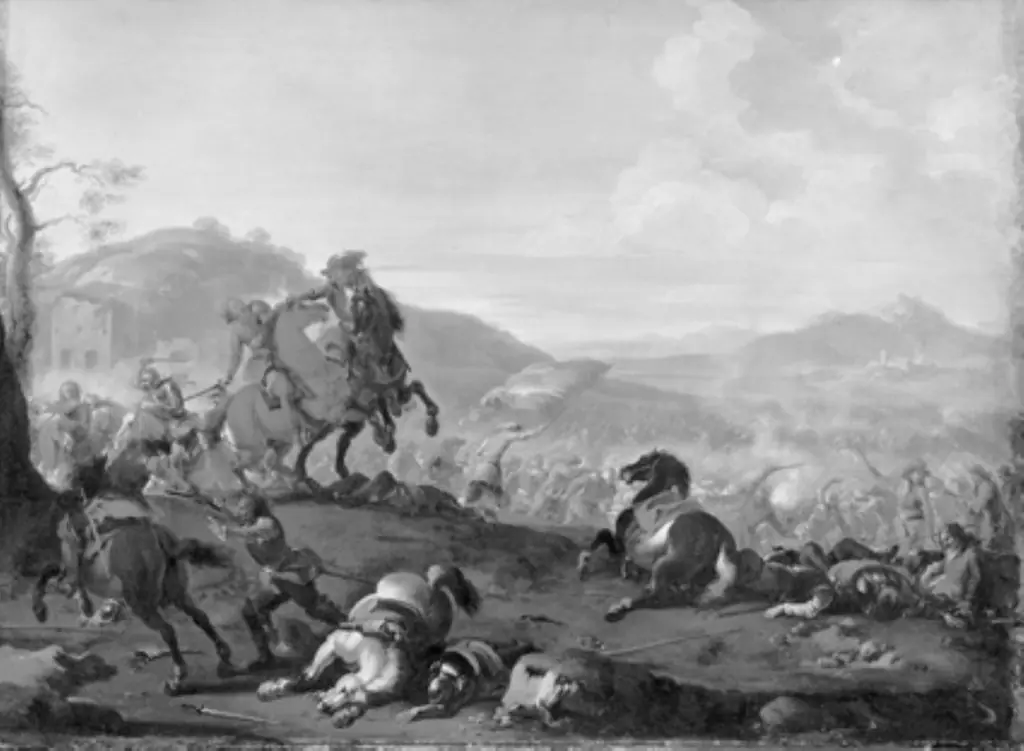
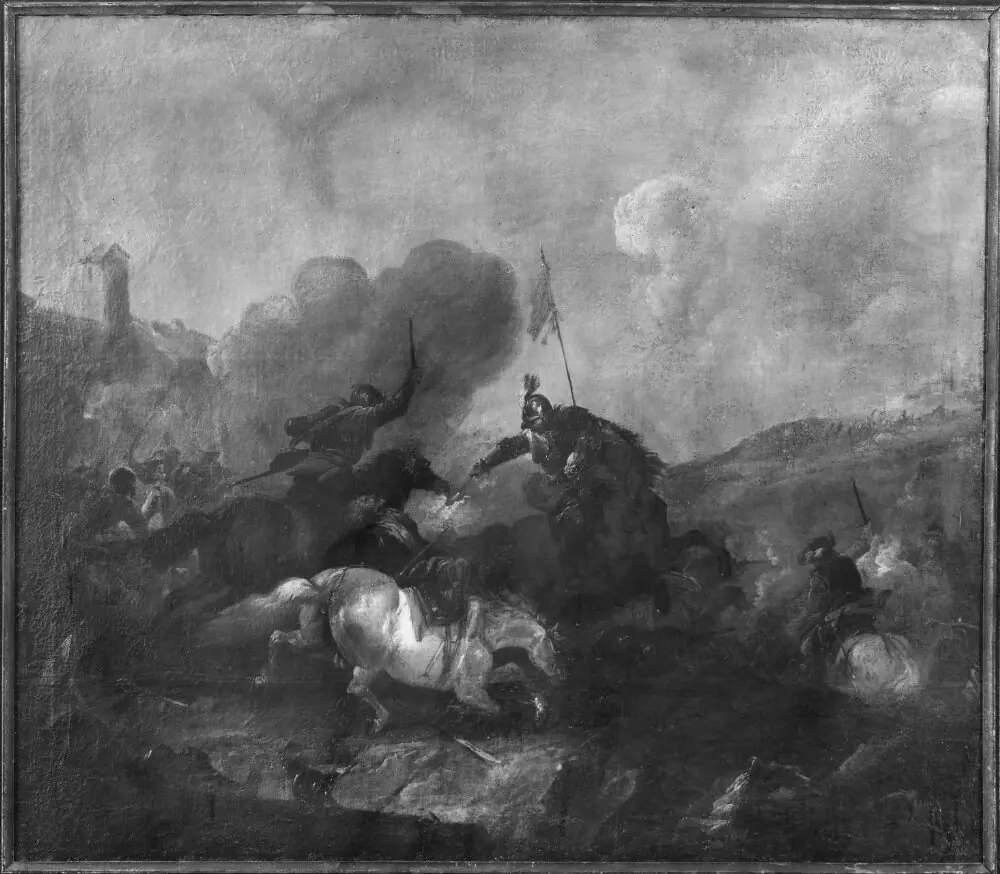
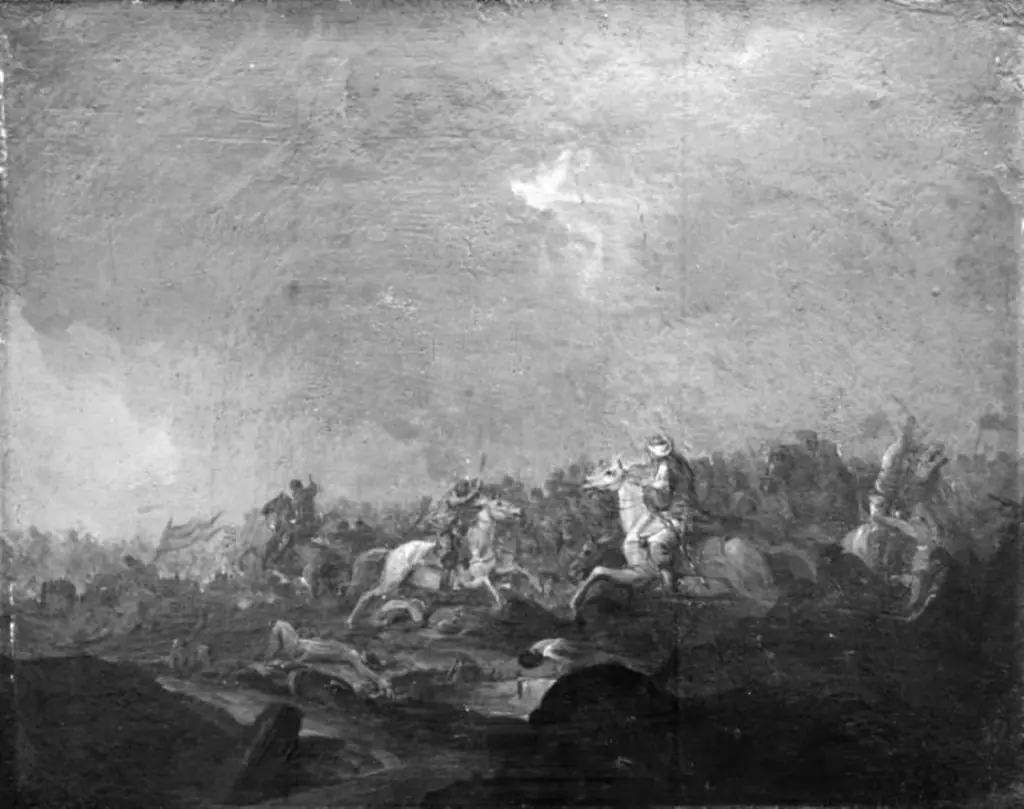
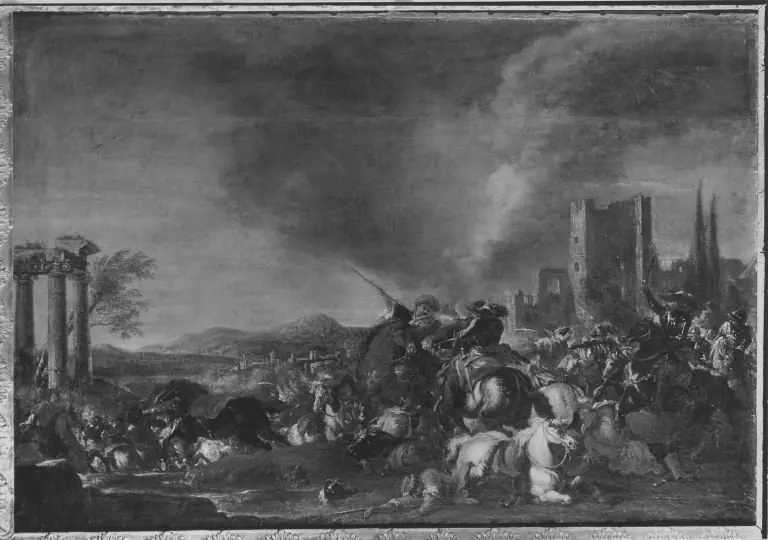
Reitergefecht is an unspecified painting by the French Classical Baroque artist Jacques Courtois. It dates from 1648 and is held in the collection of the Bavarian State Painting Collections.
About this work
Overview
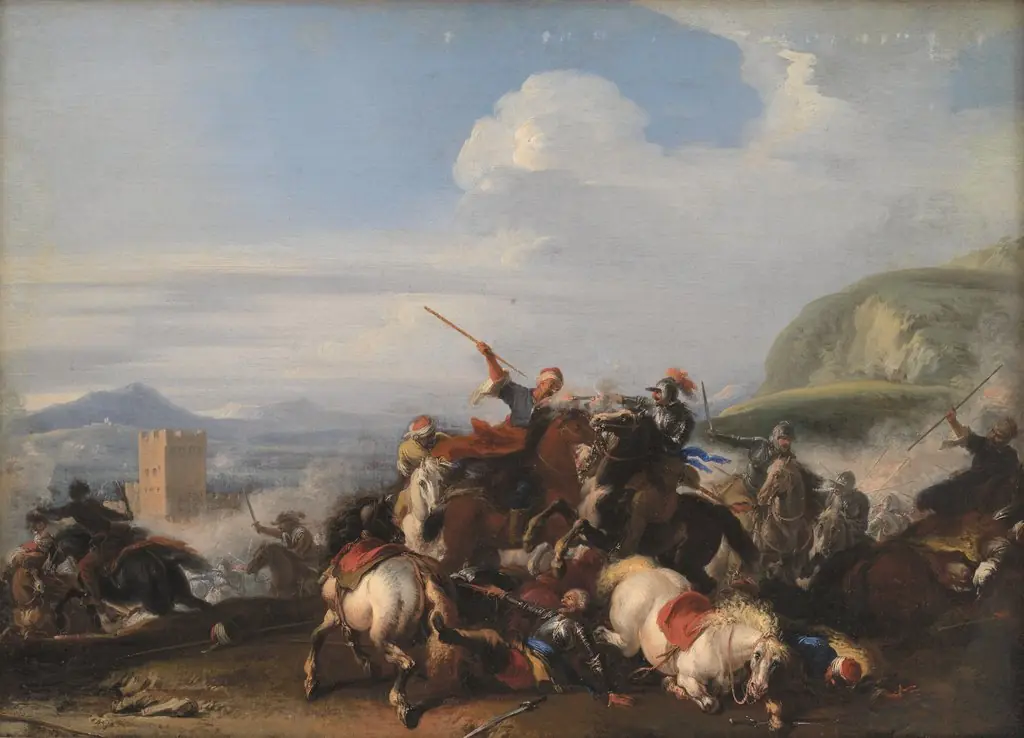
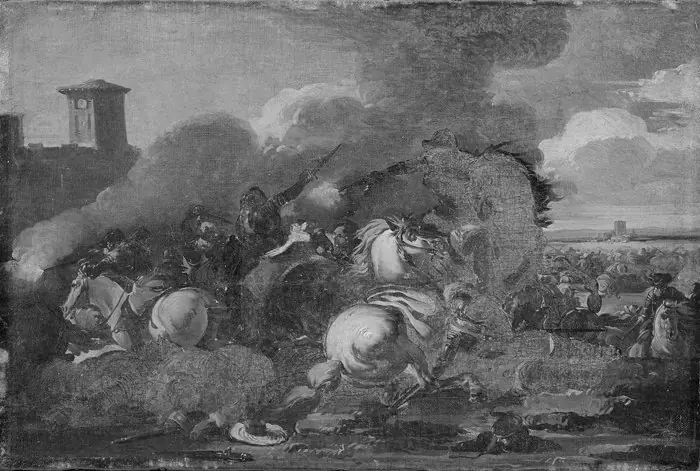
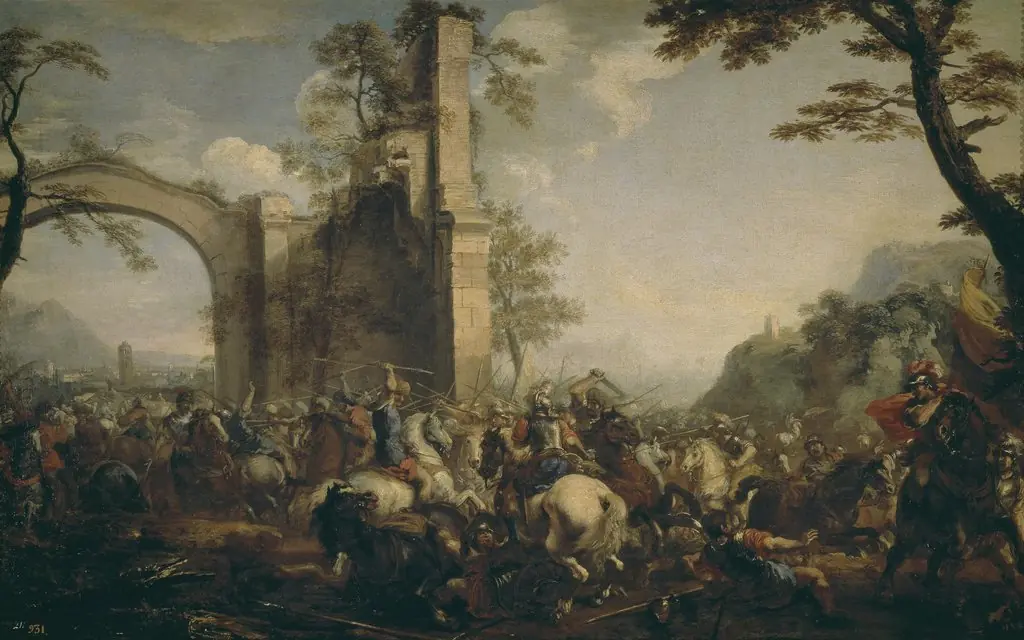
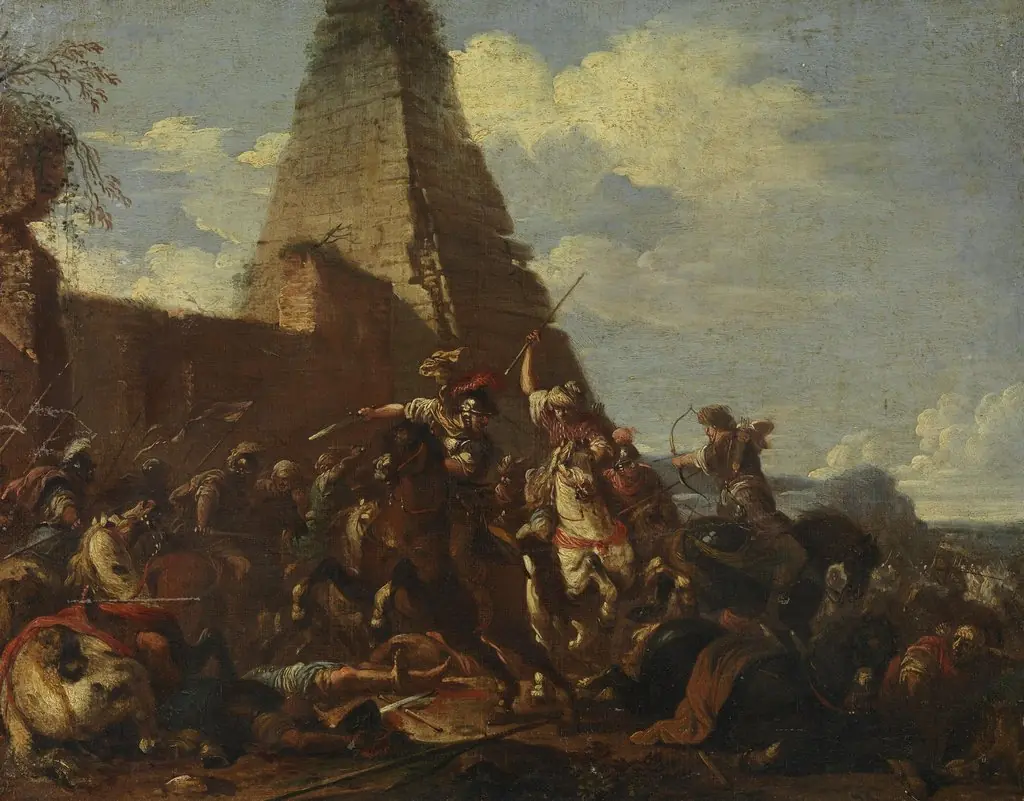
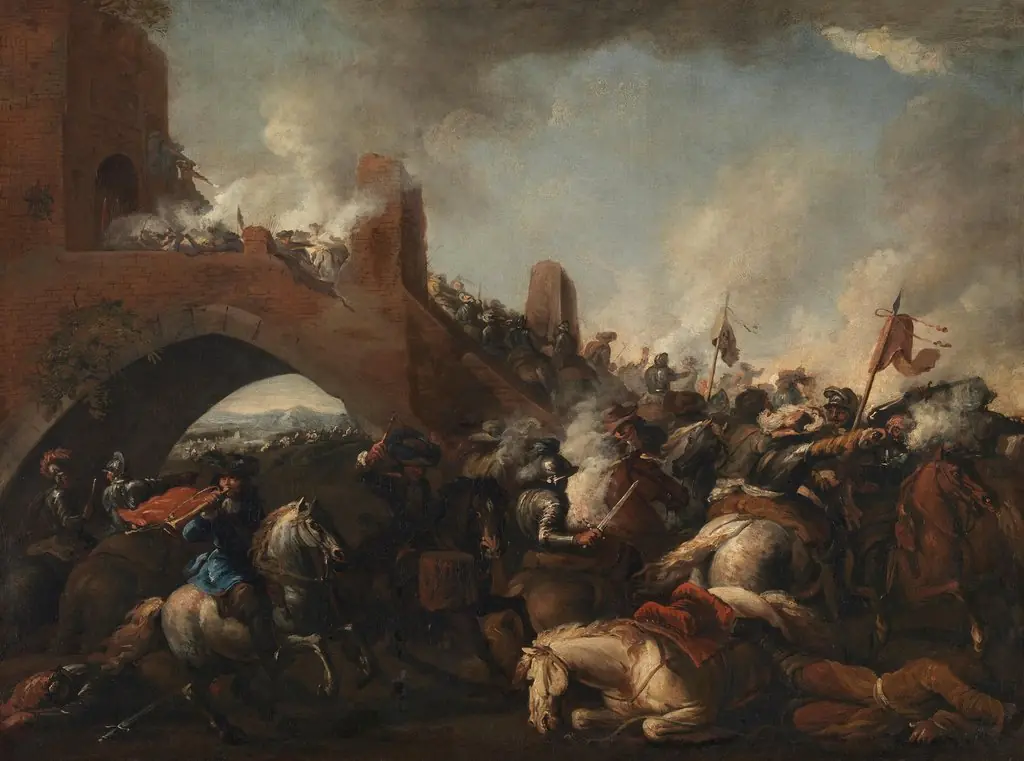
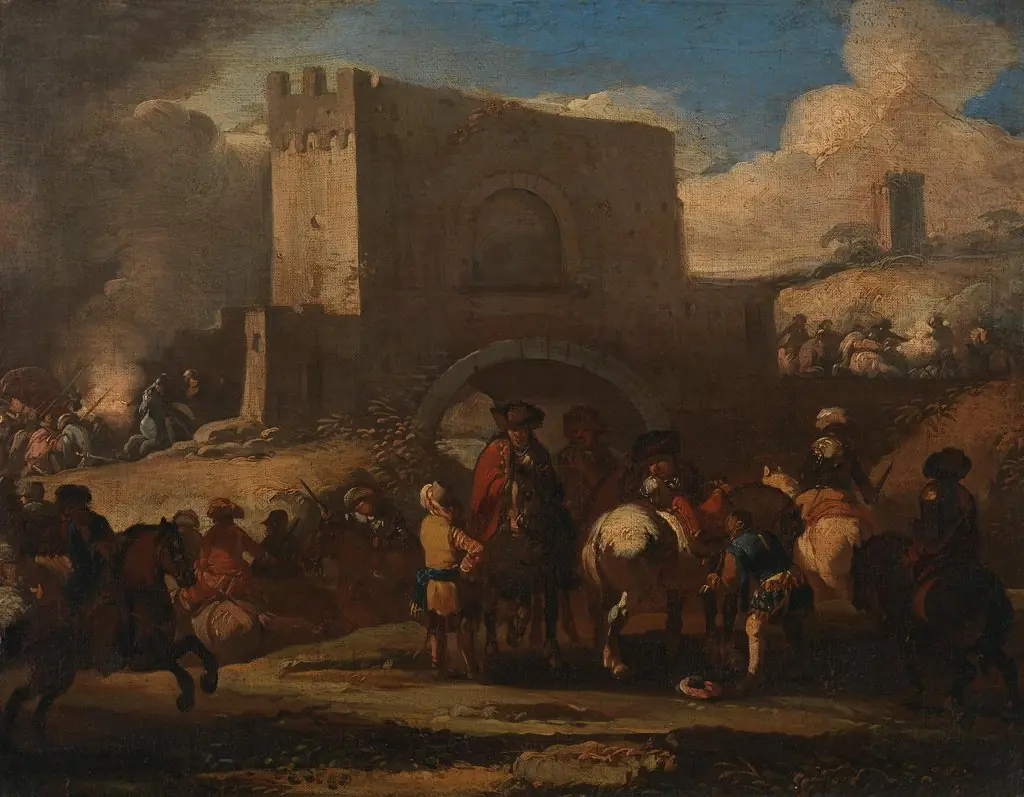
His 1648 work Reitergefecht captures a dynamic cavalry engagement, reflecting his reputation as a leading specialist in battle scenes.
Jacques Courtois, known as il Borgognone, was a 17th-century painter born in Franche-Comté who worked chiefly in Rome and Florence. His 1648 work Reitergefecht captures a dynamic cavalry engagement, reflecting his reputation as a leading specialist in battle scenes. Though he later joined the Jesuit order, he continued painting, blending religious devotion with his artistic practice. The painting resides today in the Alte Pinakothek in Munich.
Subject & Meaning
Reitergefecht portrays a chaotic moment in a mounted skirmish, with riders and horses entangled in motion amid dust and weapons. The scene lacks a clear narrative or hero, emphasizing instead the disorder and intensity of combat. Courtois avoids glorification, presenting battle as a turbulent, impersonal event, consistent with the Baroque interest in movement and emotional realism.
Technique & Style
Courtois employed a fluid, energetic brushwork to convey the frenzy of cavalry combat. His composition uses diagonal lines and overlapping figures to create depth and momentum. Dark, muted tones ground the scene, while flashes of light on armor and weapons suggest fleeting moments of action. The style merges Italian Baroque dynamism with a restrained, classical sense of structure.
History & Provenance
Painted in 1648 during Courtois’s mature period in Rome, Reitergefecht was likely commissioned by a noble patron interested in military themes. It entered the Alte Pinakothek’s collection in the 19th century, part of a broader acquisition of Italian and Flemish Baroque works by the Bavarian royal family. Its attribution has remained consistent, with no significant disputes over authorship.
Context
In mid-17th-century Italy, battle painting was a specialized genre, often commissioned to commemorate military victories or display aristocratic valor. Courtois stood out for his focus on the immediacy of combat rather than its aftermath. His work responded to the era’s fascination with warfare, shaped by the Thirty Years’ War and the continued presence of mercenary forces in Italian states.
Legacy
Courtois influenced later battle painters through his emphasis on kinetic realism and compositional clarity. Though less celebrated than contemporaries like Rubens, his disciplined approach to depicting chaos helped define a quieter strand of Baroque military art. His dual identity as a Jesuit and artist also reflects the complex interplay of faith and secular patronage in Counter-Reformation Italy.
Artist & collection
Artist
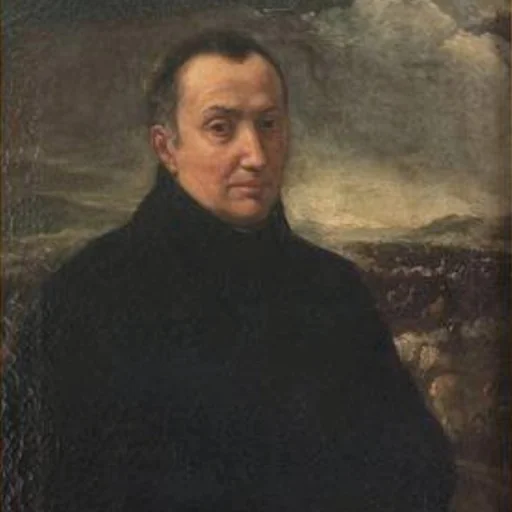
Jacques Courtois (French pronunciation: ) or Giacomo Cortese, called il Borgognone or le Bourguignon (12 ?December 1621 – 14 November 1676) was a Franche-Comtois–Italian painter, draughtsman, and etcher.