Artwork
The Sacrifice of Isaac
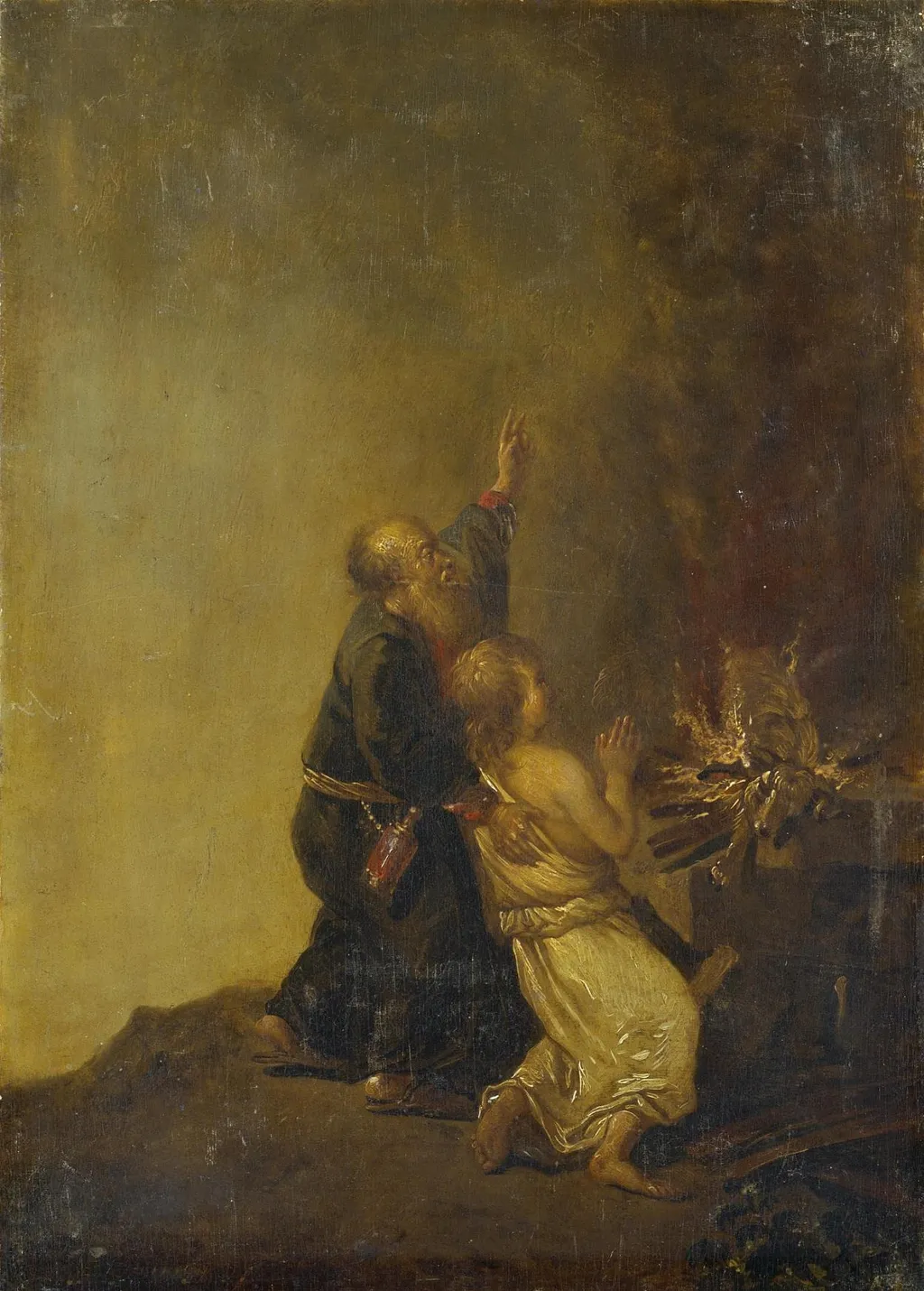
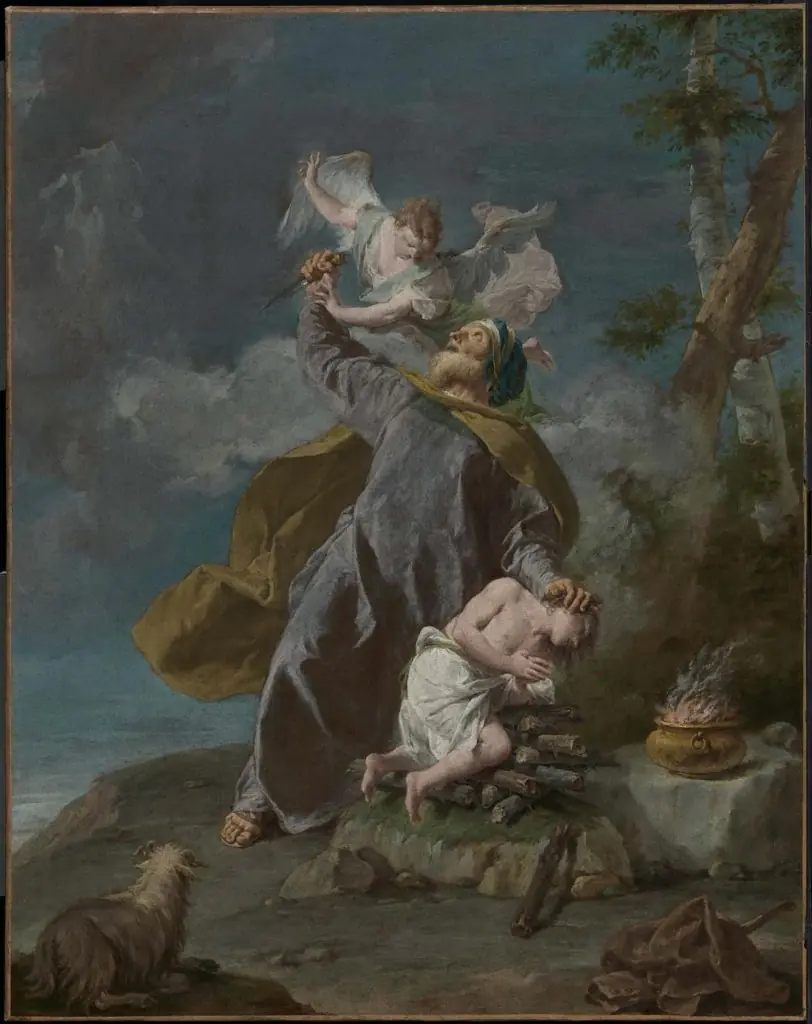
The Sacrifice of Isaac is an oil painting by the Rococo painting artist Christian Wilhelm Ernst Dietrich. It dates from 1750 and is held in the collection of the Hermitage Museum.
About this work
Overview
Christian Wilhelm Ernst Dietrich, a German painter active in the mid‑eighteenth century, executed *The Sacrifice of Isaac* in oil around 1750. The work belongs to the religious genre and is presently part of the State Hermitage Museum’s collection.
Subject & Meaning
The canvas portrays the biblical moment when Abraham prepares to offer his son Isaac as a sacrifice. Abraham kneels on a craggy ledge, his arm raised toward the heavens, while a curved knife hovers above Isaac’s shoulder. The young boy lies on the ground in a light robe, his back arched, emphasizing the tension between obedience and impending violence.
Technique & Style
Dietrich employs a stark chiaroscuro, using deep shadows to isolate the figures against a softly illuminated background. The contrast heightens the drama, allowing the flesh tones and the gleam of the blade to emerge with clarity. The composition reflects Rococo sensibilities in its graceful poses, yet the lighting recalls earlier Baroque practices.
History & Provenance
Created during Dietrich’s tenure as a court painter and art administrator, the painting later entered the State Hermitage Museum, where it remains on display. Its acquisition history is not extensively documented, but it has been part of the Hermitage’s holdings since the nineteenth century.
Context
Dietrich was renowned for his facility in imitating the styles of past masters rather than forging a singular aesthetic. *The Sacrifice of Isaac* illustrates this tendency, merging Rococo elegance with Baroque dramatic lighting, a synthesis typical of his eclectic approach to historical and religious subjects.
Own this work as a print
Artist & collection
Artist
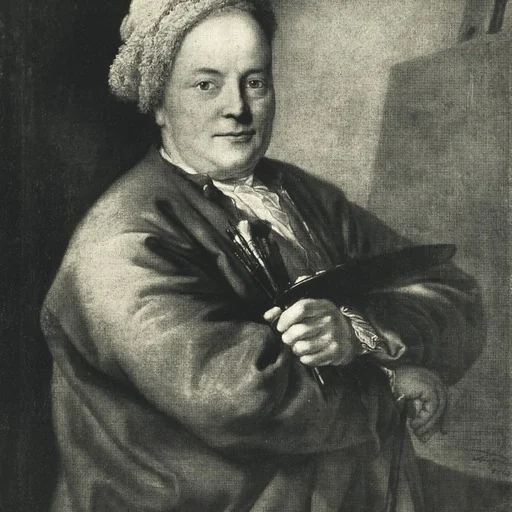
Christian Wilhelm Ernst Dietrich
Christian Wilhelm Ernst Dietrich (30 October 1712 – 23 April 1774) was a German painter and art administrator. In his own works, he was adept at imitating many earlier artists, but never developed a style of his own.