Artwork
Verspottung des Hiob
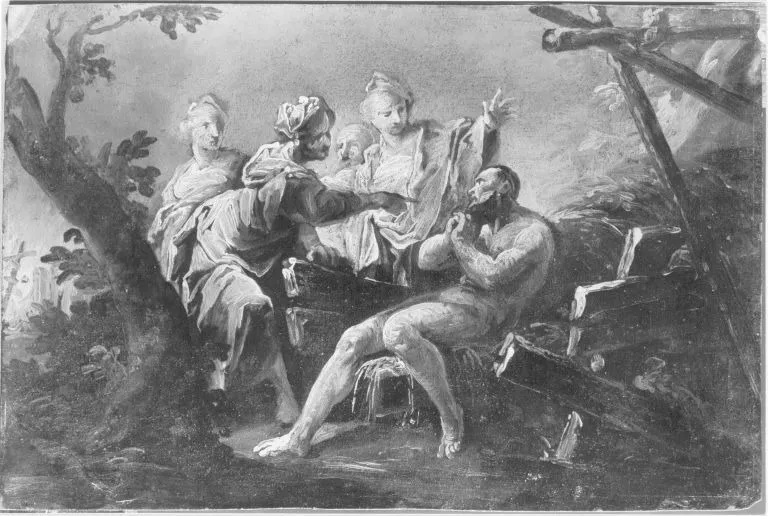
Verspottung des Hiob is an unspecified painting by the Rococo painting artist Christian Winck. It dates from 1789 and is held in the collection of the Bavarian State Painting Collections.
About this work
Overview
It resides in the Alte Pinakothek in Munich, where it is cataloged as part of the museum’s collection of European works from the period.
Painted in 1789 by Christian Winck, this work depicts a scene from the biblical story of Job, rendered in a naturalistic style typical of late 18th-century German painting. It resides in the Alte Pinakothek in Munich, where it is cataloged as part of the museum’s collection of European works from the period. The composition centers on a group of figures within a wooded setting, suggesting narrative action rather than static representation.
Subject & Meaning
The painting illustrates the moment of Job’s mockery by his friends, as described in the Book of Job. One figure, seated on a rock, represents Job in his suffering, while others surround him in gestures of scorn or disbelief. The forest setting, devoid of divine intervention, underscores the isolation and moral ambiguity of the scene, reflecting Enlightenment-era interest in human endurance amid suffering.
Technique & Style
Winck employs subtle contrasts of light and shadow to model forms and suggest spatial depth, though not with the dramatic intensity of classical chiaroscuro. The palette is muted yet varied, with earth tones and soft greens blending to evoke a dense, atmospheric woodland. Figures are rendered with attention to gesture and costume, their postures conveying emotional tension without theatrical exaggeration.
History & Provenance
Created in 1789, the painting entered the collection of the Alte Pinakothek in Munich, likely through state acquisition or donation during the early 19th century. Its presence in the museum’s holdings suggests it was valued as an example of contemporary German narrative painting, though it never achieved widespread fame beyond regional circles during Winck’s lifetime.
Context
In the late 1700s, biblical subjects remained popular among German artists, often interpreted through Enlightenment lenses emphasizing human psychology over divine drama. Winck’s work aligns with a trend toward naturalism and emotional restraint, contrasting with the ornate religious art of earlier centuries. His choice of Job reflects broader cultural fascination with suffering, justice, and moral resilience.
Legacy
Christian Winck’s painting is now primarily of interest to scholars of German regional art and 18th-century biblical illustration. It has not influenced major artistic movements, but it remains a quiet example of how Enlightenment values shaped religious storytelling in visual form. Its preservation in the Alte Pinakothek ensures its continued availability for study and contextual display.
Artist & collection

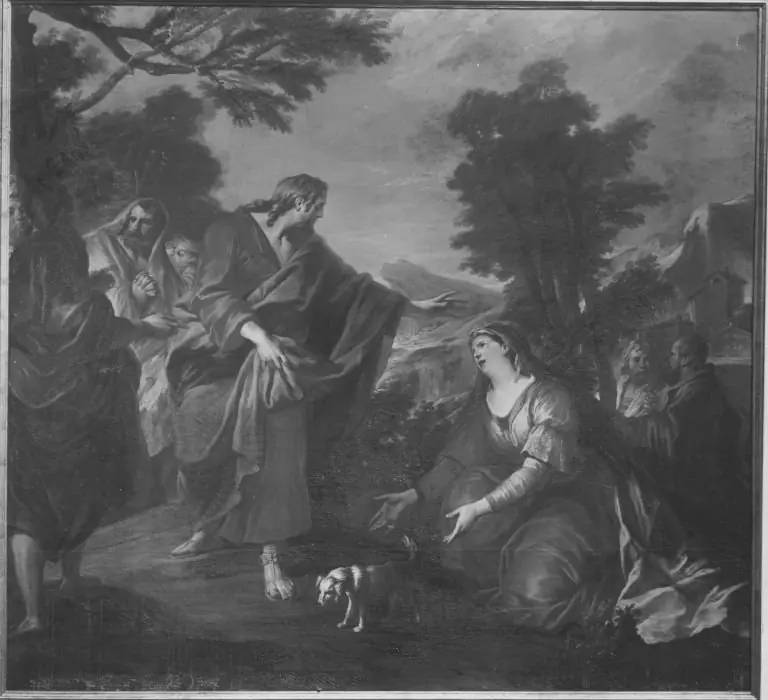 Christus und das kanaanitische Weib
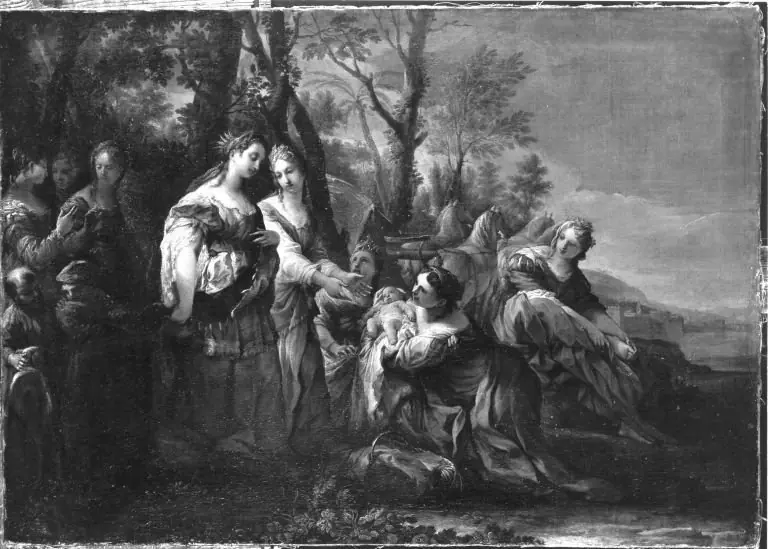 Die Auffindung Moses
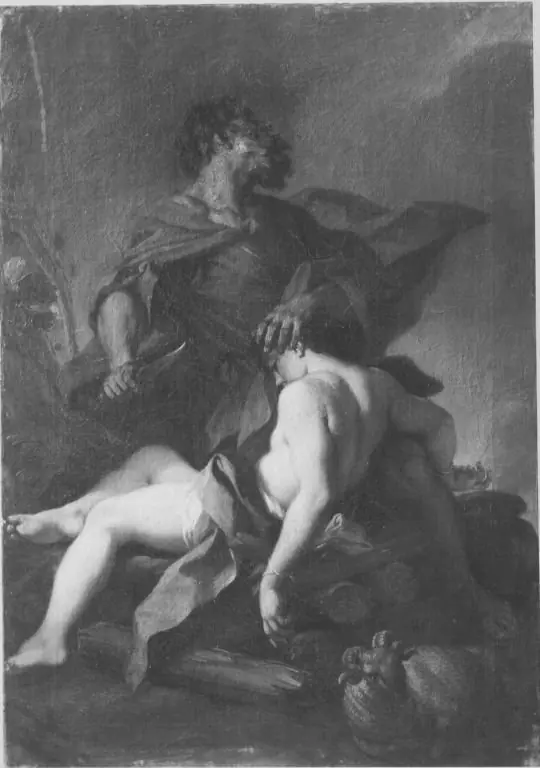 Abraham opfert Isaak
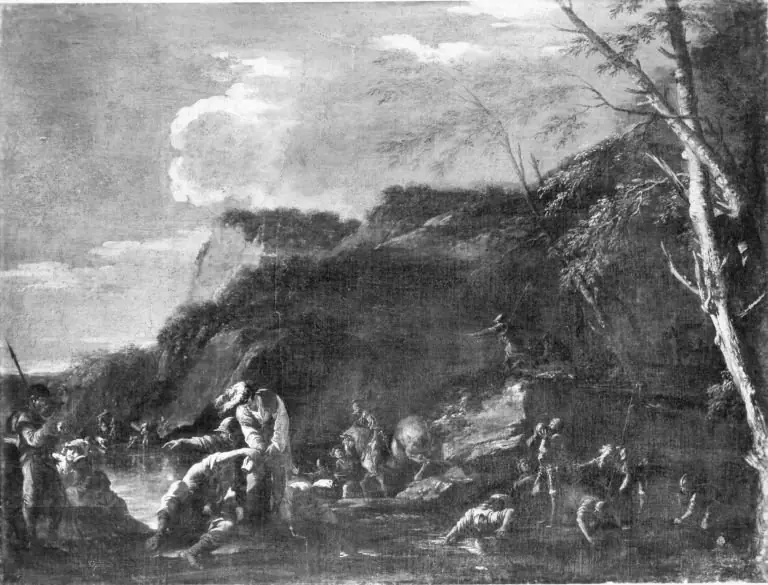 Das Kriegsvolk des Gideon
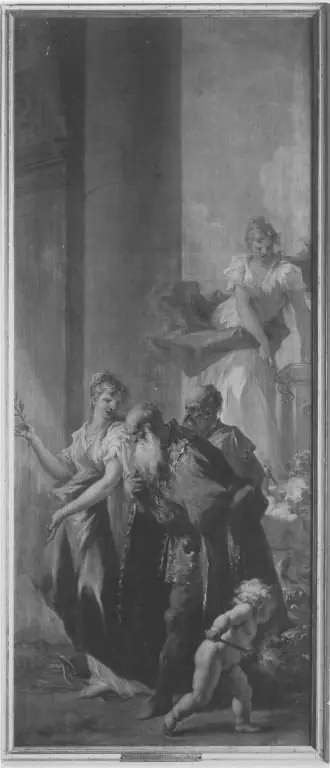 Allegorie der Befreiung vom Joch des Islam (Frieden und Glück unter Johann Wilhelm von der Pfalz)
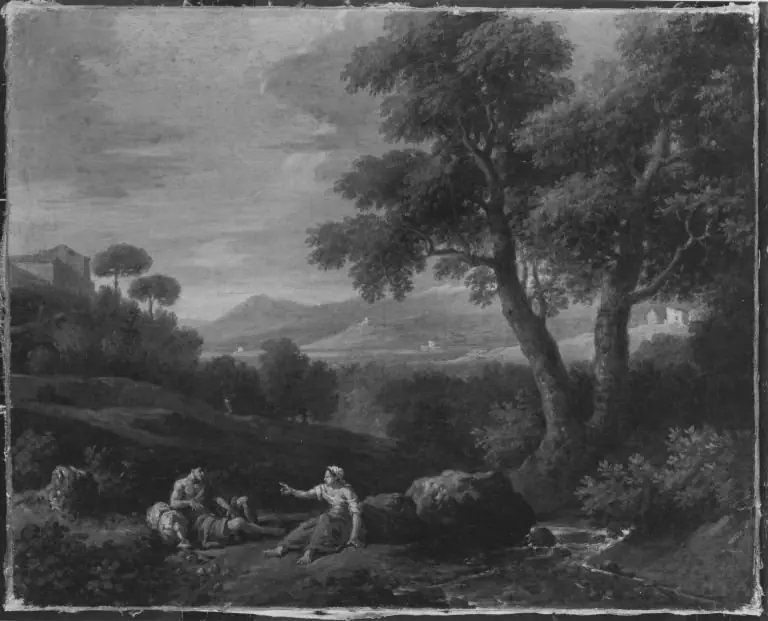 Italienische Landschaft
 Dorinda, Silvio and Linco
 Pan and Syrinx
 Abrahamsopfer
 Odysseus and Nausikaä
 Bathseba erhält den Brief König Davids