Artwork
Pan and Syrinx
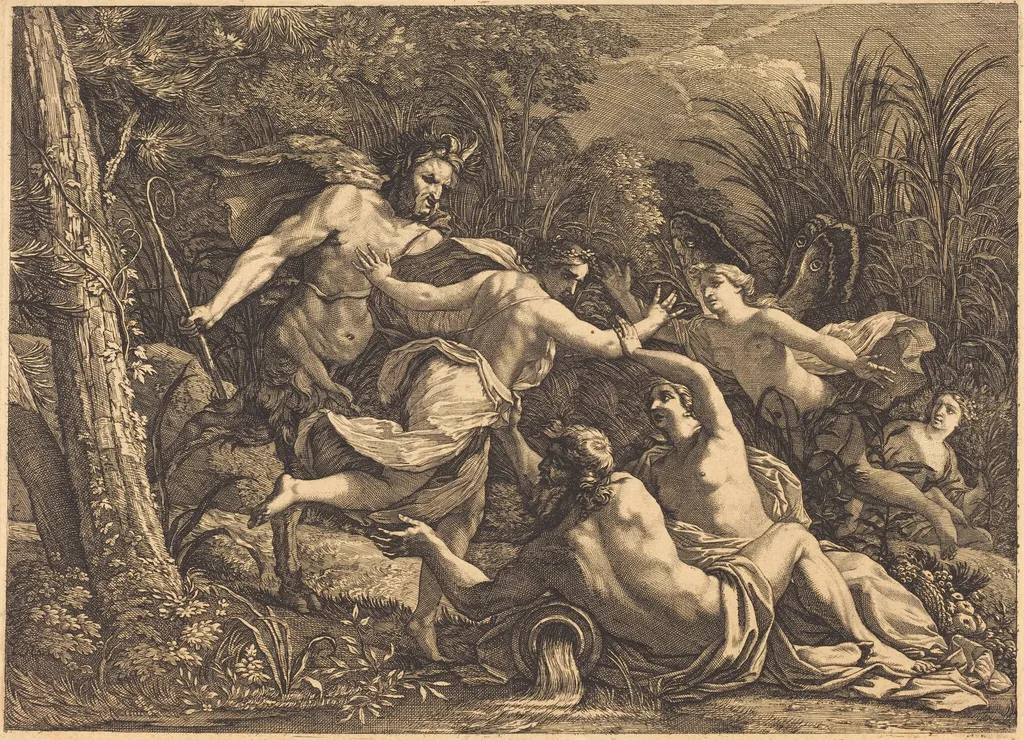
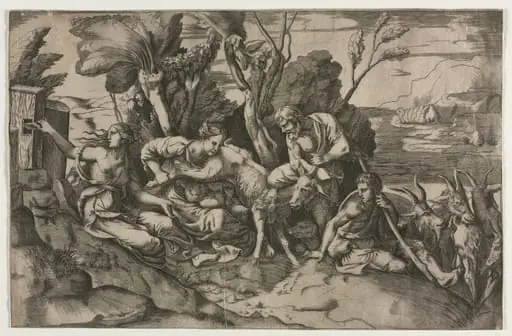
Pan and Syrinx is an ink print by the Baroque artist Michel Dorigny. It dates from 1666 and is held in the collection of the National Gallery of Art.
About this work
Overview
Pan and Syrinx is a 1666 print by Michel Dorigny, combining etching and engraving on laid paper to depict a dynamic mythological scene.
Subject & Meaning
The print illustrates a chaotic forest scene where the mythological figure Pan, characterized by his muscular build, horns, and goat-like legs, pursues Syrinx. As she transforms into reeds to escape, another figure kneels in apparent distress, while a child observes from the ground, highlighting the intersection of myth, transformation, and witness.
Technique & Style
Dorigny employed expressive lines through etching and engraving to convey movement and emotion, achieving a sense of dynamism. The metamorphosis of Syrinx into reeds is rendered with particular ingenuity, showcasing the artist's skill in suggesting transformation through line work.
History & Provenance
Created in 1666, specific details about the print's provenance and historical context are not provided in the available information.
Context
This work reflects the 17th-century interest in classical mythology as subject matter for art, with Dorigny's interpretation offering a vivid, kinetic portrayal of a ancient tale.
Legacy
The legacy of 'Pan and Syrinx' lies in its representation of Baroque printmaking techniques and the enduring depiction of mythological themes in European art.
Artist & collection


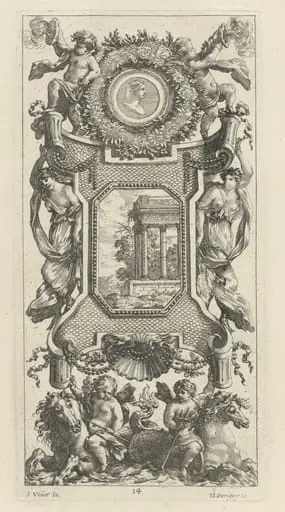 Ornamental Panel Surmounted by a Bust of a Woman and Two Putti with Flaming Trumpets
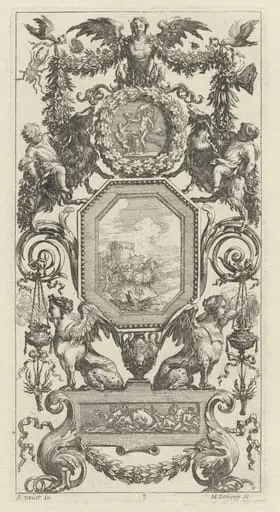 Ornamental Panel Surmounted by a Winged Harpy
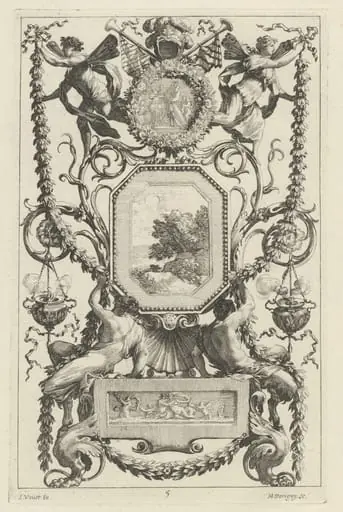 Ornamental Panel Surmounted by a Medallion with a Sacrifice
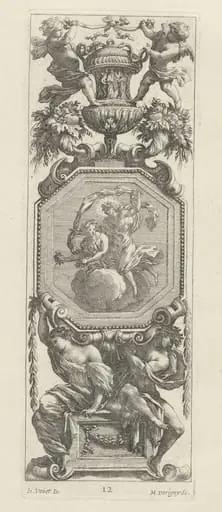 Ornamental Panel Surmounted by Two Putti and a Vase
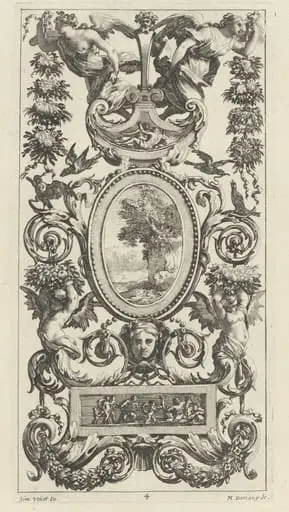 Ornamental Panel with Pan and Two Garland-Bearing Women
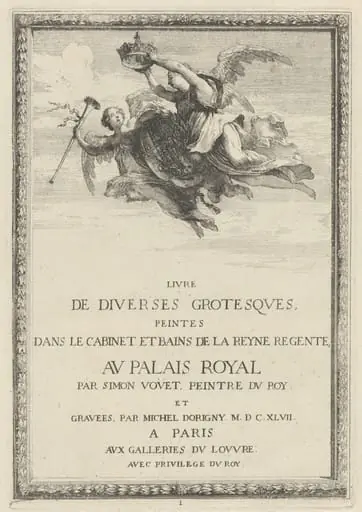 Title Page
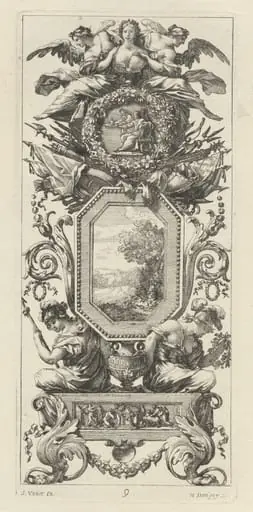 Ornamental Panel Surmounted with Two Figures Leaning on the Bust of a Woman
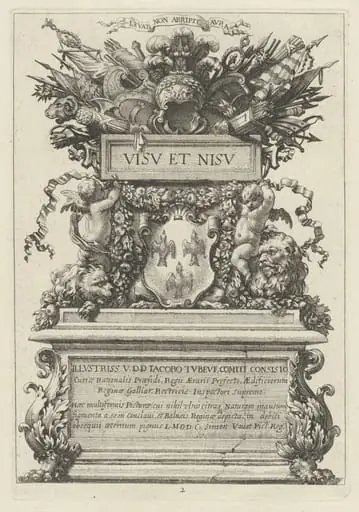 Frontispiece
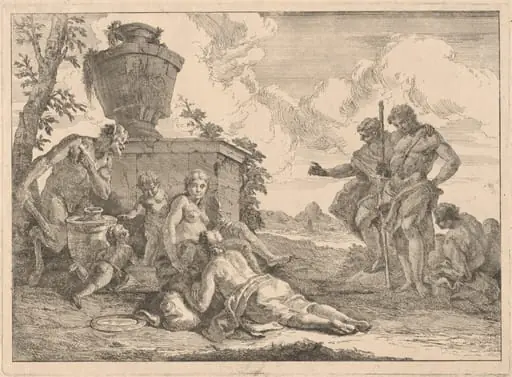 A Satyr with a Staff and Seven Other Figures
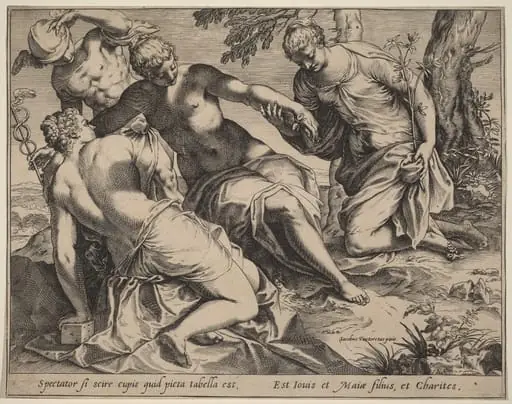 Mercury and the Three Graces
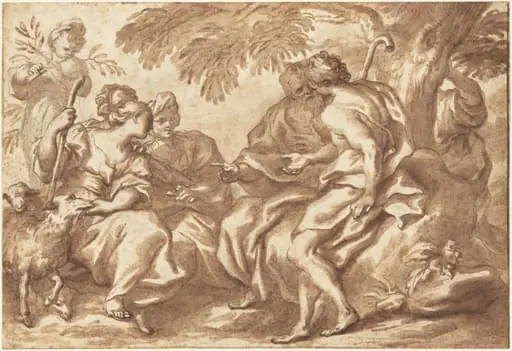 The Meeting of Jacob and Rachel
 The Judgment of Midas
 Nine Figures around a Herm of Pan
 Cephalus and Procris
 Mercury and the Graces
 The Admission of Psyche to Olympia
 Clymene Urging Phaeton to Find Helios
 Christ and the Samaritan Woman
 Mercury Lulling Argus to Sleep
 Jupiter Suckled by the Goat Amalthea