Artwork
Untitled
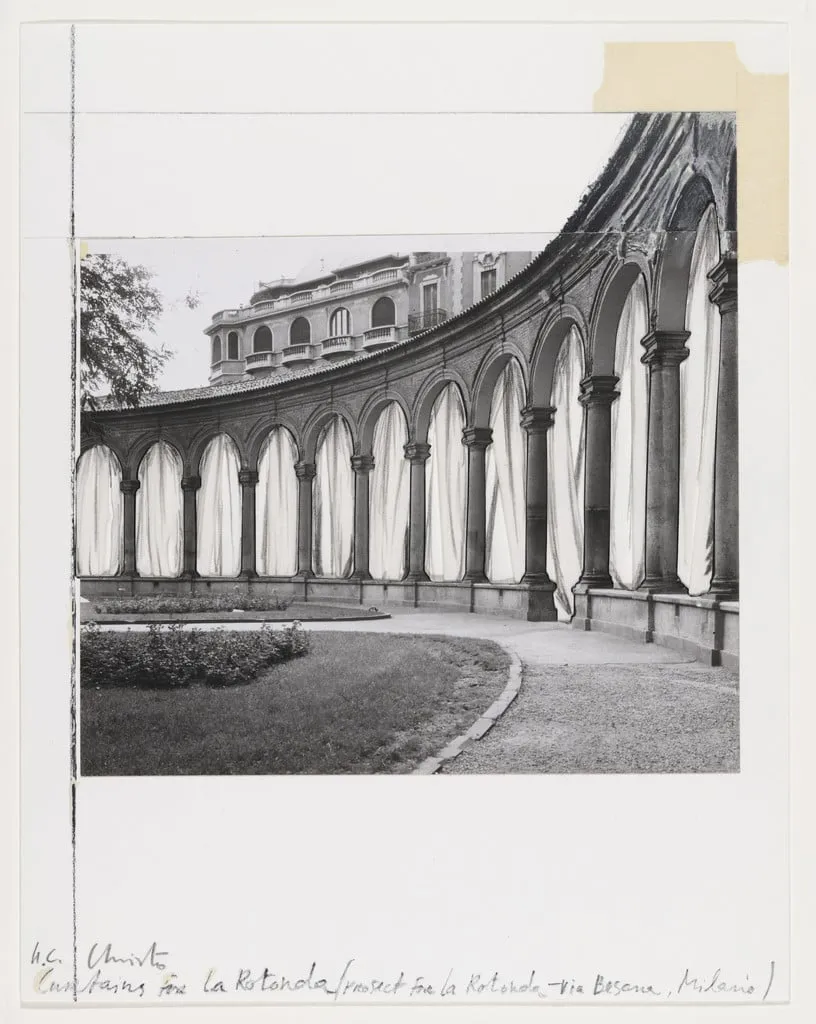
Untitled is a graphite print by Christo. It dates from 1985 and is held in the collection of the Museum of Modern Art.
About this work
Overview
Created in 1985, this print by Christo combines collotype and screenprint techniques with physical materials including masking tape, cloth, and pencil. It captures a moment from a temporary environmental installation in Milan, preserving its ephemeral quality through layered printing and manual interventions. The work exists as a document of a transient artistic gesture, not a standalone image.
Subject & Meaning
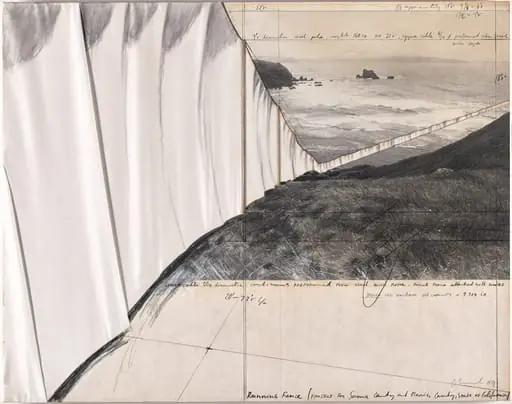
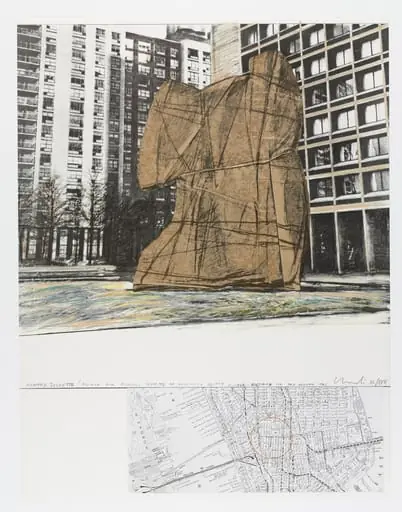
The image depicts a row of arched structures draped in white fabric, suggesting a temporary enclosure or veil over architectural forms.
The image depicts a row of arched structures draped in white fabric, suggesting a temporary enclosure or veil over architectural forms. Behind them, a building with a curved balcony and distant trees frame a quiet, enclosed space. The addition of handwritten notes identifying Milan anchors the work in a real location, emphasizing Christo’s practice of transforming familiar urban environments through subtle, impermanent interventions.
Technique & Style
Christo layered photographic reproduction with tactile elements: collotype and screenprint for tonal depth, supplemented by actual cloth and masking tape applied to the surface. Pencil annotations, including the location, were added by hand, blurring the line between documentation and object. The result is a hybrid print that resists categorization as purely photographic or purely sculptural.
History & Provenance
The work originated from Christo’s 1985 project in Milan, where he temporarily wrapped architectural elements with fabric. This print was produced shortly after as a limited edition record of the installation. It entered The Museum of Modern Art’s collection as part of its broader commitment to documenting conceptual and process-based art practices of the late 20th century.
Context
Christo’s work in the 1980s continued his decades-long exploration of wrapping and veiling structures, often in public spaces. This piece reflects his interest in how temporary interventions alter perception of familiar environments. Unlike monumental sculptures, his projects were fleeting, making printed records essential to preserving their presence in art history.
Legacy
This print exemplifies Christo’s method of using documentation as an extension of the artwork itself. By incorporating physical materials and handwritten notes into the print, he challenged traditional boundaries between photography, sculpture, and installation. It remains a key reference in discussions of ephemeral art and the role of the archive in contemporary practice.
Artist & collection