Artwork
Maria in der Glorie
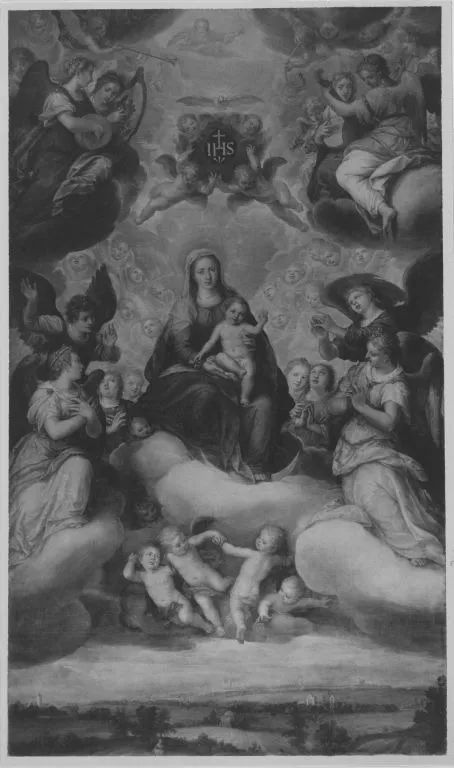
Maria in der Glorie is an unspecified painting by the Mannerist artist Christoph Schwarz. It dates from 1592 and is held in the collection of the Bavarian State Painting Collections.
About this work
Overview
Painted in 1592 by Christoph Schwarz, this work depicts the Virgin Mary in a celestial setting, surrounded by angels and putti.
Painted in 1592 by Christoph Schwarz, this work depicts the Virgin Mary in a celestial setting, surrounded by angels and putti. Executed in oil on panel, it was commissioned for a devotional context and later entered the collection of the Alte Pinakothek in Munich, where it remains today. The composition centers on Mary’s serene presence amid a heavenly assembly, reflecting late Renaissance religious iconography.
Subject & Meaning
The painting portrays the Virgin Mary as Queen of Heaven, seated on a cloud with the Christ Child in her arms. Angels hover above, some holding symbolic objects like lilies or crowns, while cherubic figures below gaze upward. The scene conveys divine grace and maternal tenderness, reinforcing Marian devotion prevalent in Catholic Europe after the Council of Trent. The calm demeanor of all figures underscores spiritual harmony rather than dramatic intensity.
Technique & Style
Schwarz employs chiaroscuro to model forms and direct attention, contrasting illuminated faces and garments with shadowed areas. The figures are rendered with soft contours and delicate modeling, typical of late Mannerist tendencies. The sky and clouds are rendered in muted tones, allowing the luminous figures to emerge with quiet authority. The brushwork is precise but not overly ornate, favoring clarity over theatrical flourish.
History & Provenance
Commissioned in 1592, the painting likely originated in a private chapel or religious institution in southern Germany. It entered the Bavarian royal collection in the early 19th century and was transferred to the Alte Pinakothek upon its founding in 1836. Its preservation reflects its continued value as a devotional object and a representative example of regional Catholic art from the late 16th century.
Context
Created during the Counter-Reformation, the image aligns with Church efforts to reaffirm Marian veneration through accessible, emotionally resonant imagery. While Italian artists like Titian influenced German painters, Schwarz’s style remains distinctly regional—less idealized than Venetian works, more intimate and grounded in local devotional practices. The painting reflects a broader trend of combining spiritual authority with human tenderness in religious art.
Legacy
Though not widely known outside regional collections, the painting exemplifies how German artists adapted Italian compositional models to suit local theological and aesthetic preferences. Its preservation in the Alte Pinakothek ensures its role as a reference for studying late Renaissance religious art in the Holy Roman Empire. It remains a quiet testament to the enduring power of Marian imagery in Catholic visual culture.
Artist & collection

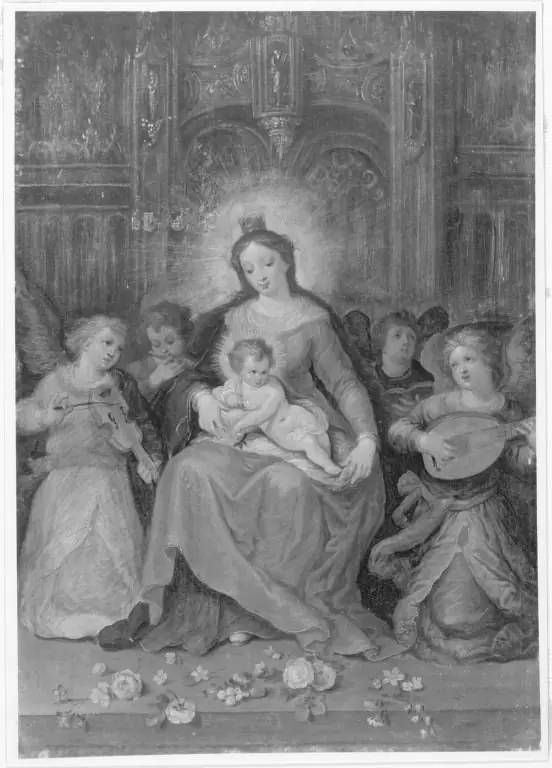 Madonna mit musizierenden Engeln
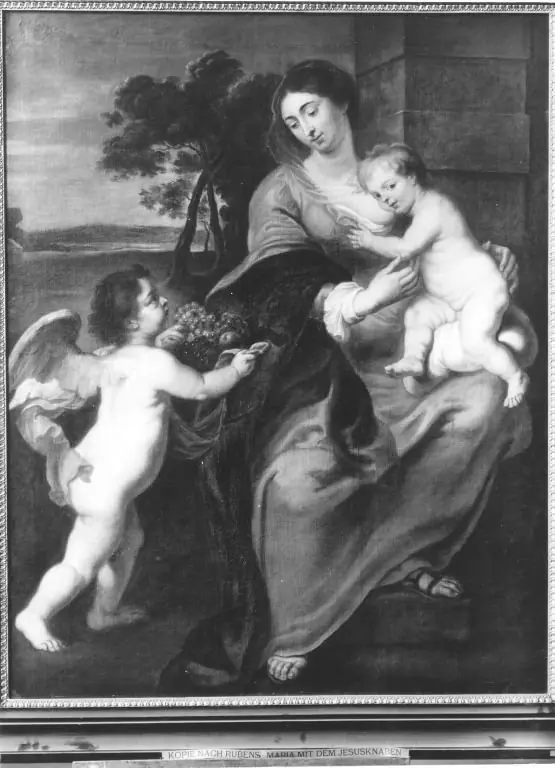 Maria mit Christuskind und einem Engel (Nachfolger)
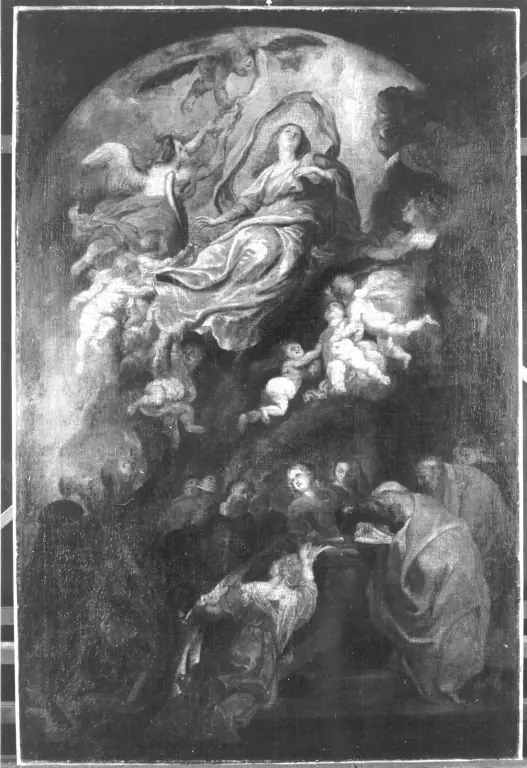 Himmelfahrt Mariae (Kopie nach)
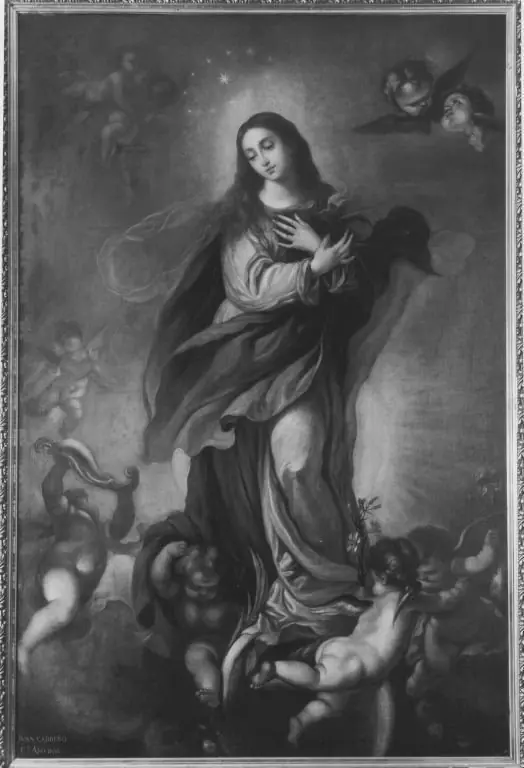 Maria, die unbefleckt Empfangene (und Werkstatt)
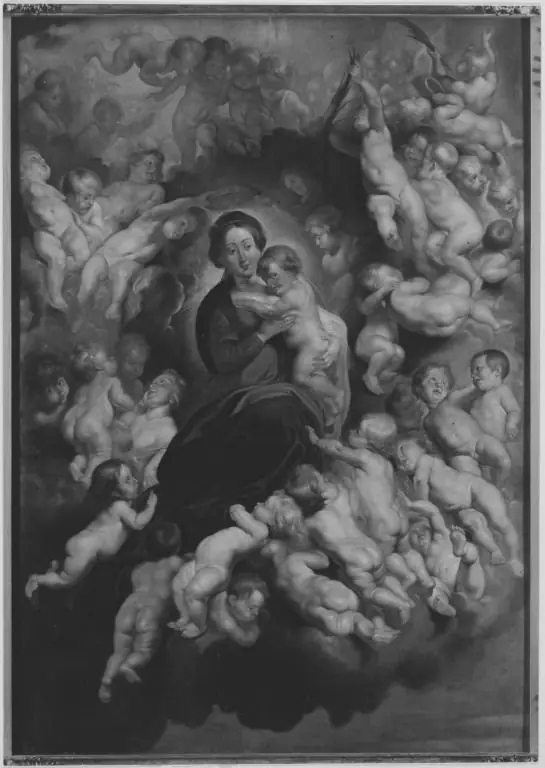 Maria mit Kind, von Engeln umgeben (nach Peter Paul Rubens)
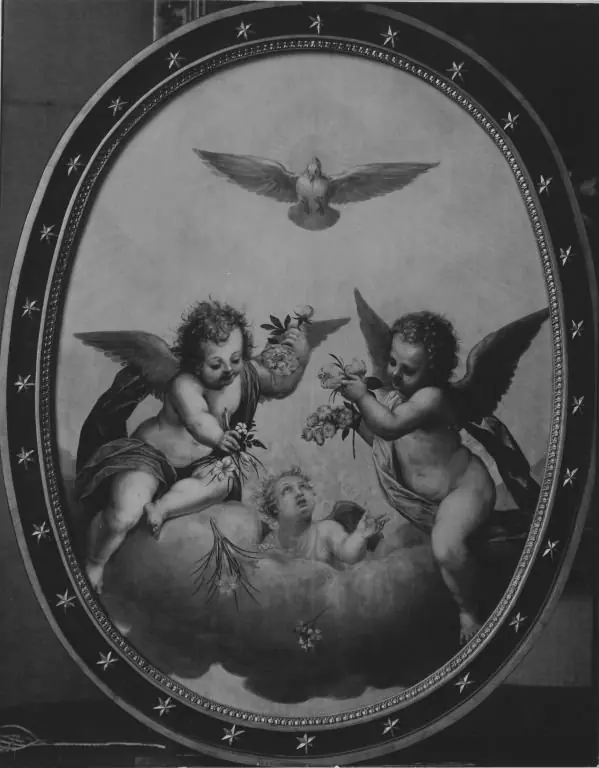 Die Taube des Heiligen Geistes mit blumenstreuenden Engeln (und Werkstatt)
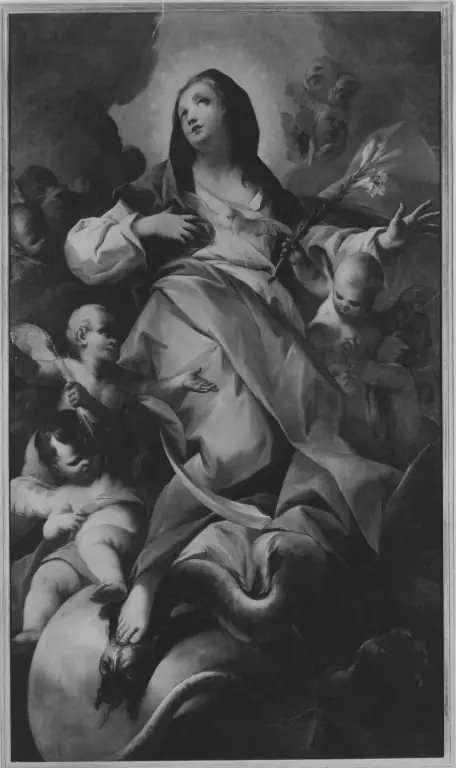 Unbefleckte Empfängnis
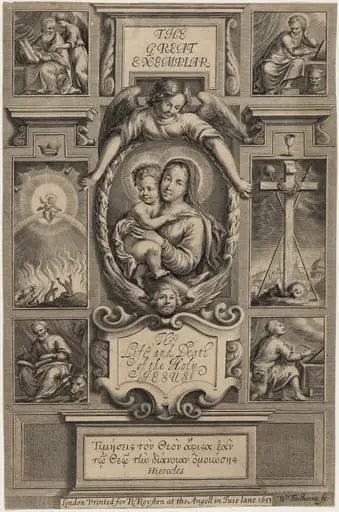 Title Page to Jeremy Taylor, The Great Exemplar
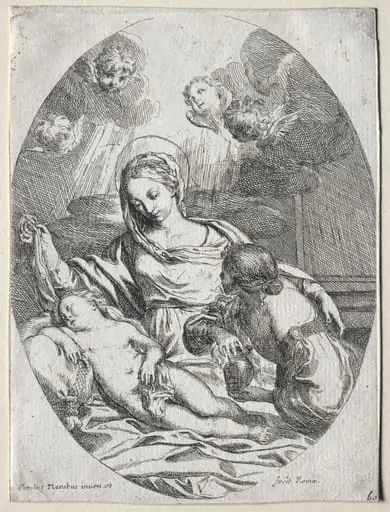 Madonna and Child with the Magdalen
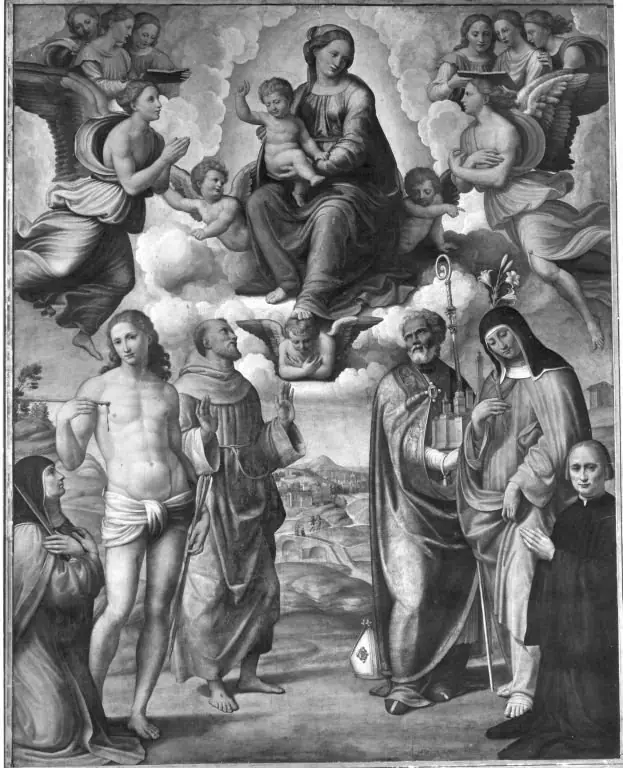 Maria mit Kind und den hll. Katharina von Siena, Sebastian, Franziskus, Petronius, Klara und Stifter
 Mystic Marriage of Saint Catherine
 La Madonna Del San Francesco