Artwork
Mystic Marriage of Saint Catherine
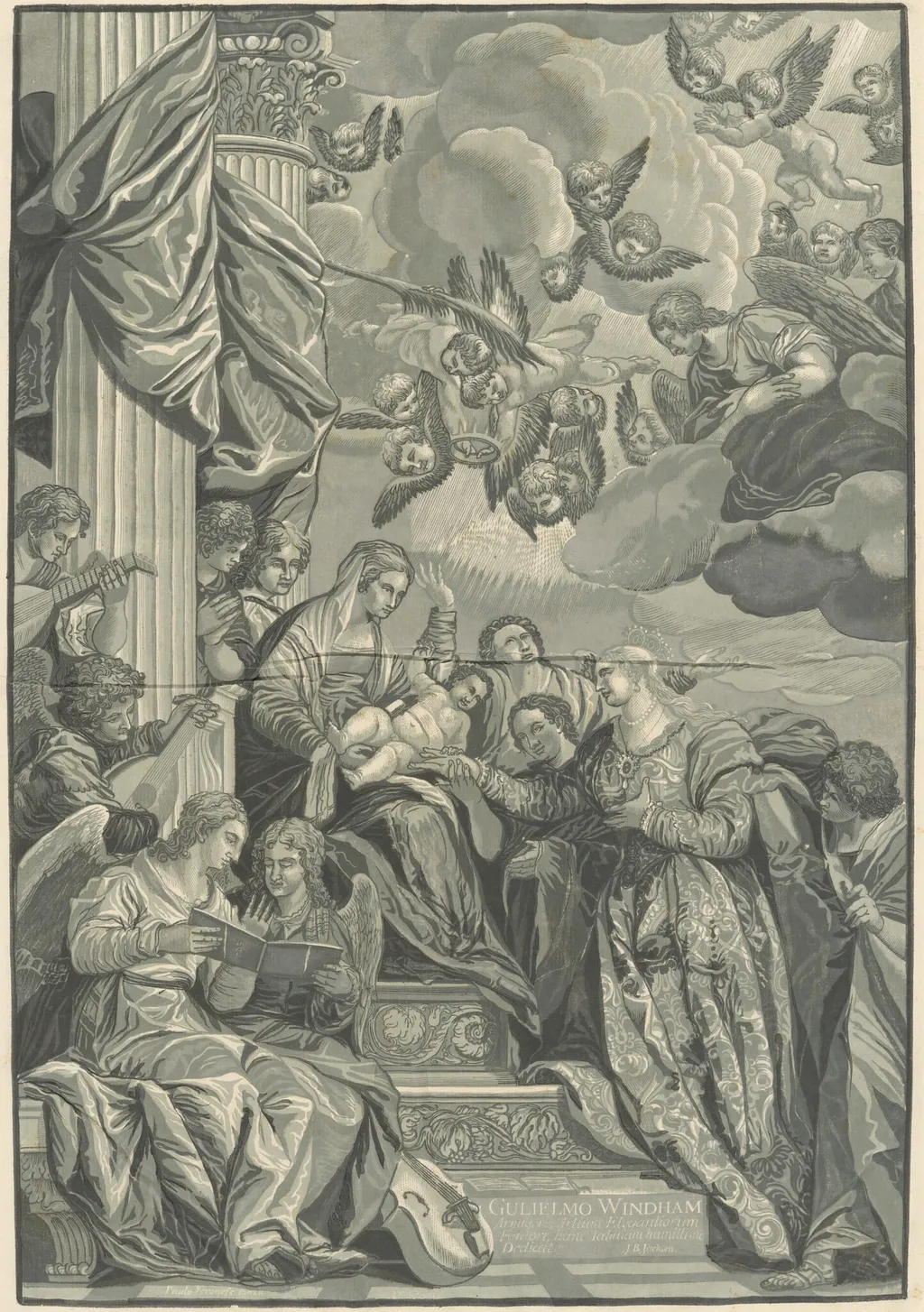
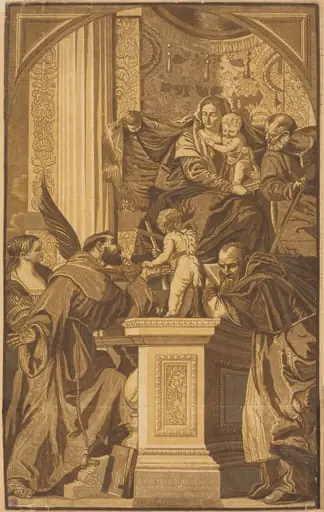
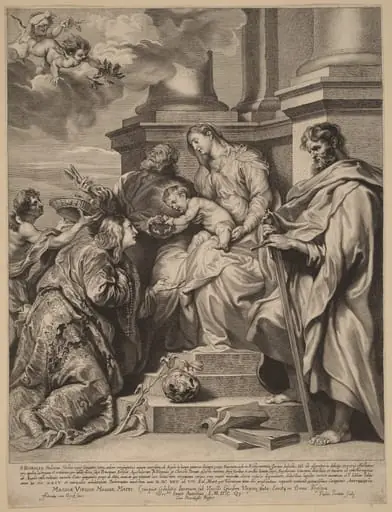
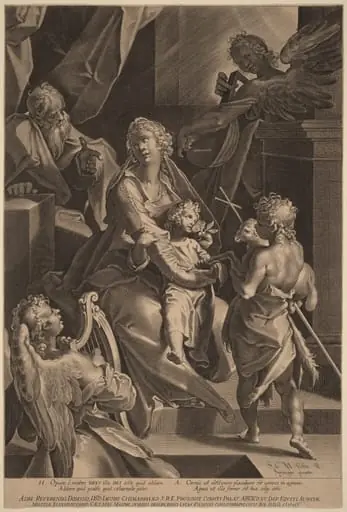
Mystic Marriage of Saint Catherine is an ink print by the Baroque artist John Baptist Jackson. It dates from 1740 and is held in the collection of the National Gallery of Art.
About this work
Overview
Unlike many contemporaries, he based his compositions on oil paintings rather than drawings, emphasizing tonal depth over linear definition.
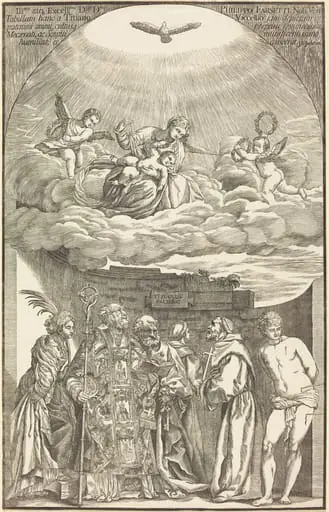
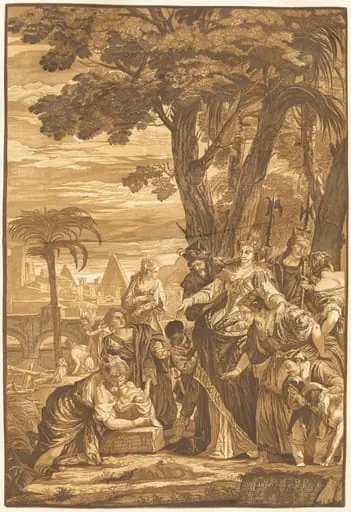
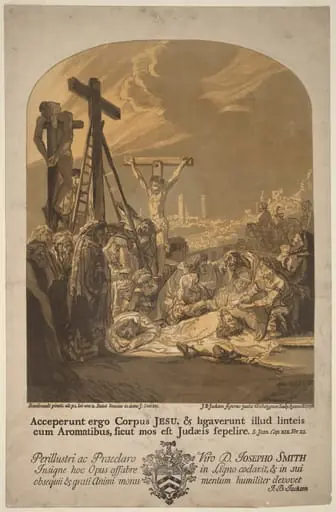
Created in 1740 by John Baptist Jackson, this chiaroscuro woodcut depicts the Mystic Marriage of Saint Catherine. Printed in grayscale from four separate blocks on laid paper, it reflects Jackson’s technical precision and his engagement with Italian and French printmaking traditions. Unlike many contemporaries, he based his compositions on oil paintings rather than drawings, emphasizing tonal depth over linear definition.
Subject & Meaning
The scene portrays Saint Catherine of Alexandria in a spiritual union with the infant Christ, symbolizing her divine devotion. She kneels as Christ, held by the Virgin Mary, places a ring on her finger—an act representing her mystical betrothal to Christ. Surrounding figures, including saints and angels, observe in reverent stillness, reinforcing the sacred intimacy of the moment within a modest architectural setting.
Technique & Style
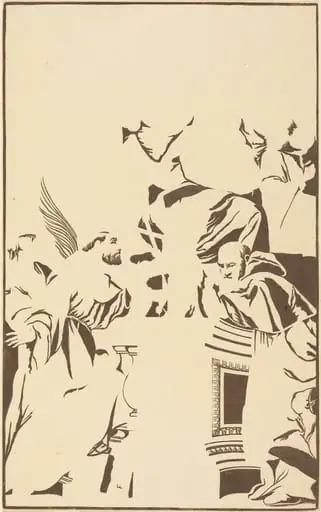
Jackson employed four woodblocks to achieve nuanced gradations of gray, using oil-based inks and selective overprinting to simulate the tonal richness of painted compositions. The chiaroscuro method—contrasting light and shadow—models forms with subtlety, avoiding harsh outlines. Drapery and architectural elements are rendered with delicate hatching, enhancing spatial depth without color, relying solely on tonal variation.
History & Provenance
Jackson, a British artist active in Paris and Venice during the 1730s and 1740s, produced this print as part of a series adapting Old Master paintings for print circulation. His work was distributed among collectors and religious institutions, though few of his prints survive in original condition. The print’s survival in good state suggests it was carefully preserved, likely by a private or ecclesiastical owner.
Context
In mid-eighteenth-century Europe, religious imagery remained central to print culture, even as secular themes gained ground. Jackson’s choice of subject aligns with Counter-Reformation devotional traditions, while his technique bridges the Baroque emphasis on light and the emerging interest in print as an independent art form. His use of oil inks distinguished him from contemporaries who relied on water-based pigments.
Legacy
Jackson’s approach to chiaroscuro woodcut influenced later printmakers seeking to replicate painterly effects in relief printing. Though not widely celebrated in his time, his technical innovations in tonal layering contributed to the evolution of printmaking as a medium capable of nuanced expression. His work remains a rare example of eighteenth-century British engagement with continental religious print traditions.
Artist & collection

Artist
John Baptist Jackson (1701–1780) was a British artist, a woodcut printmaker of the eighteenth century.

![The Marriage at Cana [left plate], by John Baptist Jackson](https://artifactworldgallery.com/img/john-baptist-jackson--the-marriage-at-cana-left-plate--22bae83d46cc40b5-w320.webp)