Artwork
Untitled
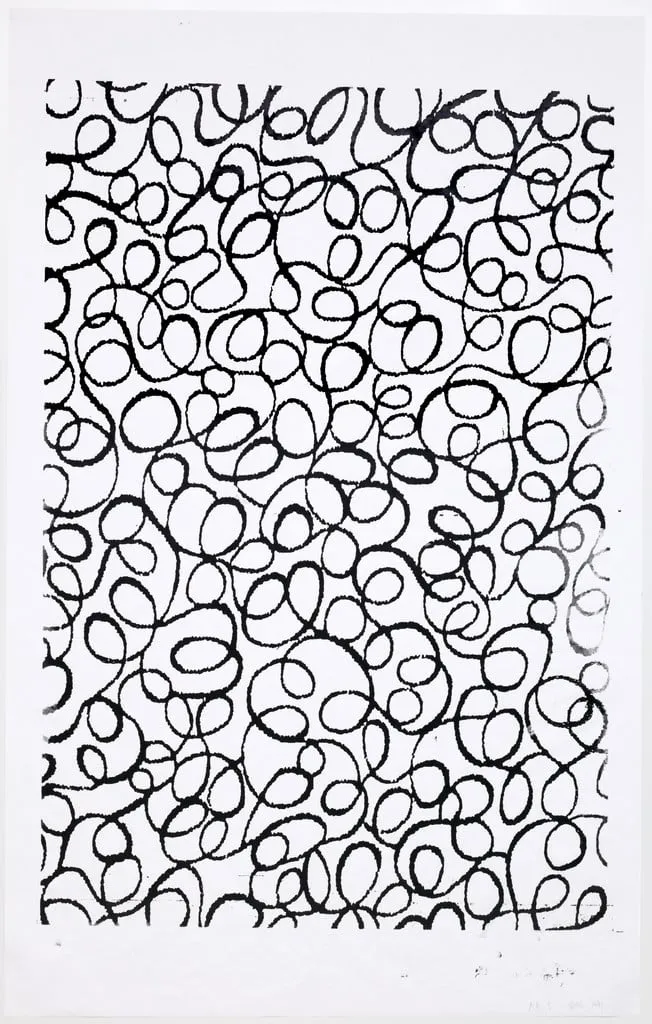
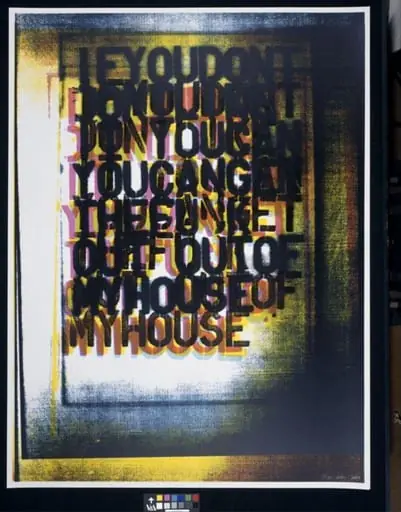
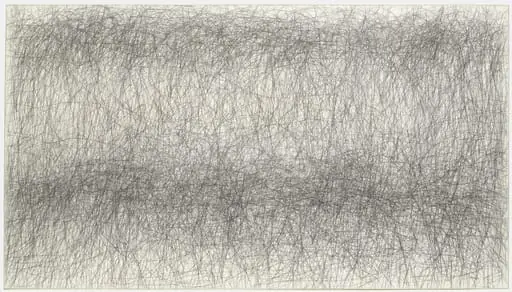
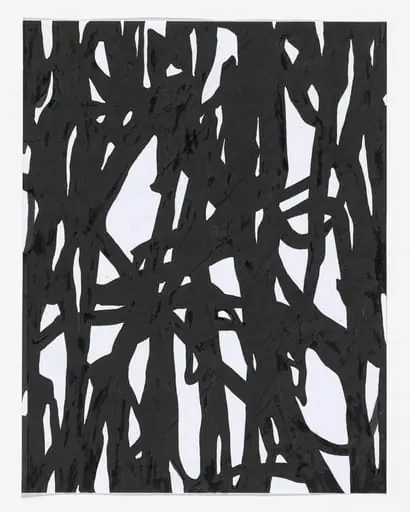
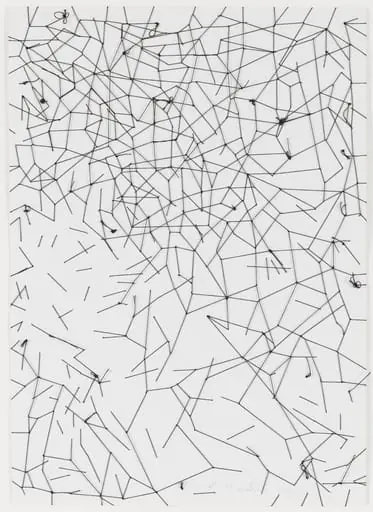
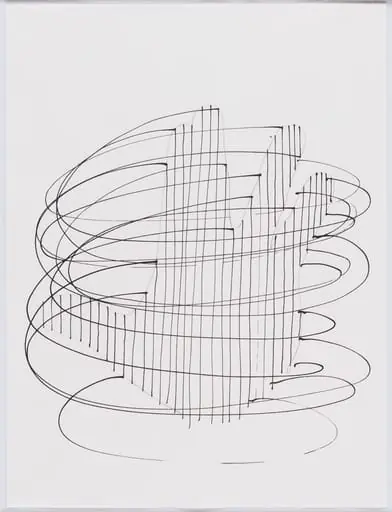
Untitled is an ink print by Christopher Wool. It dates from 1999 and is held in the collection of the Museum of Modern Art.
About this work
Overview
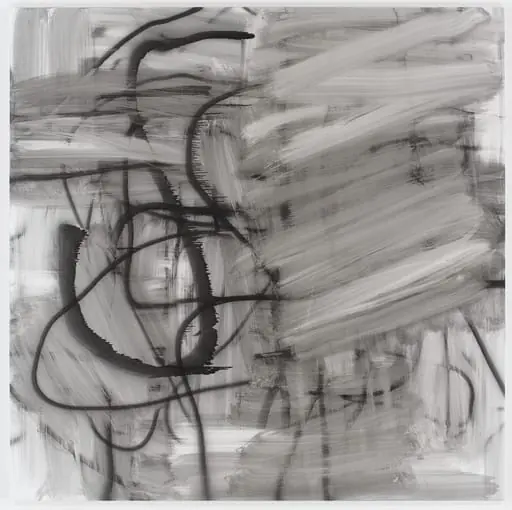
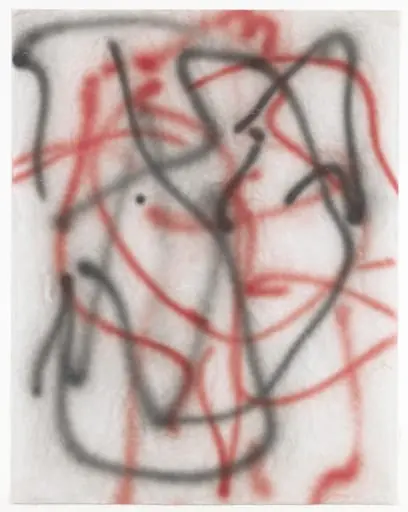
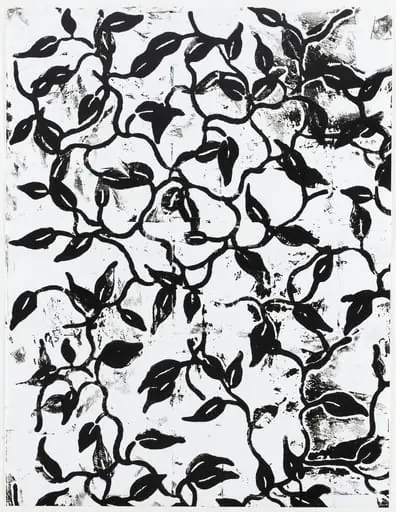
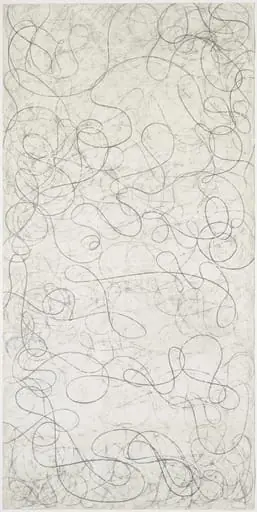
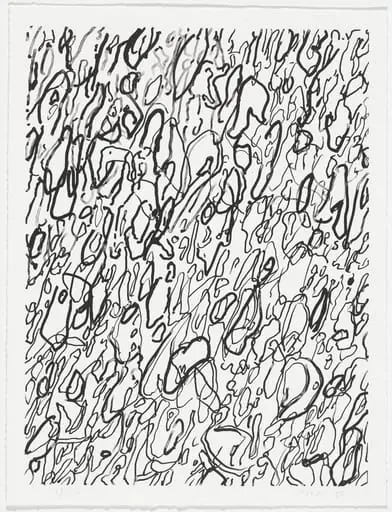
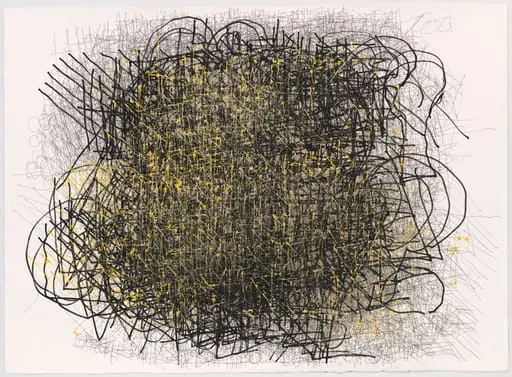
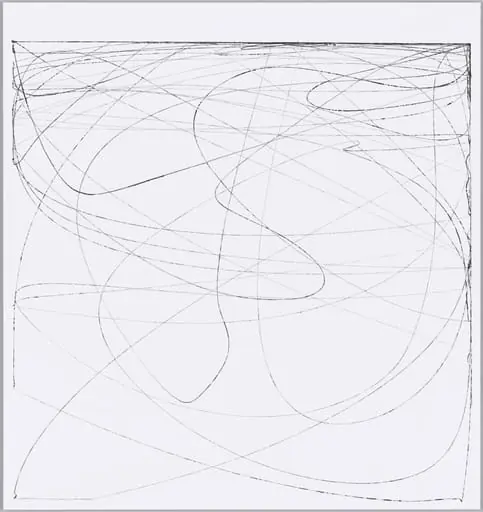
Christopher Wool created this 1999 screenprint as part of his exploration of abstraction through mechanical reproduction. The work is held in the collection of The Museum of Modern Art, New York. It presents no representational imagery, instead offering a dense composition of interwoven black lines on a white ground, generated through a printed process that emphasizes precision over spontaneity.
Subject & Meaning
The piece resists narrative or symbolic interpretation. Its forms—loops, arcs, and overlapping strokes—do not depict objects or figures but function as autonomous marks. Wool’s intent appears to be the examination of line, texture, and repetition as subjects in themselves, distancing the work from traditional pictorial conventions.
Technique & Style
Executed as a screenprint, the work achieves sharp, uniform black lines with a graphic clarity that mimics hand-drawn energy. The layering of strokes creates a sense of accumulation without hierarchy, where no single element dominates. The absence of grayscale or color reinforces the stark contrast and structural focus of the composition.
History & Provenance
Produced in 1999, this print belongs to a series in which Wool expanded his earlier use of text and gesture into pure abstraction. It entered The Museum of Modern Art’s collection shortly after its creation, reflecting institutional recognition of his contribution to post-minimalist printmaking in the late 1990s.
Context
Wool’s work emerged alongside broader shifts in 1990s art, where artists questioned the boundaries between painting, printmaking, and conceptual practice. This piece aligns with contemporaneous efforts to deconstruct authorship and representation, drawing from graffiti, industrial stenciling, and abstract expressionism without adhering to any single tradition.
Legacy
Untitled exemplifies Wool’s influence on contemporary printmaking by demonstrating how mechanical processes can generate expressive complexity. Its rejection of figuration and embrace of procedural repetition has informed subsequent generations of artists working at the intersection of abstraction and reproduction.
Artist & collection