Artwork
Untitled
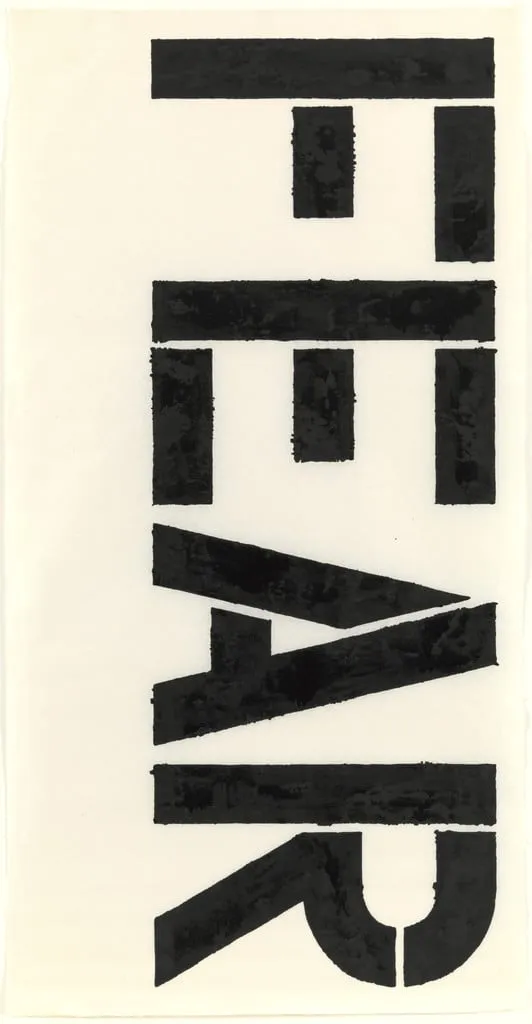
Untitled is a drawing by Christopher Wool. It dates from 1989 and is held in the collection of the Museum of Modern Art.
About this work
Overview
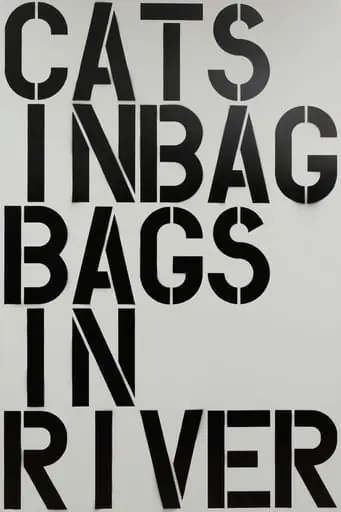
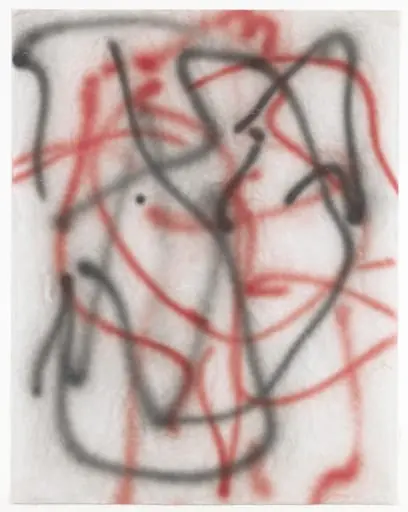
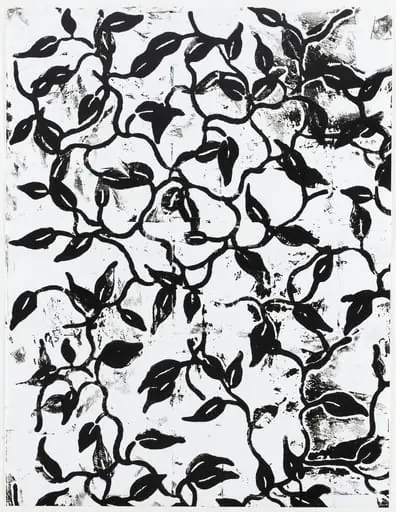
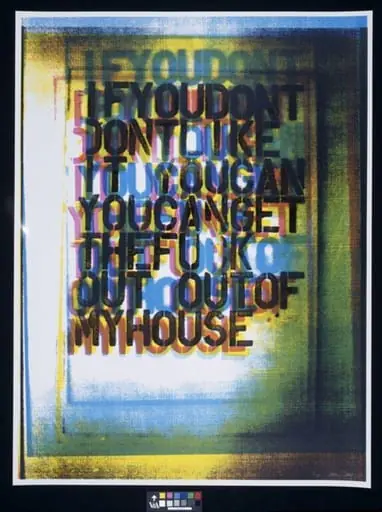
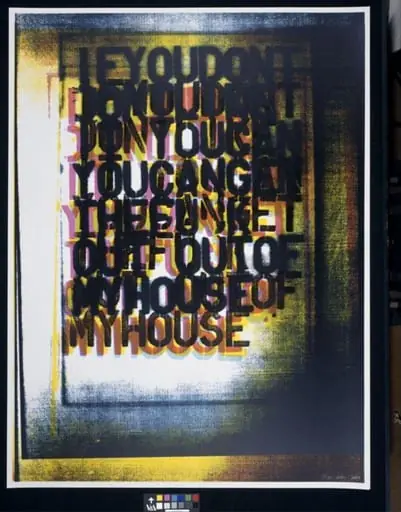
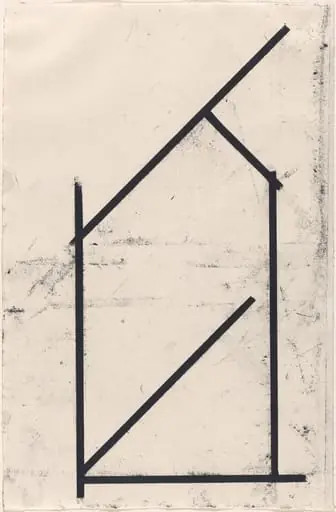
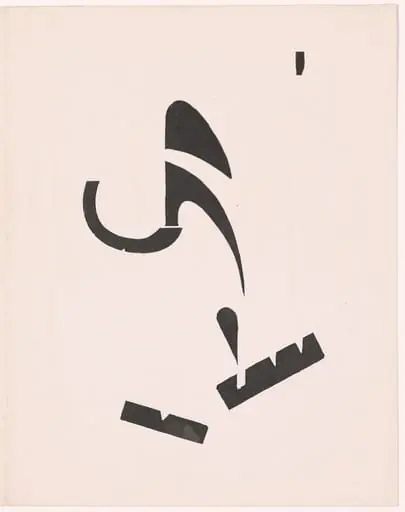
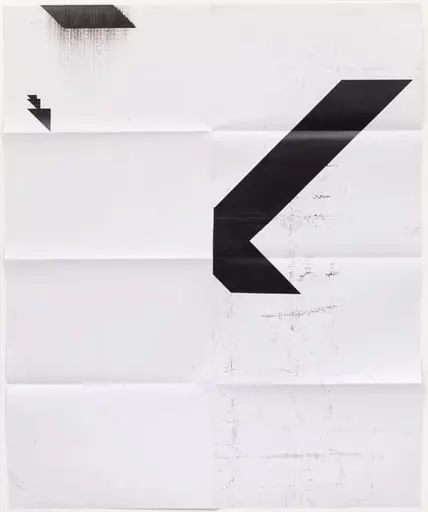
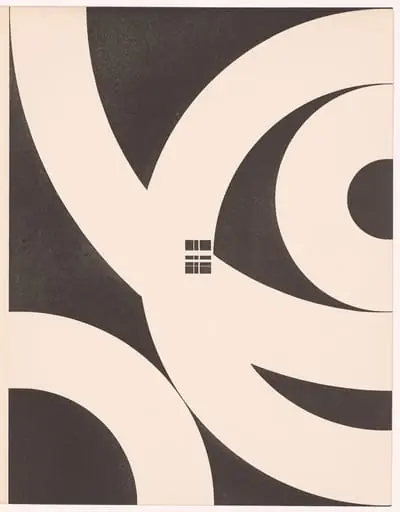
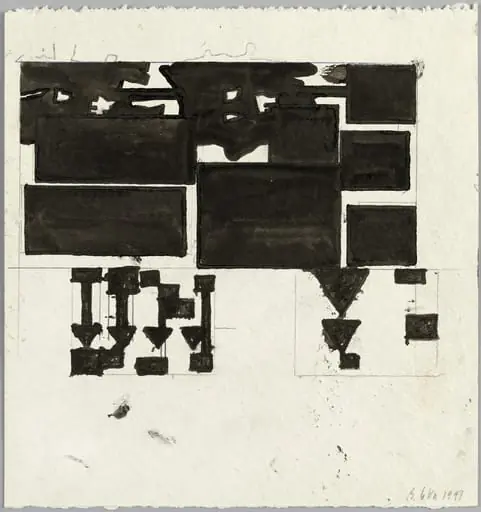
Created in 1989, this enamel-on-paper work by Christopher Wool is part of The Museum of Modern Art’s collection. It belongs to a series of abstract drawings that explore the visual potential of language without using legible text. The composition relies solely on black enamel shapes applied to a white ground, emphasizing materiality and gesture over narrative.
Subject & Meaning
Black forms resemble fragmented letters, stenciled bars, or cut-out typography, arranged in a loose, non-linear pattern.
The piece avoids literal meaning, instead evoking the remnants of written language. Black forms resemble fragmented letters, stenciled bars, or cut-out typography, arranged in a loose, non-linear pattern. Their placement suggests the aftermath of textual deconstruction—words disassembled, rearranged, and stripped of function, inviting viewers to consider the physicality of language rather than its content.
Technique & Style
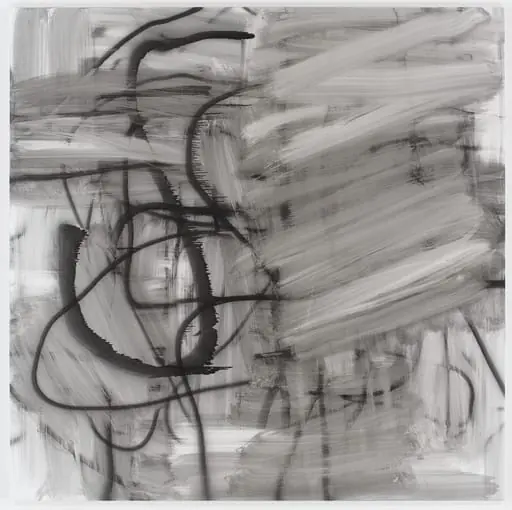
Wool applied black enamel with a brush or roller, allowing the paint to pool and dry unevenly, creating rough, textured edges. The shapes appear cut or torn, then adhered to the paper, producing a collage-like effect. The deliberate irregularity of placement and surface contrasts with the precision often associated with stenciling, introducing a sense of controlled chaos.
History & Provenance
This work emerged during a pivotal period in Wool’s career when he began translating graffiti and commercial signage into fine art contexts. It entered The Museum of Modern Art’s collection in the early 1990s, reflecting the institution’s growing interest in post-conceptual practices that blurred boundaries between painting, drawing, and language-based art.
Context
Wool’s work in the late 1980s responded to the decline of traditional painting and the rise of appropriation and conceptual strategies. Drawing from urban visual culture—such as spray-painted slogans and industrial stencils—he rejected expressive brushwork in favor of impersonal, mechanical forms. This piece aligns with broader artistic inquiries into meaning, repetition, and the erosion of communication.
Legacy
This work contributed to a redefinition of drawing in contemporary art, demonstrating how minimal means could generate complex visual and conceptual resonance. Its influence is visible in later artists who treat text as material rather than message, and in the continued exploration of abstraction rooted in urban signage and printed ephemera.
Artist & collection