Artwork
Rocky Landscape with a Natural Arch
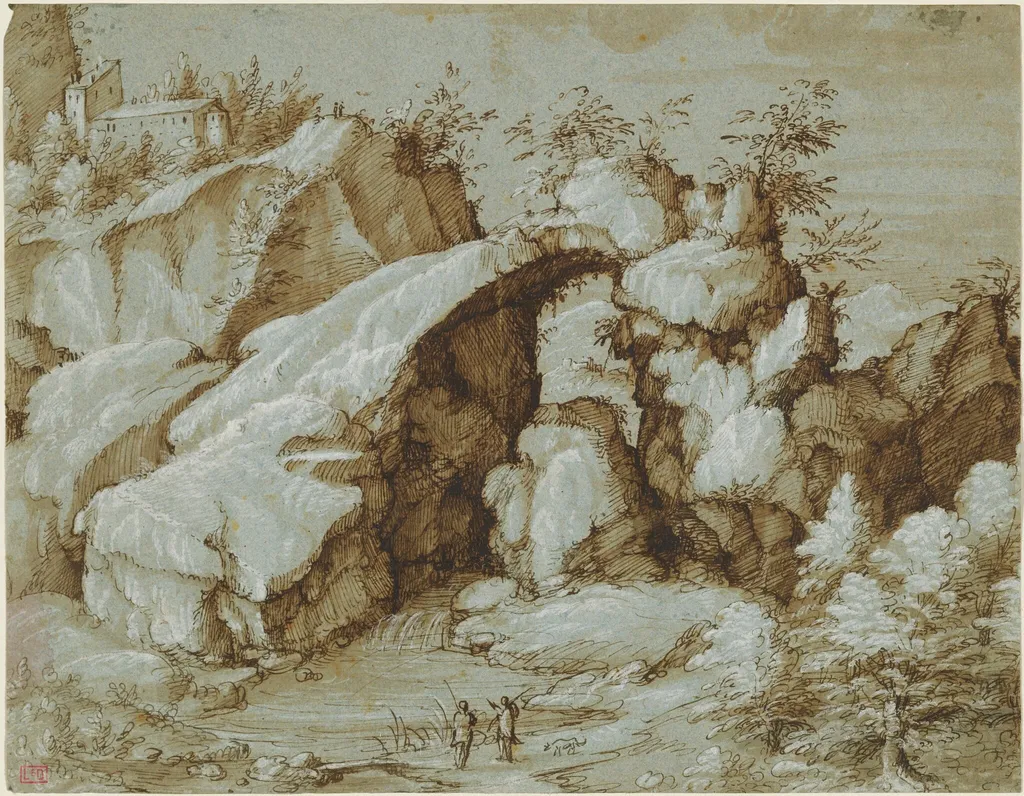
Rocky Landscape with a Natural Arch is an ink drawing by the Renaissance artist Gherardo Cibo. It dates from 1575 and is held in the collection of the National Gallery of Art.
About this work
Overview
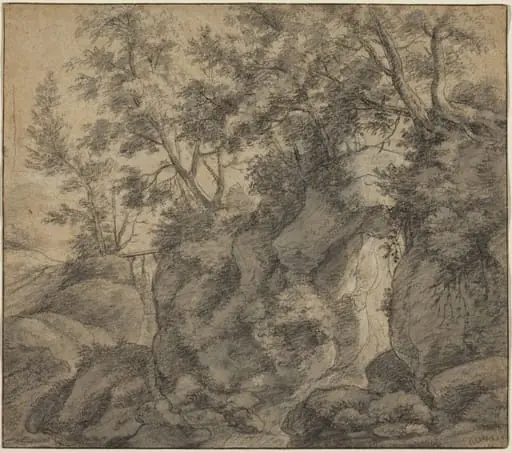
Created around 1575 by the Italian artist and herbalist Gherardo Cibo, this drawing captures a rugged natural arch amid a rocky hillside.
Created around 1575 by the Italian artist and herbalist Gherardo Cibo, this drawing captures a rugged natural arch amid a rocky hillside. Executed in pen and brown ink with brown wash, it is heightened with white gouache on blue laid paper—a rare choice that imparts a subdued, cool atmosphere to the scene. The work exemplifies the late Renaissance convergence of scientific inquiry and artistic draftsmanship.
Subject & Meaning
The composition centers on a towering natural rock arch, flanked by jagged cliffs and a distant hilltop structure with small figures near a watercourse. These elements suggest a topographical record rather than an idealized landscape. The inclusion of human presence, though minimal, implies observation of inhabited terrain, aligning with Cibo’s interest in documenting nature as it was encountered in the field.
Technique & Style
Cibo employed thick pen lines to define rock contours, layered with translucent brown washes for shadow and volume. White gouache was selectively applied to suggest highlights and texture, enhancing the three-dimensionality of the stone. The blue paper beneath subtly modulates the tonal range, creating a cool ambient tone uncommon in contemporary landscape drawings of the period.
History & Provenance
The drawing is attributed to Gherardo Cibo, active in the mid-to-late 16th century, whose botanical studies often included landscape settings. While specific early ownership records are sparse, its survival reflects its value as a study within a tradition of observational drawing. It likely originated as part of a larger collection of natural sketches, possibly linked to his botanical research.
Context
In the late Renaissance, artists increasingly turned to direct observation of nature, blending scientific precision with aesthetic sensitivity. Cibo’s work aligns with this trend, particularly among Italian draftsmen who documented terrain for both scholarly and artistic purposes. His integration of landscape with plant life distinguished him from contemporaries focused solely on idealized scenery.
Legacy
Cibo’s drawings, including this one, contributed to the development of topographical illustration in Europe. Though not widely known during his lifetime, his meticulous approach to natural forms influenced later generations of naturalists and landscape draftsmen. The use of colored paper and gouache highlights an experimental spirit that anticipated more systematic landscape studies in the 17th century.
Own this work as a print
Artist & collection

Artist
Gherardo Cibo, also known by the alias of Ulisse Severini da Cingoli (1512 − 30 January 1600), was an artist and a herbalist from Italy.

 Landscape with Shepherds Driving Away a Wolf
 Landscape with a Wooded Ravine
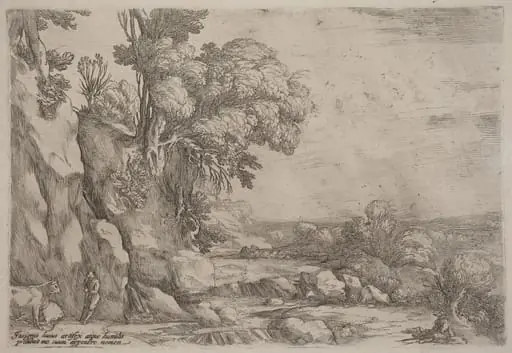 Landscape with Resting Herdsmen
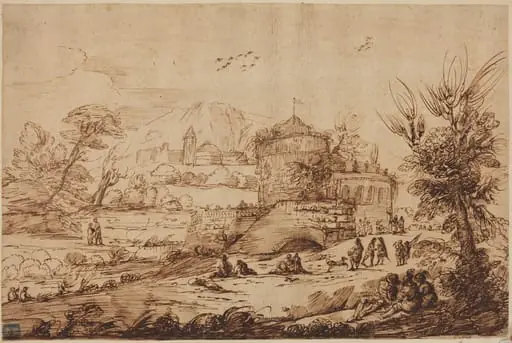 Landscape with Fortress and River
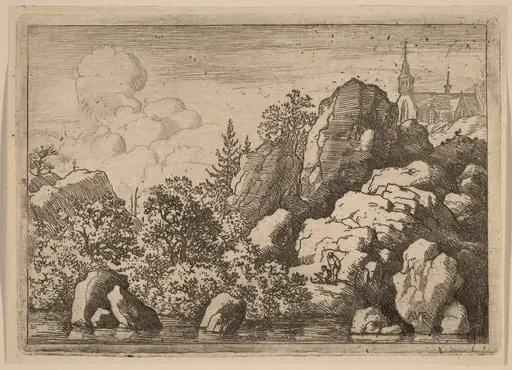 Church on a Hill
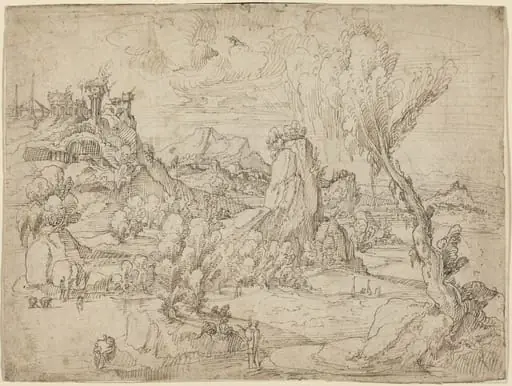 Landscape with the Baptism of Christ
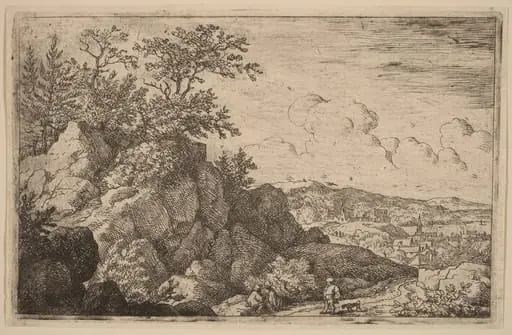 Peasant with His Dog
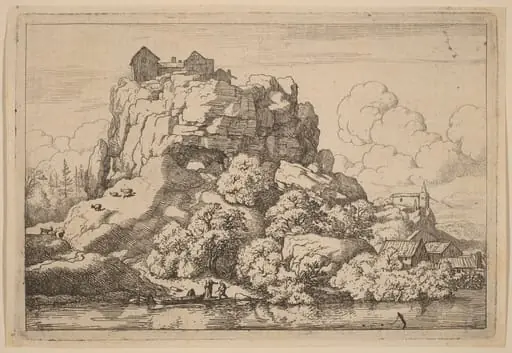 River at the Foot of a High Rock
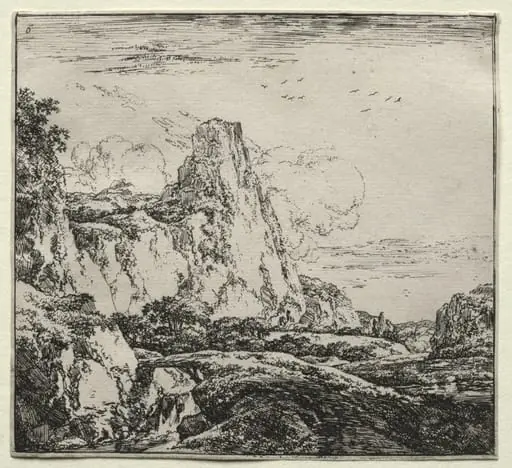 The Bridge near the Mountain
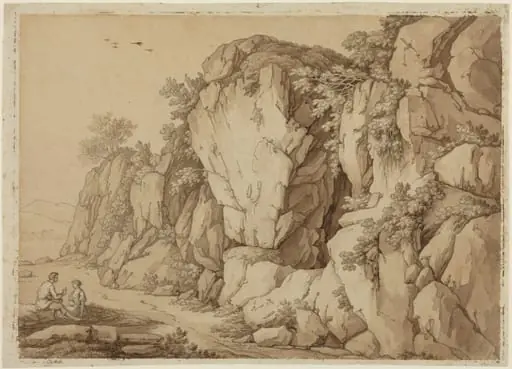 A Young Couple Seated near a Massive Rock Formation