Artwork
Virgin and Child with the Young Saint John the Baptist
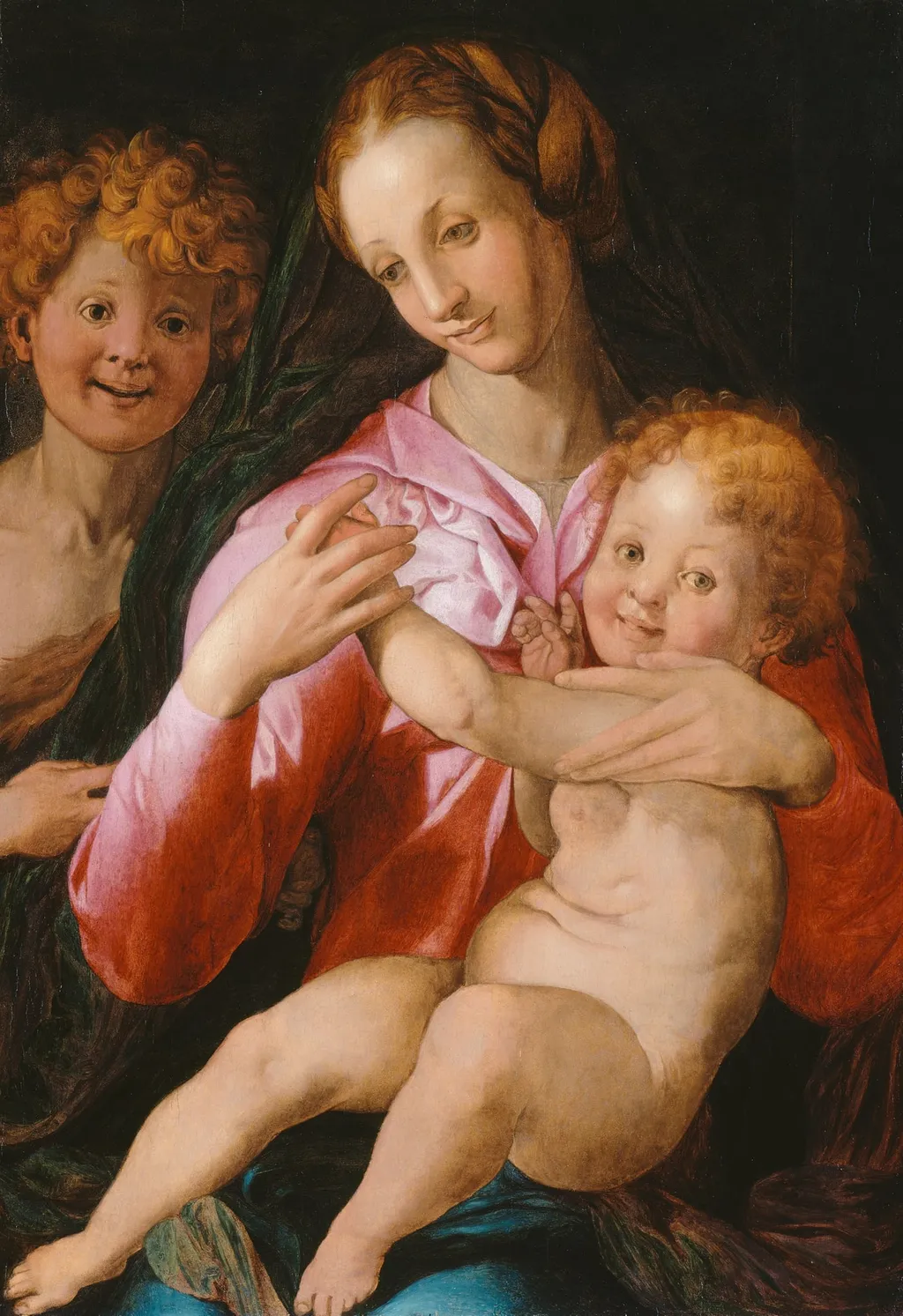
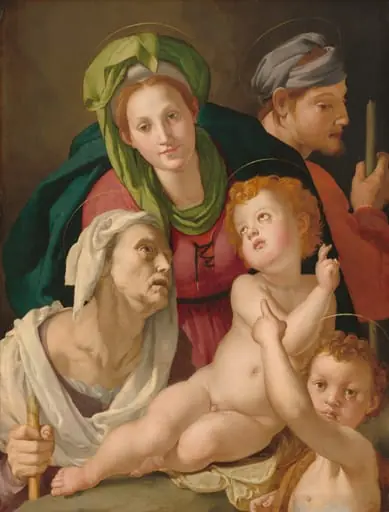
Virgin and Child with the Young Saint John the Baptist is an oil painting by the Mannerist artist Circle of Agnolo Bronzino. It dates from 1530 and is held in the collection of the Art Institute of Chicago.
About this work
Overview
Three nearly identical oil-on-panel paintings of the Virgin and Child with the Young Saint John the Baptist survive, all left incomplete. This version, along with one other, appears to derive from a preparatory cartoon rather than the original composition. Their shared unfinished state and stylistic consistency suggest workshop production, typical of Florentine practices in the mid-16th century.
Subject & Meaning
The composition centers on the Virgin Mary cradling the infant Christ, with the young John the Baptist standing beside them, his presence signaling his future role as Christ’s forerunner. The intimate grouping reflects devotional themes common in Renaissance Florence, emphasizing familial tenderness and spiritual connection, though the work’s incomplete state limits full symbolic elaboration.
Technique & Style
The painting exhibits the refined linear clarity and cool palette characteristic of Mannerist Florentine art. Brushwork varies in finish, revealing underdrawings and unmodeled areas, consistent with workshop practices where assistants replicated compositions from cartoons. The figures are rendered with elongated proportions and restrained emotion, aligning with the aesthetic of Bronzino’s circle.
History & Provenance
The painting’s origins lie within a Florentine workshop active in the 1530s–1540s. Though its exact provenance is undocumented, its relationship to other versions suggests it was produced alongside them, possibly for private devotion or as a study. Its incomplete condition implies it was abandoned before sale or delivery, a not uncommon outcome in busy studios.
Context
Florentine workshops frequently reused successful compositions through cartoons, especially for devotional subjects in high demand. The close stylistic ties between Bronzino, Pontormo, and their associates make precise attribution difficult. This painting reflects a collaborative environment where artistic identity was often shared, and replication served both pedagogical and commercial ends.
Legacy
The existence of multiple unfinished versions underscores the importance of compositional models in Renaissance studio practice. While not attributed definitively to a single hand, the work contributes to understanding how artistic ideas circulated and were adapted within a network of painters, preserving the visual language of Mannerist Florence beyond the hand of its most celebrated figures.
Own this work as a print
Artist & collection

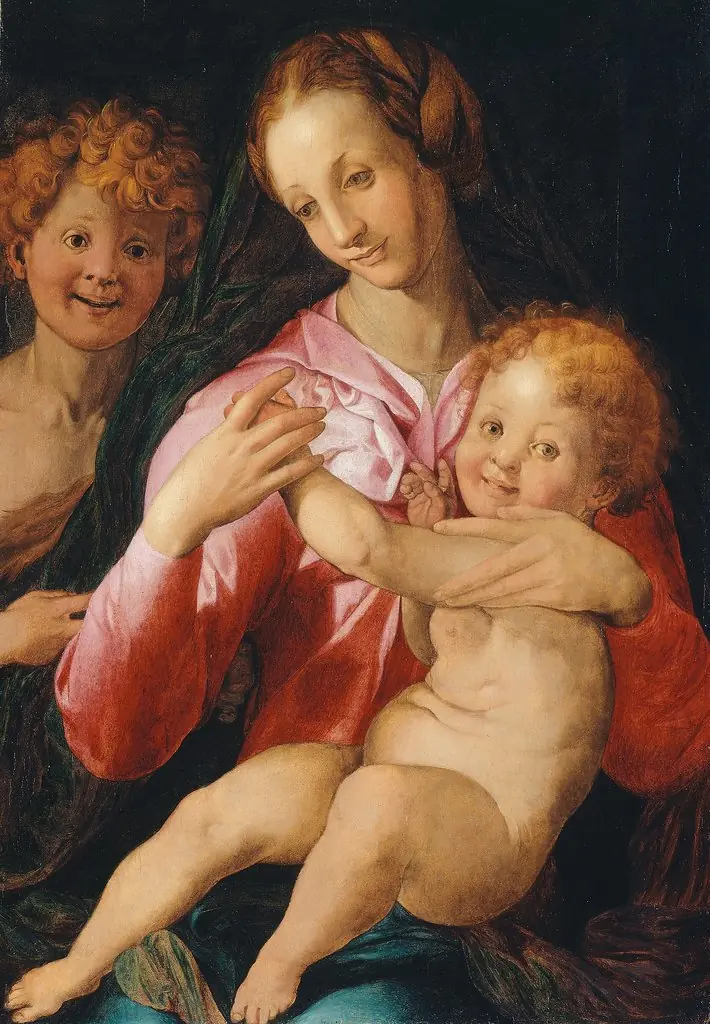 Virgin and Child with the Young Saint John the Baptist
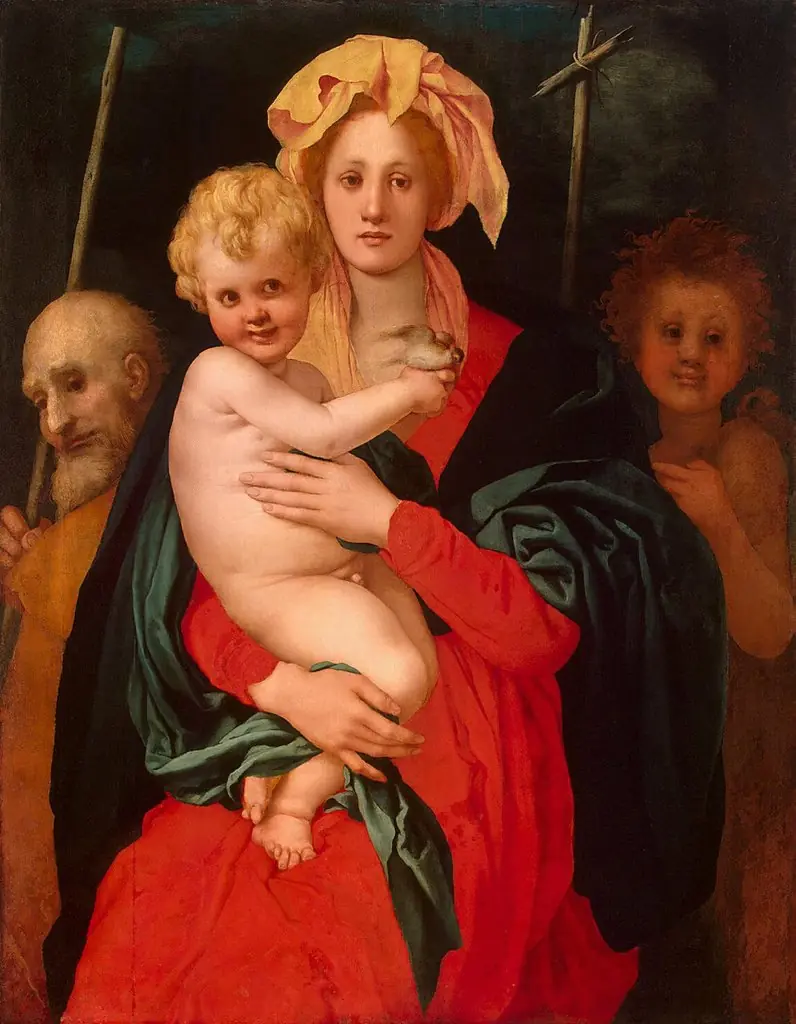 The Virgin and Child with St Joseph and St John the Baptist
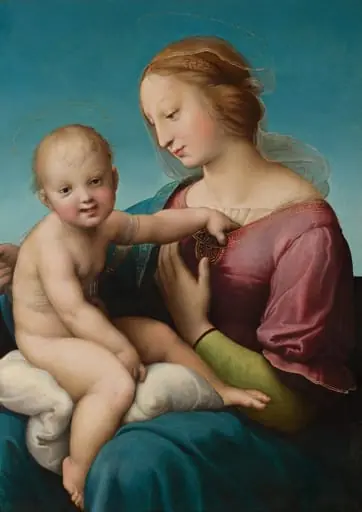 The Niccolini-Cowper Madonna
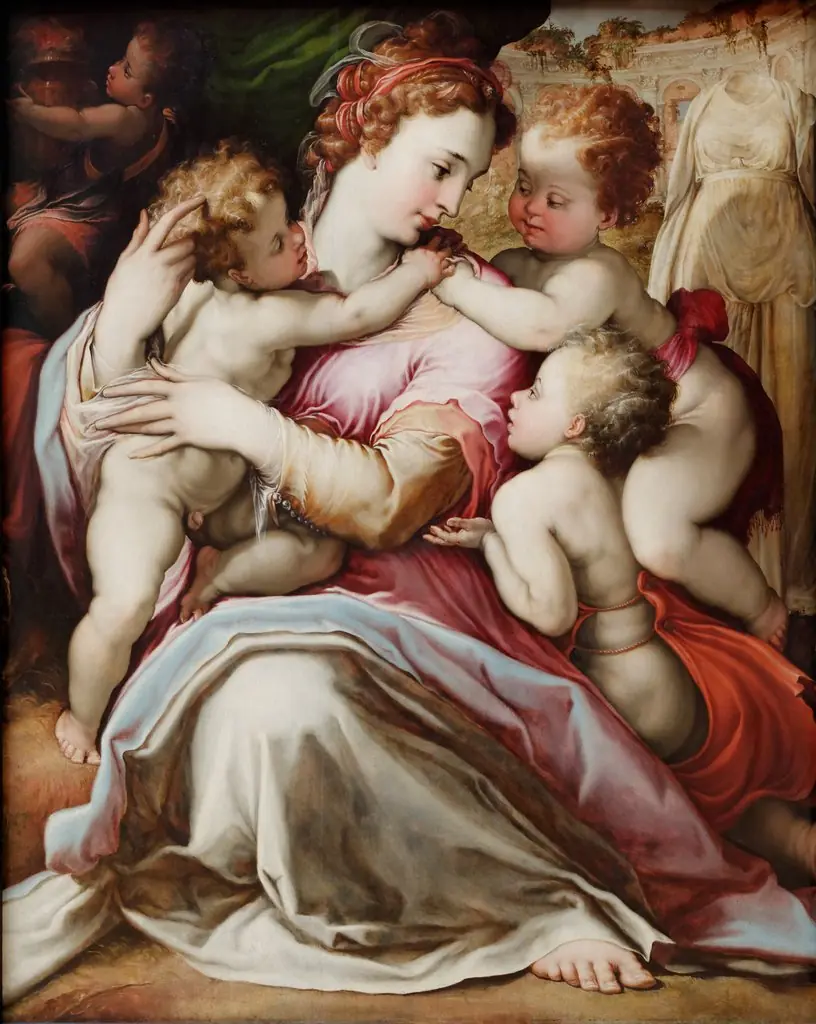 Caritas
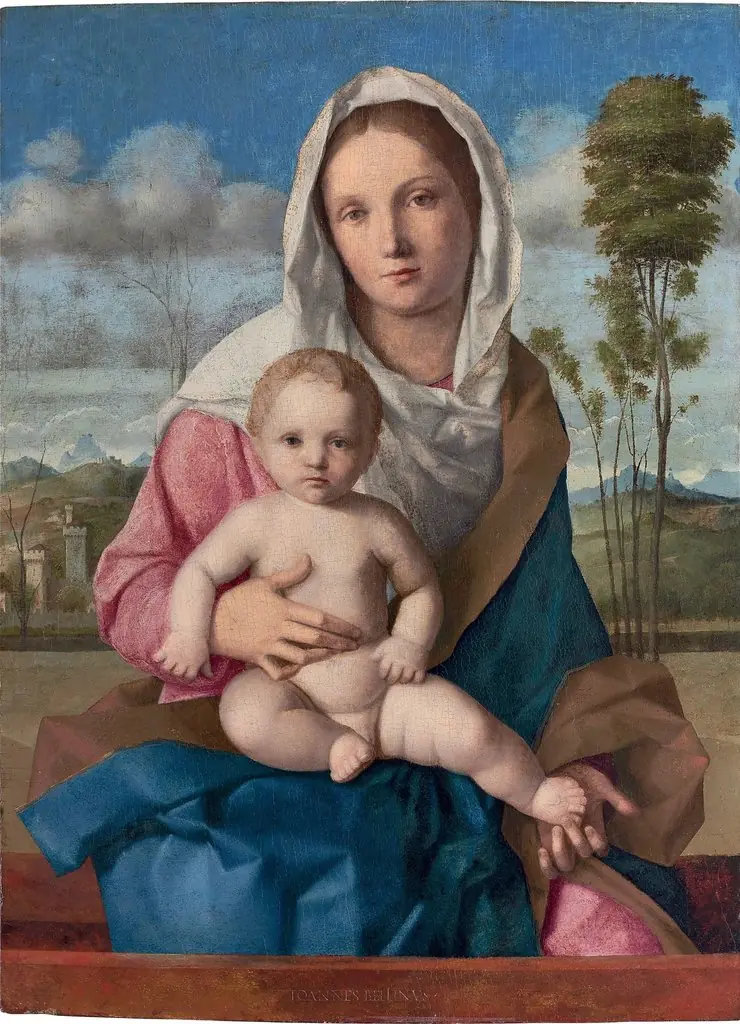 Madonna Dudley
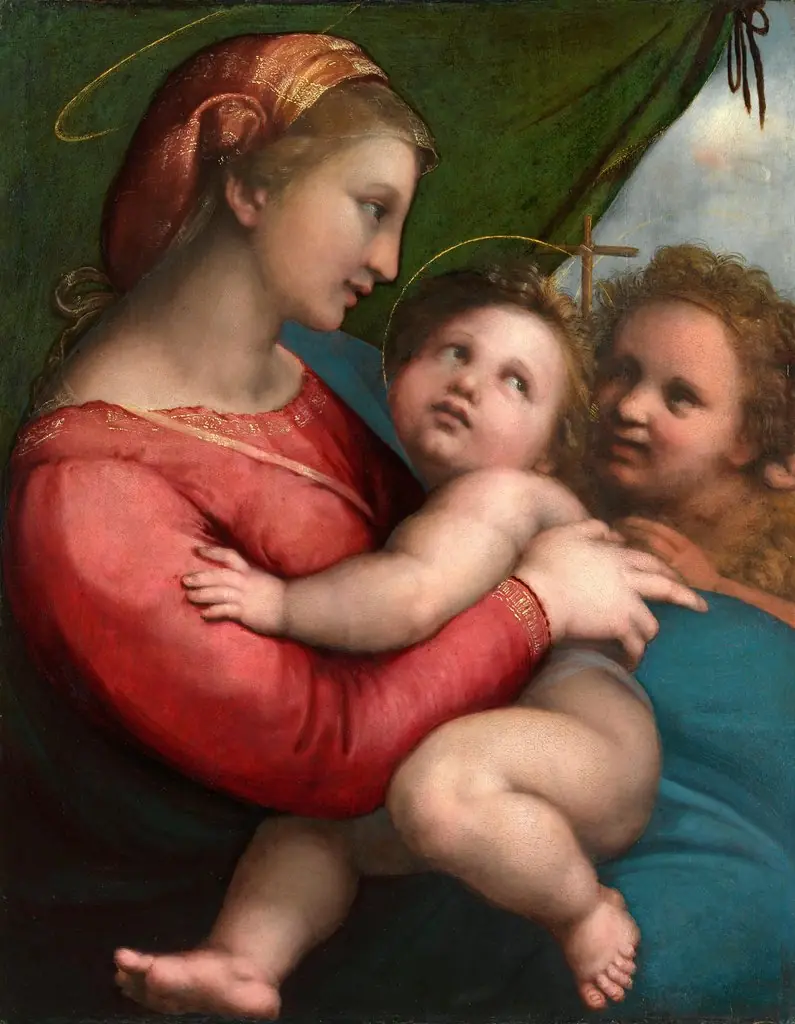 Madonna della tenda
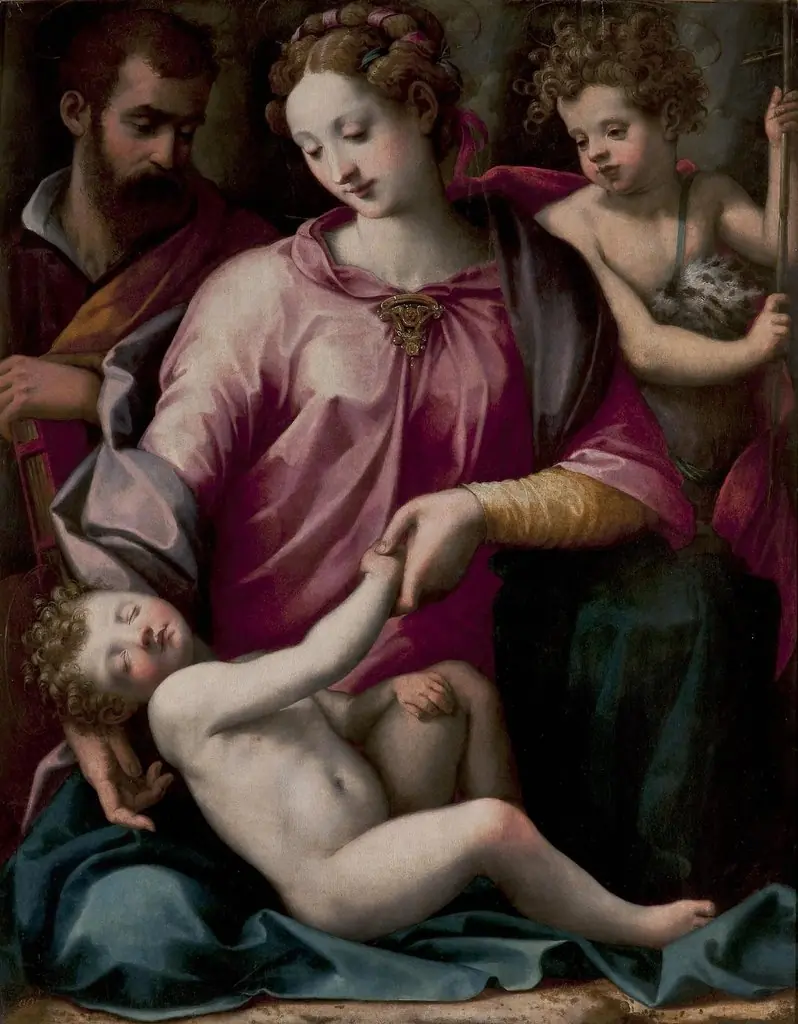 Holy Family with St John the Baptist
 Madonna and Child with Saint John the Baptist
 Madonna and Child with John the Baptist
 Madonna and Child with Saint John
 The Holy Family with Angels
 The Holy Family