Artwork
Natură statică cu flori, cană și carte
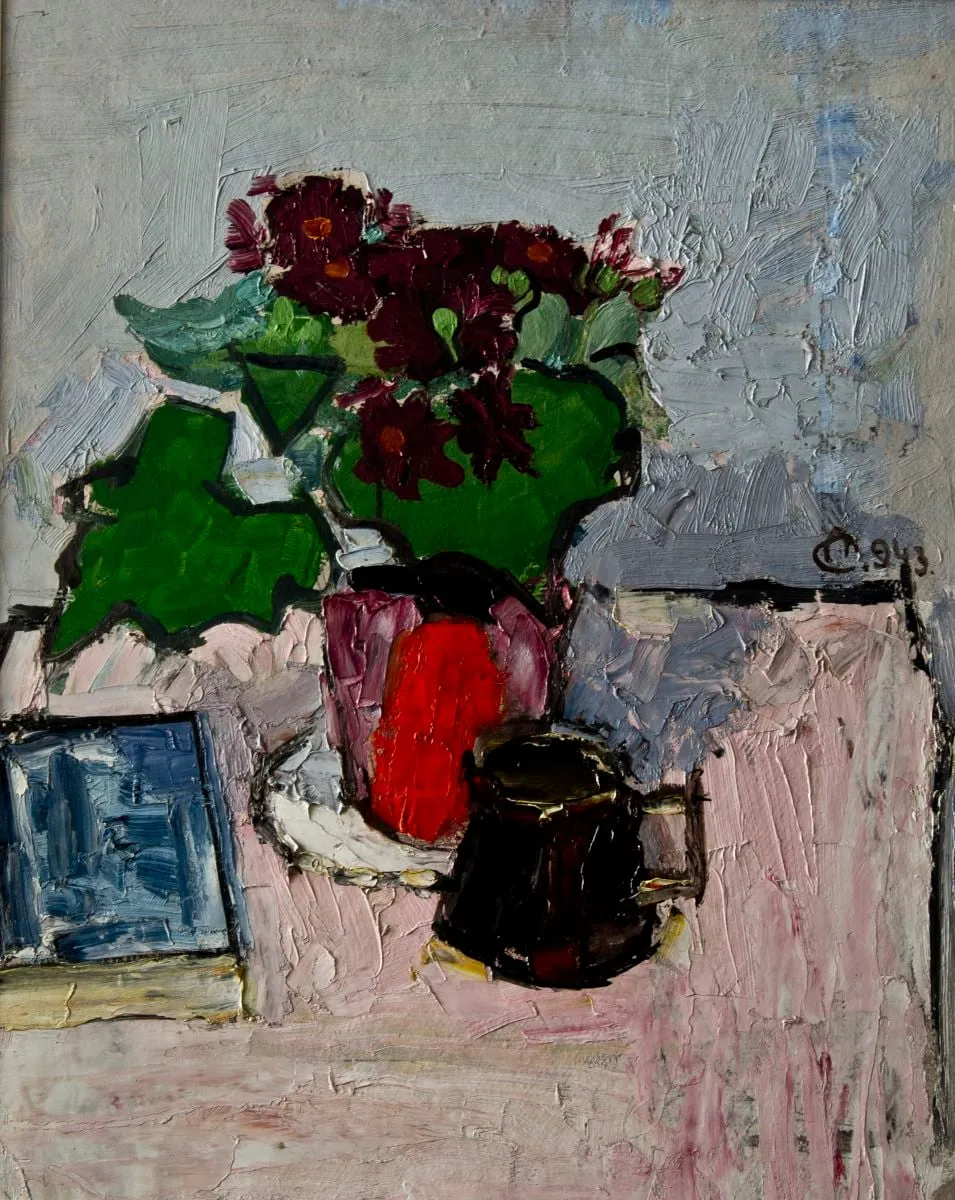
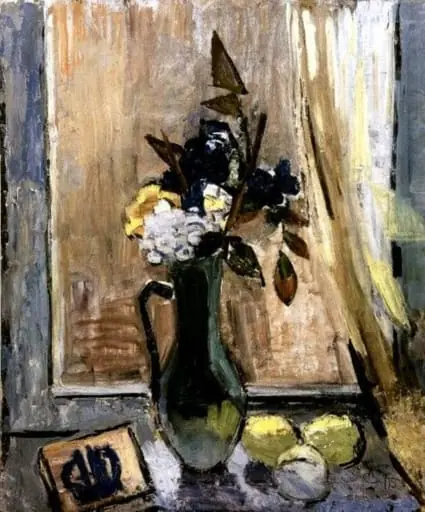
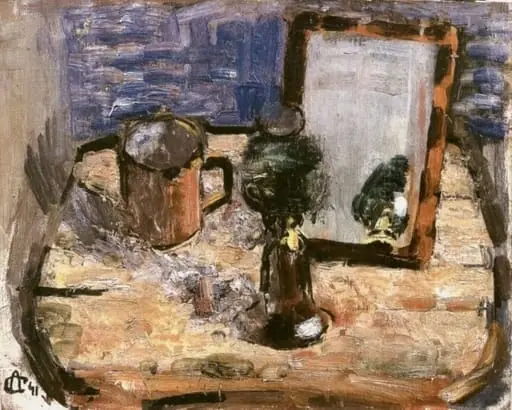
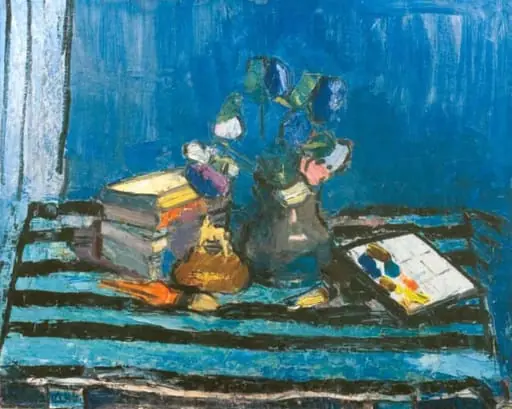
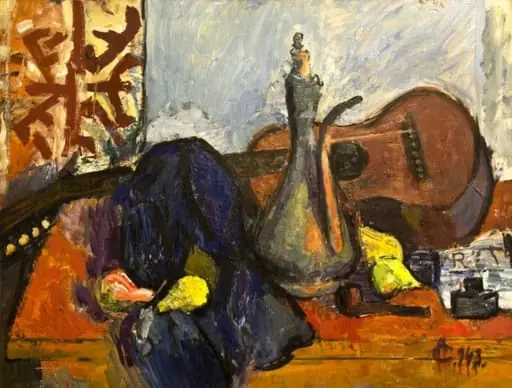
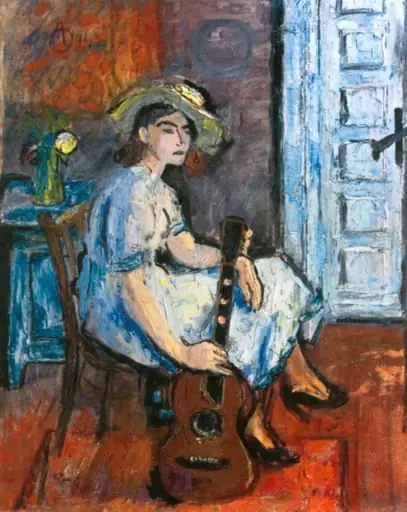
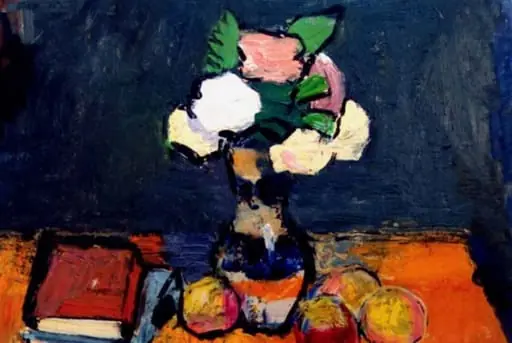
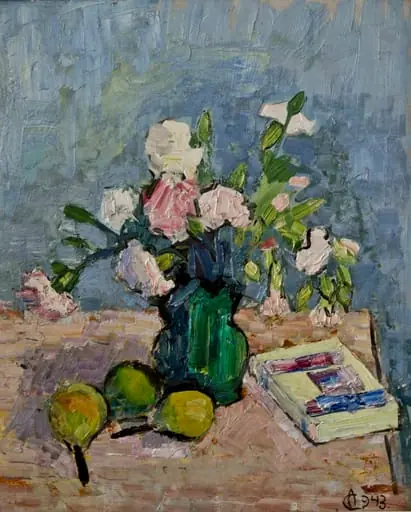
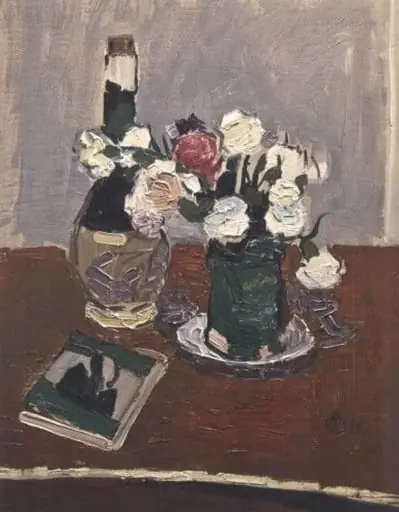
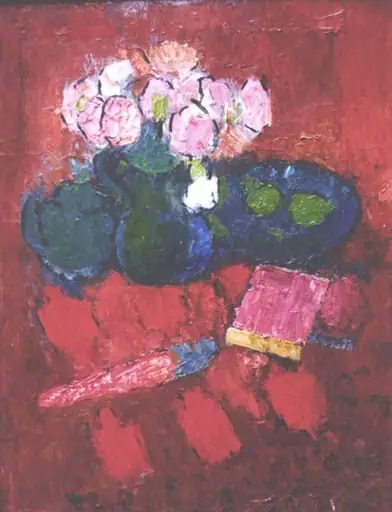
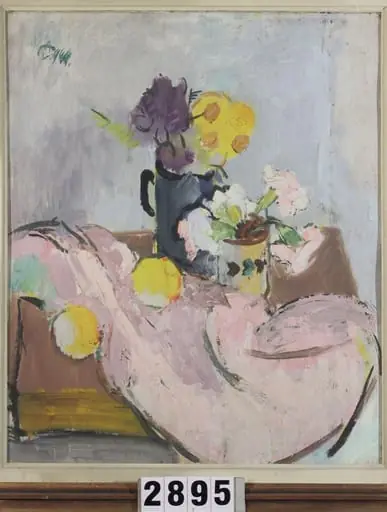
Natură statică cu flori, cană și carte is a print by Alexandru Ciucurencu. It dates from 1943 and is held in the collection of the National Museum of Art of Romania.
About this work
Overview
The composition is deliberately unadorned, focusing on everyday items rendered with expressive brushwork.
Painted in 1943 by Romanian artist Alexandru Ciucurencu, this still life brings together a vase of flowers, a dark pitcher, and a red rectangular object on a textured surface. The composition is deliberately unadorned, focusing on everyday items rendered with expressive brushwork. Ciucurencu’s training in Bucharest and Paris informed his approach, blending Post-Impressionist sensibilities with a personal, tactile style that emphasizes material presence over idealized form.
Subject & Meaning
The arrangement centers on a dark vase holding vibrant red blooms, flanked by a black ceramic vessel and an ambiguous red object—possibly a book or box. The lack of clear identification invites contemplation rather than narrative. The still life avoids symbolism, instead presenting ordinary objects with quiet dignity. Their placement suggests a moment of pause, where domestic items become subjects of visual attention without overt metaphor.
Technique & Style
Ciucurencu applied paint thickly, using visible impasto strokes to build texture across the surface. Colors are saturated—deep greens, vivid reds, and muted whites—yet their edges remain soft and uneven, resisting smooth blending. The background, a wash of pale blue and pink, contrasts with the heavier foreground forms. The rough handling of paint gives the scene a tactile, almost haptic quality, emphasizing the physicality of the materials over precise representation.
History & Provenance
Created during World War II, the painting reflects Ciucurencu’s continued artistic practice amid political upheaval. He had studied under prominent Romanian instructors and later in Paris, absorbing European modernist trends. While specific ownership history is not documented, the work aligns with his broader output from the 1940s, a period when he focused on intimate, interior scenes that balanced tradition with expressive innovation.
Context
In 1940s Romania, artists navigated shifting cultural policies while maintaining ties to European modernism. Ciucurencu’s work stood apart from state-sanctioned realism, favoring personal expression rooted in Post-Impressionist principles. His still lifes, like this one, offered quiet resistance through formal experimentation—prioritizing color, texture, and composition over ideological messaging, even as external pressures mounted.
Legacy
Ciucurencu’s still lifes, including this piece, contributed to a Romanian modernist tradition that valued emotional resonance over academic precision. His use of impasto and bold color influenced later generations seeking alternatives to socialist realism. Though not widely exhibited internationally, his work remains a significant reference in Romanian art history for its synthesis of local sensibility and European technique.
Artist & collection
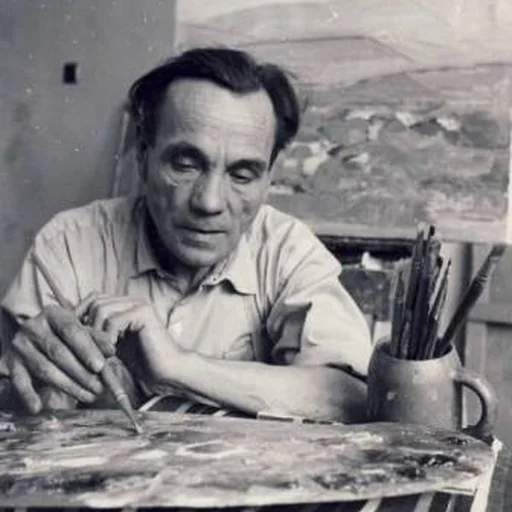
Artist
Alexandru Ciucurencu (Romanian pronunciation: ; 27 September 1903 – 27 December 1977) was a Romanian Post-Impressionist painter, and a corresponding member of the Romanian Academy.