Artwork
Natură statică cu flori
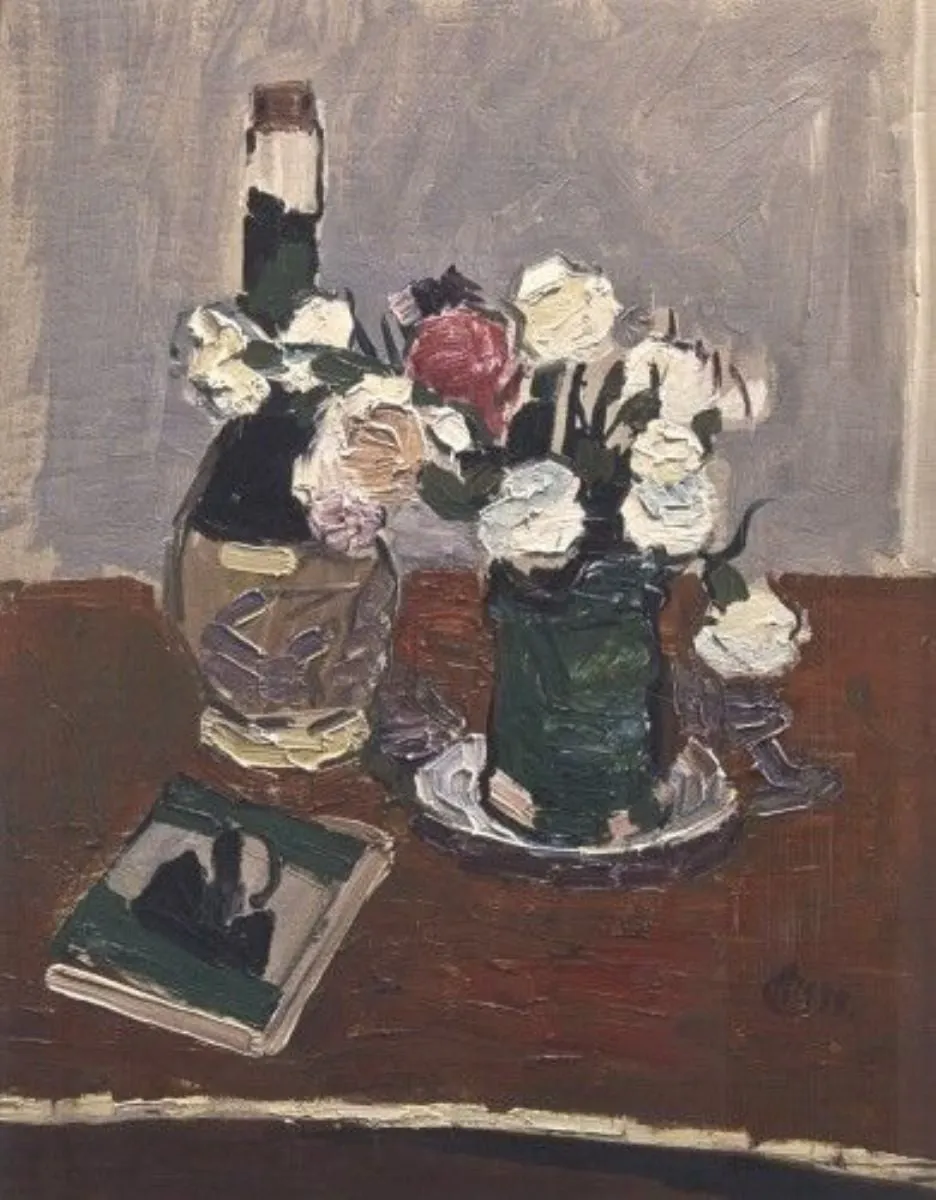
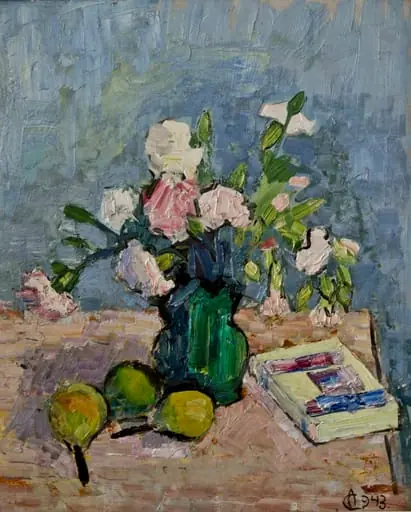
Natură statică cu flori is an unspecified painting by Alexandru Ciucurencu. It dates from 1944 and is held in the collection of the National Museum of Art of Romania.
About this work
Overview
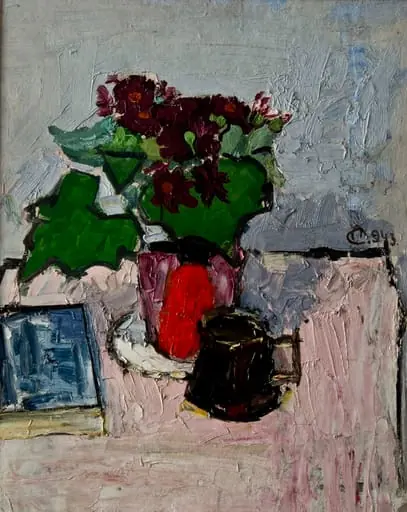
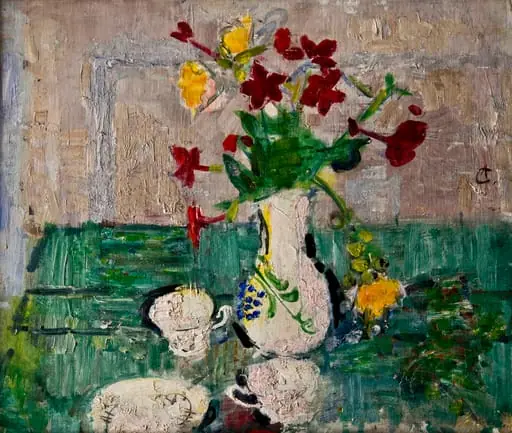
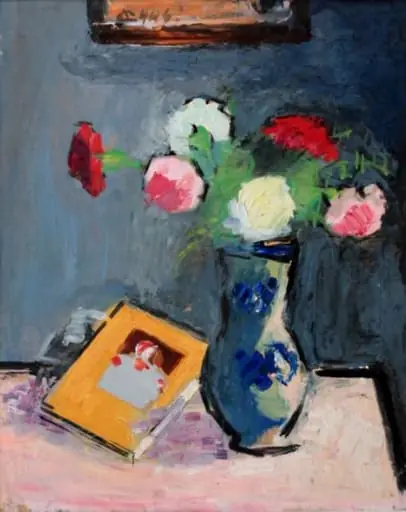
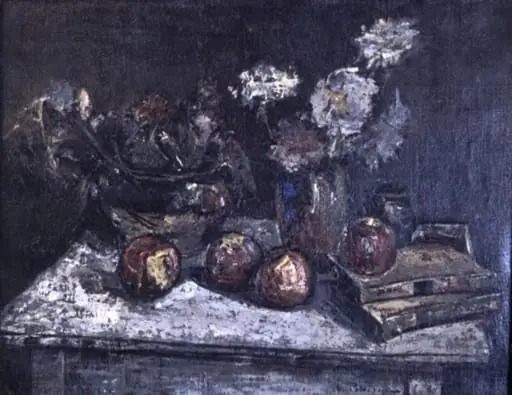
Alexandru Ciucurencu’s 1944 composition titled *Natură statică cu flori* presents a modest still‑life arranged on a plain tabletop.
Alexandru Ciucurencu’s 1944 composition titled *Natură statică cu flori* presents a modest still‑life arranged on a plain tabletop. Two contrasting vases dominate the scene: a slender, dark vessel holding a few white blossoms, and a broader, green‑tinged jar brimming with a mix of white and pink flowers. Adjacent to the floral display lies a closed book, while the background remains an unadorned light wash.
Subject & Meaning
The work juxtaposes the fleeting beauty of blossoms with the quiet permanence of a bound volume, suggesting a dialogue between nature’s transience and human knowledge. The restrained palette and simple objects focus attention on the tactile qualities of the flowers and the subtle interplay of light, inviting contemplation of everyday elegance without overt symbolism.
Technique & Style
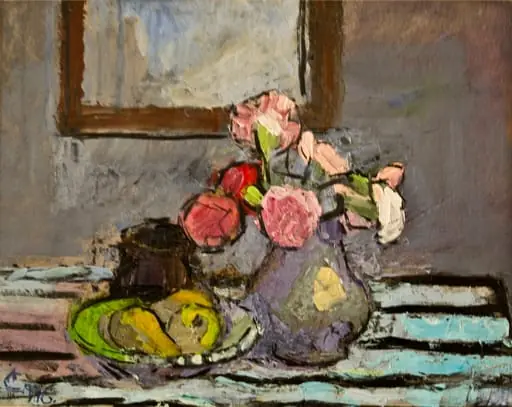
Ciucurencu employs a pronounced impasto, applying paint in thick, textured strokes that render the petals and vase surfaces palpable. Visible brushwork creates a tactile surface, while the illumination from the left casts soft shadows on the right, enhancing depth. The overall handling reflects a synthesis of realism and expressive surface treatment characteristic of mid‑century Romanian painting.
History & Provenance
Created in the final year of World War II, the piece emerged during a period of limited artistic resources in Romania. It entered the artist’s personal collection before being acquired by a regional museum in the 1960s, where it has remained on display as part of the institution’s representation of interwar and postwar still‑life practice.
Artist & collection
Artist
Alexandru Ciucurencu painted scenes from everyday life and the human body in the mid-20th century.