Artwork
In Shining Armour
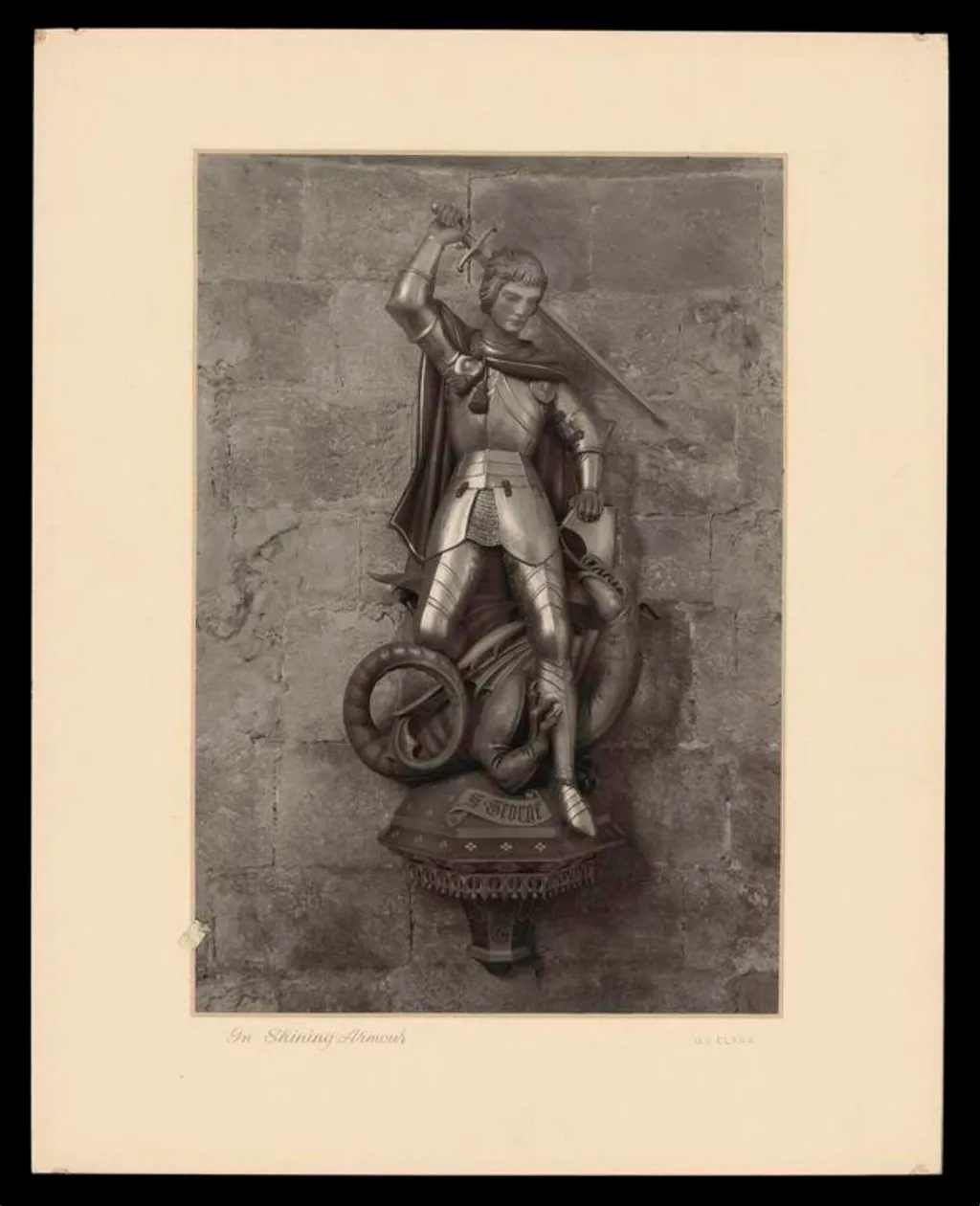
In Shining Armour is a photographic photography by G. V. Clark. It dates from 1964 and is held in the collection of the Victoria and Albert Museum. A black-and-white photograph from 1964 captures a sculpted figure of Saint George in full armor, mounted on a wall.
About this work
Overview
The composition is formal, emphasizing the sculpture’s solidity and the contrast between light and shadow across its surfaces.
A black-and-white photograph from 1964 captures a sculpted figure of Saint George in full armor, mounted on a wall. The image presents the knight in a static, heroic pose, sword raised and shield held firm, standing atop a circular base. The photograph’s title, *In Shining Armour*, reflects its focus on the visual weight and texture of the armor. The composition is formal, emphasizing the sculpture’s solidity and the contrast between light and shadow across its surfaces.
Subject & Meaning
The figure depicts Saint George, the legendary Christian martyr and dragon-slayer, frozen mid-action as if poised to strike. The dragon, though partially obscured, lies beneath his feet, symbolizing the triumph of good over evil. The shield bearing a lion reinforces themes of courage and divine authority. The image does not depict the moment of victory but the readiness for battle, suggesting vigilance and moral resolve rather than completed action.
Technique & Style
The photograph employs high-contrast tonal ranges to emphasize the sculptural form, enhancing the depth of the armor’s ridges and the folds of the cape. The lighting is directional, casting strong shadows that define the contours of the figure, evoking chiaroscuro effects common in Renaissance painting. The black-and-white medium strips away color, focusing attention on texture, volume, and the interplay of light and mass.
History & Provenance
Created in the early 1960s, the photograph documents a specific sculptural work, likely commissioned for a public or religious setting. Its exact origin remains undocumented, but the style suggests mid-century British or European craftsmanship. The photograph itself appears to have been made for archival or exhibition purposes, preserving the sculpture’s appearance before potential deterioration or relocation.
Context
In the 1960s, traditional religious iconography was being re-examined in both art and public spaces, often through modern photographic documentation. This image reflects a broader interest in preserving historical motifs amid shifting cultural values. The choice to photograph rather than sculpt suggests a deliberate engagement with reproduction, memory, and the endurance of symbolic forms in a rapidly changing world.
Legacy
The photograph serves as a record of a now possibly lost or altered sculpture, offering insight into mid-century approaches to sacred imagery. Its formal composition and emphasis on texture influenced later documentary practices in art conservation. While not widely exhibited, it remains a quiet example of how photography can extend the life of three-dimensional works beyond their physical presence.
Artist & collection
Artist
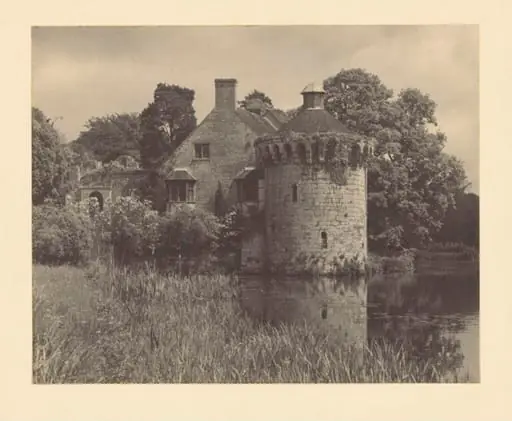
G. V. Clark made black-and-white photographs in the early 1960s that mix sharp detail with quiet mood. Look at *Weepers, Warwick*—a row of stone figures on a tomb, lit by a single window—and *Scotney Castle*, where ivy…

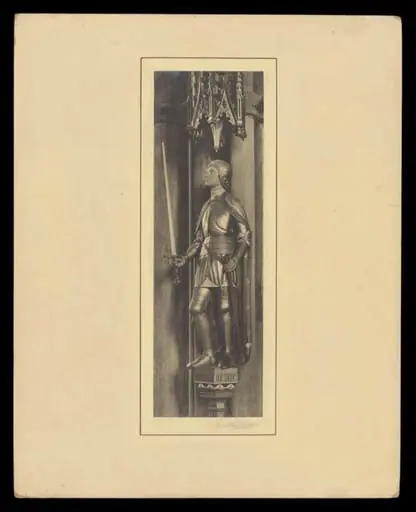 'Statue of Joan or Arc, Winchester'
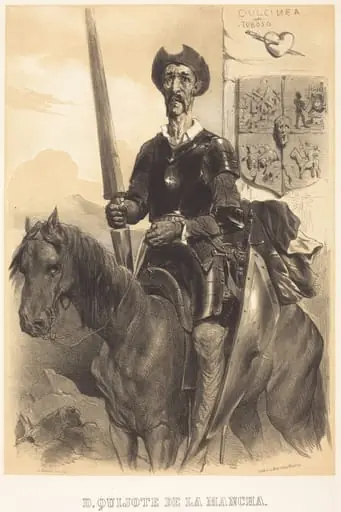 Don Quixote de la Mancha
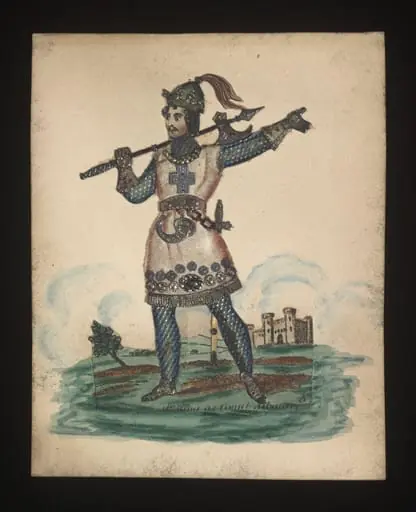 Count Albaun tinsel print
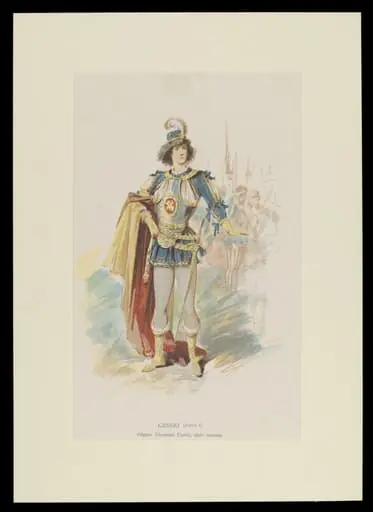 H Beard Print Collection
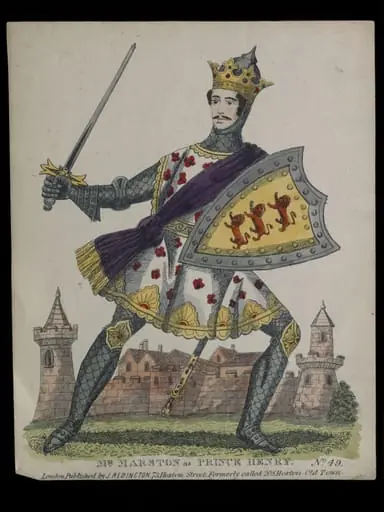 Harry Beard Print Collection
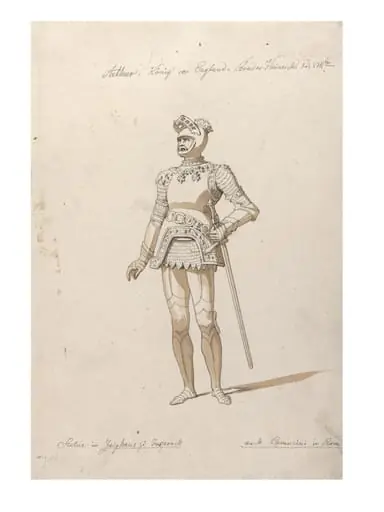 Anonymous drawing of the statue of King Arthur in the Hofkirche, Innsbruck.
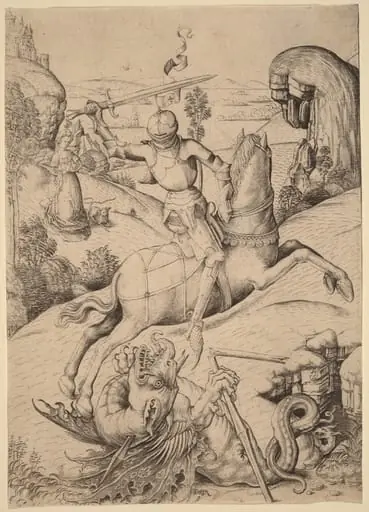 Saint George and the Dragon
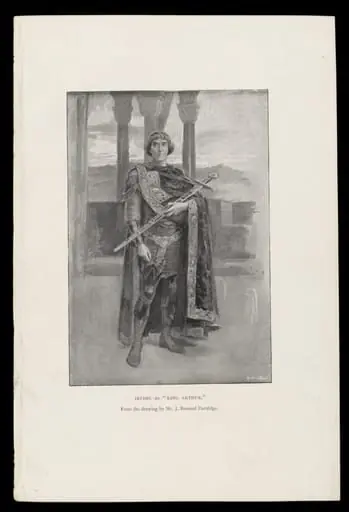 H Beard Print Collection
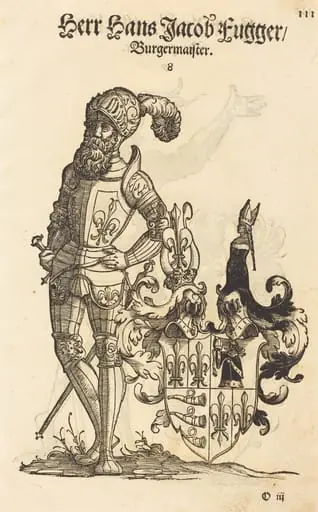 Page from Geschlechter Buch - Ausberg
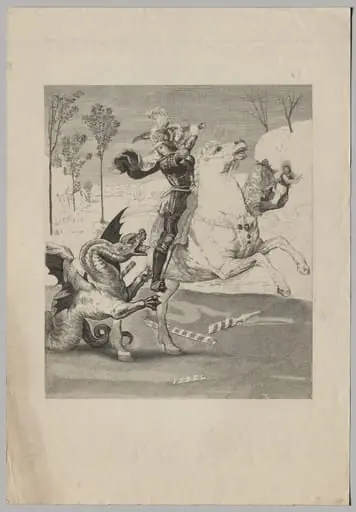 St. George and the Dragon (3)
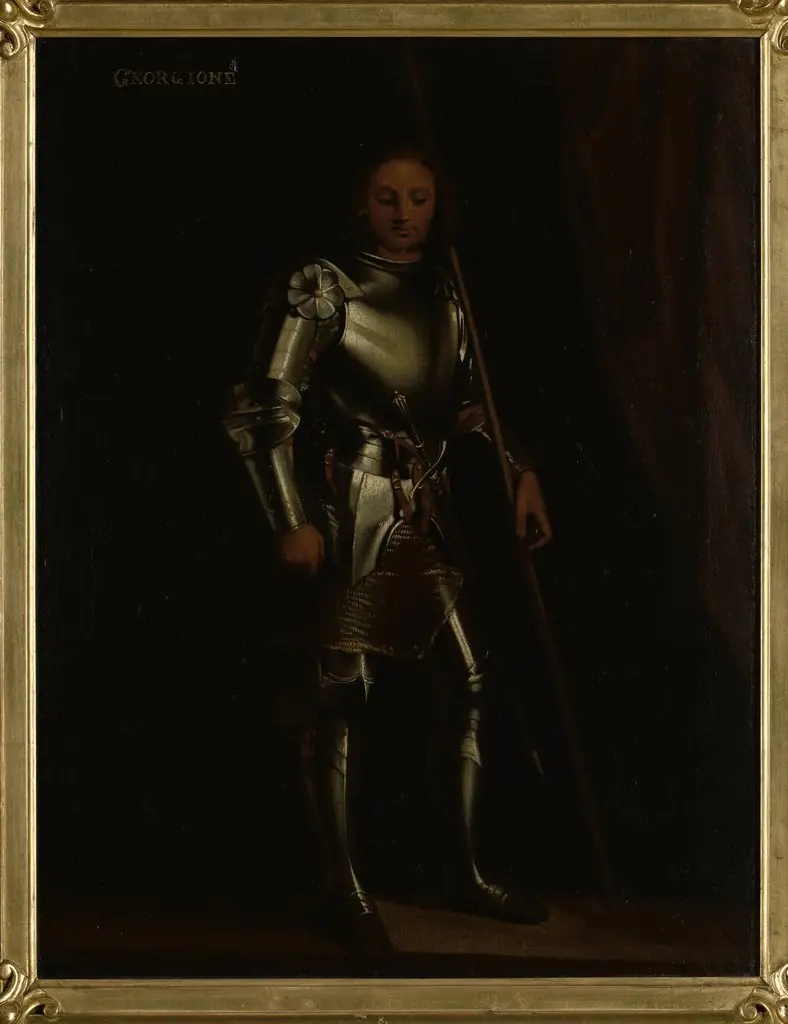 Knight in Armour – Saint George (?)