Artwork
Panel Lincoln
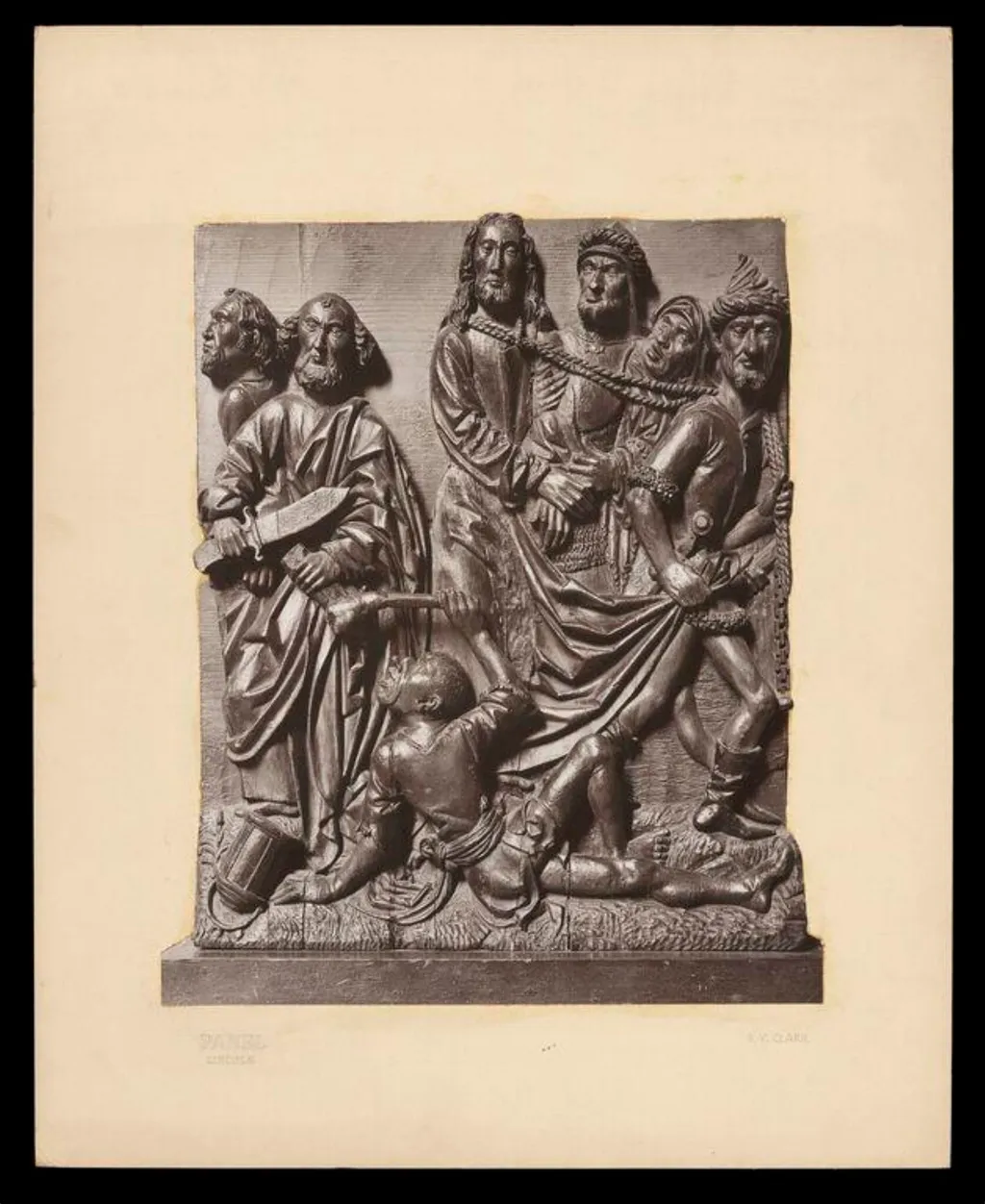
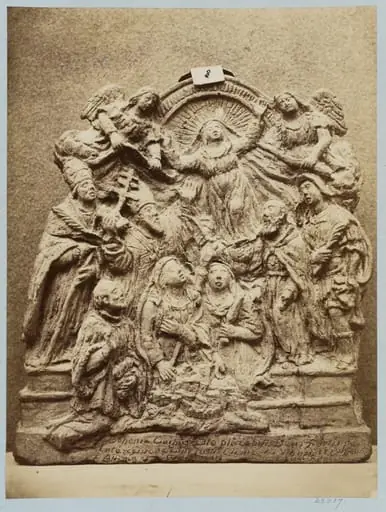
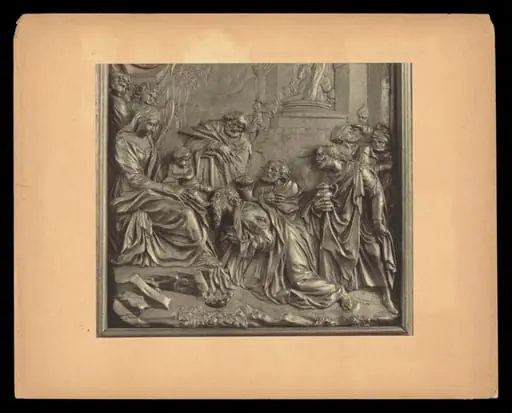
Panel Lincoln is a photographic photography by G. V. Clark. It dates from 1964 and is held in the collection of the Victoria and Albert Museum. A mounted black-and-white photograph records a carved wooden relief panel, capturing its full frontal composition.
About this work
Overview
A mounted black-and-white photograph records a carved wooden relief panel, capturing its full frontal composition. The image emphasizes high contrast and deep carving, translating the sculptural texture into tonal gradations. The photograph preserves the intricate details of the original work, including the play of light across raised surfaces and the emotional intensity of the figures depicted.
Subject & Meaning
The relief portrays six figures gathered around a central man who wears a rope around his neck. Others, dressed in robes and crowns, surround him in postures of anguish or submission. A small child clings to his leg, intensifying the scene’s emotional gravity. The calm expression of the central figure contrasts with the tension in the others, suggesting a moment of solemn sacrifice or judgment.
Technique & Style
The carving employs deep undercutting to create pronounced shadows and a strong sense of volume. Fabric folds and facial expressions are rendered with precision, enhancing the narrative weight. The composition relies on chiaroscuro effects, where stark contrasts between light and dark areas heighten drama and direct the viewer’s focus toward the central figure.
History & Provenance
The original panel’s origin and maker are undocumented. The photograph, likely taken in the 19th or early 20th century, serves as the sole surviving record of the work. Its mounting and preservation suggest it was collected or studied by an institution or private scholar interested in religious or historical sculpture.
Context
The scene resembles iconographic traditions of martyrdom or divine judgment, common in medieval and early modern religious art. The presence of crowns and robes implies royal or sacred figures, while the child adds a layer of familial sorrow. Such imagery often served devotional or didactic purposes, though the specific cultural or geographic source remains uncertain.
Legacy
As the only known record of the relief, the photograph preserves a lost artifact of uncertain provenance. It offers insight into regional carving practices and the visual language of suffering and authority in pre-modern sculpture. Scholars reference it as a rare example of narrative relief with psychological depth, though its original context is irrecoverable.
Artist & collection
Artist
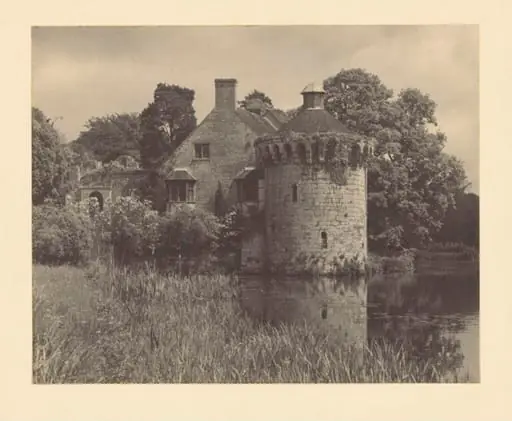
G. V. Clark made black-and-white photographs in the early 1960s that mix sharp detail with quiet mood. Look at *Weepers, Warwick*—a row of stone figures on a tomb, lit by a single window—and *Scotney Castle*, where ivy…

 Fifth Series
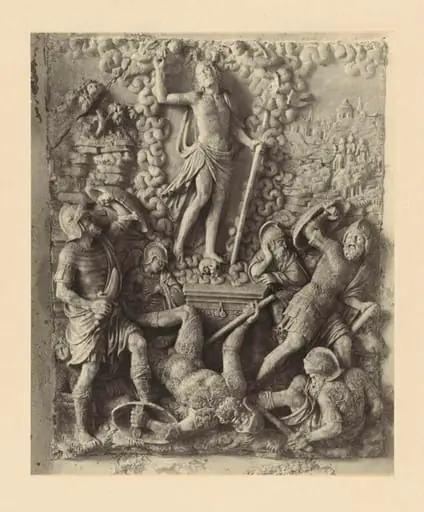 Alabaster Tablet, Plymtree
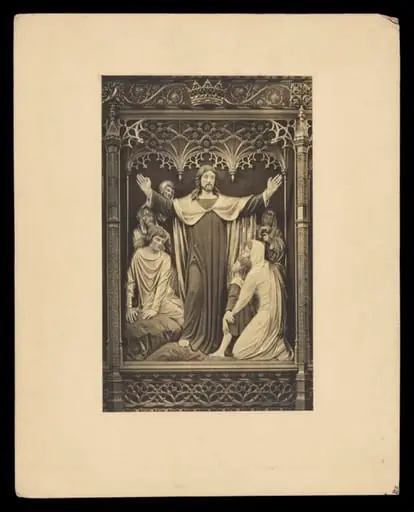 Altar Panel - Southwold Church
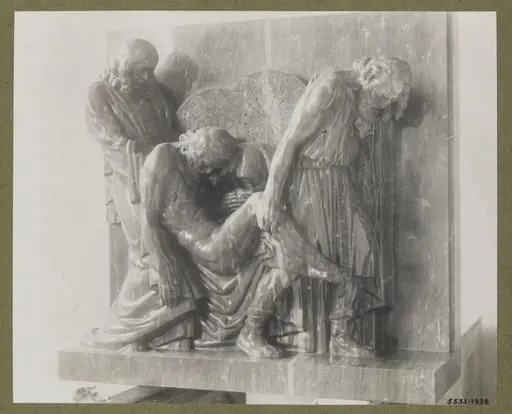 Untitled
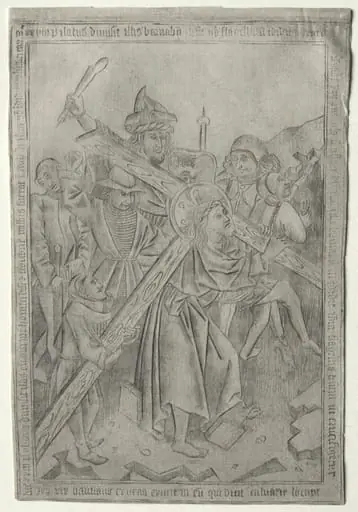 The Passion: The Cross Bearing
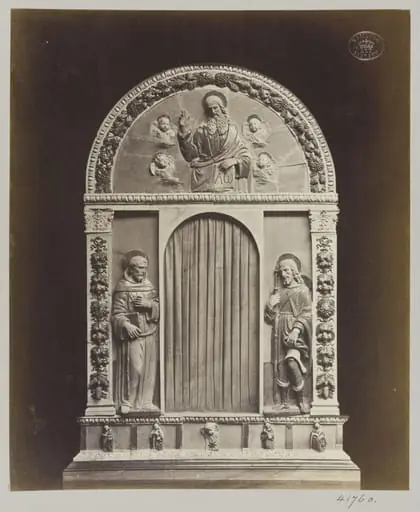 Enamelled earthenware altar piece of Christ and Saint Francis and St. Rock
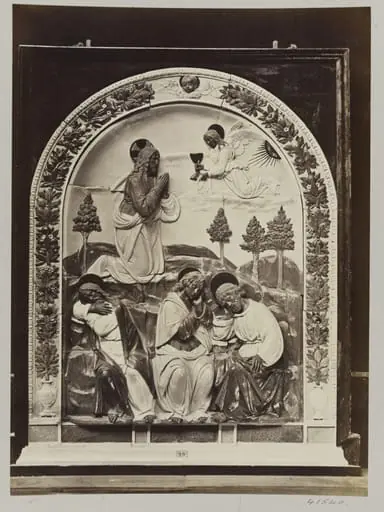 Altar piece depicting Christ in the Garden of Olives in enamelled earthenware
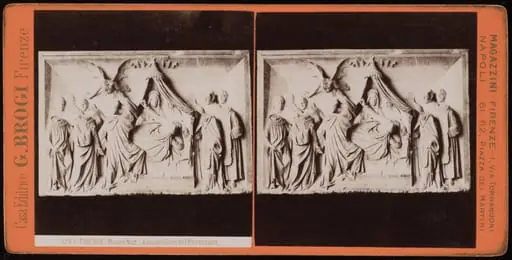 Bassorilievo del Rovezzano
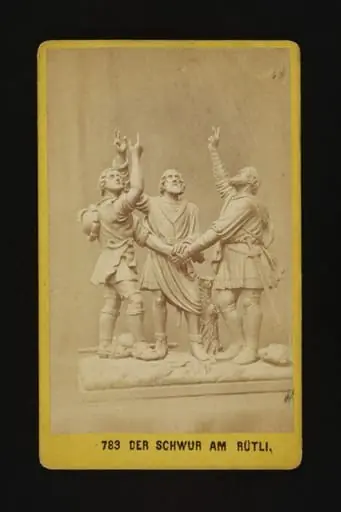 A photograph of 'der schwur am rutli' statue
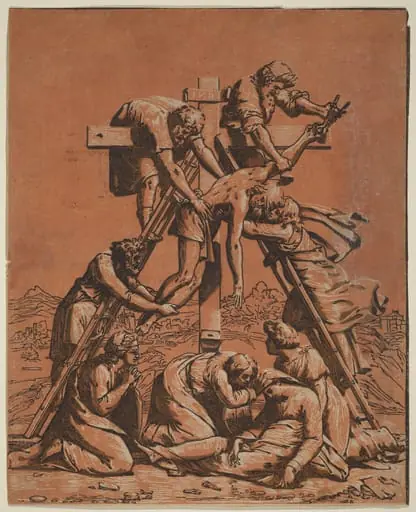 The Descent from the Cross
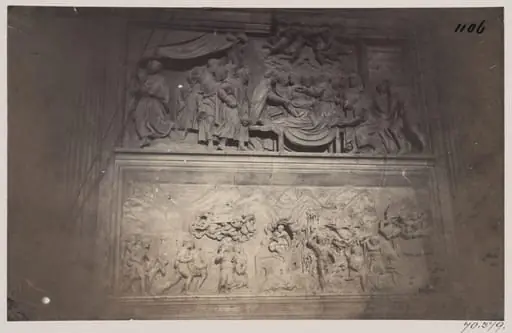 Out of Rome - House of the Blessed Virgin at Loreto. Sculpture of the Santissima Casa carried by Angels, A.D. 1520
 Pulpit Panel, Wragby Church