Artwork
Seascape
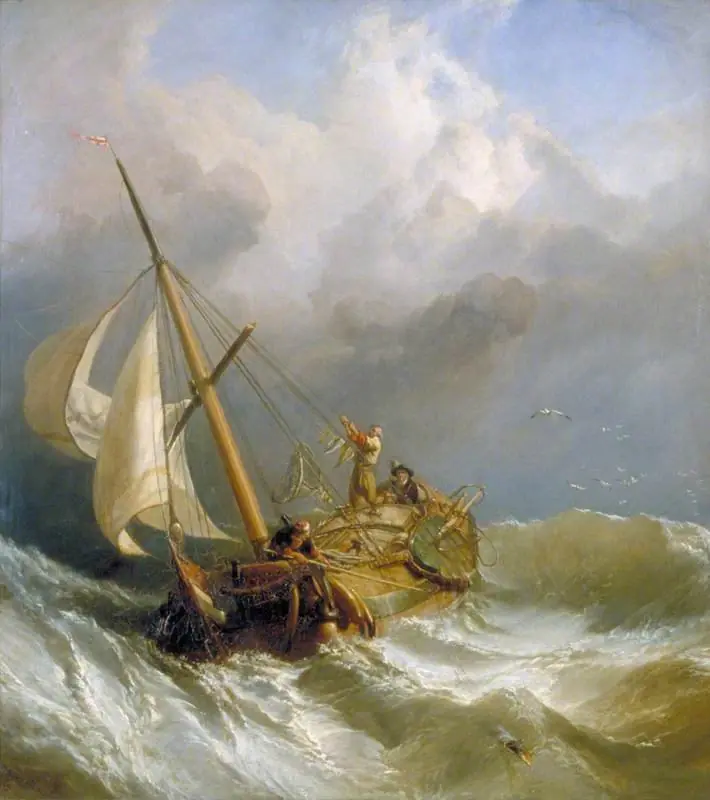
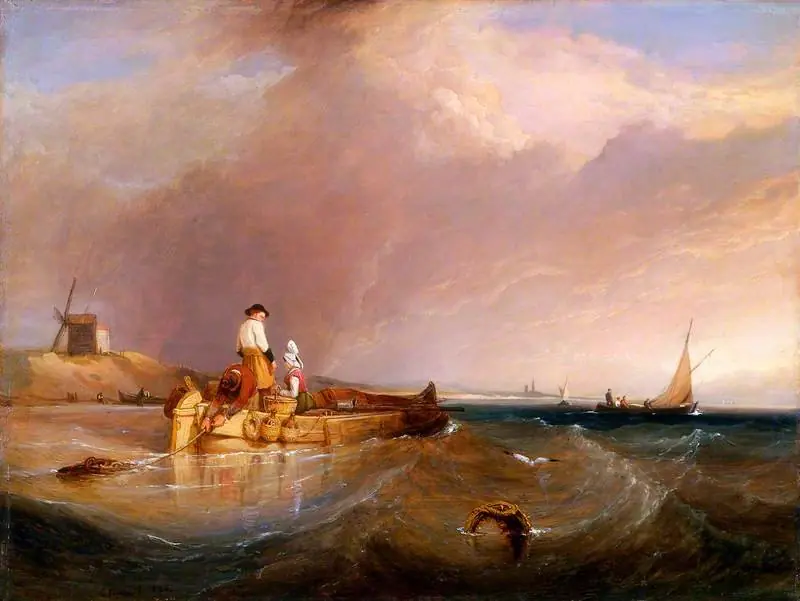
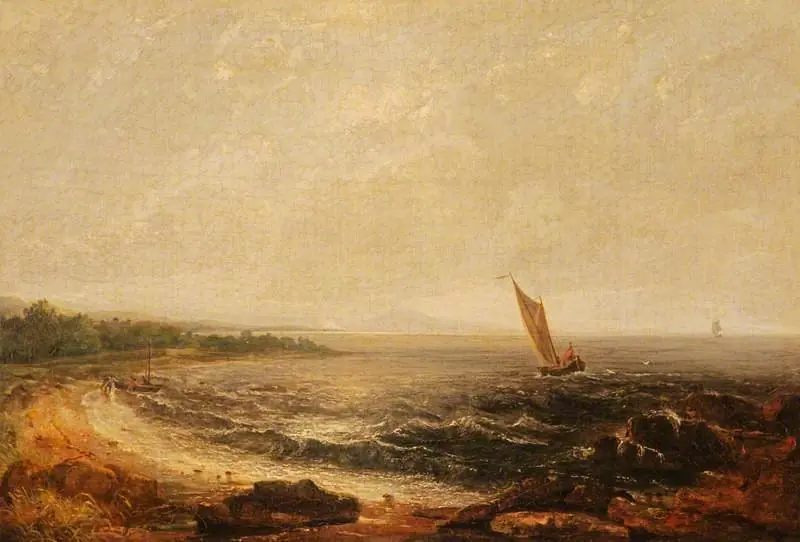
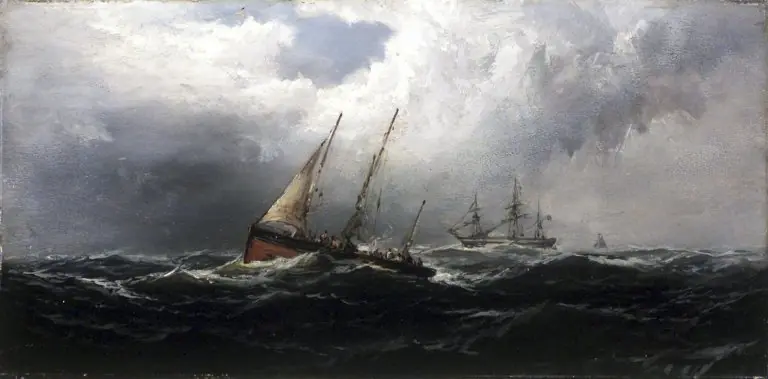
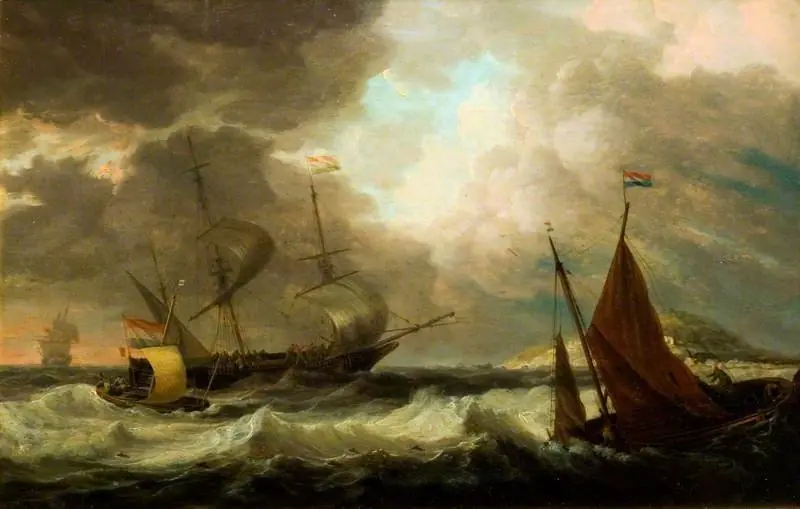
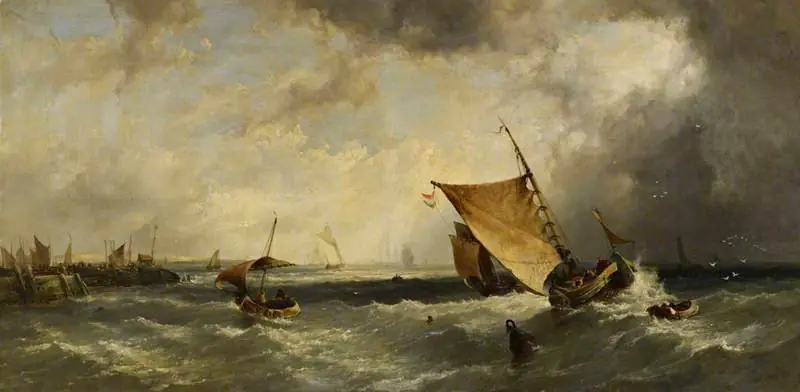
Seascape is an oil painting by Clarkson Frederick Stanfield. It dates from 1826 and is held in the collection of the Victoria and Albert Museum.
About this work
Overview
It is now part of the Victoria and Albert Museum’s collection, where it represents his contribution to 19th-century British marine painting.
Clarkson Frederick Stanfield painted *Seascape* in 1826 in oil on canvas, marking an early stage in his transition from theatrical scenery to independent marine painting. The work reflects his firsthand experience at sea, having served as a sailor before turning to art. It is now part of the Victoria and Albert Museum’s collection, where it represents his contribution to 19th-century British marine painting.
Subject & Meaning
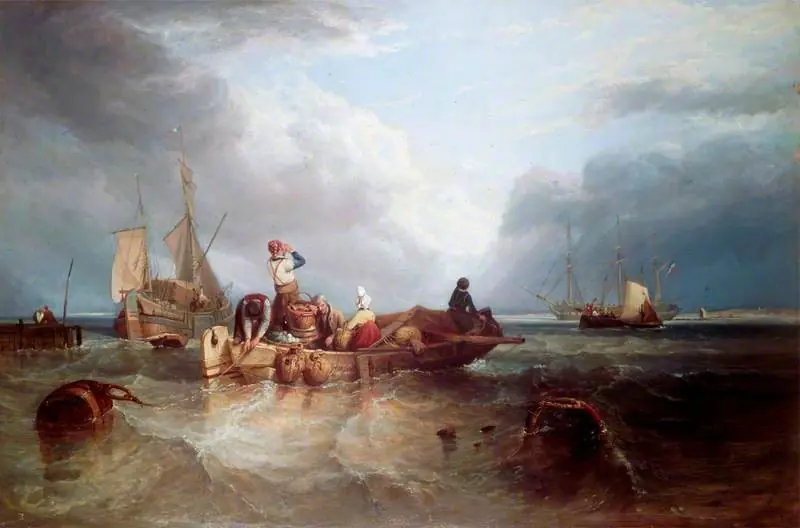
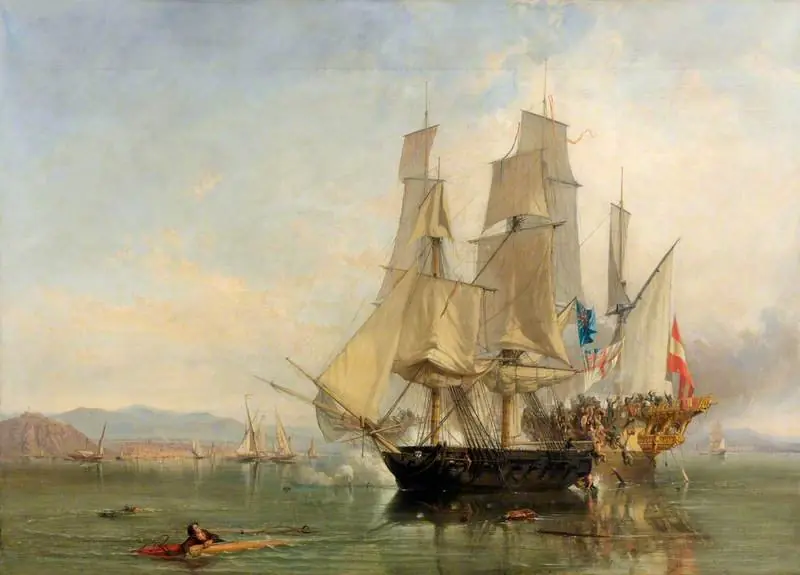
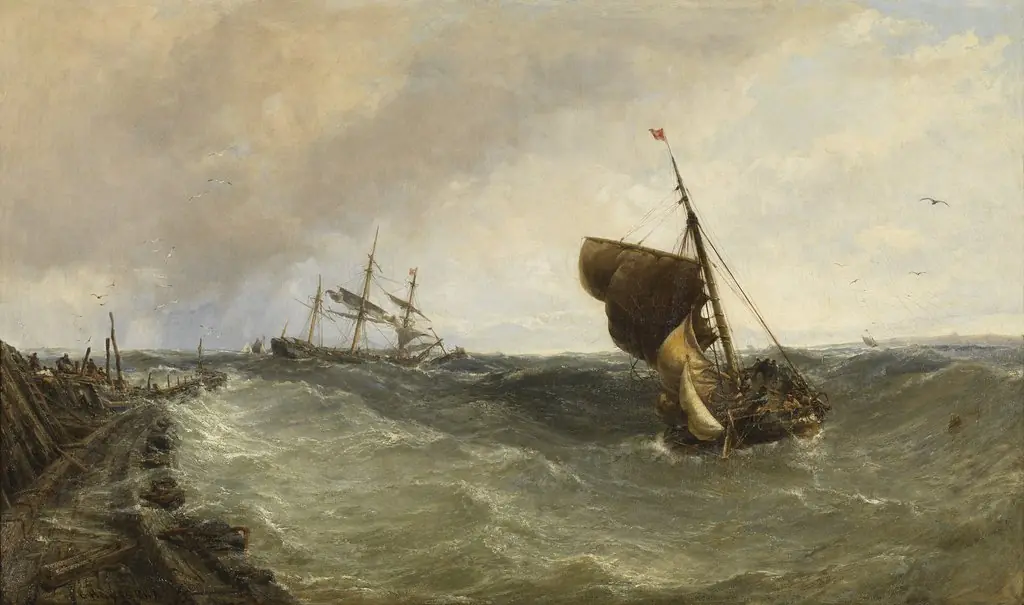
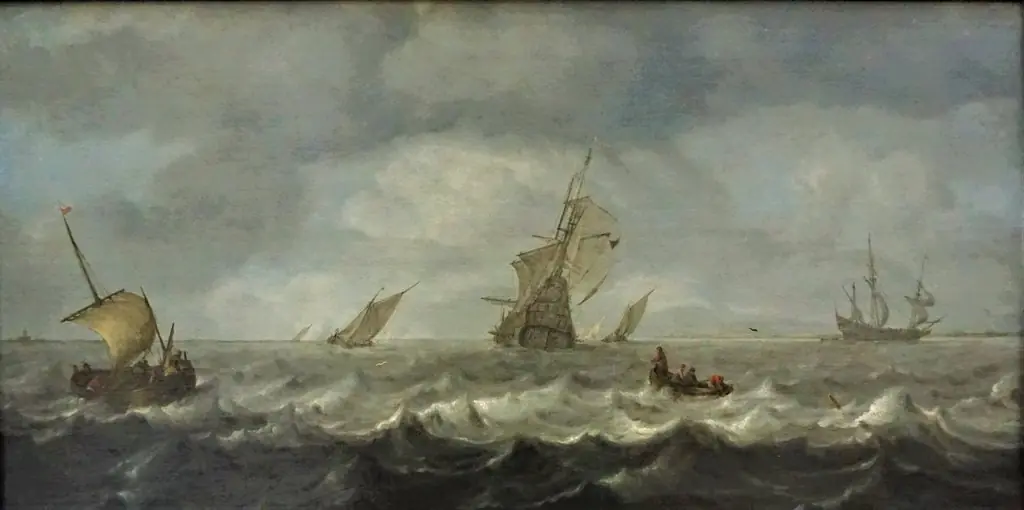
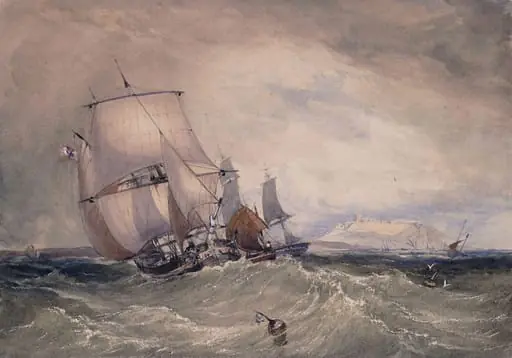
The painting presents a calm yet dynamic ocean scene dominated by a large vessel centered in the composition, with smaller ships fading into the distance. A tiny boat struggles in the foreground waves, its occupants barely visible, suggesting human vulnerability against nature’s scale. The interplay of light and cloud suggests a moment of transition—perhaps dawn or dusk—evoking quiet contemplation rather than drama.
Technique & Style
Stanfield employed bold, textured brushwork to convey the movement of water and the weight of clouds. His use of warm, diffused light filtering through overcast skies creates atmospheric depth, guiding the viewer’s gaze from the turbulent foreground to the distant horizon. The palette is restrained yet nuanced, with muted blues and ochres enhancing the sense of realism and spatial immersion.
History & Provenance
Painted shortly after Stanfield left his position as a scenic designer at the Theatre Royal, Drury Lane, *Seascape* reflects his shift toward serious landscape painting. The work entered the Victoria and Albert Museum’s collection in the 19th century, likely through acquisition or donation, and has remained in public ownership since, serving as a reference for British maritime art of the period.
Context
In the 1820s, British art saw a growing interest in naturalistic seascapes, influenced by Romantic ideals and naval prominence. Stanfield’s background in theater informed his compositional clarity and dramatic lighting, aligning his work with contemporaries like J.M.W. Turner while maintaining a more grounded, observational approach to maritime life.
Legacy
Though less celebrated than some of his peers, Stanfield’s *Seascape* exemplifies the quiet precision of his marine vision. His ability to merge personal experience with technical skill helped shape a distinct British tradition in seascapes, influencing later artists who sought to depict the sea not as sublime spectacle, but as lived environment.
Artist & collection
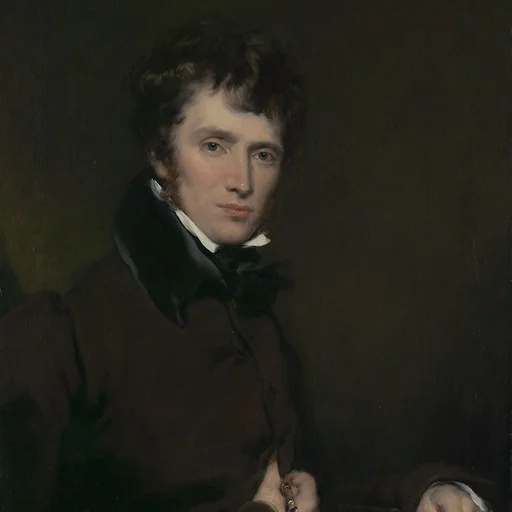
Artist
Clarkson Frederick Stanfield (3 December 1793 – 18 May 1867) was an English artist best known for his large-scale paintings of marine art and landscapes.