Artwork
The Action and Capture of the Spanish Xebec Frigate 'El Gamo'
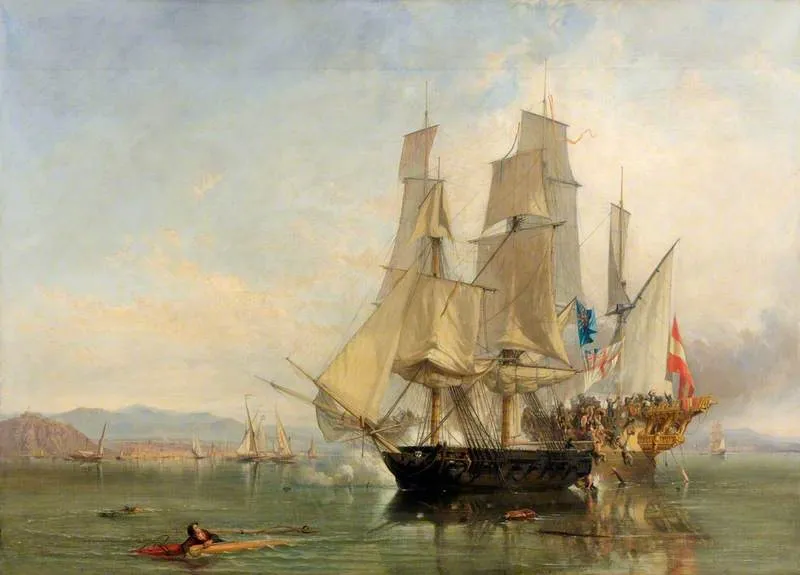
The Action and Capture of the Spanish Xebec Frigate 'El Gamo' is an oil painting by Clarkson Frederick Stanfield. It dates from 1845 and is held in the collection of the Victoria and Albert Museum.
About this work
Overview
Painted in 1845 by Clarkson Frederick Stanfield, this oil on canvas depicts a naval engagement between British and Spanish vessels during the Napoleonic Wars.
Painted in 1845 by Clarkson Frederick Stanfield, this oil on canvas depicts a naval engagement between British and Spanish vessels during the Napoleonic Wars. Stanfield, who began as a theater scenic designer, transitioned to marine painting with a focus on historical sea battles. The work is part of a broader 19th-century British tradition of documenting naval heroism through large-scale, emotionally charged compositions.
Subject & Meaning
The scene illustrates the 1801 capture of the Spanish xebec frigate El Gamo by HMS Speedy, commanded by Thomas Cochrane. Stanfield emphasizes the intensity of close-quarters combat, with tangled sails, scattered debris, and a solitary figure floating in the foreground suggesting the human cost of battle. The painting does not glorify victory but conveys the disorder and violence inherent in naval warfare.
Technique & Style
Stanfield employed chiaroscuro to heighten dramatic contrast between light and shadow, guiding the viewer’s eye through the chaos of the battle. Brushwork is vigorous yet controlled, with layered glazes rendering the sea’s movement and the ships’ weathered wood. The composition is diagonally dynamic, using tilted masts and swirling figures to amplify tension, a hallmark of Romantic marine painting.
History & Provenance
Commissioned during the height of British naval nostalgia, the painting was exhibited at the Royal Academy in 1845. It entered a private collection shortly after and remained largely unseen in public until its acquisition by a major British museum in the late 20th century. Its provenance reflects the enduring interest in naval history among Victorian collectors.
Context
Stanfield’s work emerged amid a surge of public fascination with Britain’s naval past, fueled by memoirs, biographies, and patriotic sentiment. His background in theater influenced his staging of action, aligning his paintings with popular visual narratives of heroism. Unlike earlier naval art, his scenes often included unheroic details—fallen sailors, wreckage—to ground drama in realism.
Legacy
Though less celebrated today than contemporaries like J.M.W. Turner, Stanfield’s detailed, emotionally resonant seascapes contributed to the evolution of British marine painting. His integration of historical accuracy with theatrical composition influenced later artists documenting conflict. The painting remains a reference for understanding how 19th-century Britain visualized its naval legacy.
Artist & collection
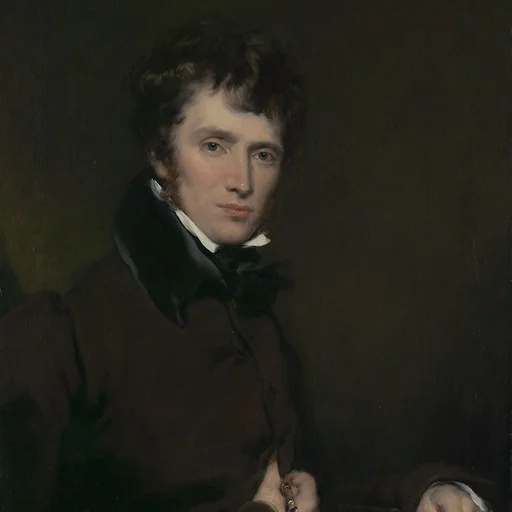
Artist
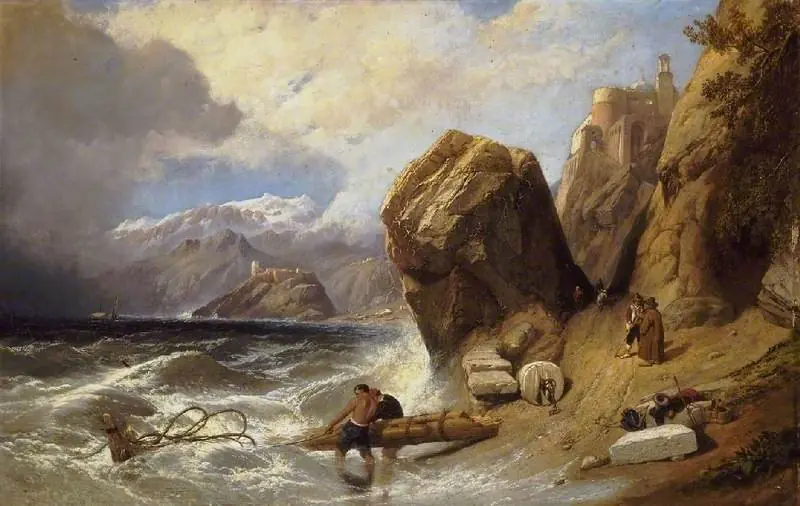
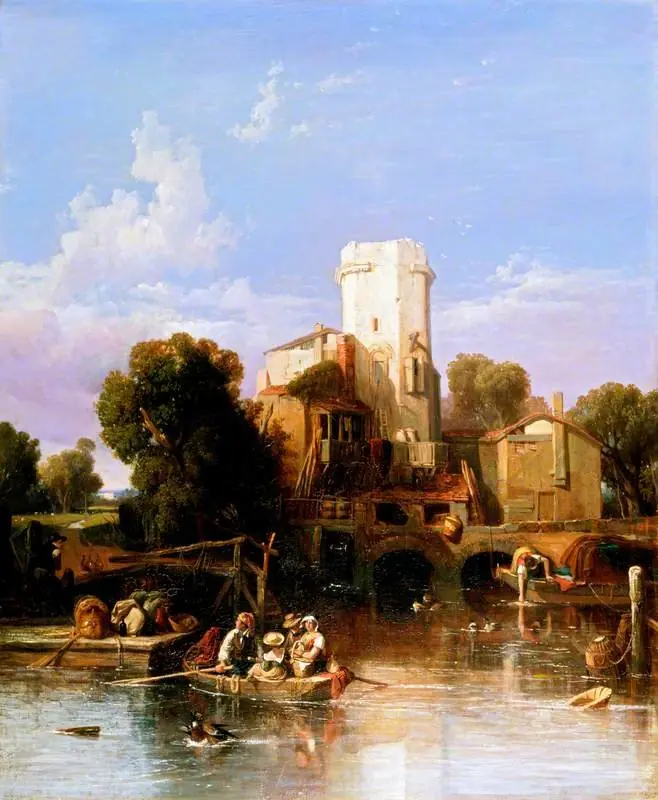
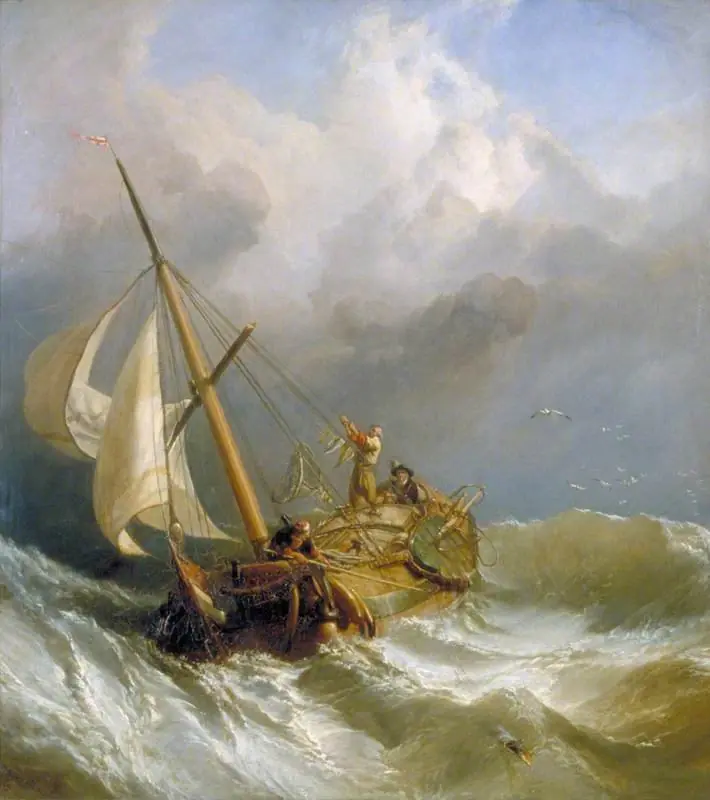
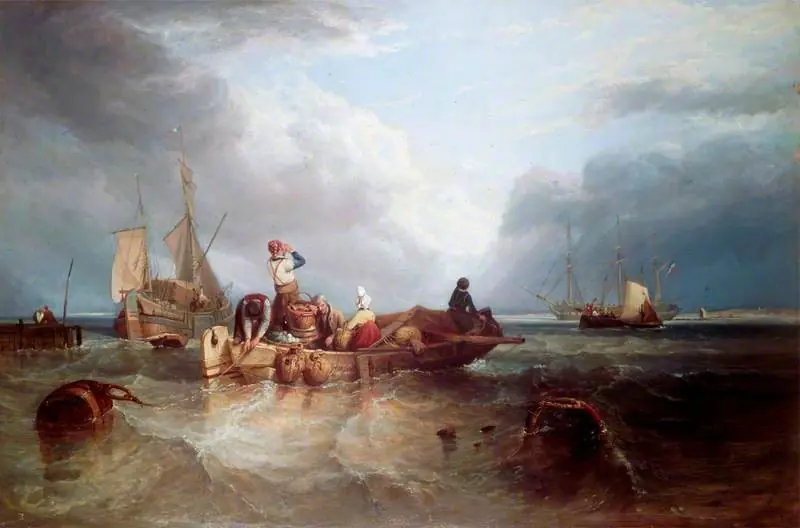
Clarkson Frederick Stanfield (3 December 1793 – 18 May 1867) was an English artist best known for his large-scale paintings of marine art and landscapes.

 Sea Piece: English Frigates at Anchor in a Calm, Saluting
 Bonaparte arriving in France back from Egypt on 9 October 1799
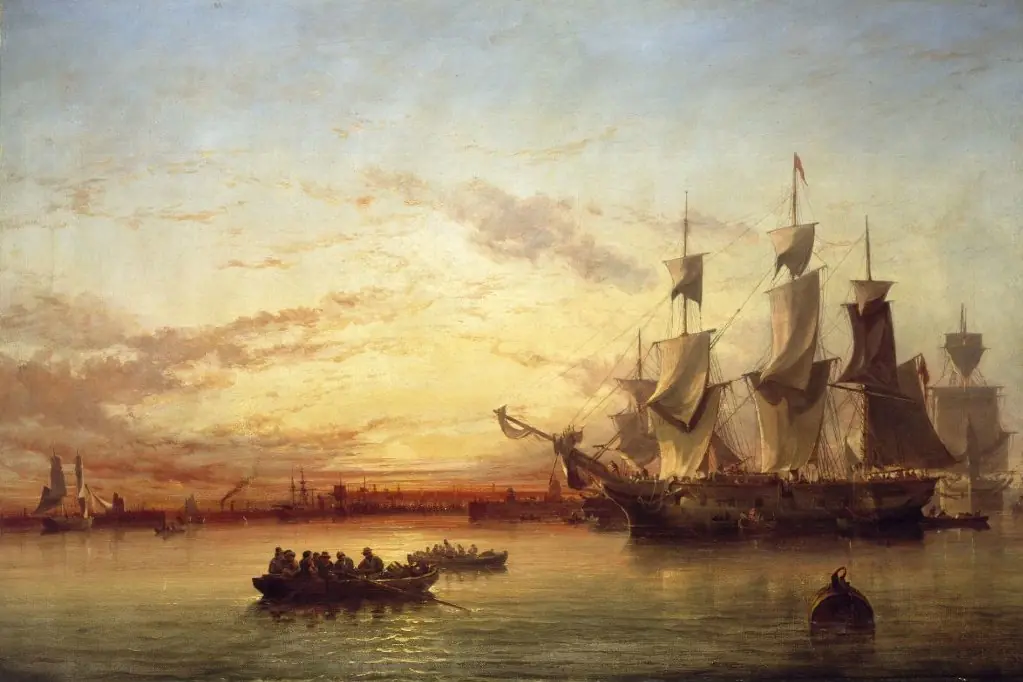 An Emigrant Ship, Dublin Bay, Sunset
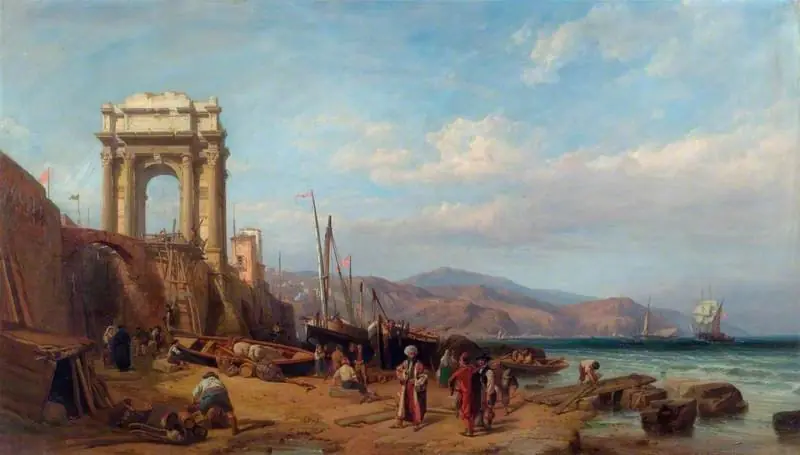
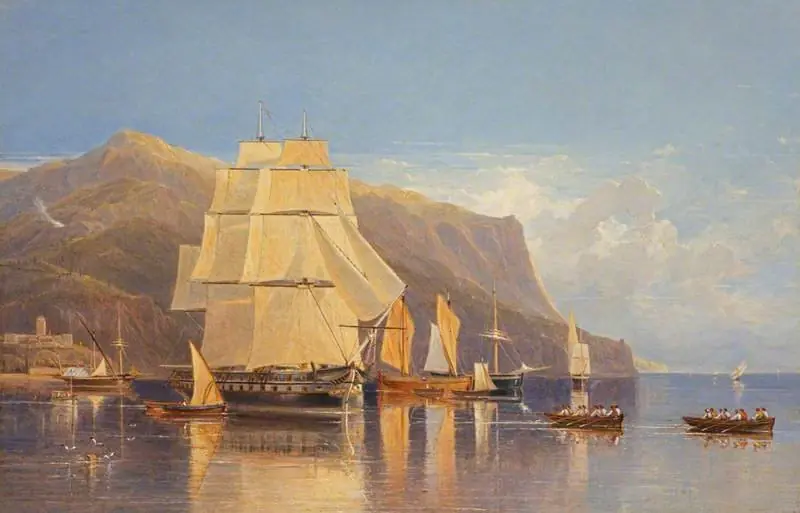 Off Porto Fino
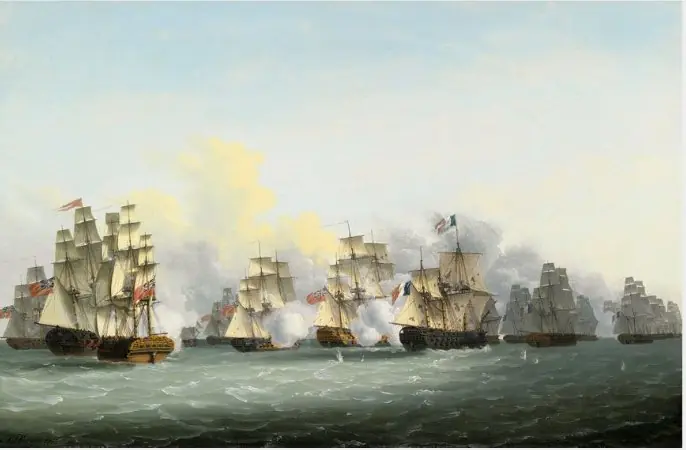 'The Robust' Engaging 'The Hoche' off Tory Island, 12th October 1798
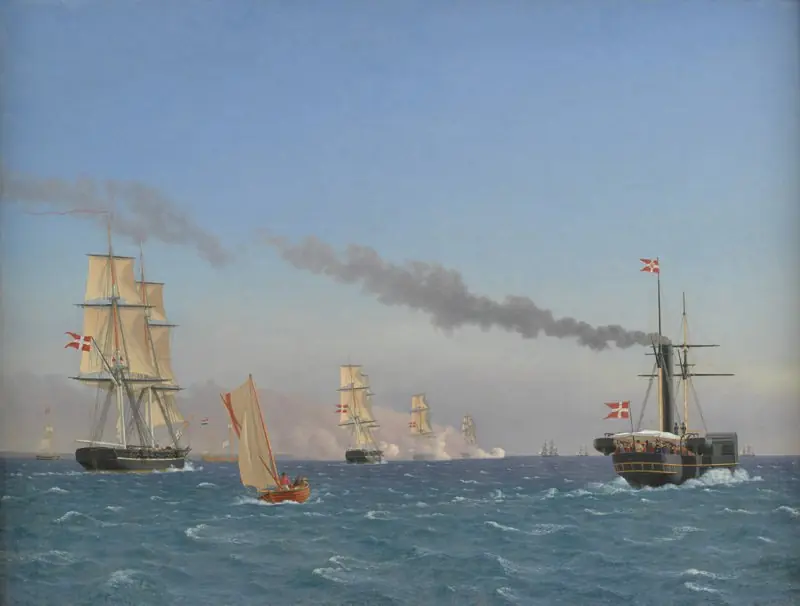 Christian VIII Aboard his Steamship "Ægir" Watching the Manoeuvres of a Squadron near Copenhagen
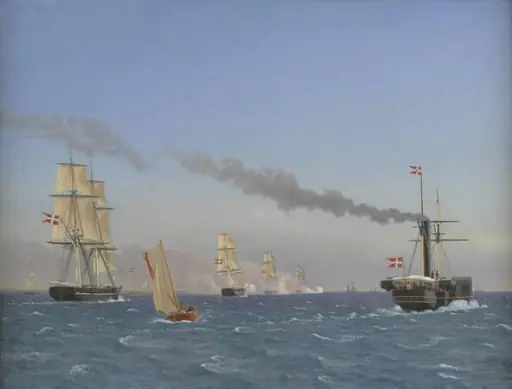 Christian VIII Aboard his Steamship "Ægir" Watching the Manoeuvres of a Squadron near Copenhagen
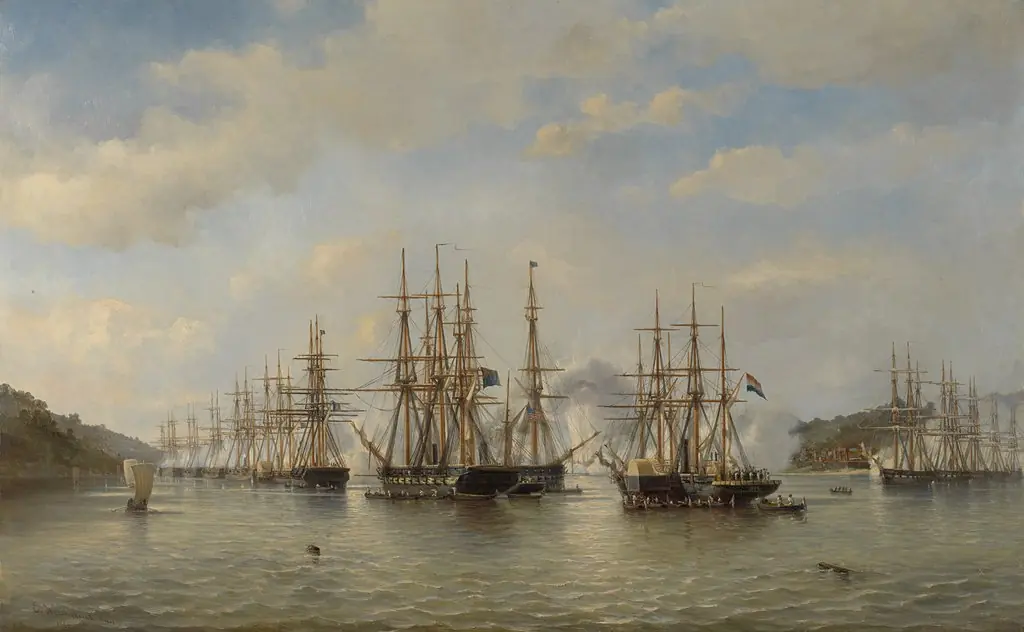 Dutch, English, French and American Squadrons in Japanese Waters during the Expedition under the Command of the French Captain Constant Jaurès, September 1864
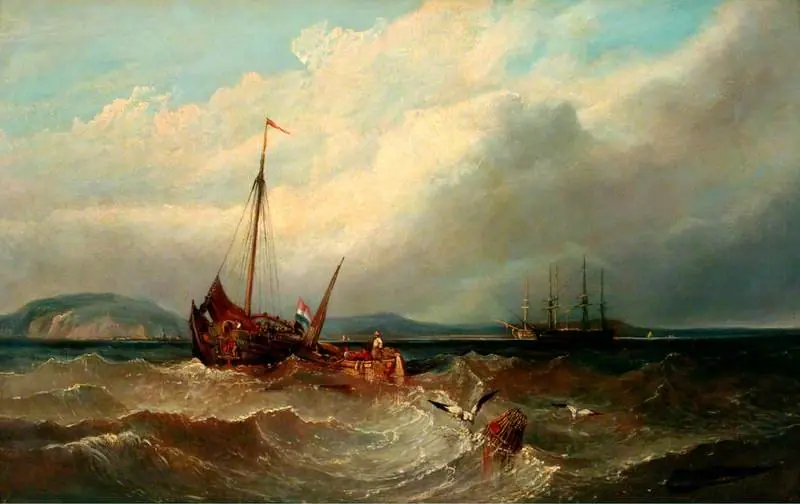
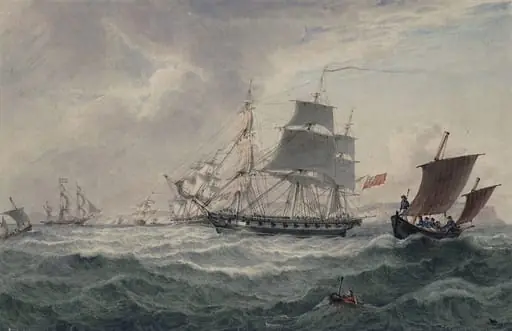 In the English Channel
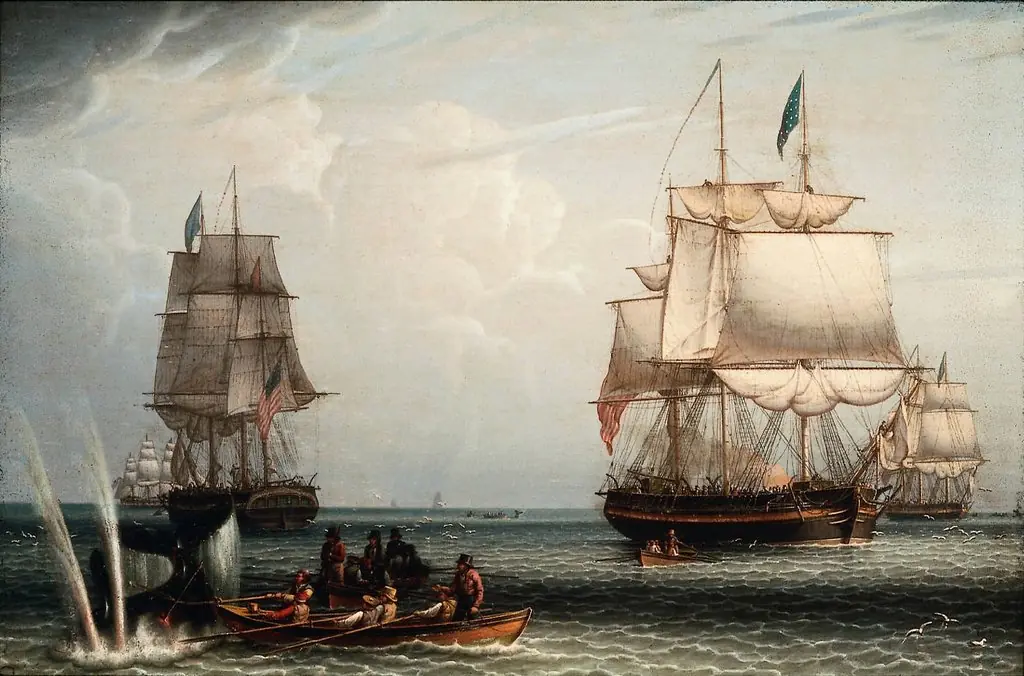 South Sea Whale Fishing II
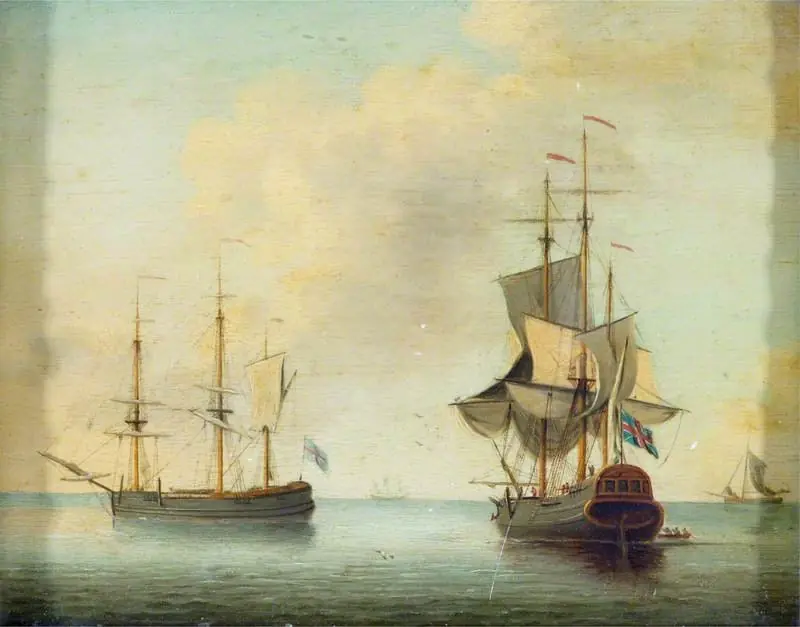 Shipping in a Calm
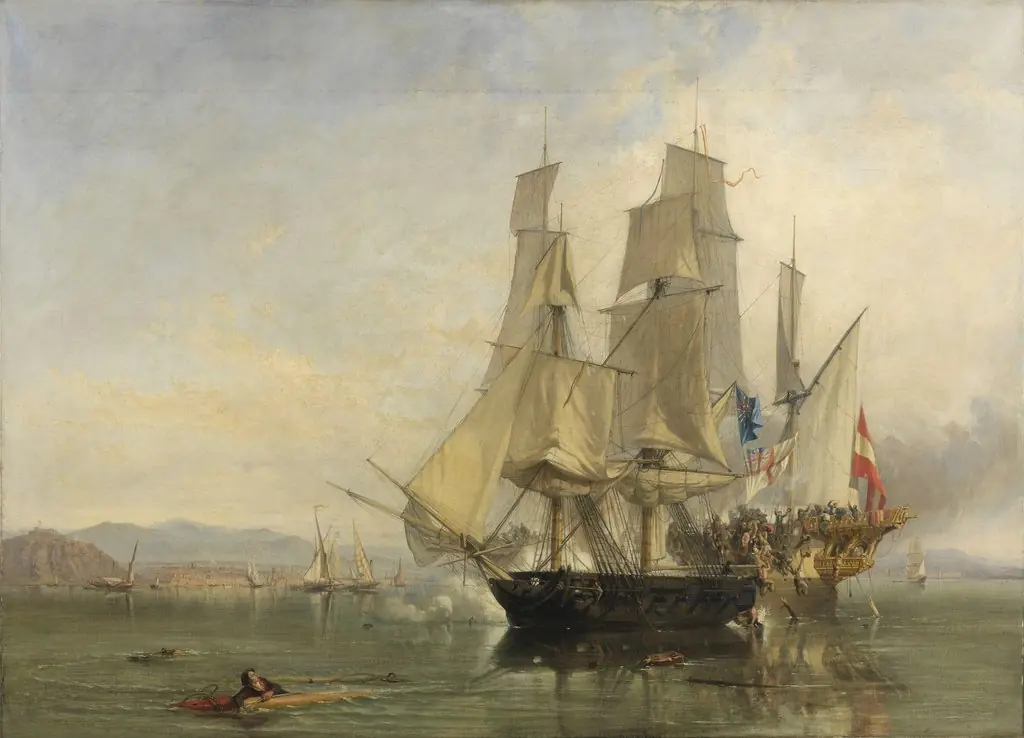 The Action and Capture of the Spanish Xebeque Frigate El Gamo