Artwork
Hyde Park, 1860
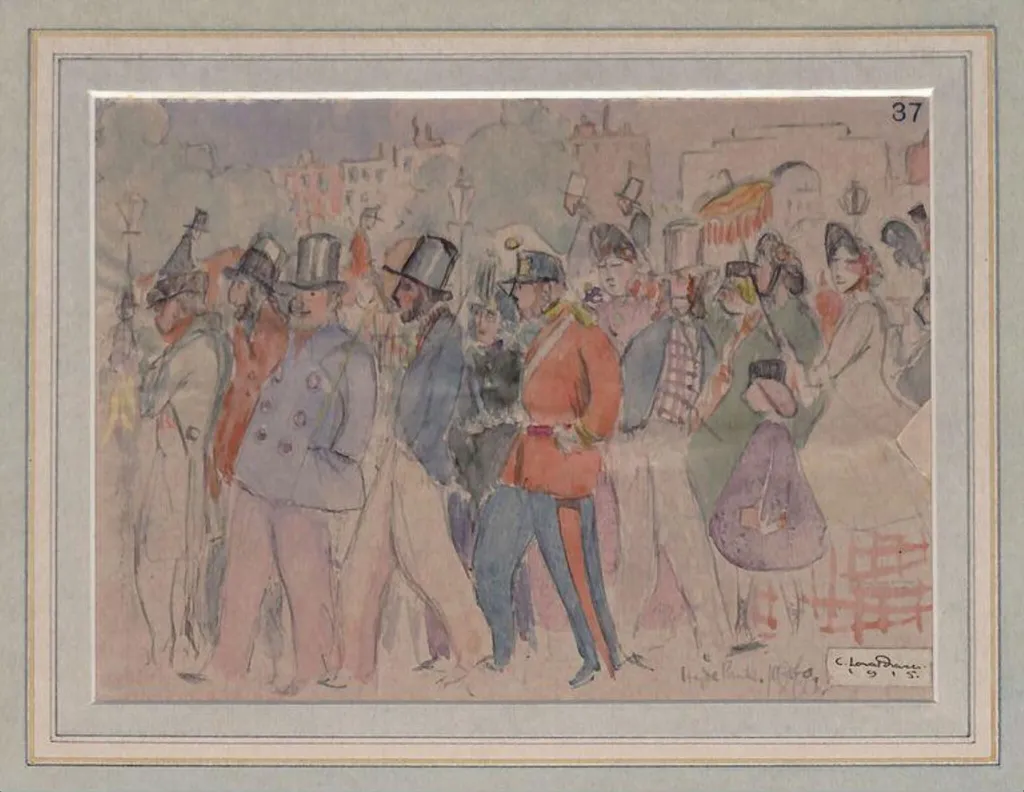
Hyde Park, 1860 is a watercolor work on paper by Claud Lovat Fraser. It dates from 1915 and is held in the collection of the Victoria and Albert Museum. Created in 1915, this watercolour captures Hyde Park in London as it appeared decades earlier, in 1860.
About this work
Overview
The work belongs to a series of urban landscapes Fraser produced while stationed away from the city, reflecting his interest in everyday public life.
Created in 1915, this watercolour captures Hyde Park in London as it appeared decades earlier, in 1860. Though painted during Claud Lovat Fraser’s military training at Halton Camp, the scene is not a direct observation but a reconstructed view, likely drawn from memory or printed sources. The work belongs to a series of urban landscapes Fraser produced while stationed away from the city, reflecting his interest in everyday public life.
Subject & Meaning
The scene portrays a typical weekday afternoon in Hyde Park, with pedestrians in period attire—tall hats, dark coats, and red jackets—suggesting middle- and upper-class visitors. A figure carries a violin case, another an umbrella, hinting at leisure activities. The composition conveys a sense of routine urban rhythm rather than a specific event, emphasizing the park as a social space rather than a monument or spectacle.
Technique & Style
Fraser employed loose, fluid watercolour strokes to suggest movement and atmosphere rather than precise detail. Colors are muted and blended, creating a soft, hazy effect. Brushwork is rapid and economical, with forms defined by suggestion rather than outline. The technique evokes the immediacy of a sketch, prioritizing mood and motion over clarity, aligning with early 20th-century tendencies toward expressive spontaneity.
History & Provenance
Painted during Fraser’s time at Halton Camp between late 1914 and mid-1915, the work emerged from a period of personal and national upheaval. Though not commissioned, it reflects his continued engagement with civilian life amid wartime service. The piece remained in private hands until acquired by the Victoria and Albert Museum, where it is now part of a broader collection of British watercolours from the early 1900s.
Context
Fraser’s depiction of 1860s London coincided with a broader revival of interest in Victorian urban scenes among artists of the 1910s. His choice to revisit an earlier era may have been influenced by nostalgia, wartime displacement, or a desire to document a fading social order. The work sits at the intersection of topographical record and personal reflection, common among artists responding to rapid modernization.
Legacy
Though not widely exhibited during Fraser’s lifetime, this watercolour contributes to the understanding of early 20th-century British watercolour practice. Its informal style and focus on ordinary life influenced later artists interested in capturing fleeting moments. Today, it remains a representative example of how wartime artists used memory and imagination to reconnect with pre-conflict civilian culture.
Own this work as a print
Artist & collection

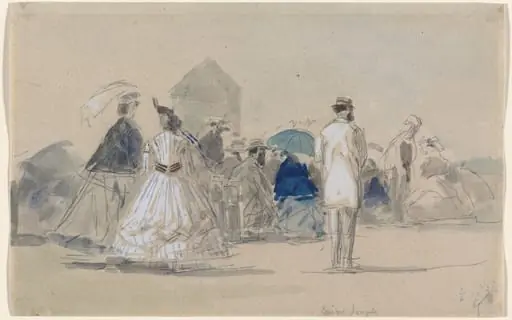 Crinolines on the Beach
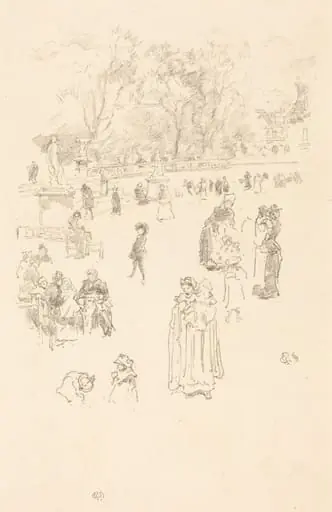 Nursemaids: "Les Bonnes du Luxembourg"
 Preparing for the March
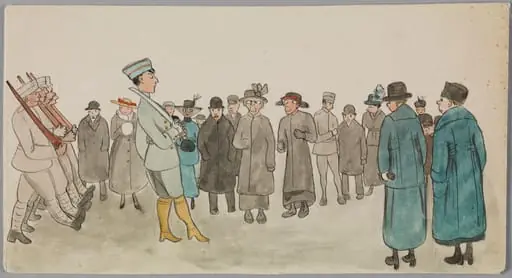 Paraati
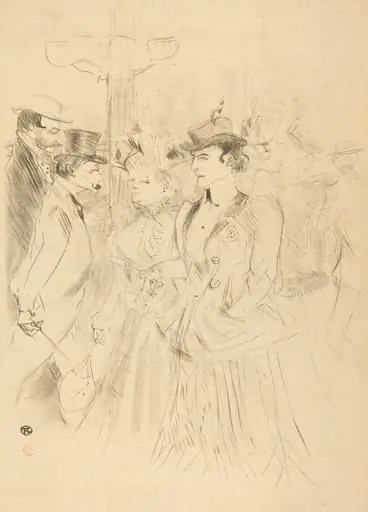 Promenade (Promenoir)
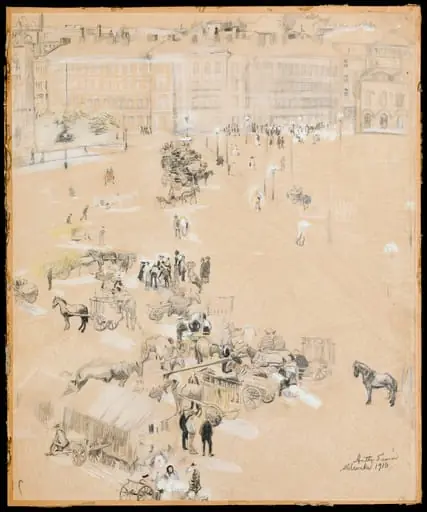 Torikauppaa Rautatientorilla
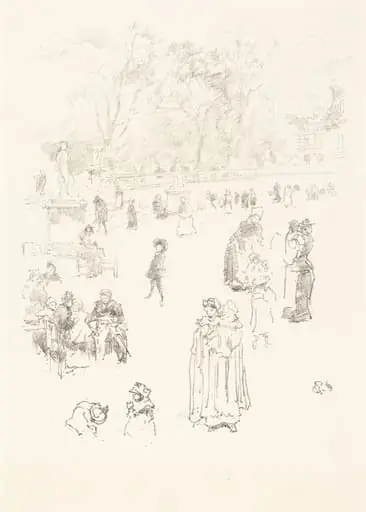 Nursemaids: "Les Bonnes du Luxembourg"
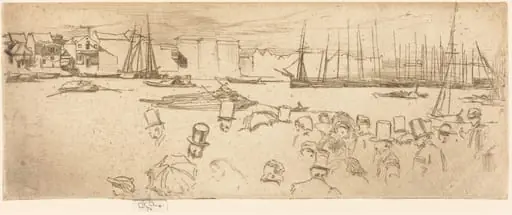 The Penny Boat
 Nursemaids
 Miss May Belfort in the Irish and American Bar, rue Royale (Miss Belfort Belfort au Irish and American Bar, Rue Royale)
![Grant and Lincoln at City Point, Virginia [recto], by Winslow Homer](https://artifactworldgallery.com/img/winslow-homer--grant-and-lincoln-at-city-point-virginia-recto--d28b6ff299a80812-w320.webp) Grant and Lincoln at City Point, Virginia [recto]
Grant and Lincoln at City Point, Virginia [recto]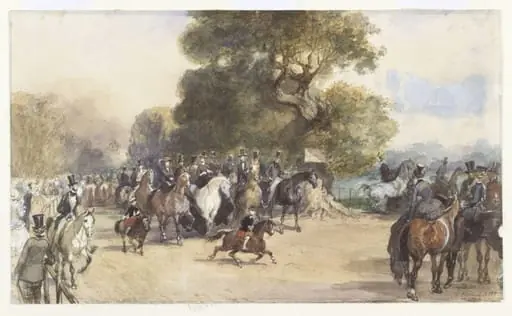 Scene in Hyde Park