Artwork
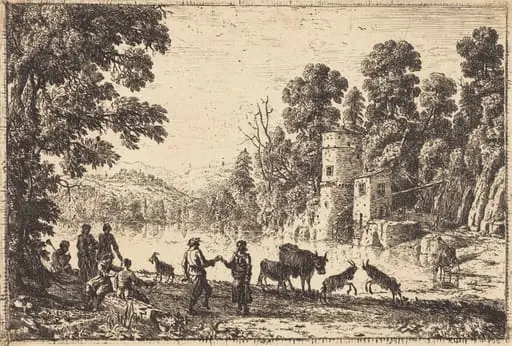
The Dance by the River
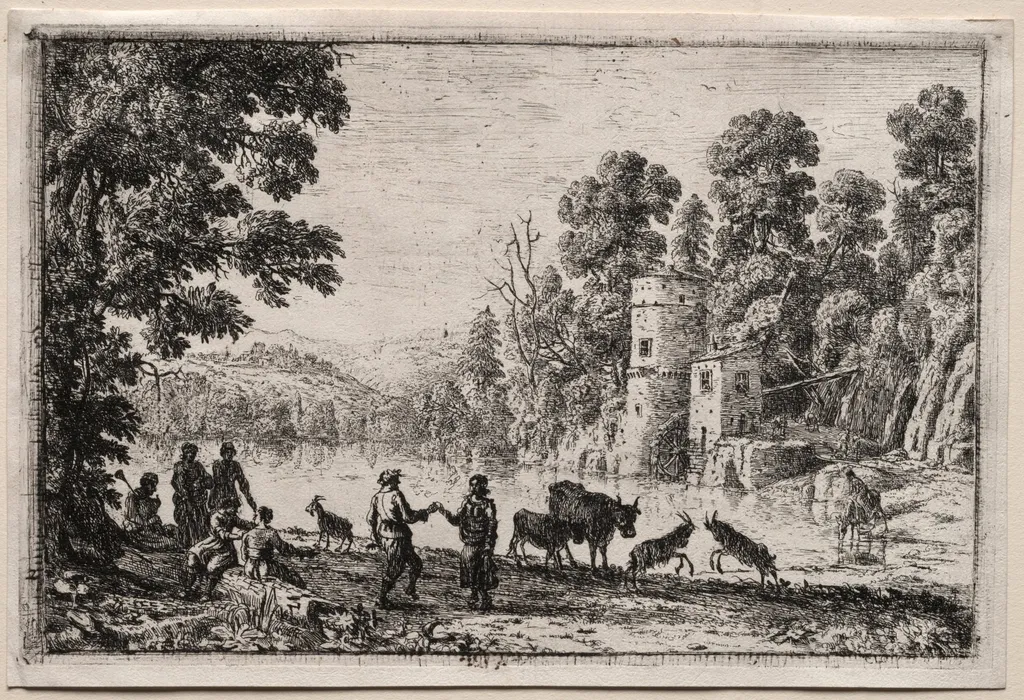
The Dance by the River is a print by the Baroque artist Claude Lorrain. It dates from 1635 and is held in the collection of the Cleveland Museum of Art.
About this work
Overview
Created circa 1635, *The Dance by the River* is a black‑ink print attributed to Claude Lorrain, the French-born artist who spent most of his professional life in Italy. The composition presents a tranquil riverside populated by a handful of people, livestock, and a distant village, all rendered with fine linear detail against a stark white ground.
Subject & Meaning
The scene depicts a modest gathering beside a riverbank, where figures converse, tend goats and cows, and observe the water. By integrating these everyday activities within a natural landscape, Lorrain underscores the harmony between human life and the environment, a motif that helped raise landscape imagery to the status of historical narrative in the seventeenth century.
Technique & Style
Executed entirely in ink, the print relies on varied line weight and subtle shading to suggest depth. Sharper, more defined strokes delineate the foreground figures and animals, while softer, less distinct lines render distant architecture, creating a sense of atmospheric perspective. This use of chiaroscuro‑like contrast imparts a three‑dimensional quality to the flat medium.
History & Provenance
The work forms part of the Cleveland Museum of Art’s collection, where it is displayed as an example of Lorrain’s early printmaking. Though Lorrain is chiefly celebrated for his oil landscapes, this print illustrates his engagement with graphic media during his Italian period, reflecting the broader Baroque interest in disseminating images through reproducible formats.
Own this work as a print
Artist & collection
Artist
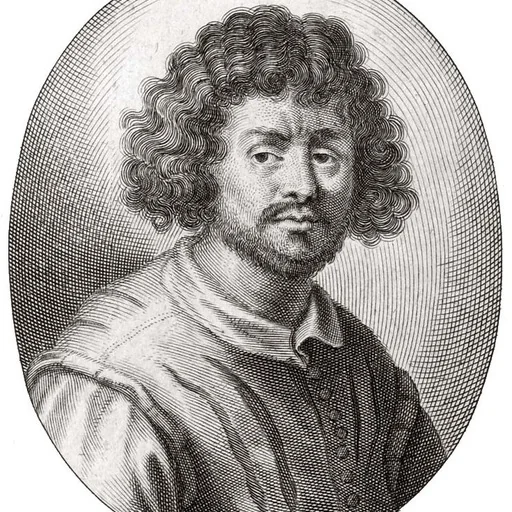
Claude Lorrain (French: ; born Claude Gellée , called le Lorrain in French; traditionally just Claude in English; c.

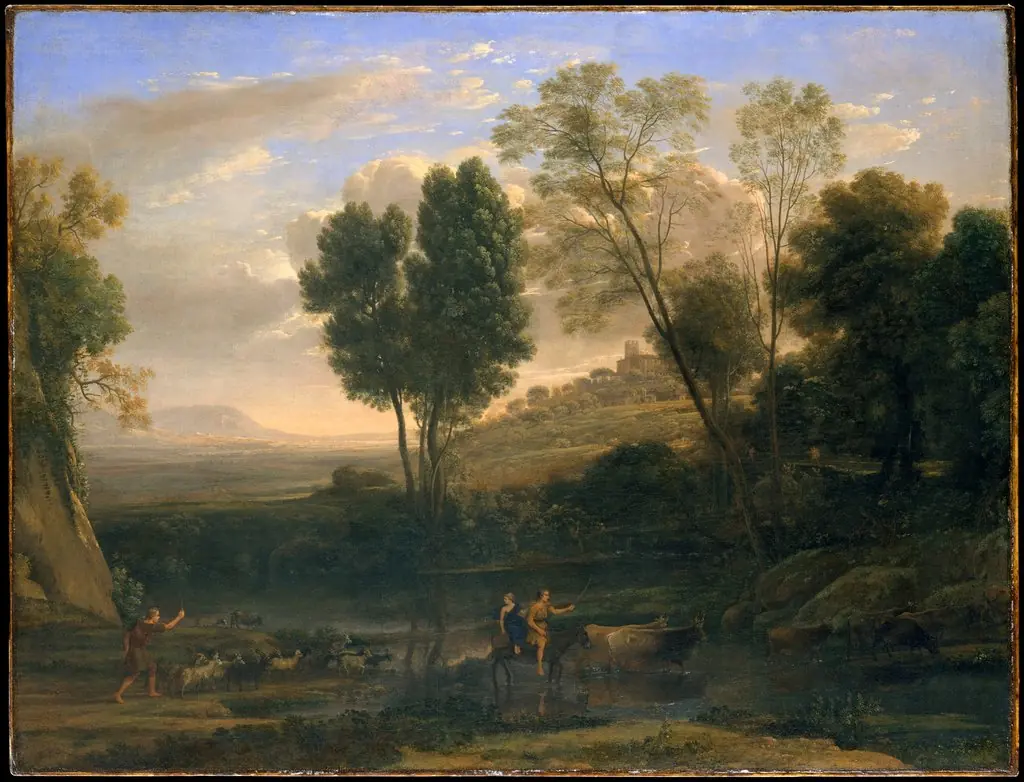
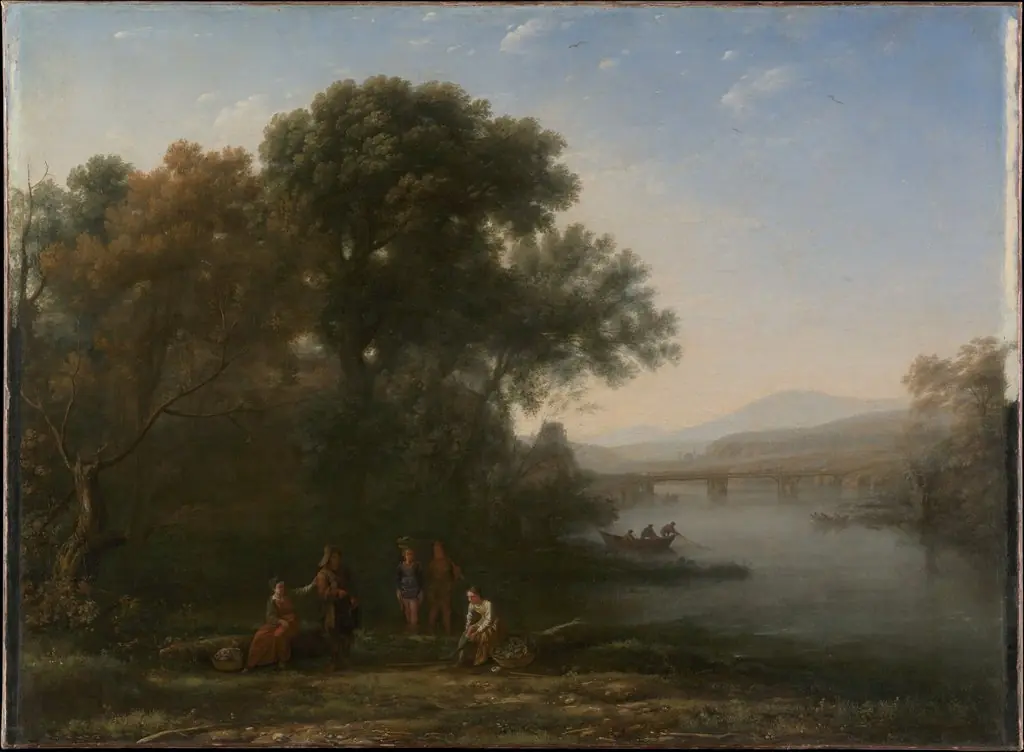
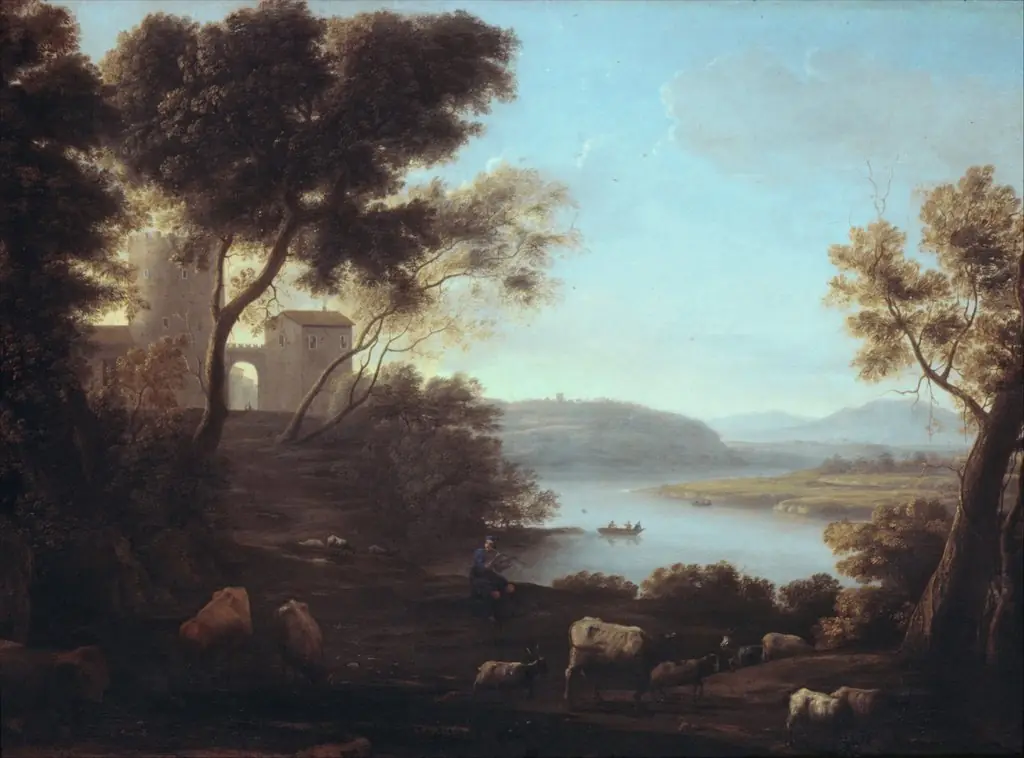
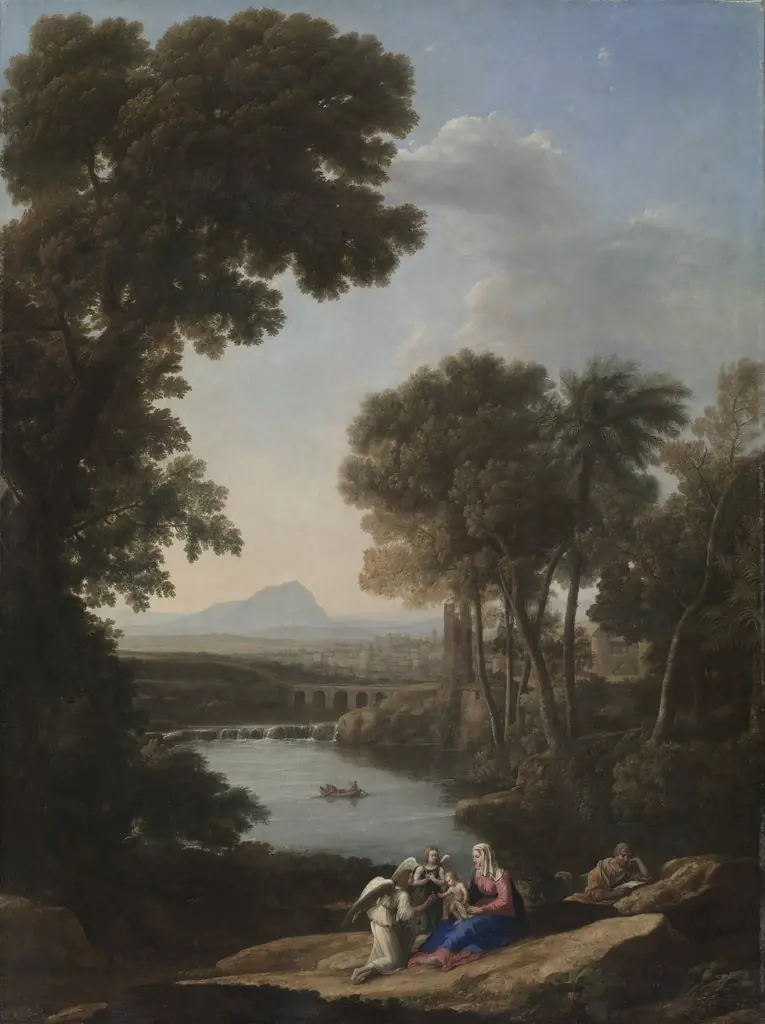
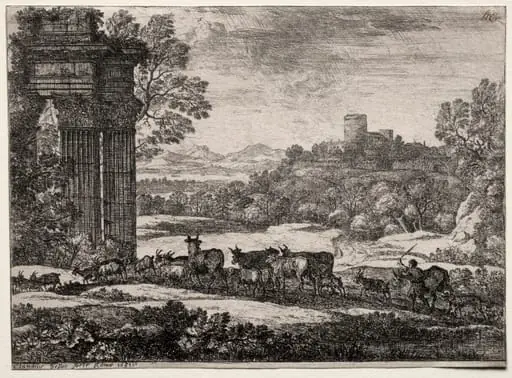 The Herd Returning in Stormy Weather
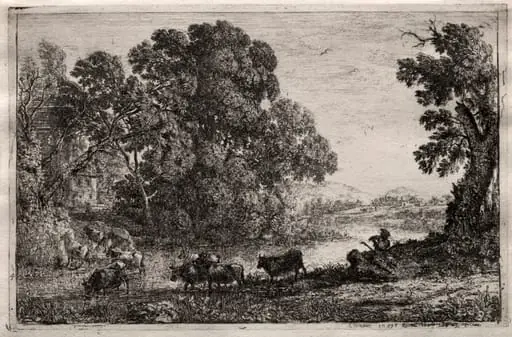 The Cowherd
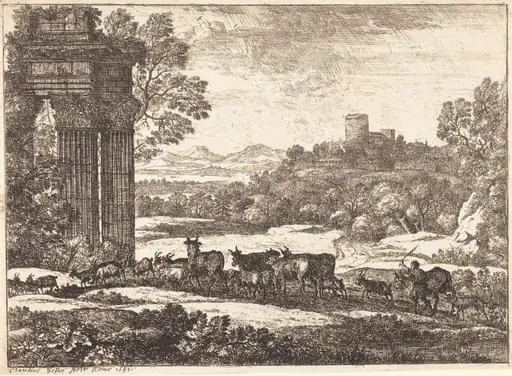 The Herd Returning in Stormy Weather (Le troupeau en marche par un temps orageux)
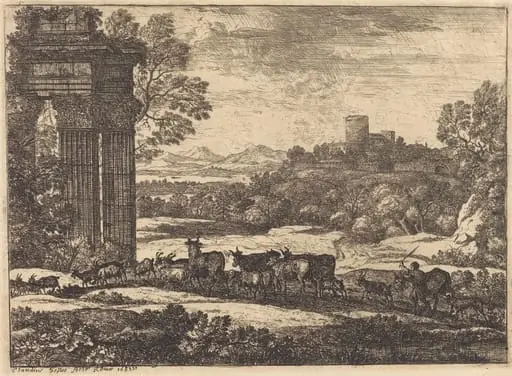 The Herd Returning in Stormy Weather (Le troupeau en marche par un temps orageux)
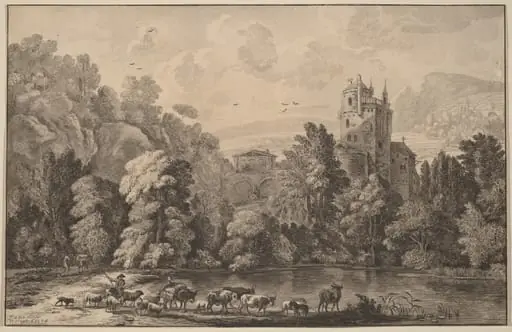 Valley with an Aged Castle
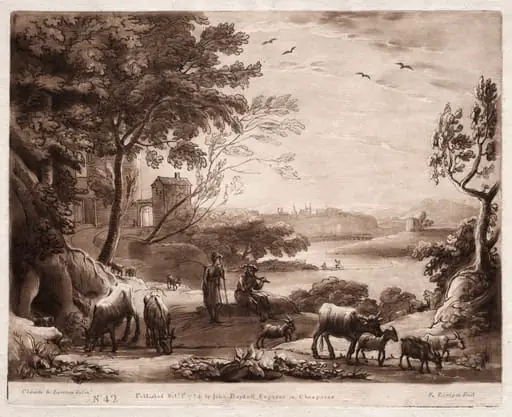 Liber Veritatis: No. 42, A River Landscape with a Shepherd and Shepherdess and a Herd of Cattle
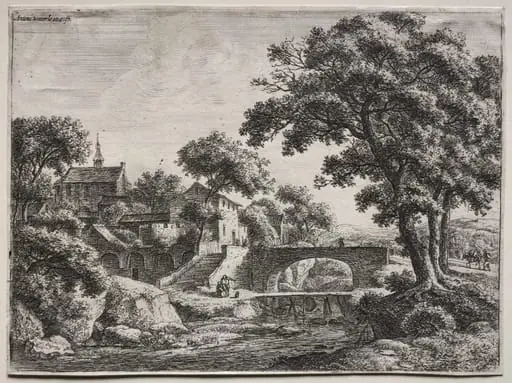 Twelve landscapes (H.95-106): The Two Bridges
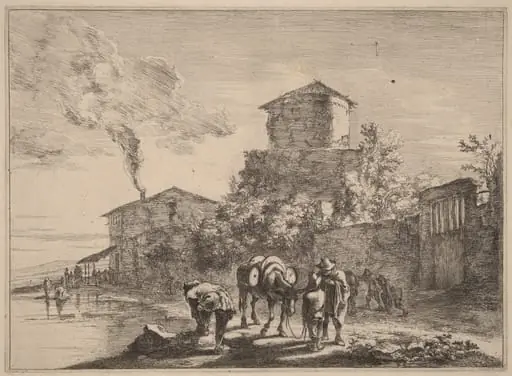 The Hinny Drover, via Appia
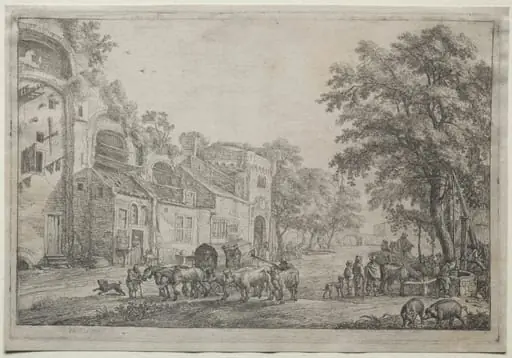 The Approach to a Village
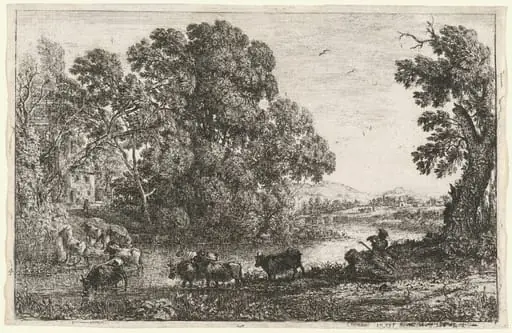 The Cowherd (Le bouvier)
 The Dance on the River Bank (La danse au bord de l'eau)
 The Wooden Bridge