Artwork
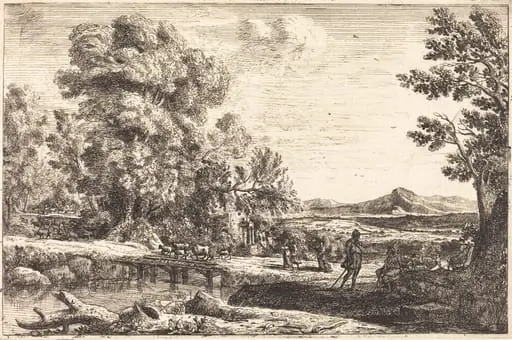
The Wooden Bridge
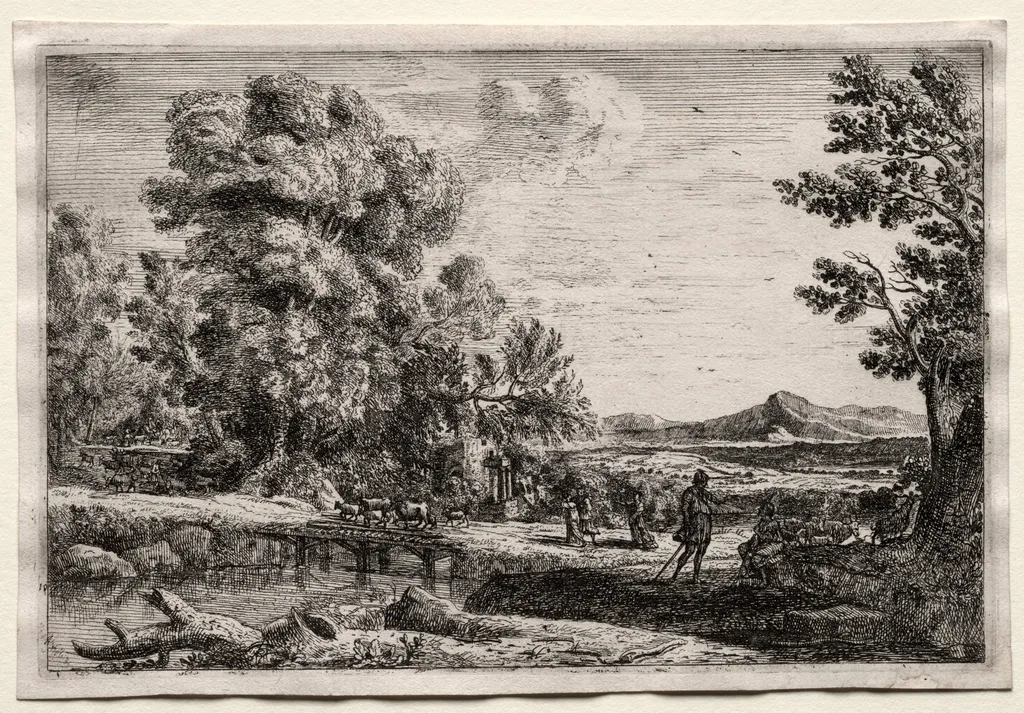
The Wooden Bridge is a print by the Baroque artist Claude Lorrain. It dates from 1640 and is held in the collection of the Cleveland Museum of Art.
About this work
Overview
This work exemplifies his quiet, contemplative approach to the countryside, rendered with delicate tonal gradations rather than bold drama.
Created in 1640, *The Wooden Bridge* is a black-and-white print by Claude Lorrain, a French artist who settled in Italy and helped define landscape as a serious artistic subject. Unlike many contemporaries who centered figures in grand narratives, Lorrain prioritized atmosphere and natural harmony. This work exemplifies his quiet, contemplative approach to the countryside, rendered with delicate tonal gradations rather than bold drama.
Subject & Meaning
The scene depicts a modest wooden bridge spanning a calm river, flanked by trees and gentle slopes. A few figures stroll or pause near the water, while a cow grazes peacefully in the distance. A distant structure hints at human habitation but remains subordinate to the landscape. The composition suggests tranquility and continuity, evoking a timeless rural rhythm rather than a specific event or story.
Technique & Style
Lorrain employed fine, controlled lines to model light and shadow, creating a sense of atmospheric depth. Distant hills are softened through subtle gradations, enhancing the illusion of air and distance. The print’s monochrome palette emphasizes tonal relationships over color, aligning with the engraving traditions of the time while preserving the painterly sensitivity of his original designs.
History & Provenance
The print derives from a drawing or painting by Lorrain, likely made during his decades-long residence in Rome. Though the original work is not definitively identified, the print circulated among collectors and artists in 17th-century Europe, contributing to his reputation as a landscape innovator. Its survival reflects the demand for his idealized views among patrons interested in classical serenity.
Context
In the Baroque period, landscape was often secondary to religious or mythological themes. Lorrain’s focus on nature as a subject in its own right was unusual. His work responded to growing intellectual interest in the natural world and classical antiquity, offering viewers a composed, harmonious vision that contrasted with the era’s more theatrical tendencies.
Legacy
Lorrain’s prints, including this one, influenced generations of landscape artists across Europe. His method of structuring space with light and recession became a model for later painters, particularly in England and France. While not overtly dramatic, his quiet compositions helped establish landscape as a legitimate and enduring genre in Western art.
Artist & collection
Artist
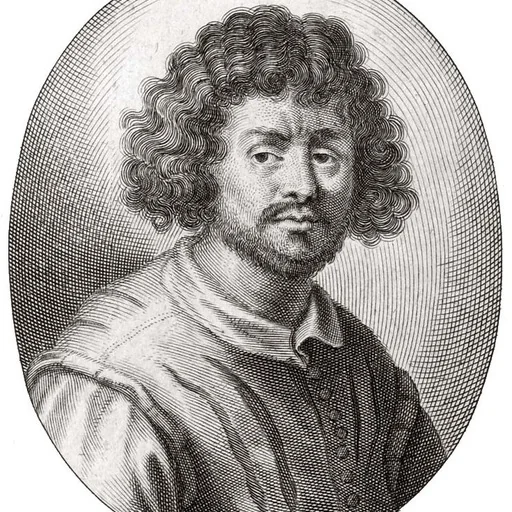
Claude Lorrain (French: ; born Claude Gellée , called le Lorrain in French; traditionally just Claude in English; c.

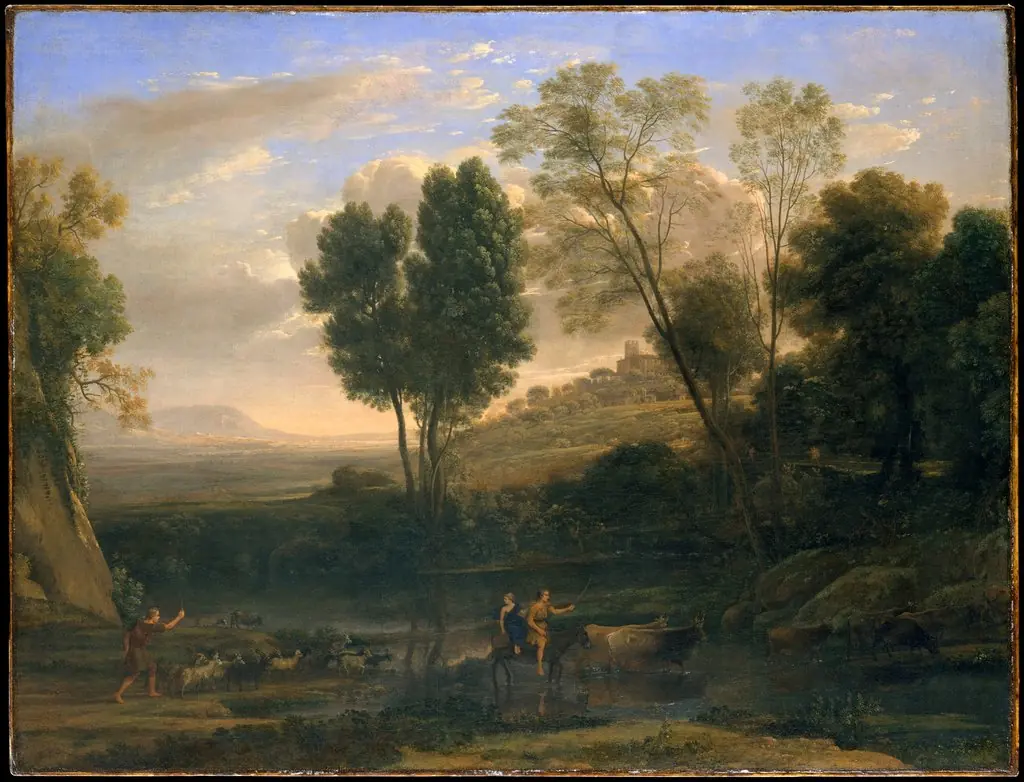
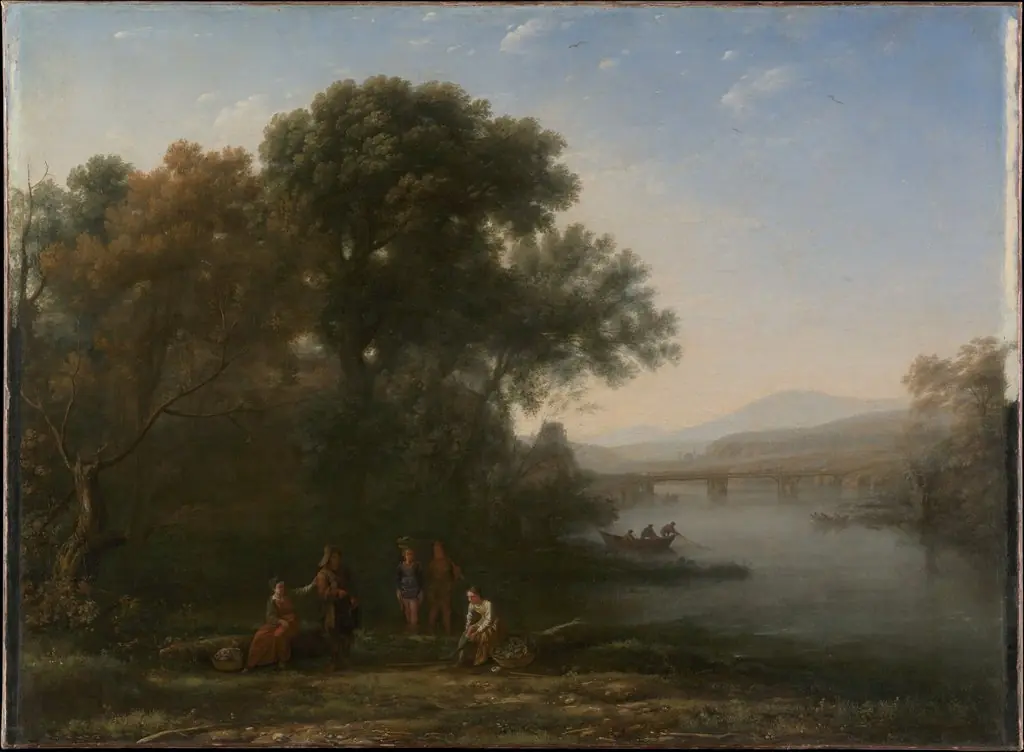
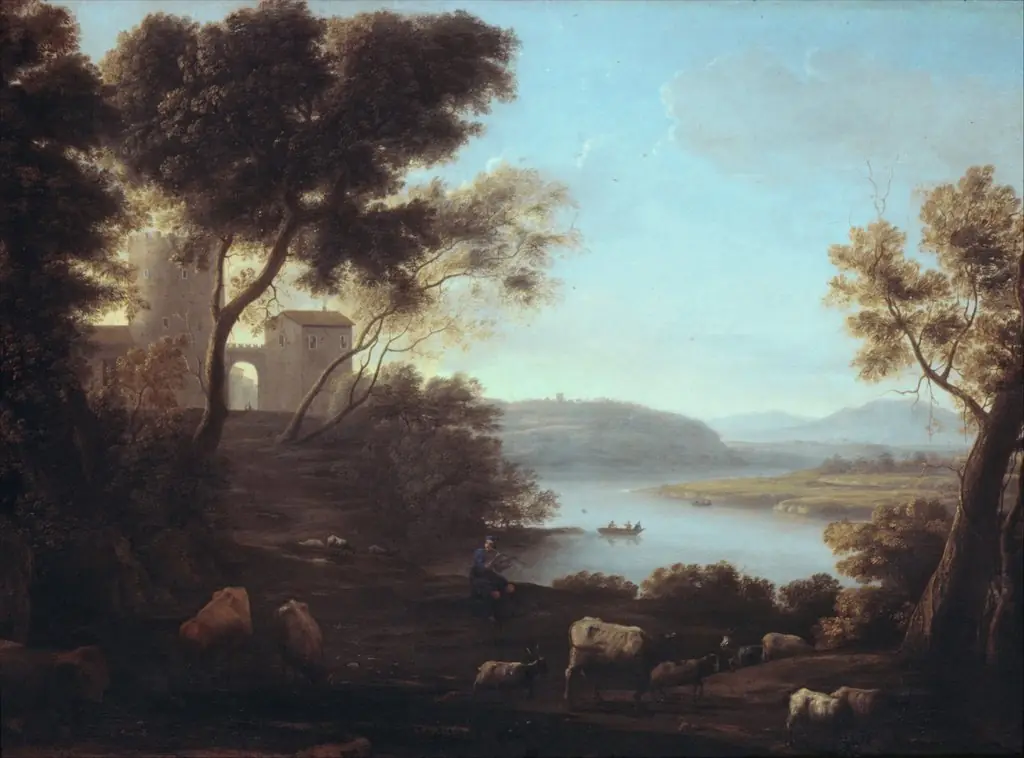
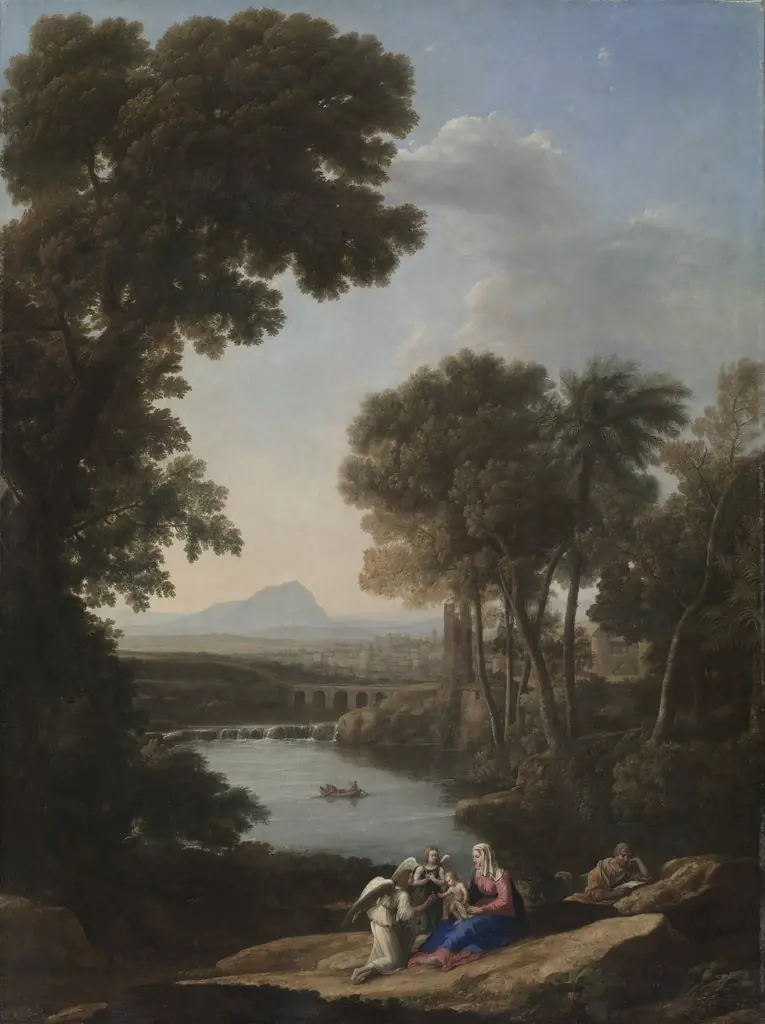
 The Cowherd
 Rebecca and Eliezer (Le pont de bois)
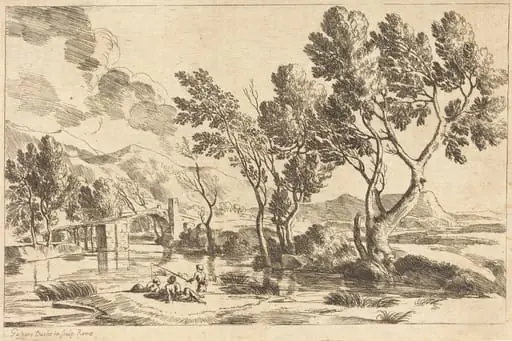 Roman Landscape
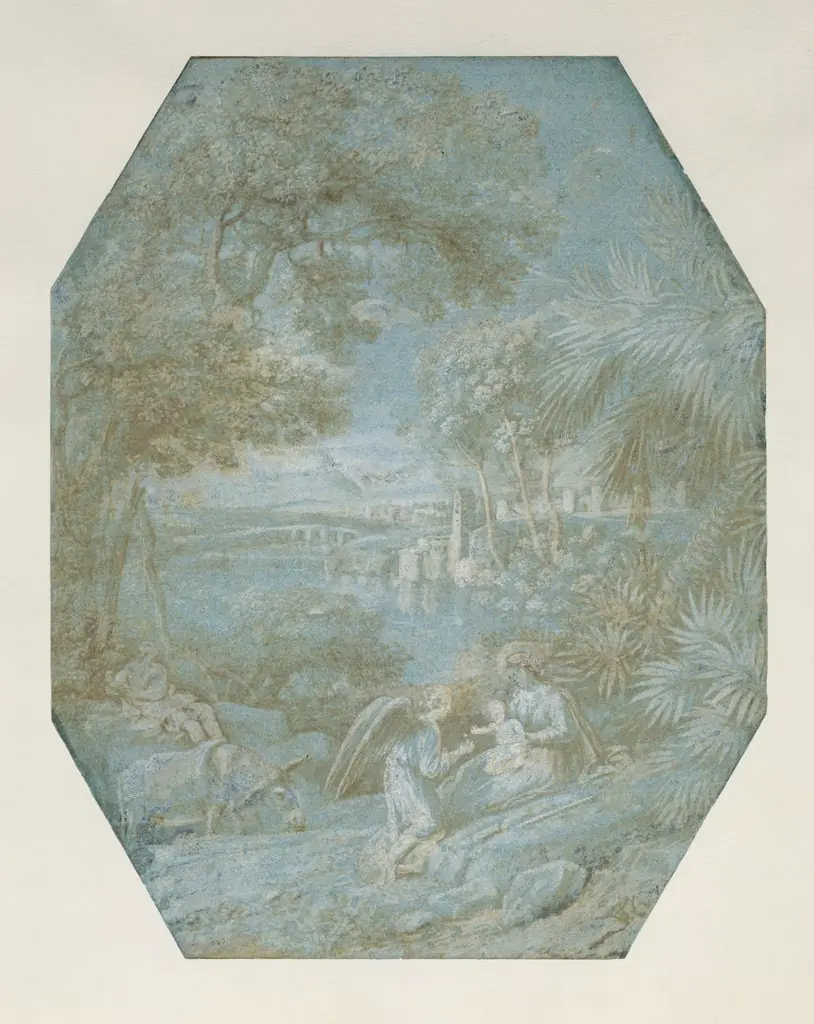
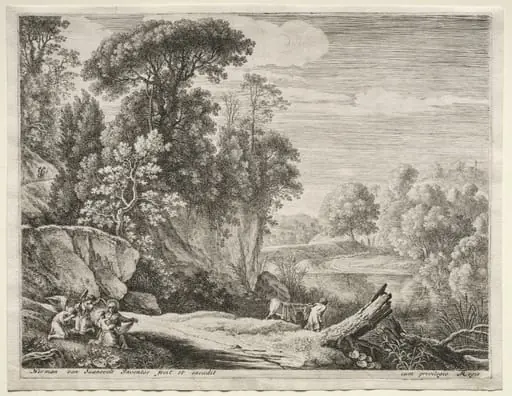 The Flight into Egypt: The Donkey Led to the River
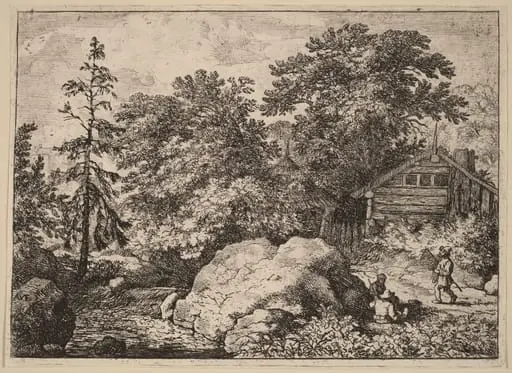 The Knoll
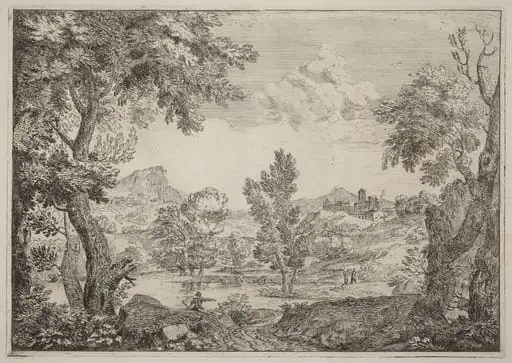 The Stream
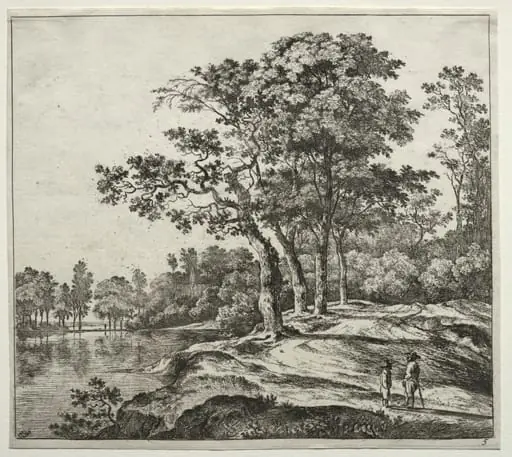 The Four Trees
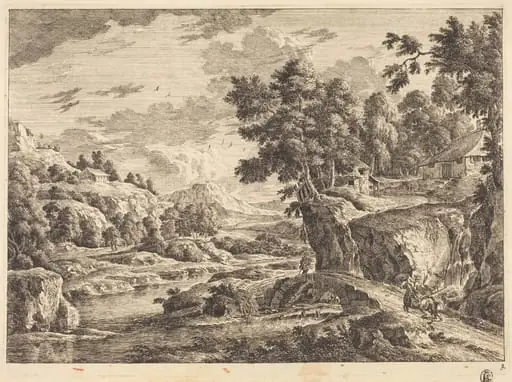 Landscape with a Bridge and Three Farm Buildings
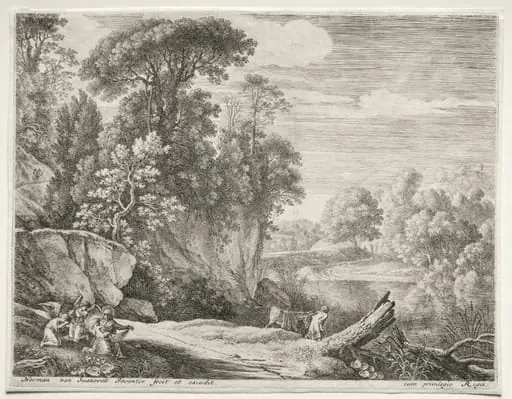 The Donkey Led to the River
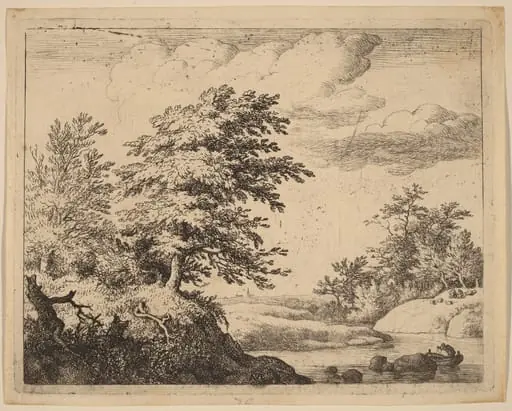 Winding River
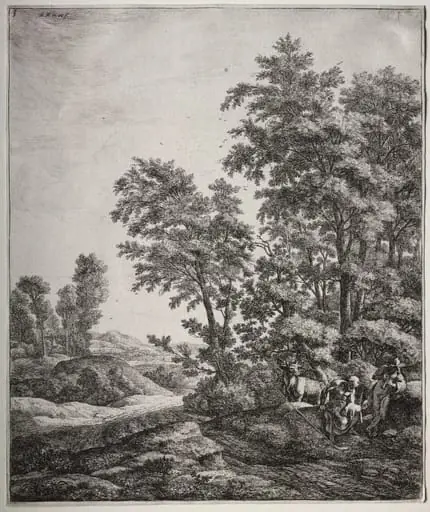 Six large upright landscapes with scenes from Ovid's Metamorphoses: Mercury and Argus
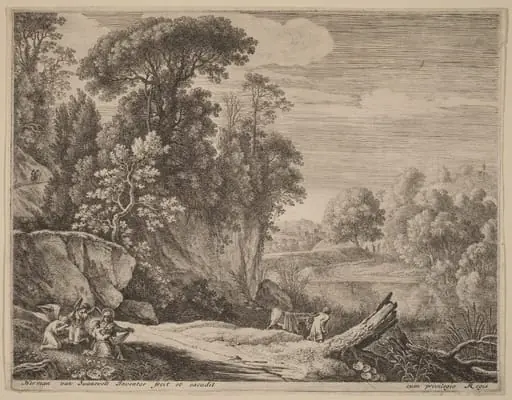 The Donkey Led to the River