Artwork
The Dance on the River Bank (La danse au bord de l'eau)
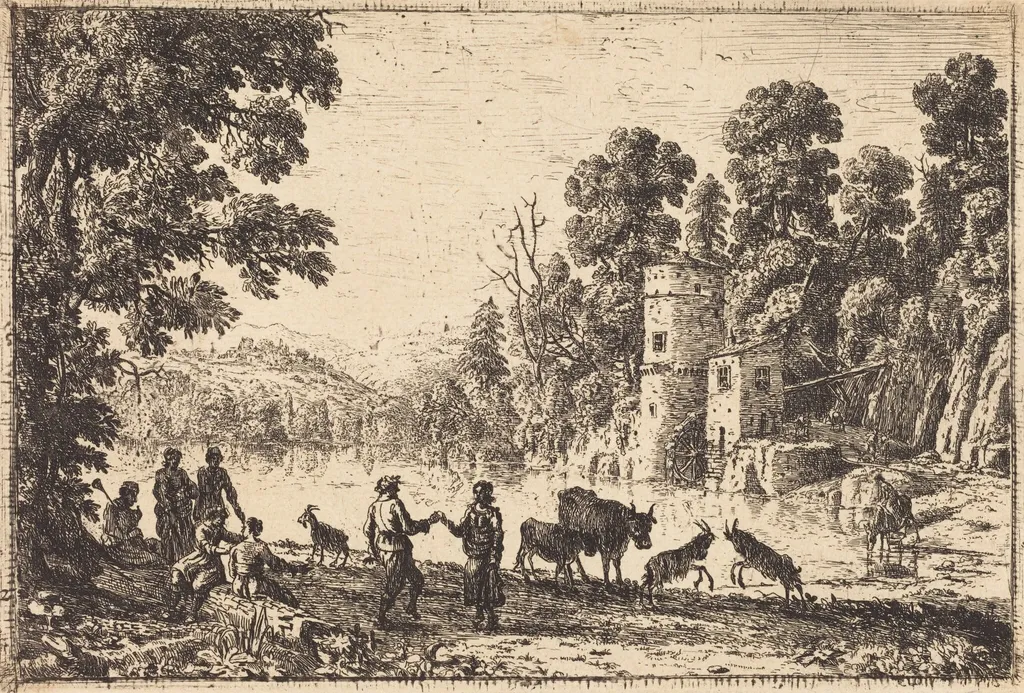
The Dance on the River Bank (La danse au bord de l'eau) is an ink print by the Baroque artist Claude Lorrain. It dates from 1634 and is held in the collection of the National Gallery of Art.
About this work
Overview
Created circa 1634, *The Dance on the River Bank* is an etching by Claude Lorrain, the French Baroque artist who spent the bulk of his professional life in Italy. The work depicts a lively gathering of figures dancing beside a river, framed by trees and a modest settlement in the distance, with grazing livestock adding a pastoral touch.
Subject & Meaning
The composition presents a convivial scene in which human activity merges with a tranquil landscape. Dancers occupy the riverbank while goats and cows wander nearby, suggesting a harmonious coexistence of culture and nature. The inclusion of a small village underscores the everyday, yet the arrangement of figures within an expansive natural setting hints at classical ideals of harmony.
Technique & Style
Executed as a print, the image was produced by incising lines into a metal plate, inking the surface, and pressing it onto paper. Lorrain’s delicate line work renders subtle gradations of light and shadow, giving the foliage, water, and architecture a sense of depth. The fine hatching and cross‑hatching characteristic of his etchings convey atmospheric softness without the richness of pigment.
History & Provenance
Claude Lorrain, born in the Duchy of Lorraine around 1600, is chiefly remembered for his landscape paintings, yet he also produced a modest number of prints. This etching, created during his early Italian period, reflects his interest in integrating figures into natural settings. The work has circulated among collectors of Baroque prints and is now held in several major museum collections.
Own this work as a print
Artist & collection
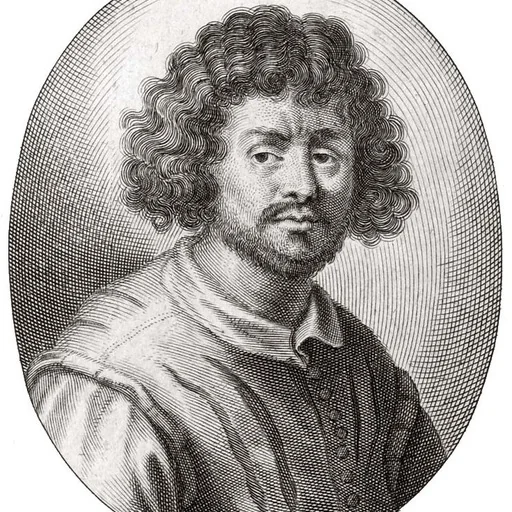
Artist
Claude Lorrain (French: ; born Claude Gellée , called le Lorrain in French; traditionally just Claude in English; c.

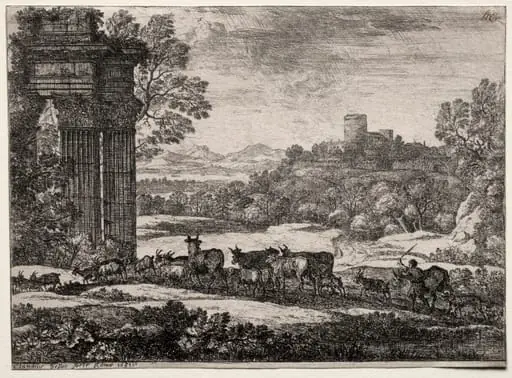 The Herd Returning in Stormy Weather
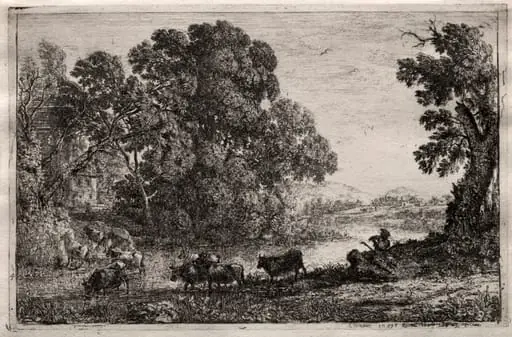 The Cowherd
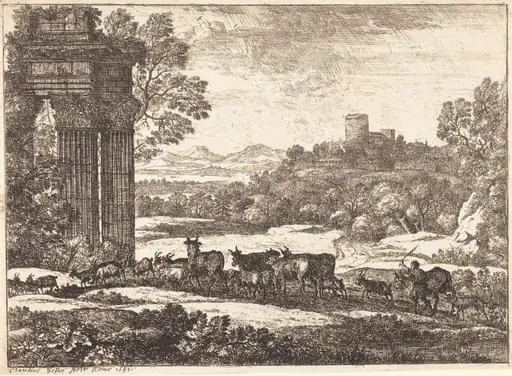 The Herd Returning in Stormy Weather (Le troupeau en marche par un temps orageux)
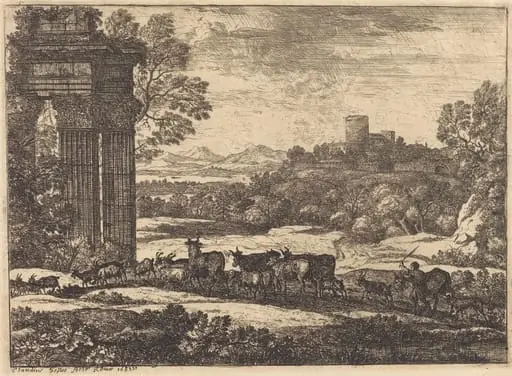 The Herd Returning in Stormy Weather (Le troupeau en marche par un temps orageux)
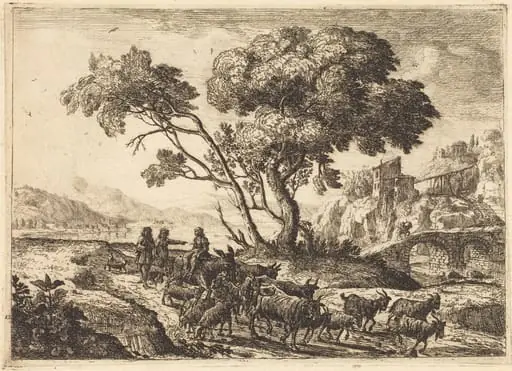 Departure for the Fields
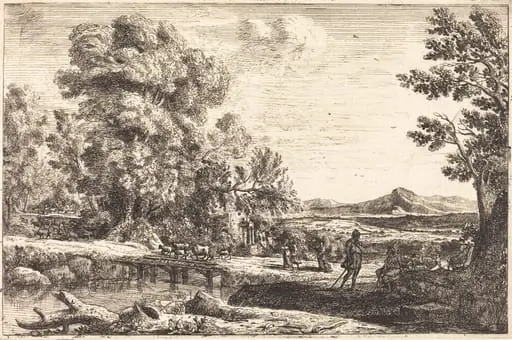 Rebecca and Eliezer (Le pont de bois)
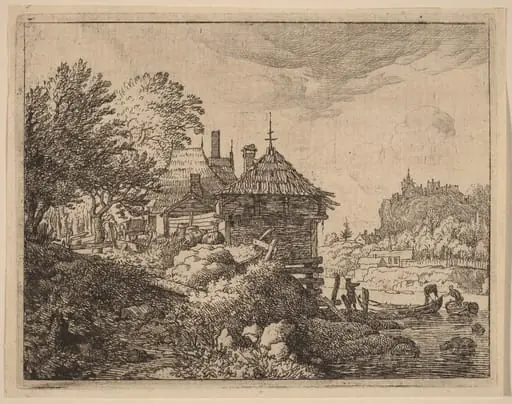 Two Boats Approaching a Hut
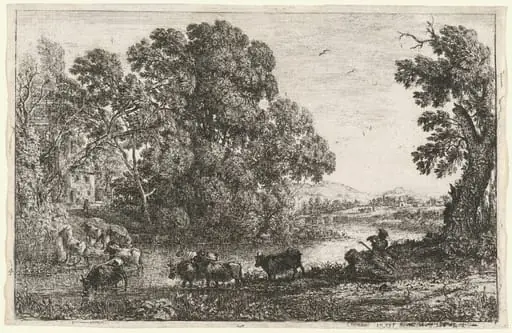 The Cowherd (Le bouvier)
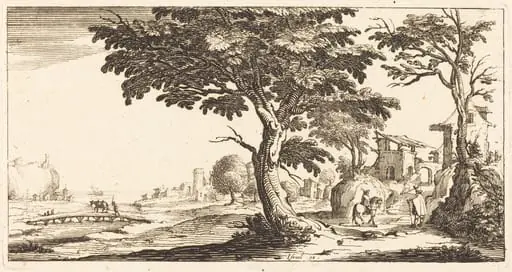 Landscape
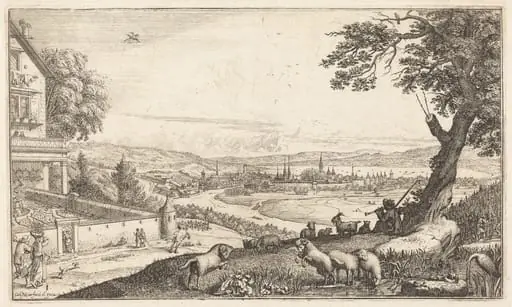 Spring