Artwork
View of the Acqua Acetosa (recto)
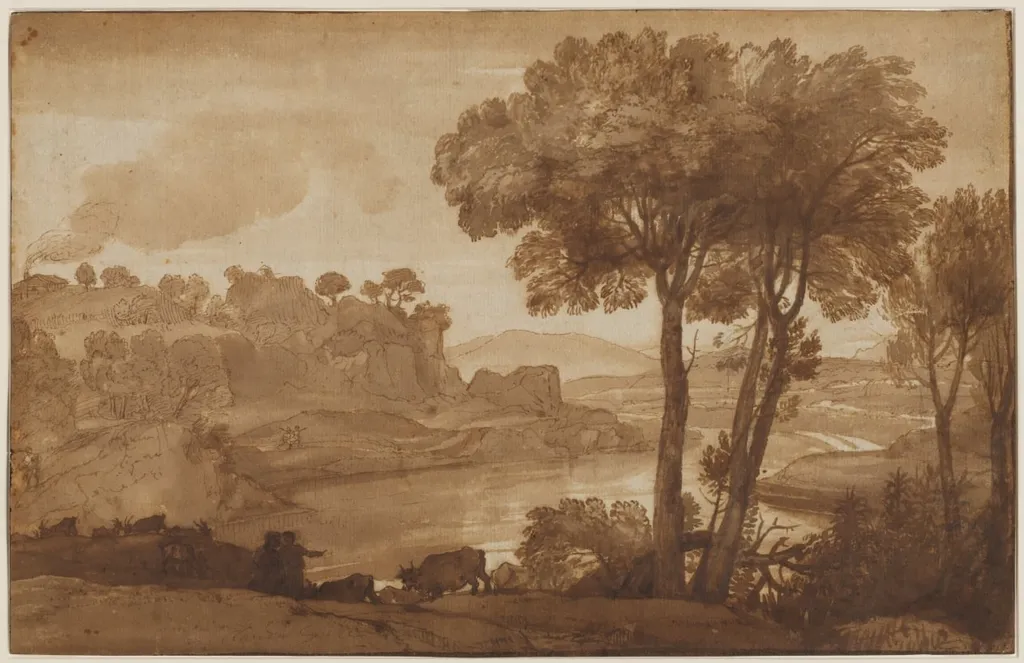
View of the Acqua Acetosa (recto) is a drawing by the Baroque artist Claude Lorrain. It dates from 1645 and is held in the collection of the Cleveland Museum of Art.
About this work
Overview
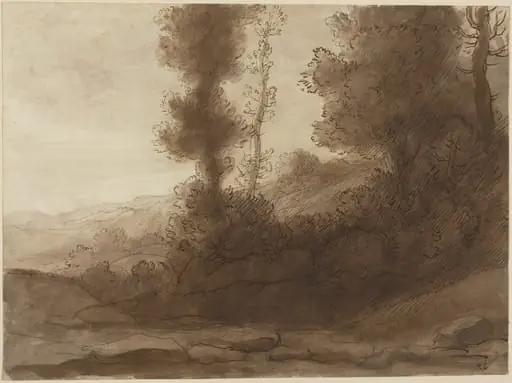
The drawing depicts the Acqua Acetosa, a mineral spring situated just outside Rome that was celebrated for its reputed therapeutic qualities. Rendered in pen and ink with wash, the image shows a tranquil riverbank at dusk, trees arching over the water and diminutive figures transporting jars, suggesting the historic practice of collecting the spring’s water.
Subject & Meaning
While the composition accurately reflects the spring’s topography, it is not a direct observation but an imagined Arcadian landscape. The inclusion of modest human activity underscores the spring’s role as a communal source of healthful water, while the serene atmosphere conveys a poetic reverence for nature’s restorative power.
Technique & Style
Executed with fine pen lines and delicate washes, the drawing demonstrates a nuanced handling of light and shadow, creating a soft, almost luminous dusk. The artist’s control of chiaroscuro shapes the forms of foliage and water, highlighting a sensitivity to atmospheric effects characteristic of his broader oeuvre.
History & Provenance
Created by Claude Gellée, known as Claude Lorrain, the French-born painter who spent his career depicting the Roman countryside and the Neapolitan shoreline. The work belongs to a series of studies through which he explored the Roman Campagna, translating memory and imagination into studio compositions rather than plein‑air sketches.
Context
In the 17th century, mineral springs like Acqua Acetosa were popular destinations for Romans seeking health benefits. Lorrain’s rendering aligns with contemporary interests in landscape as a site of both natural beauty and therapeutic function, integrating cultural practices into a cultivated, idealized setting.
Artist & collection
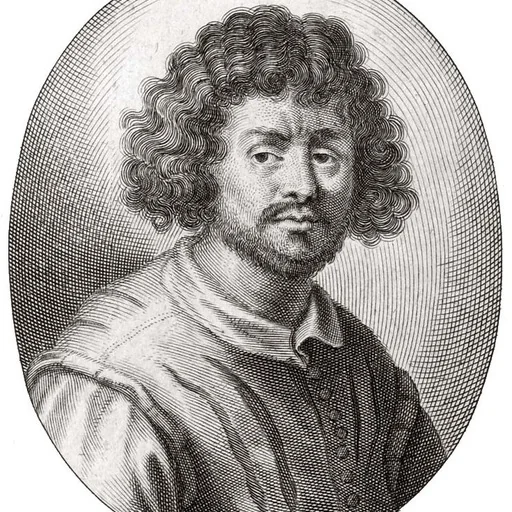
Artist
Claude Lorrain (French: ; born Claude Gellée , called le Lorrain in French; traditionally just Claude in English; c.

 At the Foot of the Hill
 River scene with a temple or palace in the clouds
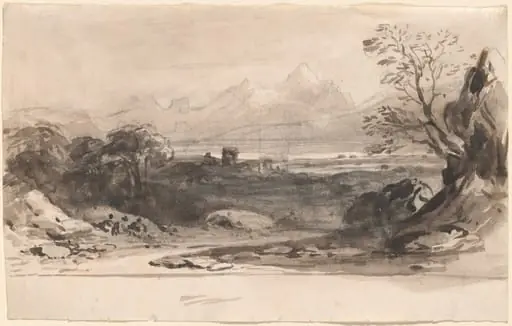 Landscape with Ruins
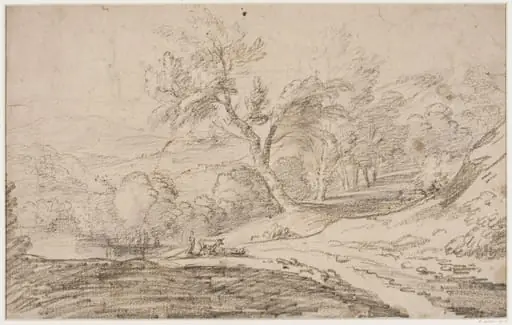 Landscape with lake
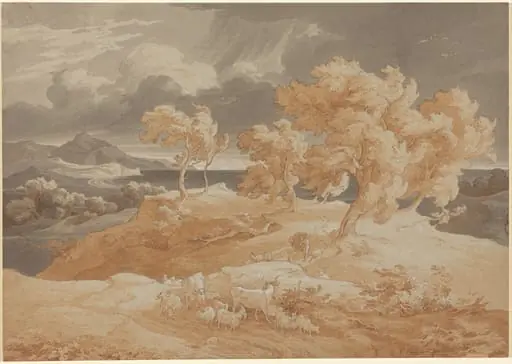 Italian Coastal Landscape with a Thunderstorm
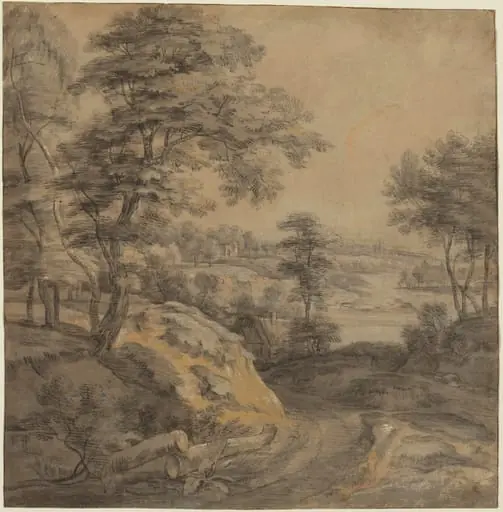 Wooded Landscape with a Road
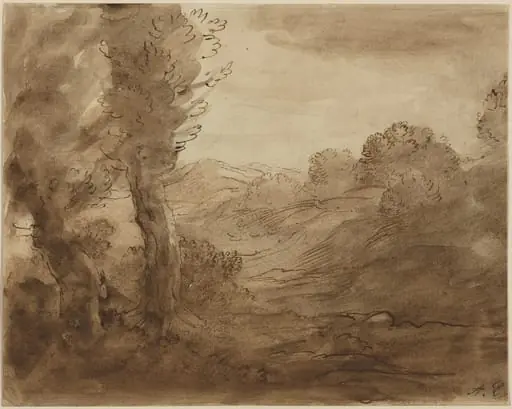 Footpath in Burgundy
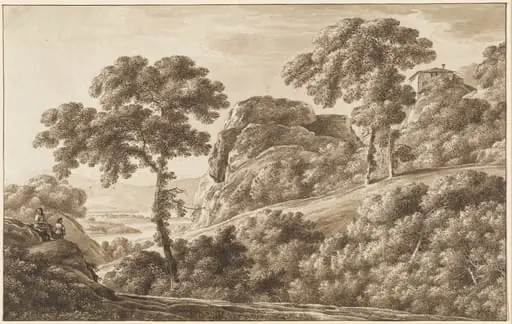 The Isar with Boulders on the Isarhohe
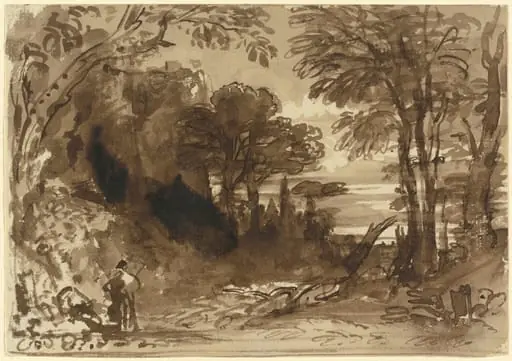 A Clearing in a Forest
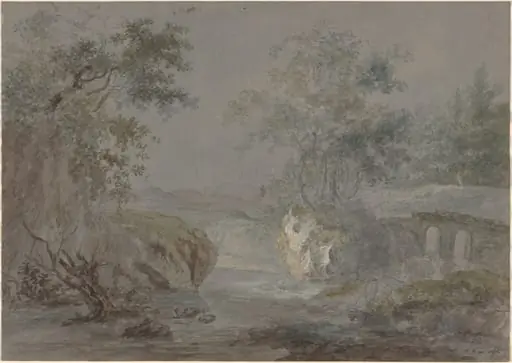 Wooded Cliffs along a Riverbank
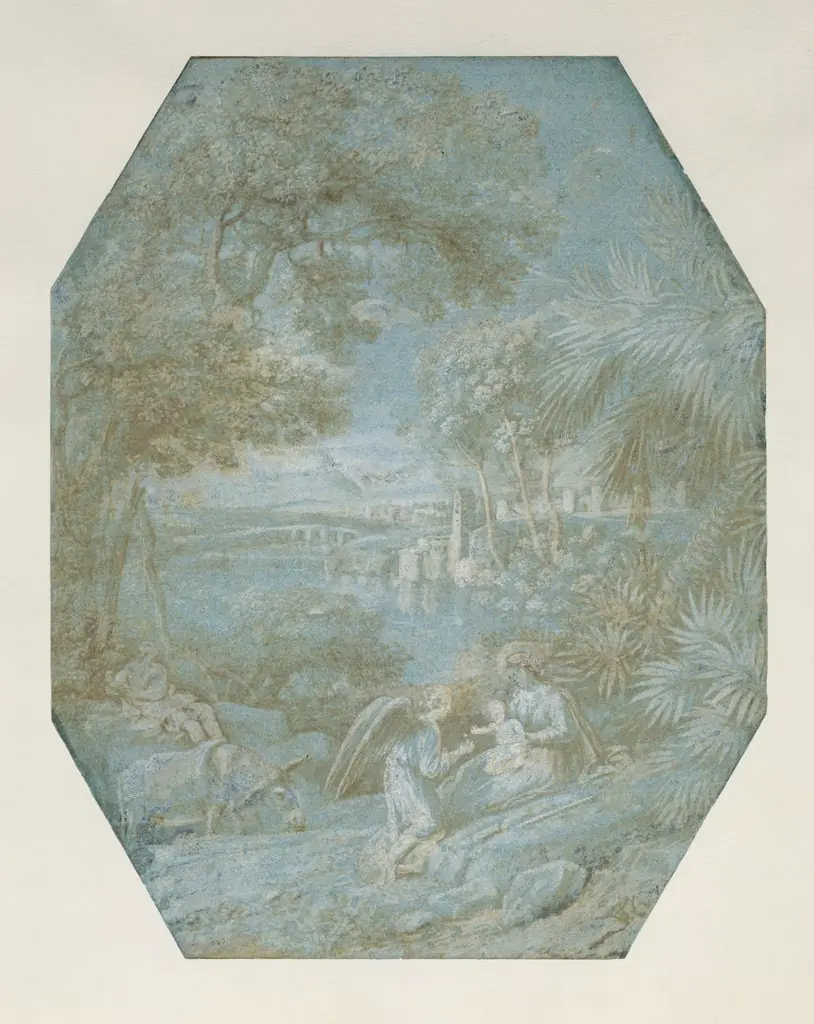
 The Flight into Egypt: Altered from Seghers
 Wooded Landscape