Artwork
Wooded Cliffs along a Riverbank
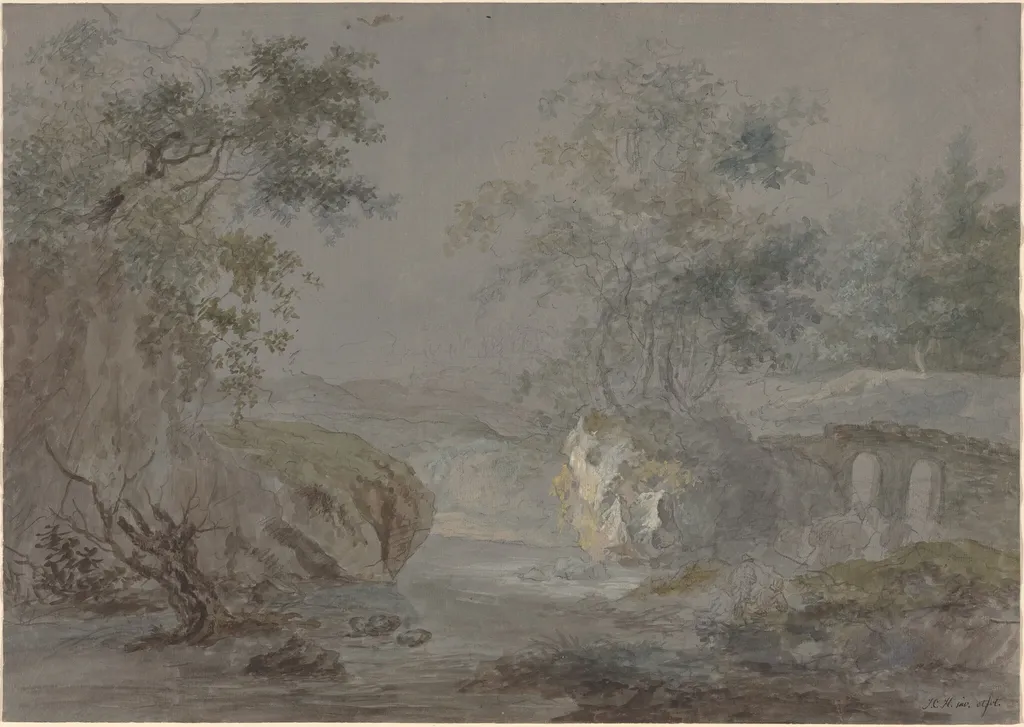
Wooded Cliffs along a Riverbank is a chalk drawing by the Romanticist artist Johann Caspar Huber. It dates from 1796 and is held in the collection of the National Gallery of Art.
About this work
Overview
Johann Caspar Huber’s 1796 work, Wooded Cliffs along a Riverbank, is a watercolor drawing executed on blue laid paper that has been primed with black chalk. The composition presents a meandering river set against rugged cliffs, bordered by a stand of tall trees under a light sky.
Subject & Meaning
The scene captures a tranquil river winding through a rocky gorge, its surface mostly smooth with occasional ripples near the bank. Leafy trees frame the waterway, their branches extending toward a pale atmosphere, suggesting a quiet, perhaps early‑morning moment in nature.
Technique & Style
Huber applied watercolor over a chalk ground, allowing the underlying dark tone to lend depth while the translucent washes convey soft blues, greens, and earthy browns. The brushwork is loose and sketch‑like, indicating a rapid, possibly plein‑air approach that emphasizes overall impression over fine detail.
History & Provenance
Created in 1796, the drawing reflects the late‑eighteenth‑century interest in landscape studies. While specific ownership records are limited, the work is attributed to Huber, a Swiss‑German artist known for his topographical watercolors, and remains part of the documented output from his productive period.
Context
During the 1790s, watercolor began to be valued for its capacity to render atmospheric effects and natural light. Huber’s use of glazing—building layers of transparent pigment—aligns with contemporary practices that sought to capture the fleeting qualities of light and terrain.
Artist & collection


 View of the Acqua Acetosa (recto)
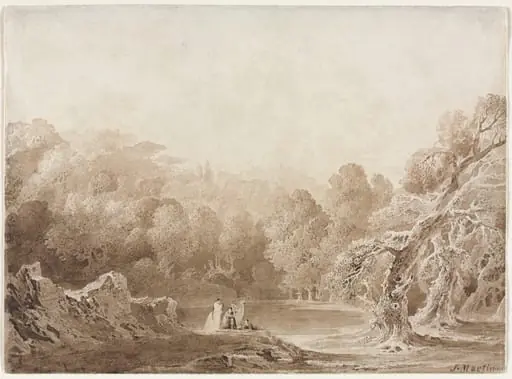 A Man Playing a Harp with other Figures beside a Lake
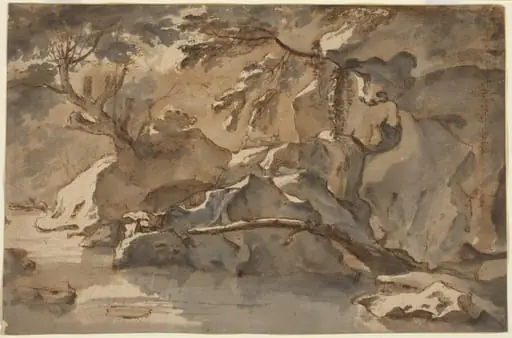 Landscape (after Paul Bril)
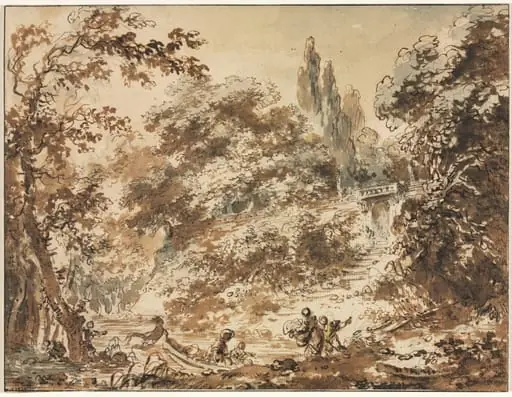 Scene in a Park
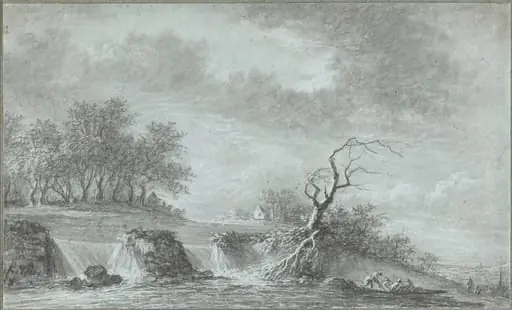 Riverscape with a Waterfall
 At the Foot of the Hill
 Landscape with a Wooded Ravine
 Forest scenery
 Waterfall in a wood
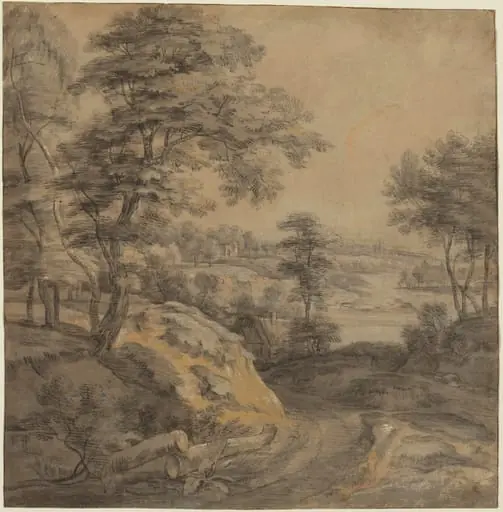 Wooded Landscape with a Road
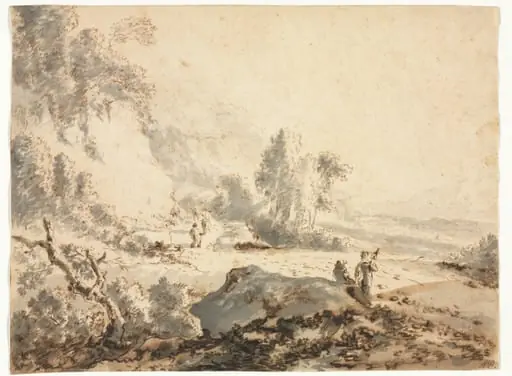 Landscape
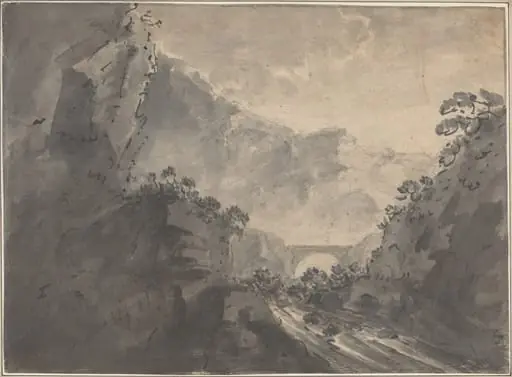 A Picturesque Landscape