Artwork
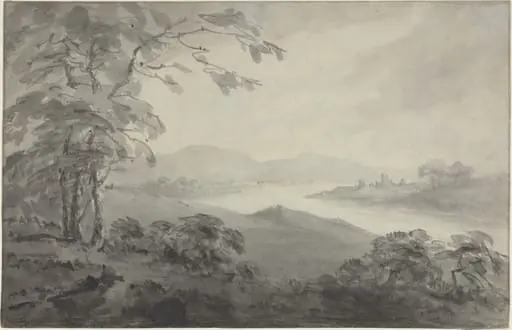
River scene with a temple or palace in the clouds
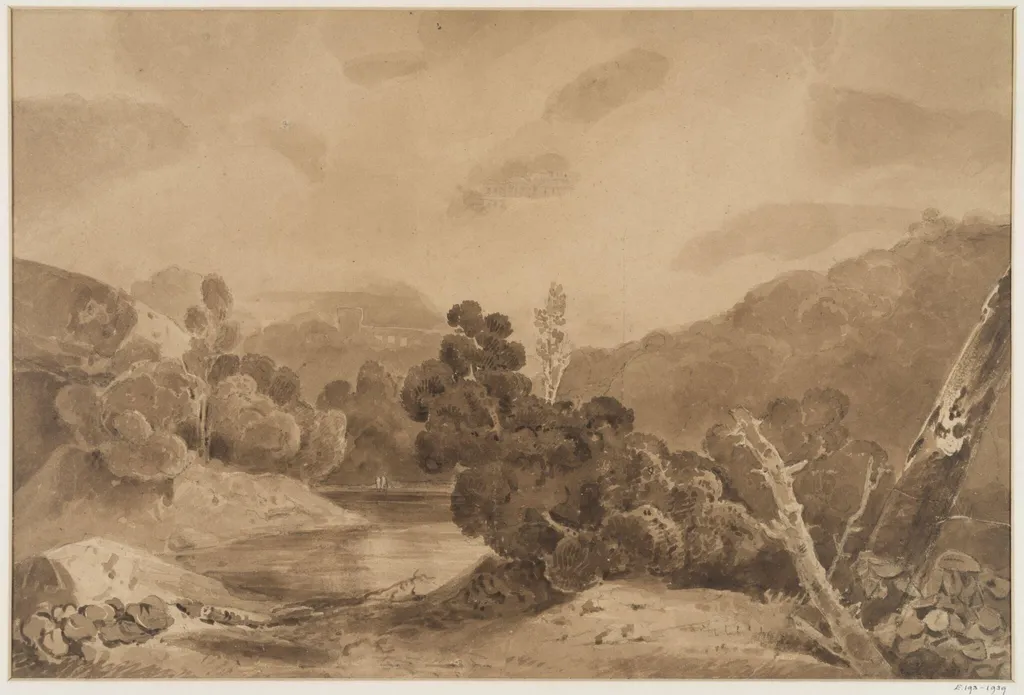
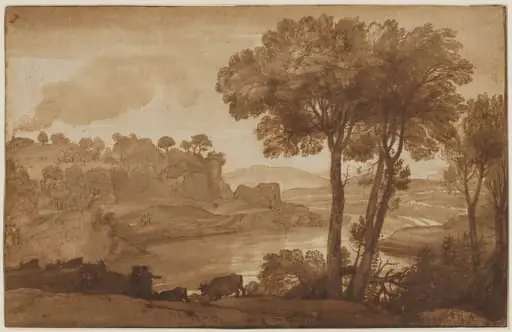
River scene with a temple or palace in the clouds is a drawing by the Romanticist artist John Samuel Hayward. It dates from 1816 and is held in the collection of the Victoria and Albert Museum.
About this work
Overview
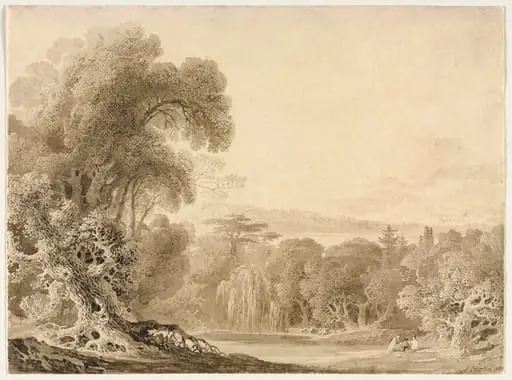
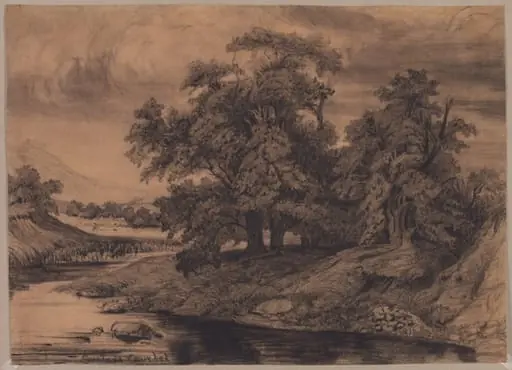
Created in 1816, this sepia wash drawing by John Samuel Hayward captures a tranquil river landscape with an ethereal structure hovering above the horizon. Executed in loose, delicate strokes, the work conveys a sense of quiet contemplation rather than precise detail. The artist’s signature appears on the piece, affirming its authorship and placing it within his early 19th-century body of work.
Subject & Meaning
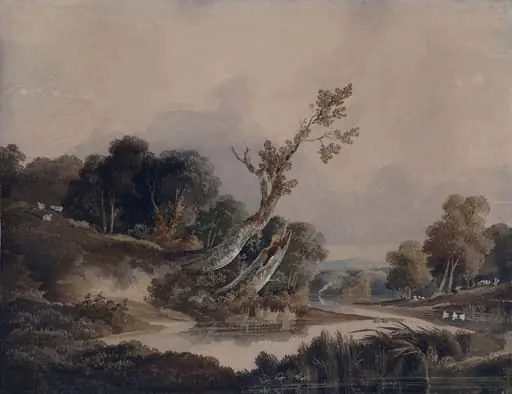
The drawing depicts a winding river flanked by dense trees and rugged terrain, with a distant edifice seemingly suspended in the clouds. Its form is ambiguous—neither clearly temple nor palace—inviting interpretation as a vision or memory. The structure’s weightless placement suggests an idealized or imagined architecture, evoking themes of transcendence or the sublime in nature.
Technique & Style
Hayward employed a light sepia wash with minimal ink outlines, allowing the paper’s texture to contribute to the atmospheric effect. His brushwork is rapid and suggestive, avoiding sharp definition to enhance the dreamlike quality of the scene. The soft gradations of tone unify the sky, hills, and river, creating a cohesive mood of hazy remoteness.
History & Provenance
The drawing is documented as part of Hayward’s personal sketches from the early 1800s. It entered the Victoria and Albert Museum’s collection through established acquisition channels, likely as part of a broader donation or bequest of his works. Its preservation reflects its value as an example of British topographical drawing from the period.
Context
Hayward worked during a time when British artists increasingly turned to landscape as a vehicle for emotional expression, influenced by Romantic ideals. While not a formal commission, this sketch aligns with contemporary practices of recording imagined or idealized scenery, often inspired by travel literature or classical ruins, rather than direct observation.
Legacy
Though not widely exhibited, the drawing contributes to understanding Hayward’s approach to landscape as a meditative exercise. It exemplifies how amateur and professional draftsmen of the era used sketchbooks to explore mood and composition, preserving fleeting impressions that later informed more finished works or personal reflections.
Own this work as a print
Artist & collection