Artwork
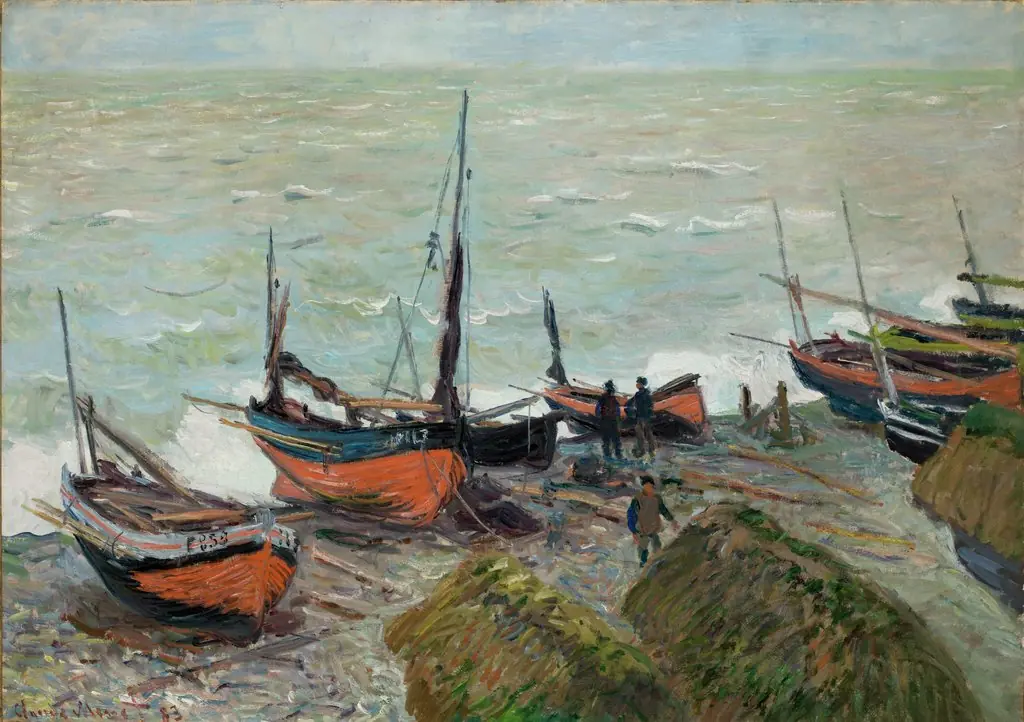
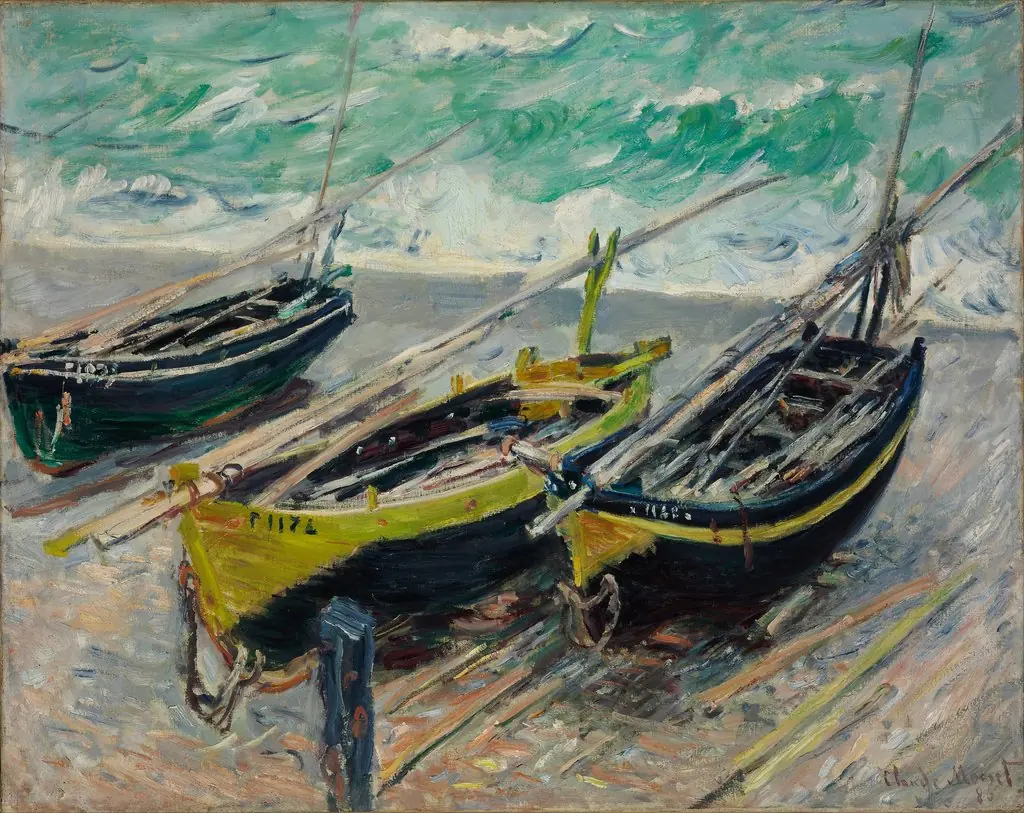
Boats on the Beach at Étretat
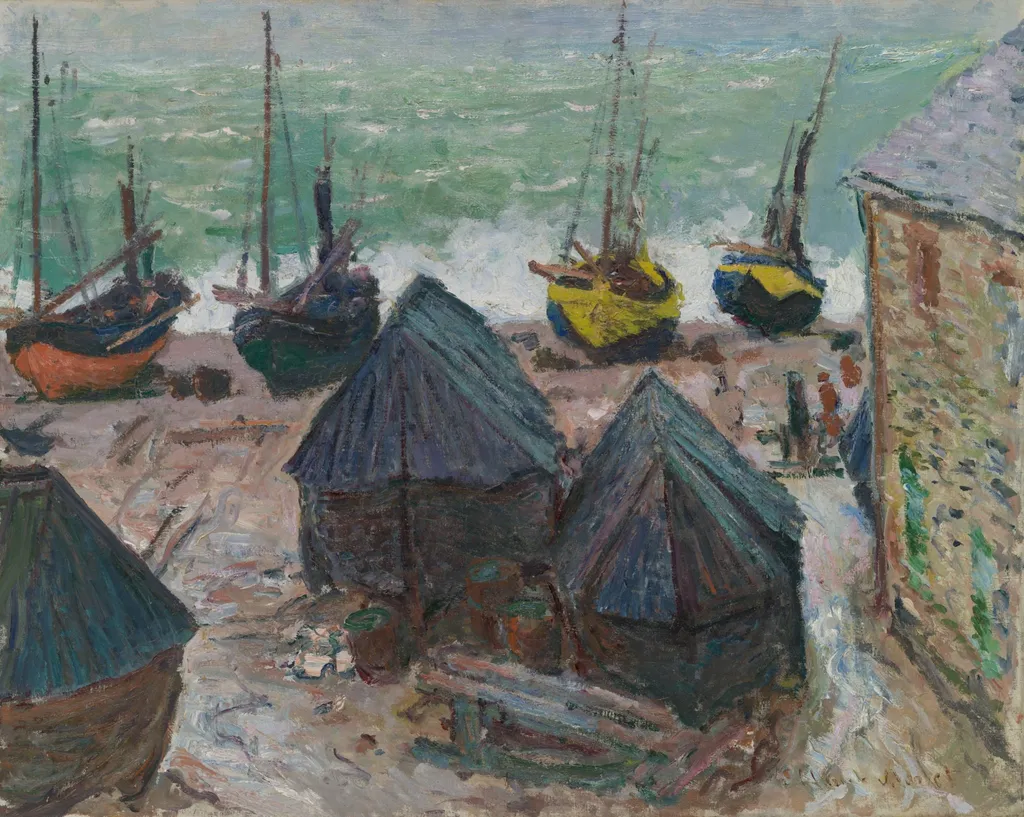
Boats on the Beach at Étretat is an oil painting by the Impressionist artist Claude Monet. It dates from 1885 and is held in the collection of the Art Institute of Chicago.
About this work
This pair of paintings shows how Monet worked indoors when bad weather trapped him.
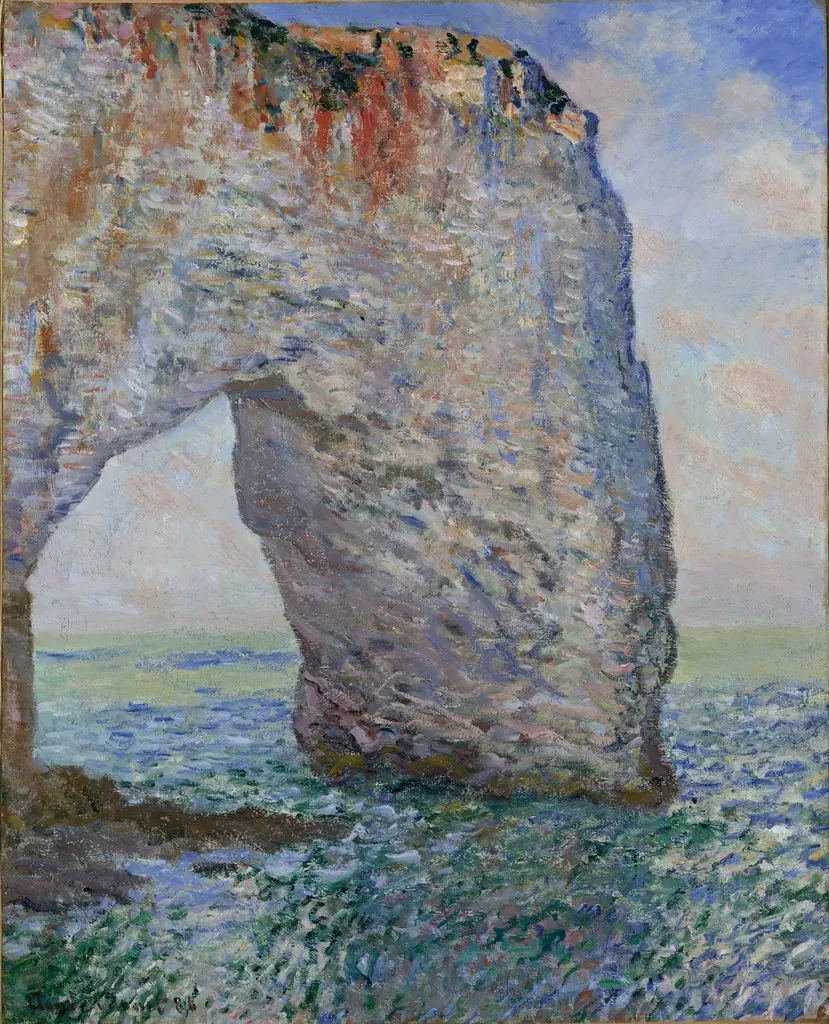
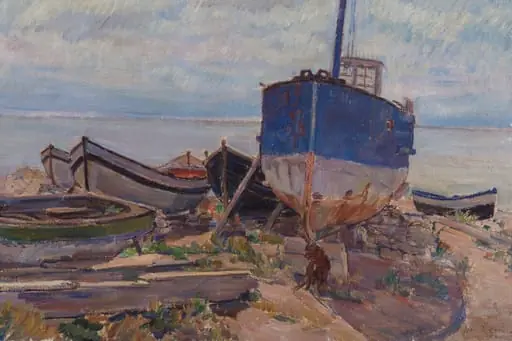
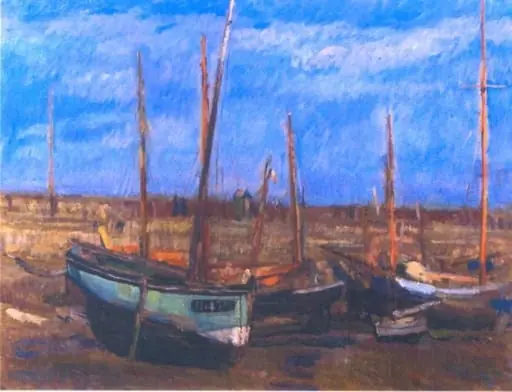
Monet painted sandy cliffs and small boats at Étretat in 1885. The view comes from his hotel window. Boats sit low in the frame while cliffs rise behind them.
This pair of paintings shows how Monet worked indoors when bad weather trapped him. He kept up his routine by looking out glass. In letters he called the boats his “caloges,” or beach huts.
See these two side by side at the Art Institute of Chicago.
Overview
Claude Monet created two related oil paintings in late 1885 while confined indoors by rain at the Hôtel Blanquet in Étretat. Both works depict the same coastal scene viewed through his hotel window: beached fishing boats against the backdrop of chalk cliffs. Though painted from inside, they capture the atmosphere of the shore with sensitivity to light and weather, reflecting his commitment to observing nature even under restrictive conditions.
Subject & Meaning
The paintings focus on local fishing vessels, known locally as 'caloges,' resting on the beach or preparing to depart. These boats, weathered and tarred, are central to the composition, anchoring the viewer’s gaze. Their presence suggests the rhythm of coastal life—stillness in one, motion in the other. Monet’s choice to frame them against towering cliffs emphasizes human activity within the vastness of the natural environment.
Technique & Style
Monet applied thin, layered washes of pastel blues, pinks, purples, and greens to convey damp surfaces and shifting light. Brushwork varies between the still boats—rendered with soft, blended tones—and the fleeting figures near the water, painted with rapid, gestural strokes. The compositions are tightly cropped, focusing attention on the boats and their immediate surroundings, while the cliffs rise vertically to frame the scene without dominating it.
History & Provenance
Painted in November 1885, the two works were created during a period when Monet was staying at the Hôtel Blanquet. He referenced them in letters to Alice Hoschedé, describing his efforts to paint through the window despite the rain. Both pieces remained in his possession until later acquisitions by private collectors. They are now held together at the Art Institute of Chicago, where their pairing underscores Monet’s methodical approach to seasonal and atmospheric variation.
Context
Monet’s stay in Étretat followed his earlier visits to the Normandy coast, where he had long studied the cliffs and tides. In 1885, he was refining his practice of painting the same subject under differing conditions. Confined by weather, he turned inward, using the window as a frame—a practical adaptation that nonetheless preserved his dedication to capturing transient effects of light and atmosphere in a familiar landscape.
Legacy
These two paintings illustrate Monet’s ability to sustain artistic inquiry under physical constraints. By working from a fixed vantage point, he demonstrated how subtle shifts in perspective and weather could yield distinct compositions. Their pairing remains a quiet testament to his disciplined observation, influencing later artists who explored the limits of perception and the role of environment in shaping artistic output.
Own this work as a print
Artist & collection
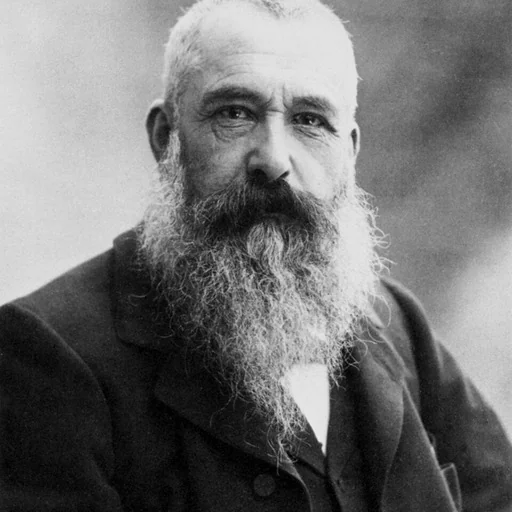
Artist
Oscar-Claude Monet was born in Paris on November 14, 1840, and raised from the age of five in Le Havre, where he began selling charcoal caricatures as a teenager.