Artwork
St. Guénole
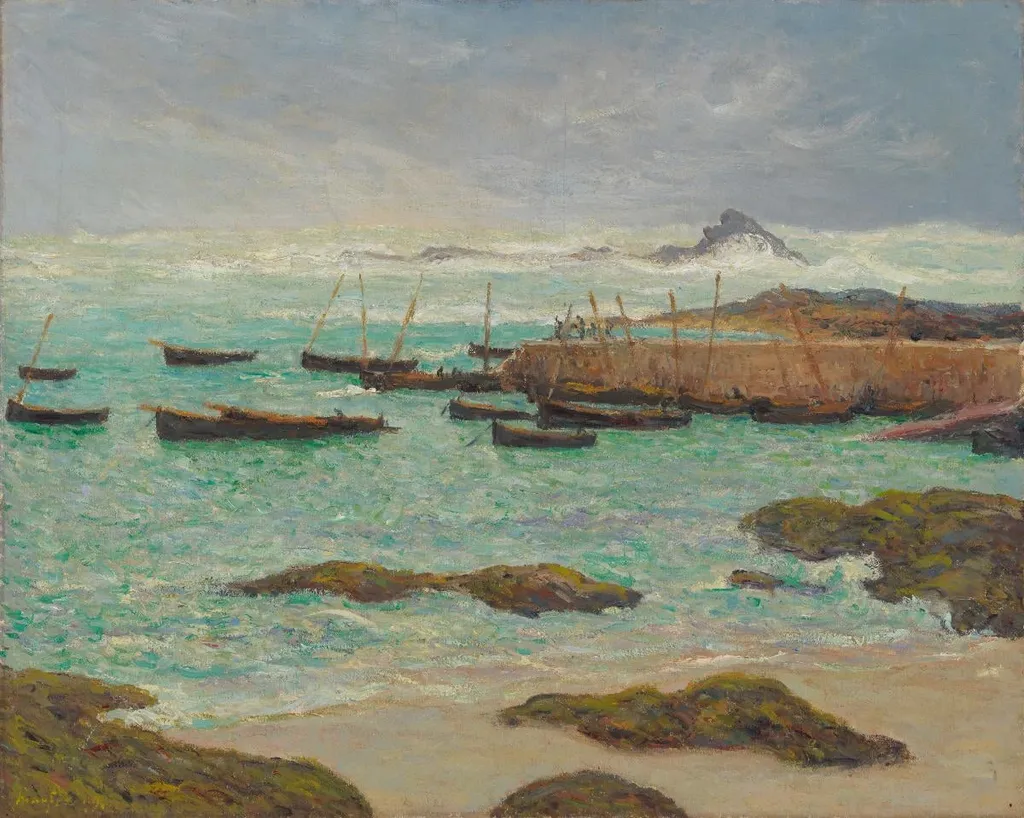
St. Guénole is an unspecified painting by Maxime-Emile-Louis Maufra. It is held in the collection of the Finnish National Gallery.
About this work
Overview
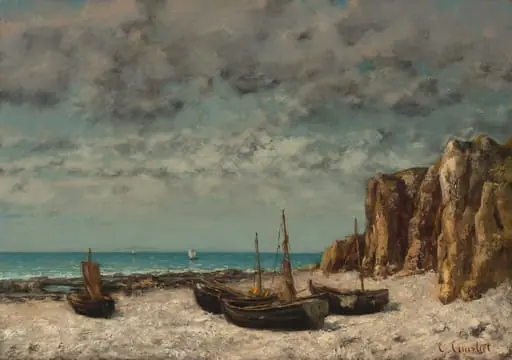
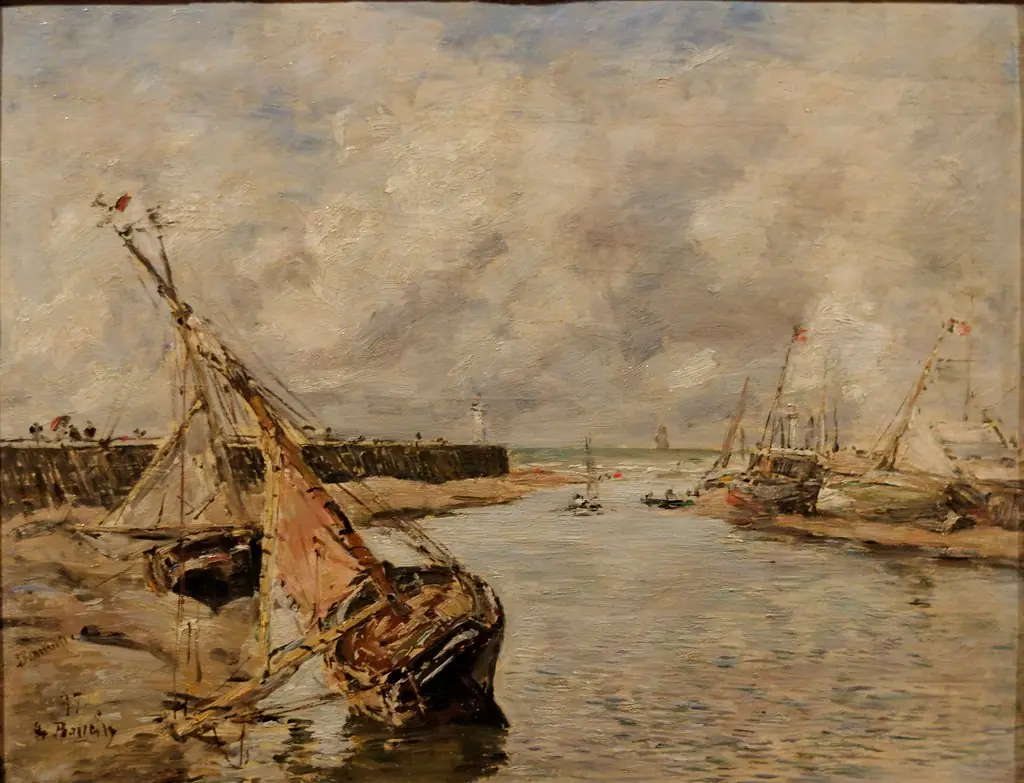
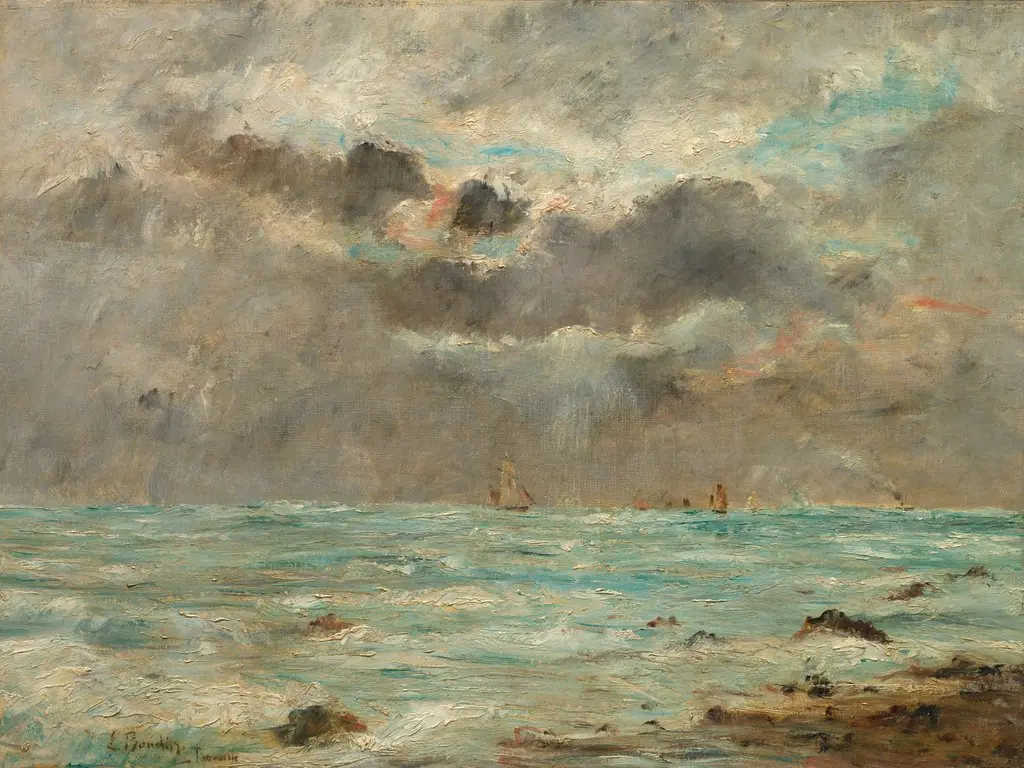
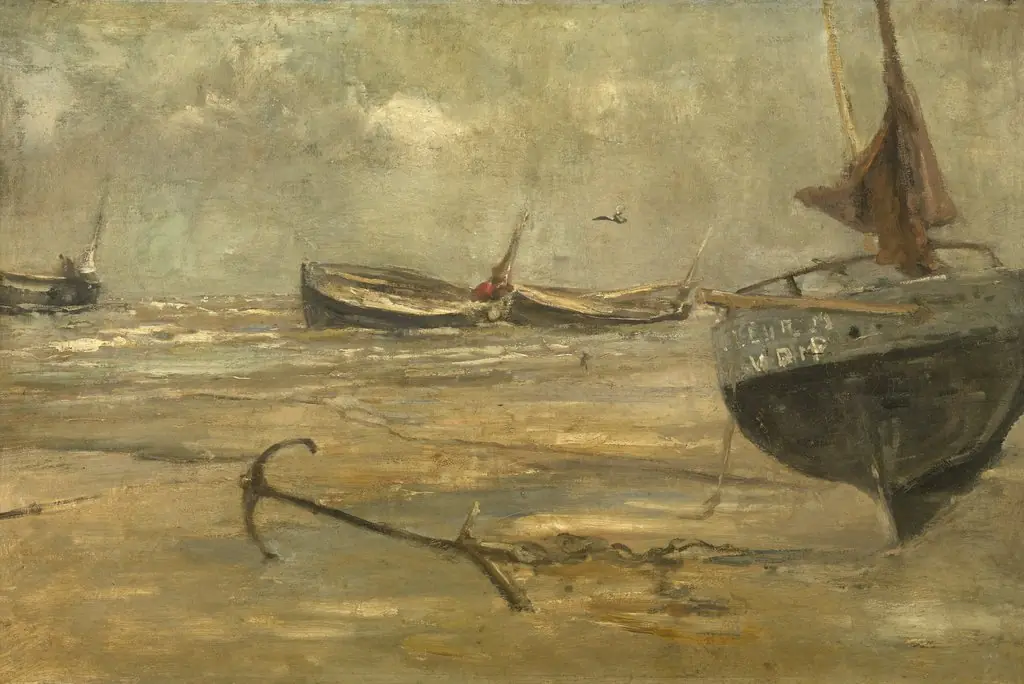
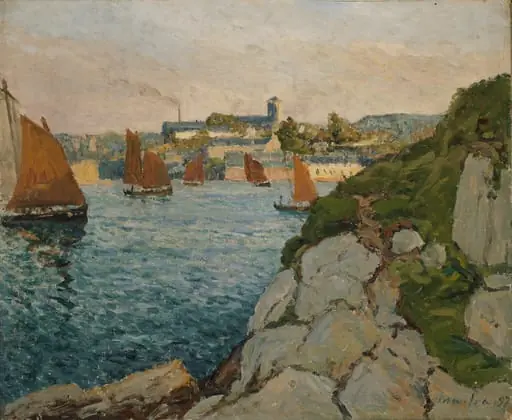
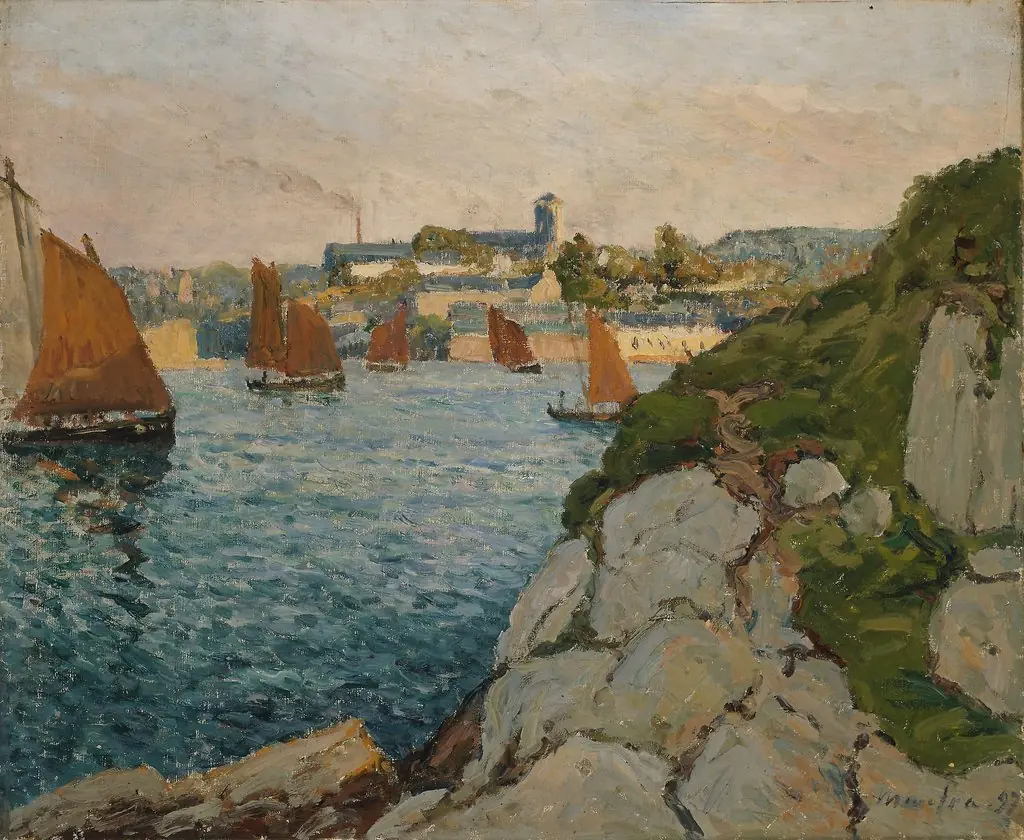
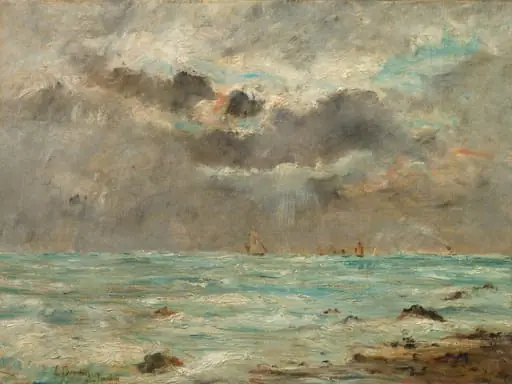
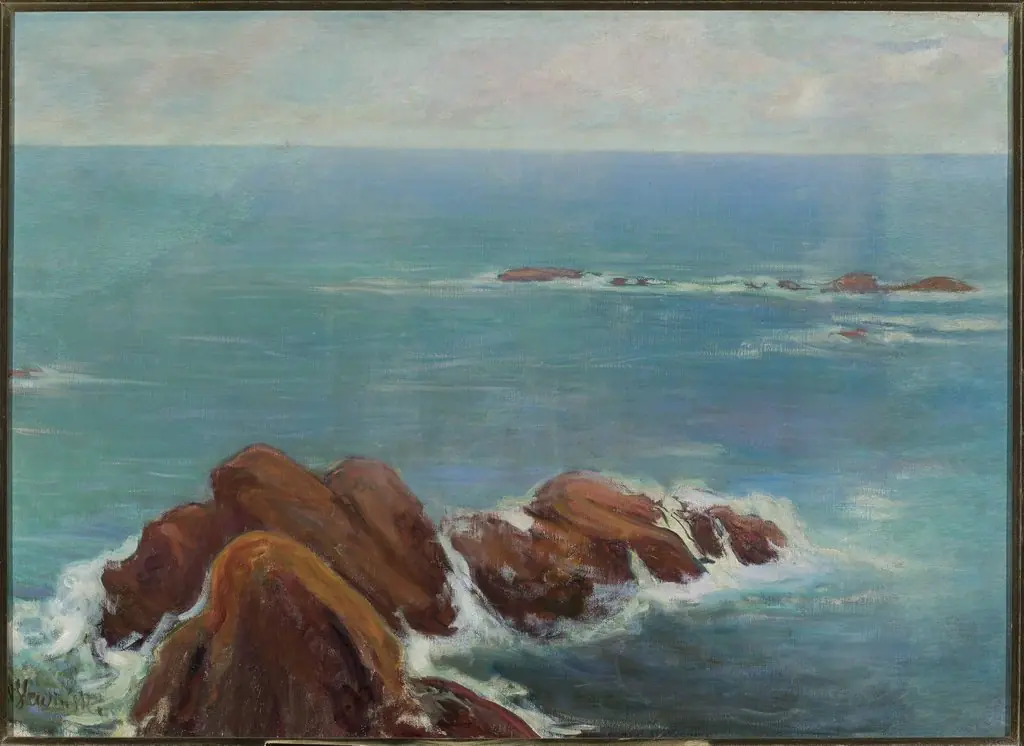
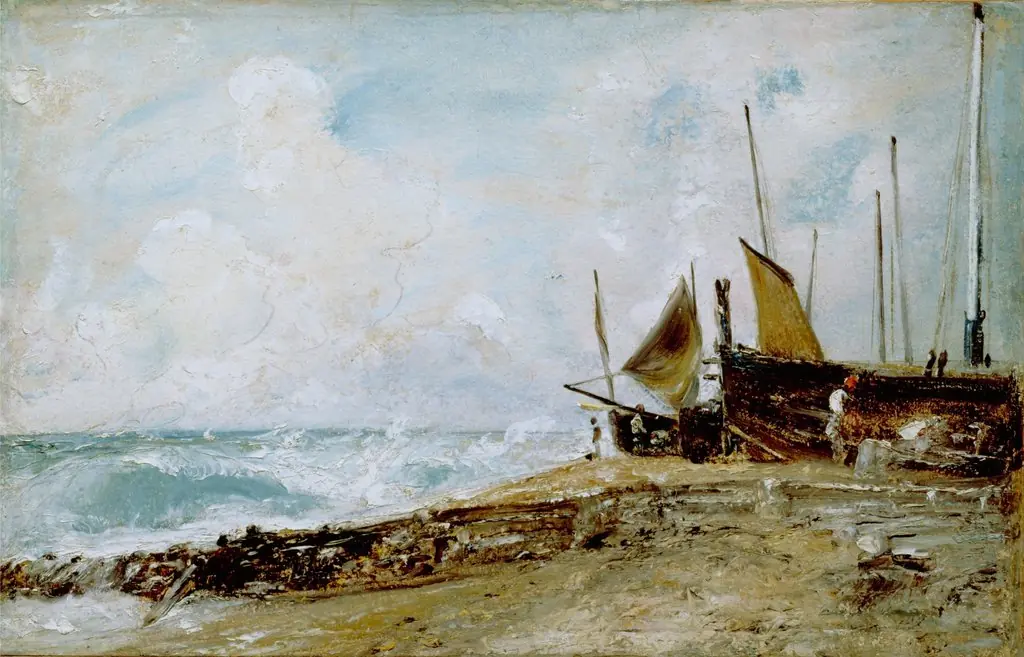
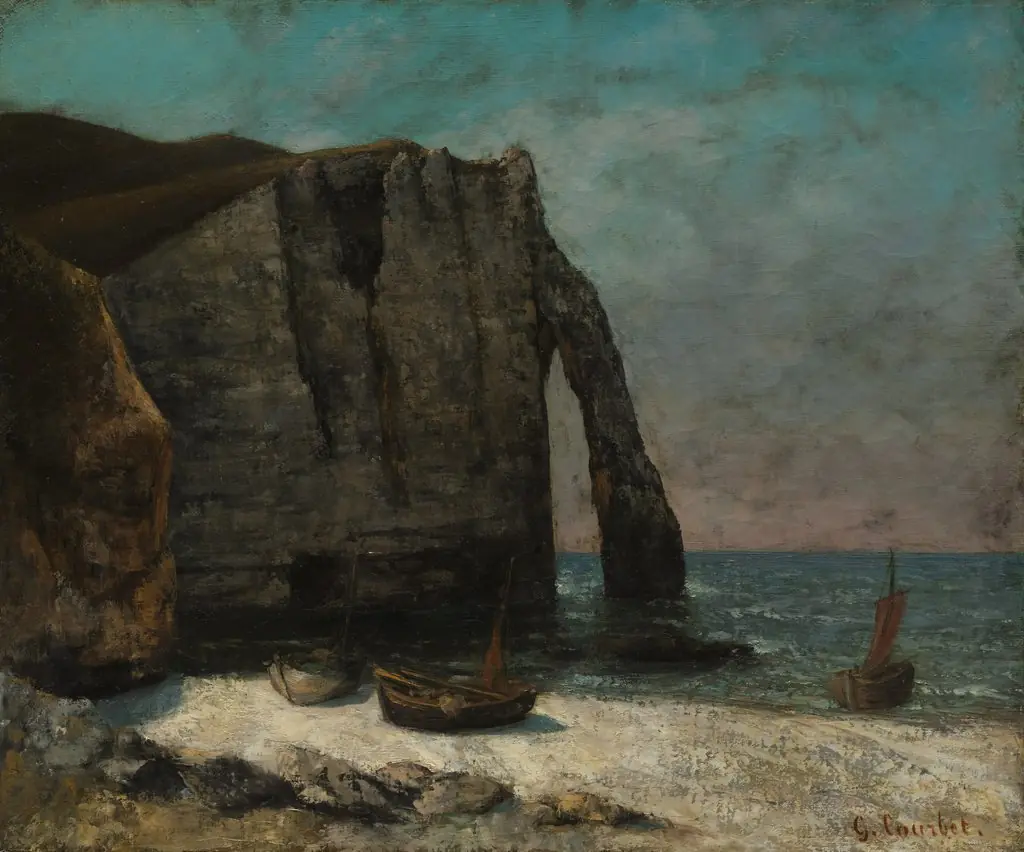
This work depicts a coastal scene with modest fishing boats on turbulent water, a distant ship near a dock, and a rugged island under a pale sky.
This work depicts a coastal scene with modest fishing boats on turbulent water, a distant ship near a dock, and a rugged island under a pale sky. The brushwork is loose and rapid, suggesting movement and atmosphere rather than precise detail. Colors are subdued—greens, blues, and earth tones—with occasional highlights on the waves. The overall effect is one of quiet observation, emphasizing the transient nature of the sea and sky.
Subject & Meaning
The scene centers on humble maritime activity: small boats navigating rough waters, a larger vessel anchored nearby, and an isolated rocky island. There is no human figure, yet the presence of boats implies labor and passage. The setting evokes solitude and the quiet rhythm of coastal life, without narrative or symbolism. The focus lies in the environment itself—its textures, light, and mood—rather than any religious or historical reference.
Technique & Style
The painting employs swift, open brushstrokes that convey the motion of water and wind without fine detail. Forms are suggested rather than defined, particularly in the boats and waves. The application is thin and fluid, with minimal impasto, creating a sense of immediacy. The palette is restrained, relying on tonal variations to suggest depth and atmosphere, aligning with a practice of direct observation over idealized composition.
History & Provenance
The painting is attributed to St. Guénole, a 19th-century Breton artist known for coastal landscapes. Little documentation exists regarding its creation date or early ownership. It likely originated from the artist’s personal studies of the Brittany shoreline, possibly as a preparatory sketch or independent study. Its survival suggests it was retained within family or local collections before entering institutional hands.
Context
Created during a period when artists increasingly turned to natural scenes outside academic studios, this work reflects a broader shift toward plein air painting and the depiction of everyday maritime life. While not part of a major movement, it shares affinities with regional realist traditions in Brittany, where painters sought to capture the raw character of the coast without romantic embellishment.
Legacy
Though not widely exhibited or reproduced, the painting contributes to a modest but persistent body of work by regional artists who documented coastal France with quiet sincerity. Its unpolished technique and focus on transient light and water influenced later local painters who valued direct observation over formal finish. It remains a quiet example of 19th-century provincial landscape practice.
Artist & collection
Artist
Maufra made bold, textured landscapes that caught the rugged coasts and cliffs of Brittany in the late 1800s.