Artwork
Embankment in Le Havre
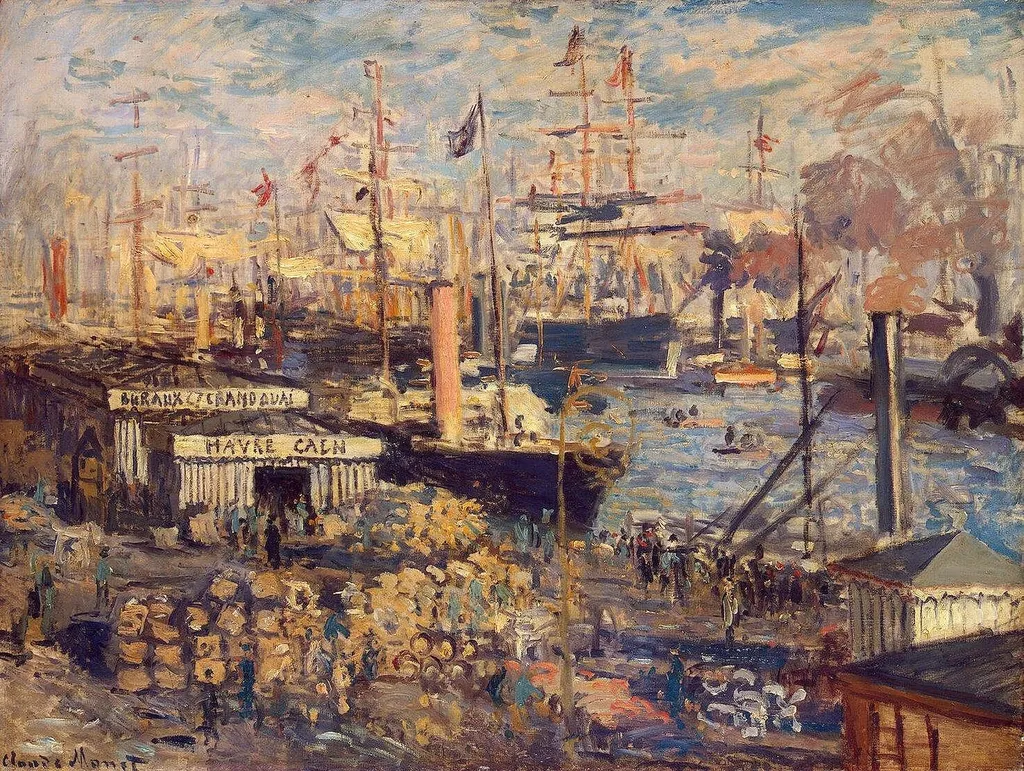
Embankment in Le Havre is an oil painting by the Impressionist artist Claude Monet. It dates from 1874 and is held in the collection of the Hermitage Museum.
About this work
Overview
Painted in 1874, Embankment in Le Havre is an unfinished oil on canvas by Claude Monet, depicting the bustling Grand Quai of his hometown.
Painted in 1874, Embankment in Le Havre is an unfinished oil on canvas by Claude Monet, depicting the bustling Grand Quai of his hometown. Created during a brief return to Le Havre, the work was intended as part of a series for an upcoming exhibition. It remains in the Otto Krebs collection at the Hermitage Museum, one of four port scenes Monet produced during this visit, with the others held in Los Angeles, Philadelphia, and a private collection.
Subject & Meaning
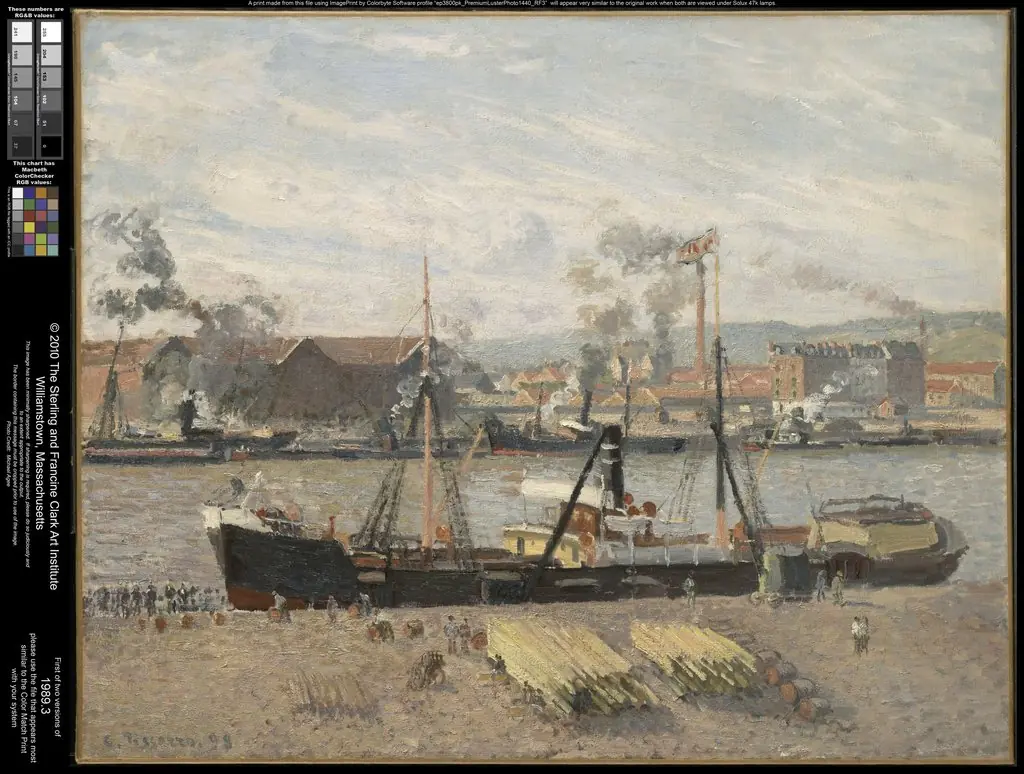
The scene captures the working harbor of Le Havre, with docked vessels, stacked cargo, and administrative buildings lining the quay. Figures move along the waterfront, engaged in routine labor, reinforcing the site’s function as a commercial hub. Monet’s focus on ordinary activity, rather than idealized spectacle, reflects his interest in modern life and the rhythms of urban industry.
Technique & Style
Monet applied loose, rapid brushwork to convey movement and atmosphere, particularly in the sky and water. Color is used to suggest light and depth rather than define form precisely. The unfinished state reveals underlying layers and sketch-like passages, emphasizing his process over polished finish. The composition draws the eye along the horizon, anchored by the quay’s linear structures.
History & Provenance
Monet painted this during a visit to Le Havre in autumn 1874, shortly after the first Impressionist exhibition. He produced three other harbor views during the same period. The painting remained in private hands until entering the Otto Krebs collection, which was later acquired by the Hermitage Museum. Its incomplete condition suggests it was set aside for further work that never materialized.
Context
This work emerged during a pivotal moment in Monet’s career, as he sought to define a new visual language for contemporary life. Le Havre, a major port and his birthplace, offered a subject rich with industrial activity and shifting light. The series reflects his commitment to painting en plein air and capturing transient effects, aligning with broader Impressionist goals of observing nature and urban scenes directly.
Legacy
Though unfinished, Embankment in Le Havre contributes to the understanding of Monet’s early exploration of urban subjects and his evolving technique. It stands as a record of his engagement with the modern port city, distinct from his later landscapes. The existence of related works in major institutions underscores its role in the development of his port series and the broader Impressionist movement.
Artist & collection
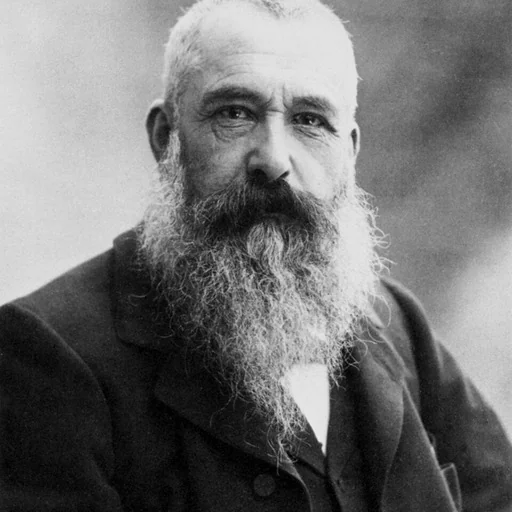
Artist
Oscar-Claude Monet was born in Paris on November 14, 1840, and raised from the age of five in Le Havre, where he began selling charcoal caricatures as a teenager.