Artwork
Japanese Bridge
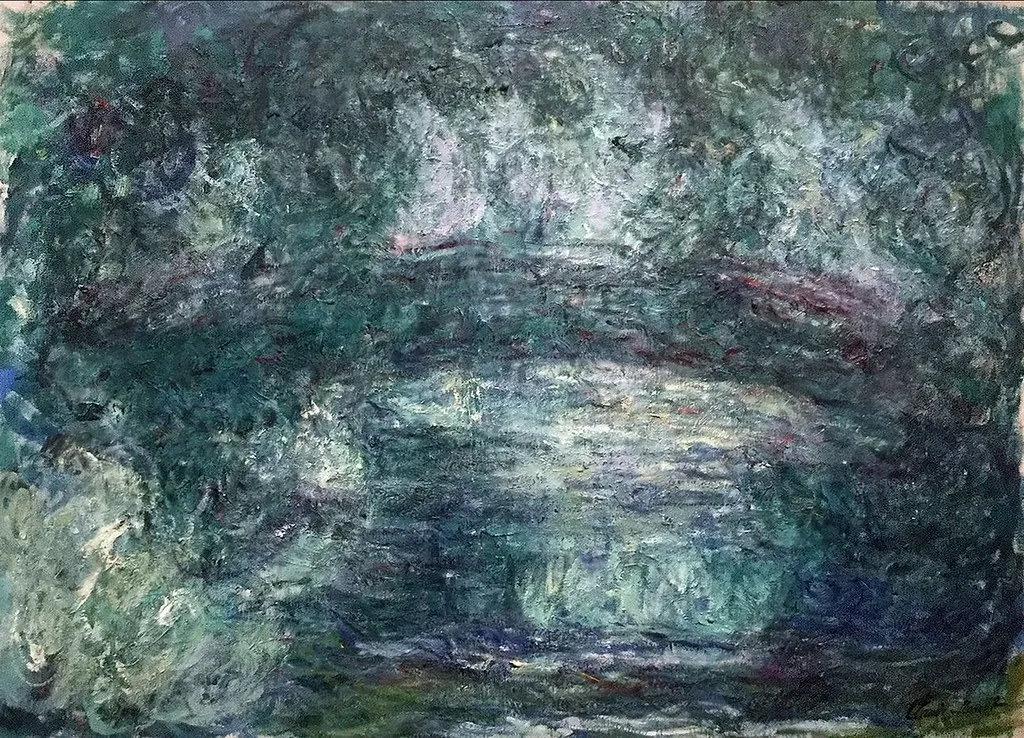
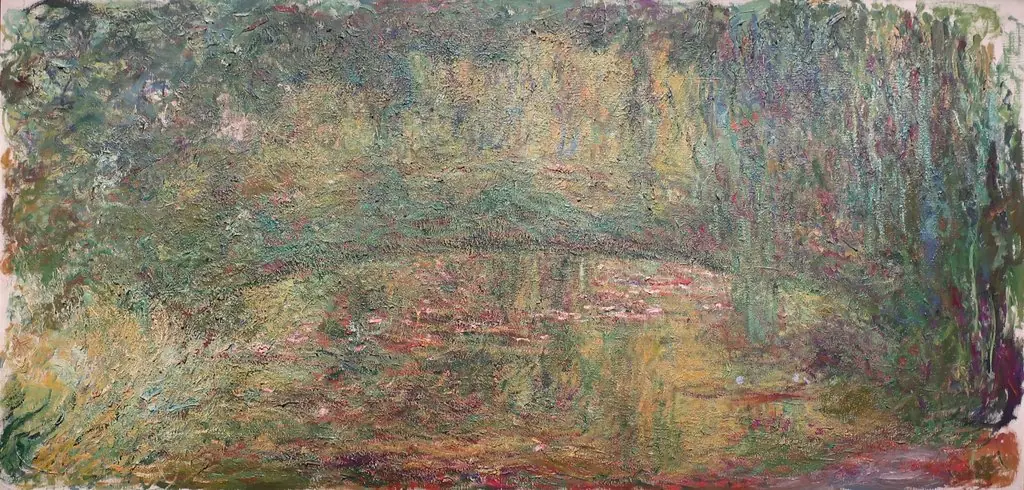
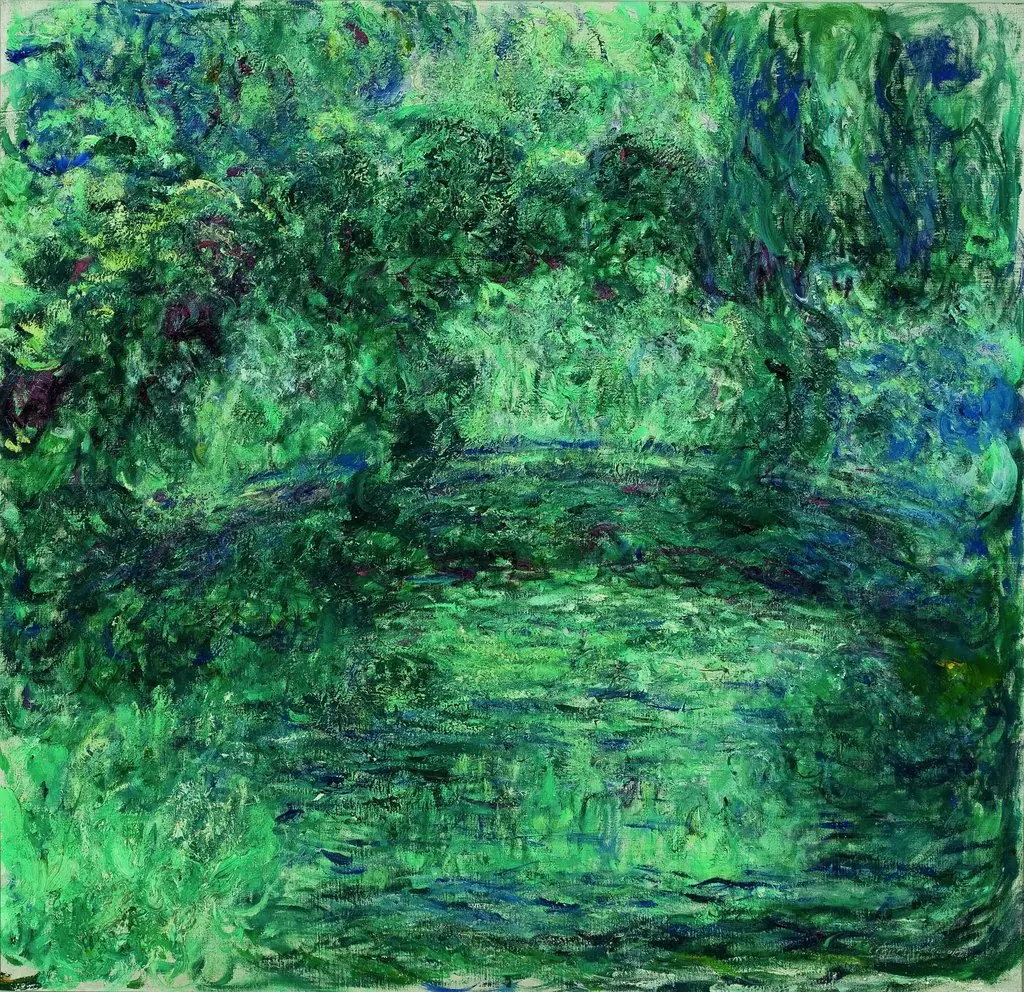
Japanese Bridge is an oil painting by the Impressionist artist Claude Monet. It dates from 1919 and is held in the collection of the Musée Marmottan Monet.
About this work
Overview
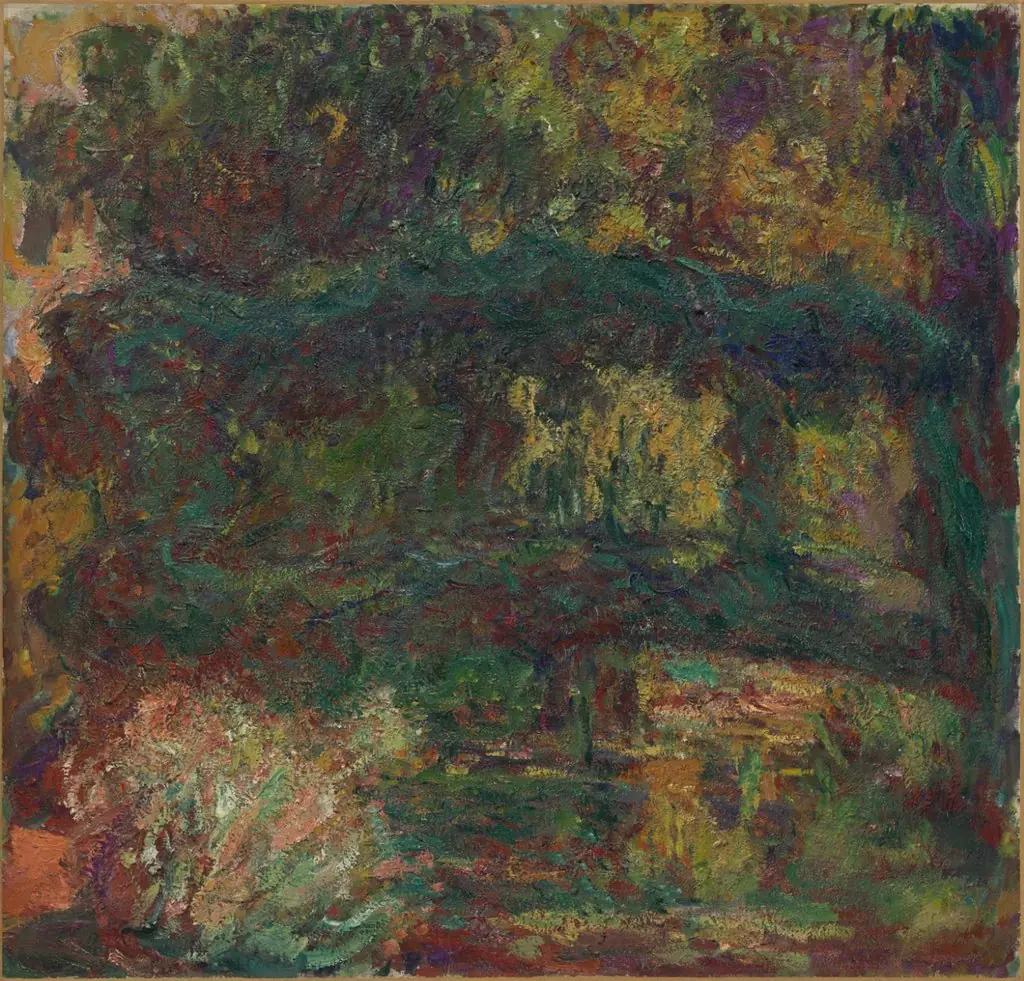
Claude Monet’s oil work titled Japanese Bridge, painted in 1919, is part of the collection at the Musée Marmottan Monet. The canvas depicts a modest wooden bridge spanning a tranquil pond, framed by foliage whose reflections ripple across the water’s surface.
Subject & Meaning
The scene captures a quiet garden setting, with the bridge serving as a focal point that draws the eye toward the surrounding trees and shrubbery. The interplay of reflected vegetation and sky suggests a contemplation of nature’s calm and the fleeting effects of light on water.
Technique & Style
Monet applied thick layers of pigment, creating a pronounced impasto surface that emphasizes texture. Broad, vigorous brushstrokes render the greens, blues, and occasional purples and pinks, producing a sense of depth and atmospheric perspective characteristic of his late garden paintings.
History & Provenance
Executed toward the end of Monet’s career, the work reflects his ongoing fascination with his own garden at Giverny. After its creation, the painting entered the collection of the Musée Marmottan Monet, where it remains on display as part of the museum’s extensive Monet holdings.
Context
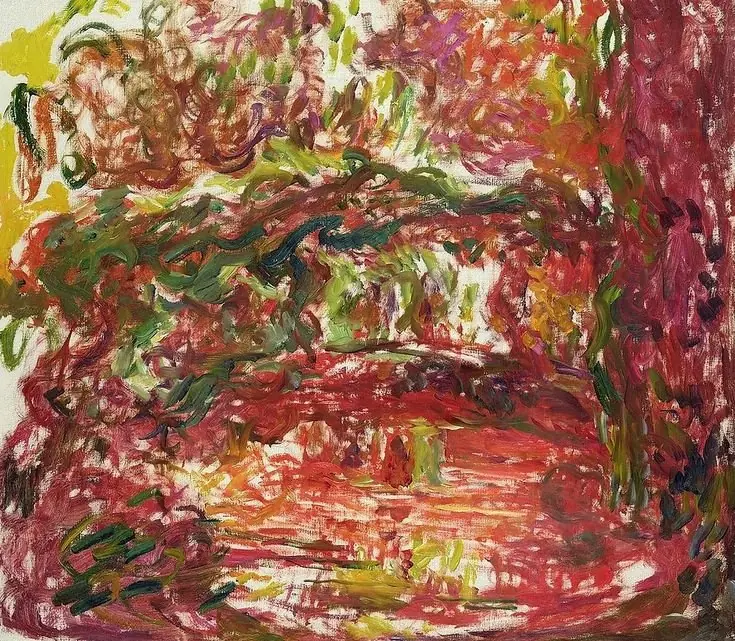
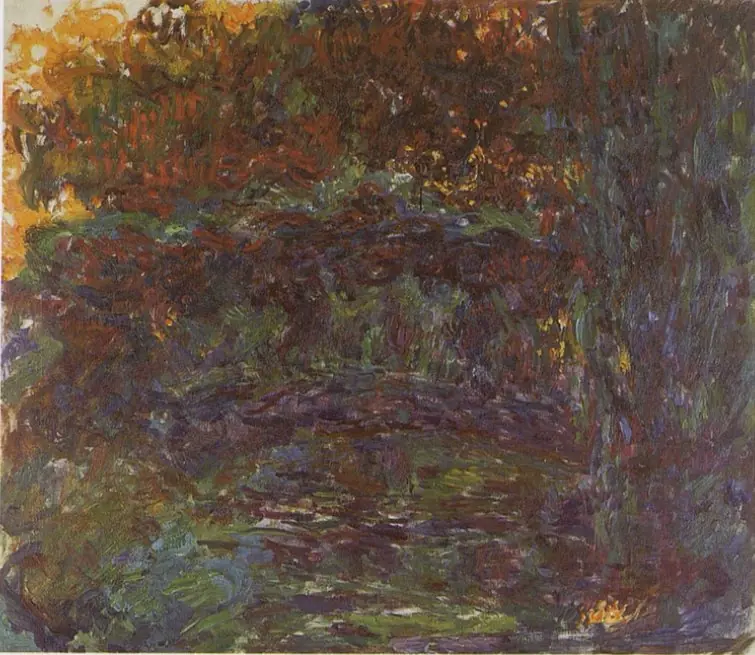
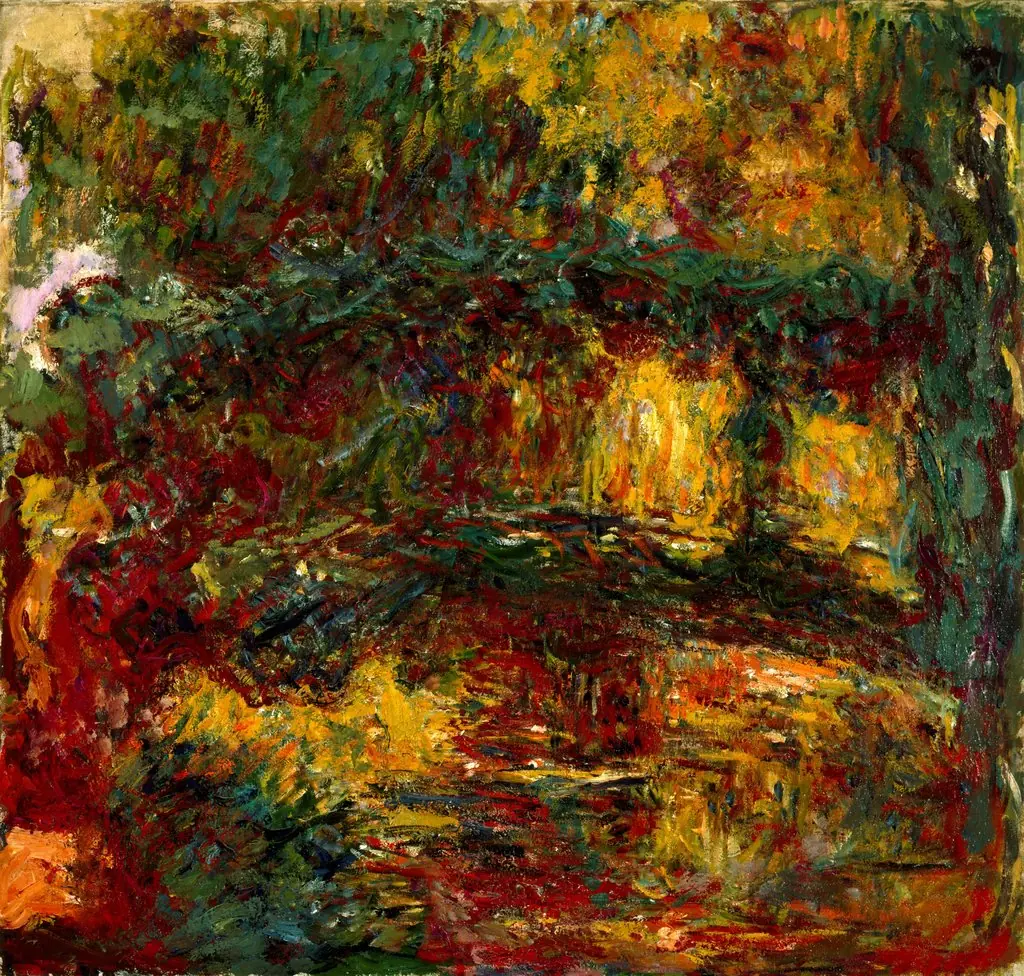
Japanese Bridge belongs to a series of works Monet produced of the same structure, inspired by the Japanese-style footbridge he installed in his Giverny garden. These paintings explore the same motif under varying light conditions, illustrating his commitment to capturing momentary impressions.
Artist & collection
Artist
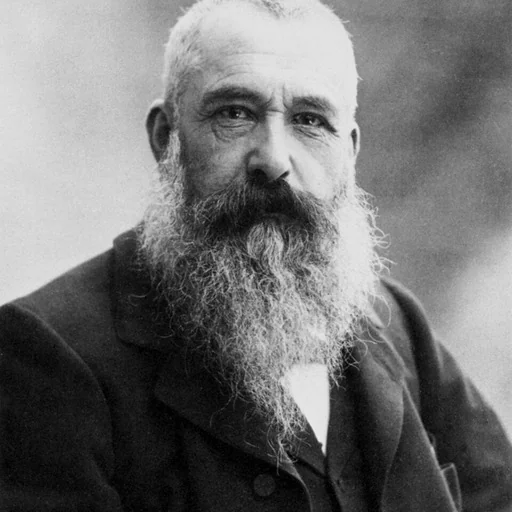
Oscar-Claude Monet was born in Paris on November 14, 1840, and raised from the age of five in Le Havre, where he began selling charcoal caricatures as a teenager.