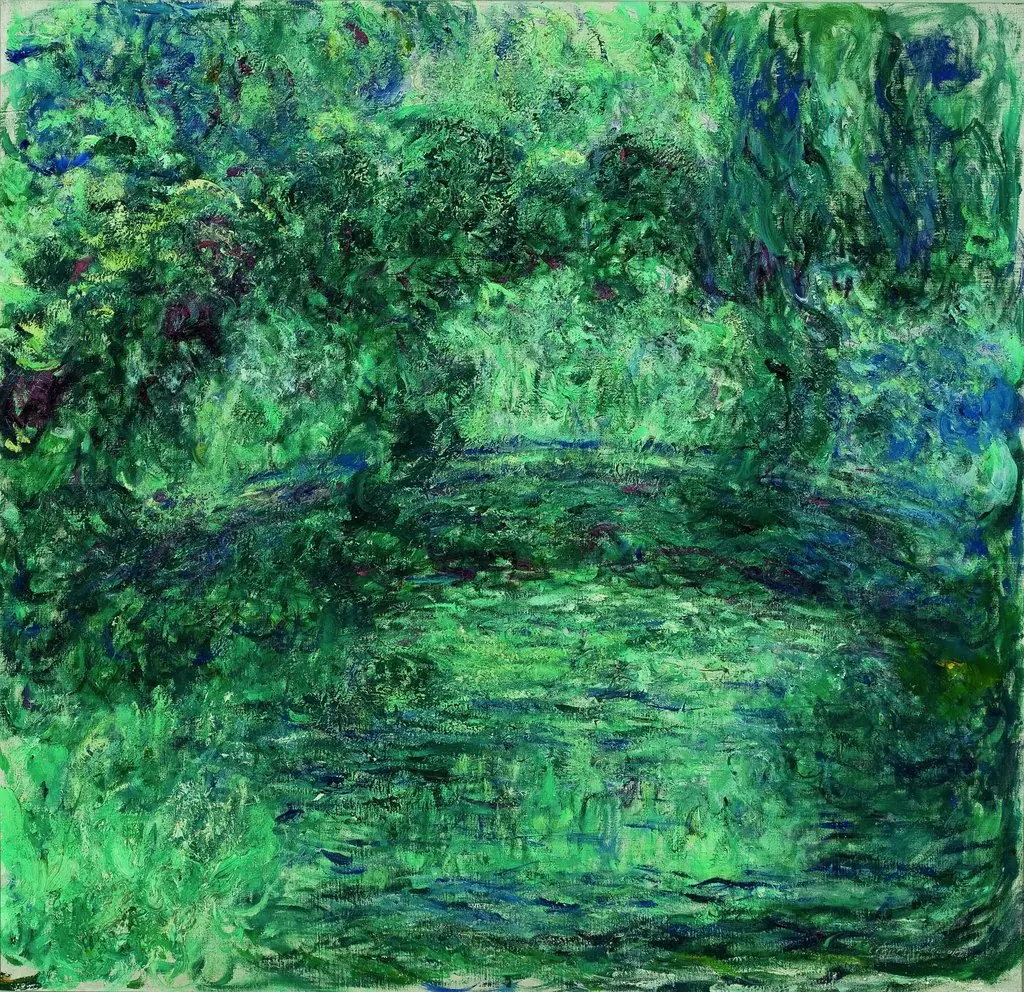
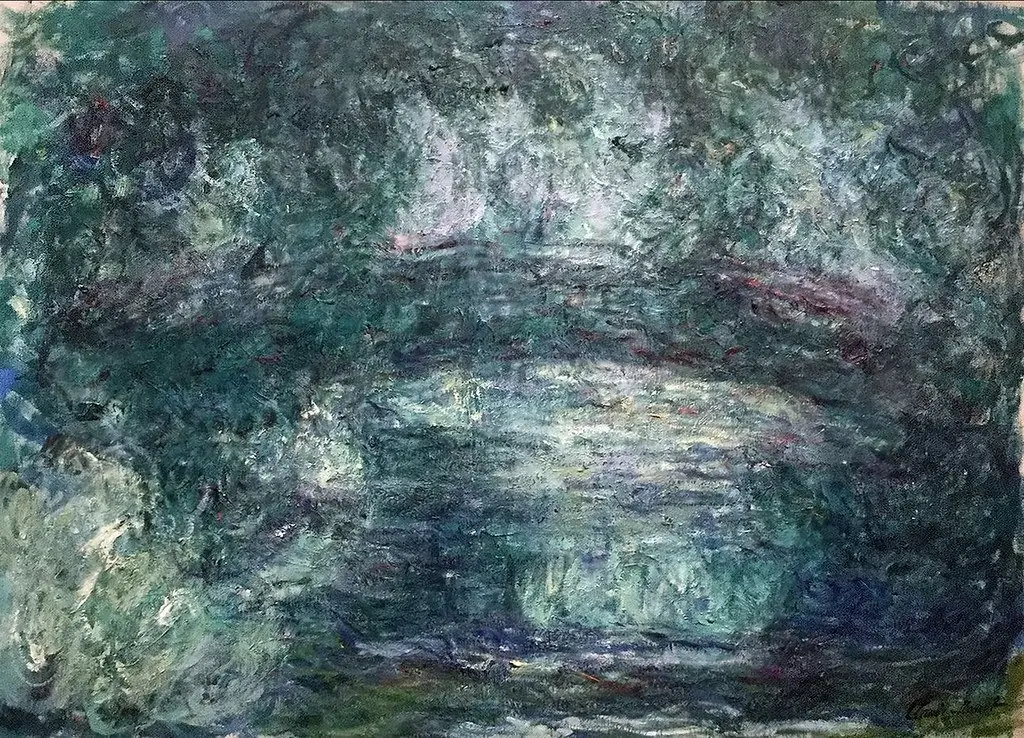
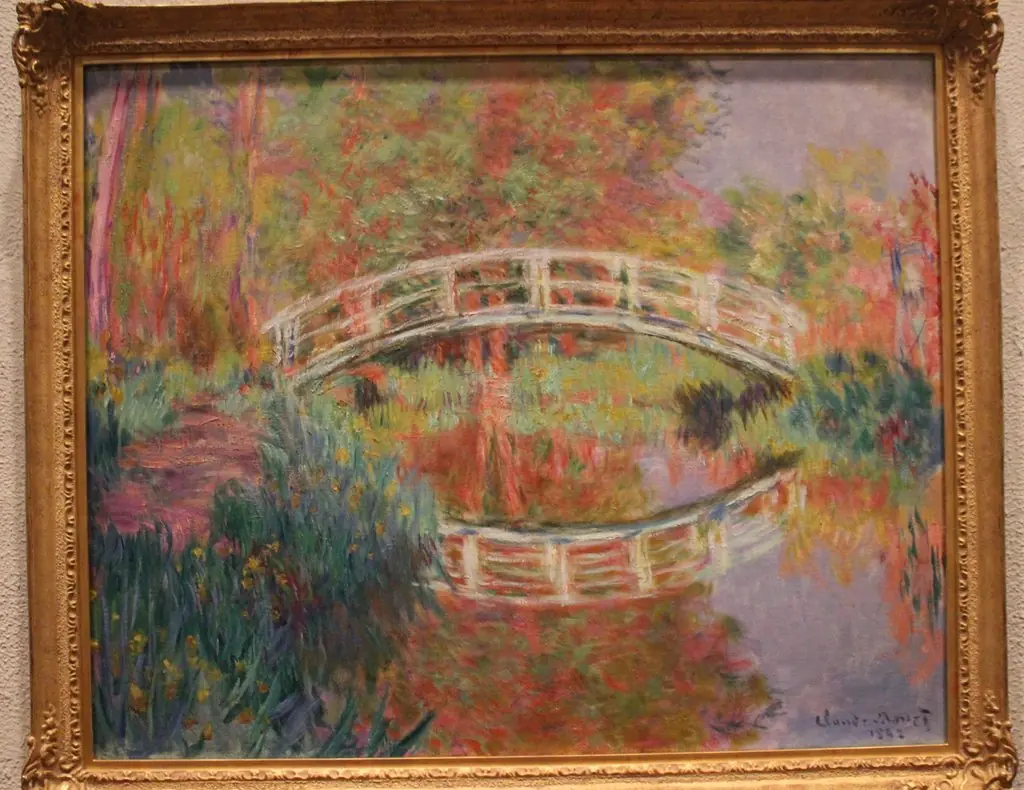
Artwork
The Japanese Bridge
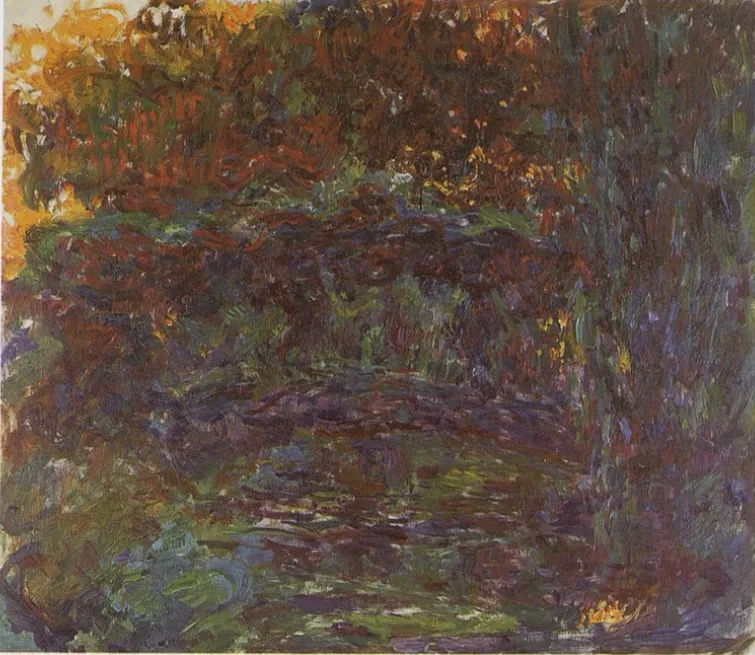
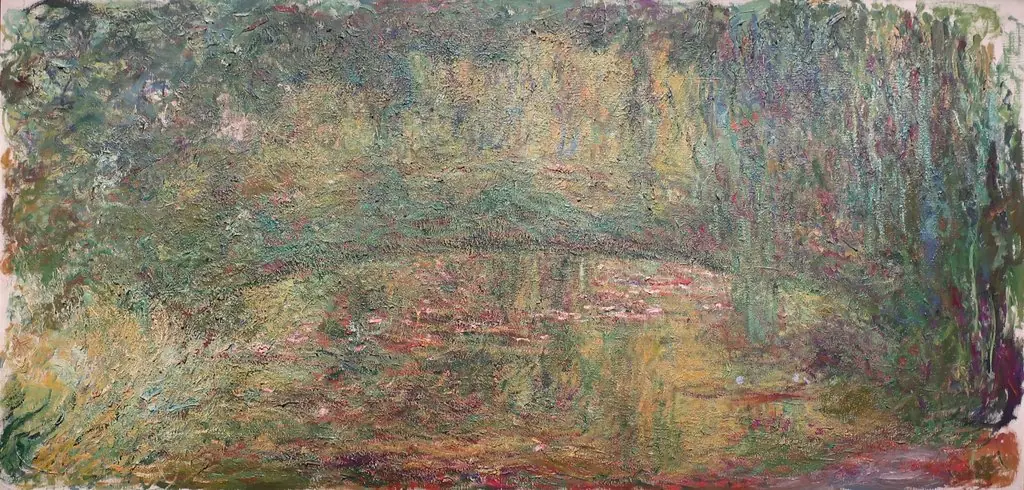
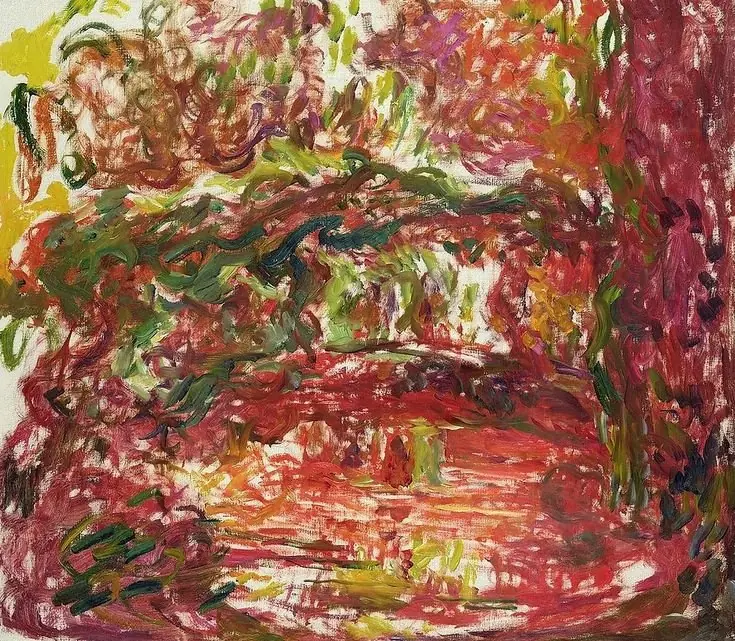
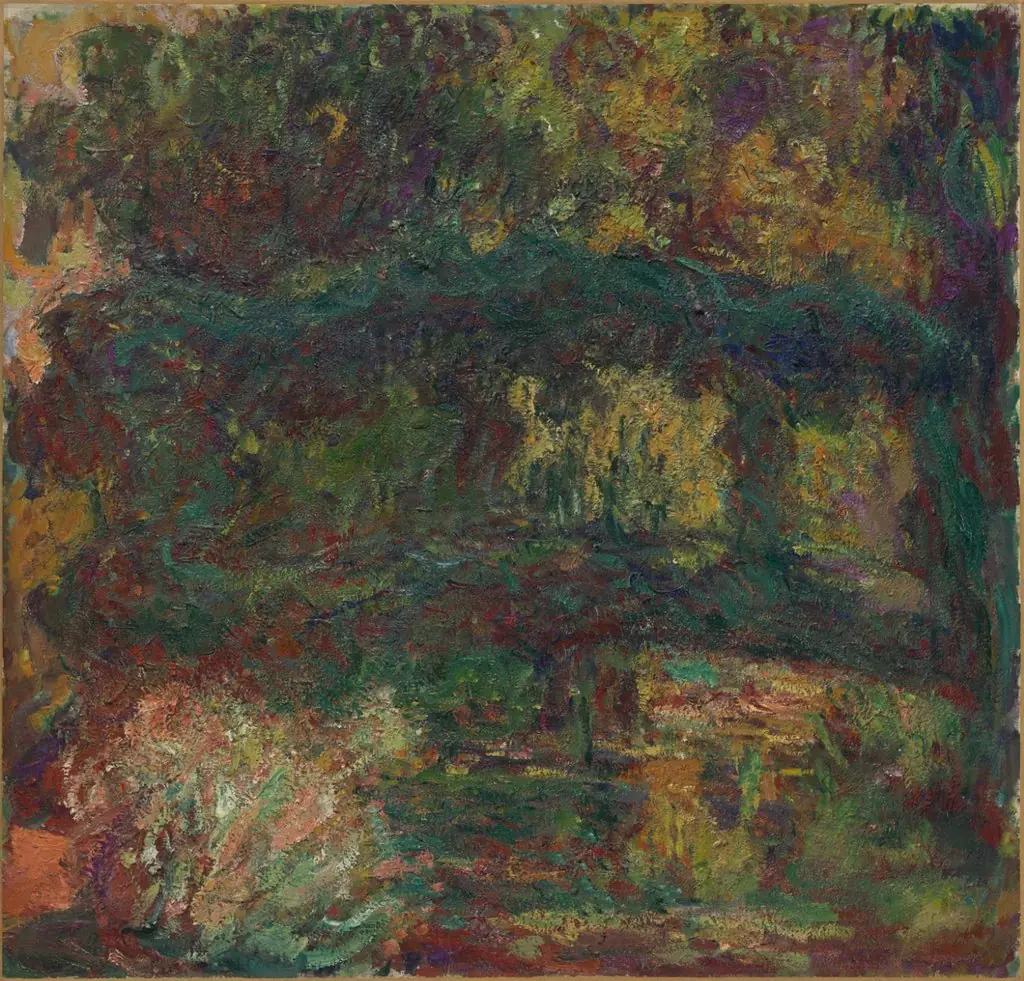
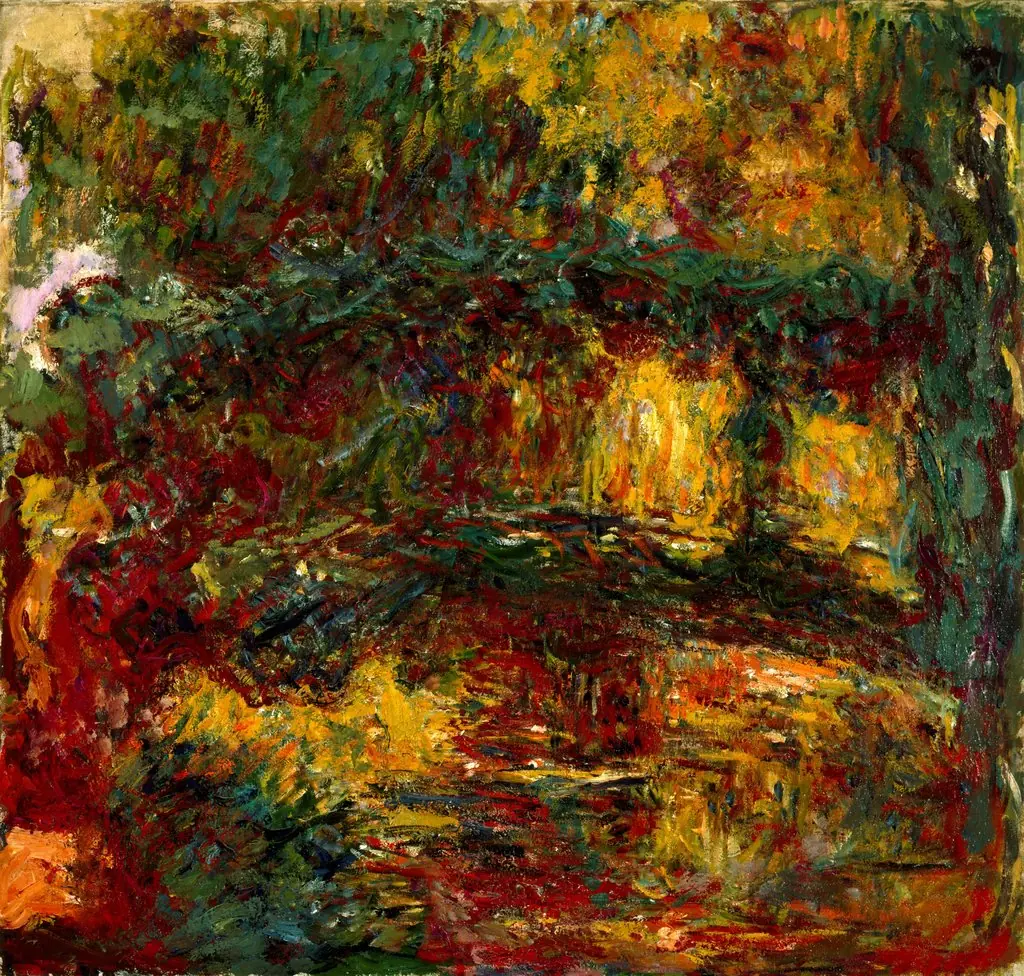
The Japanese Bridge is an oil painting by the Impressionist artist Claude Monet. It dates from 1921 and is held in the collection of the Musée Marmottan Monet.
About this work
Overview
The Japanese Bridge is an oil painting by French artist Claude Monet, executed in 1921. It is part of the permanent collection at the Musée Marmottan Monet.
Subject & Meaning
The painting depicts a serene scene of a Japanese-style bridge, a motif inspired by the garden at Monet's home in Giverny, where he had installed such a bridge over his famous water lily pond.
Technique & Style
Characteristic of Monet's Impressionist approach, the work emphasizes capturing light and color. Soft, feathery brushstrokes and a pastel-dominated palette evoke a sense of tranquility and depth.
History & Provenance
Created in 1921, during Monet's later years, the painting remained in his personal collection until his death. It was later acquired by the Musée Marmottan Monet, where it has been on display.
Context
The Japanese Bridge reflects Monet's long-standing fascination with Japanese culture, evident in his garden's design and his collection of Japanese prints. This cross-cultural inspiration was common among late 19th and early 20th-century European artists.
Legacy
As one of Monet's later works, The Japanese Bridge contributes to the broader understanding of his evolving style in his final decades. It remains a popular piece among visitors to the Musée Marmottan Monet, illustrating the enduring appeal of Monet's Impressionist landscapes.
Artist & collection
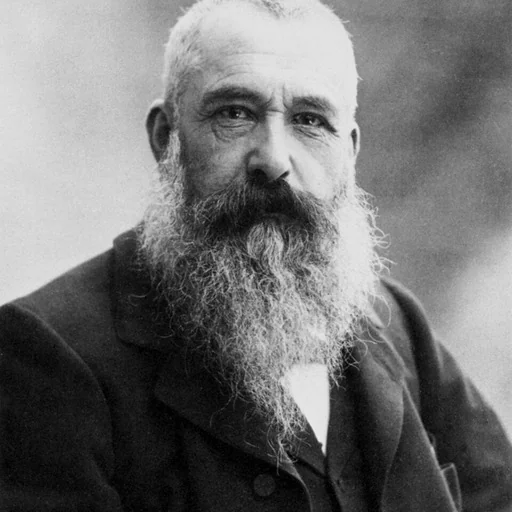
Artist
Oscar-Claude Monet was born in Paris on November 14, 1840, and raised from the age of five in Le Havre, where he began selling charcoal caricatures as a teenager.