Artwork
Mouth of the Seine
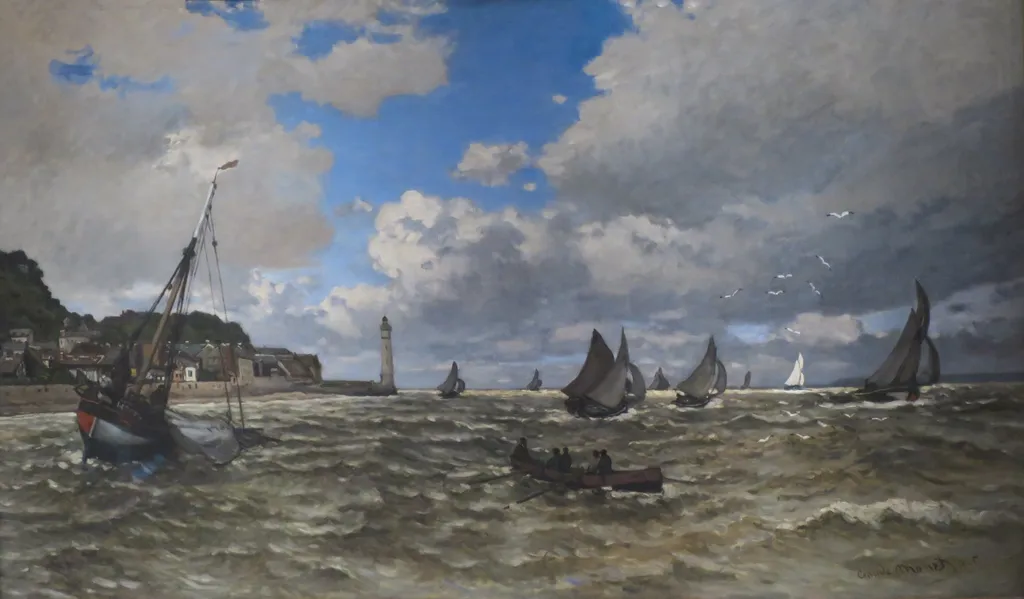
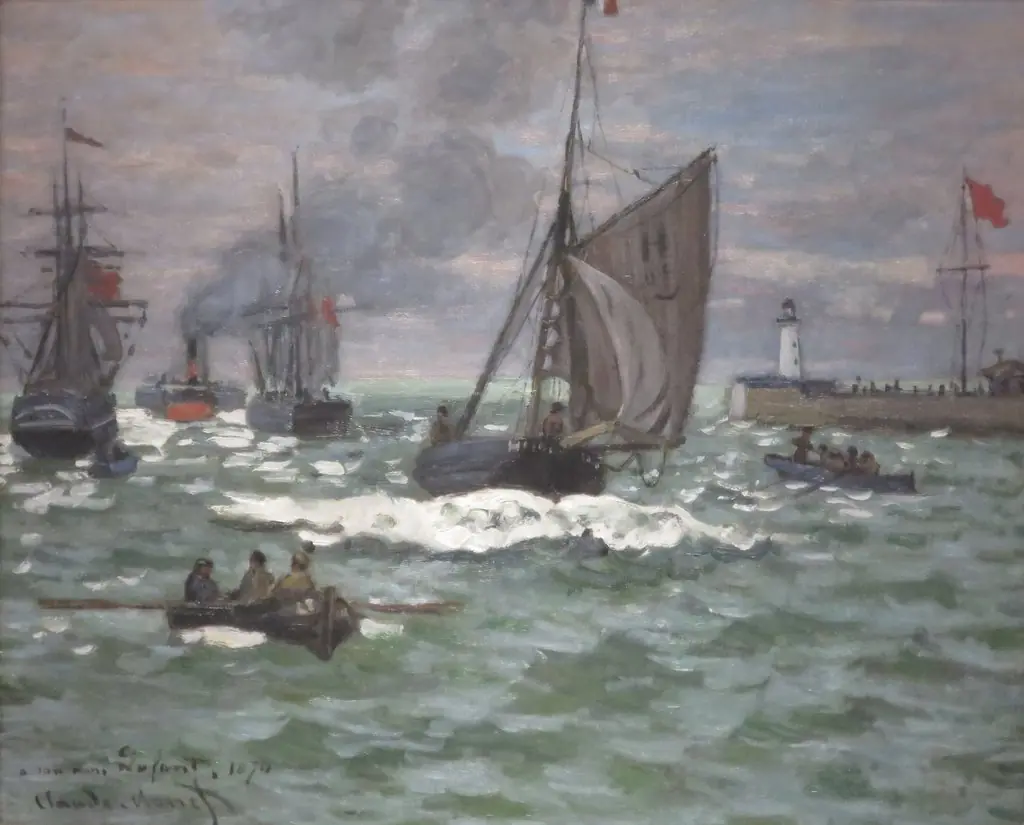
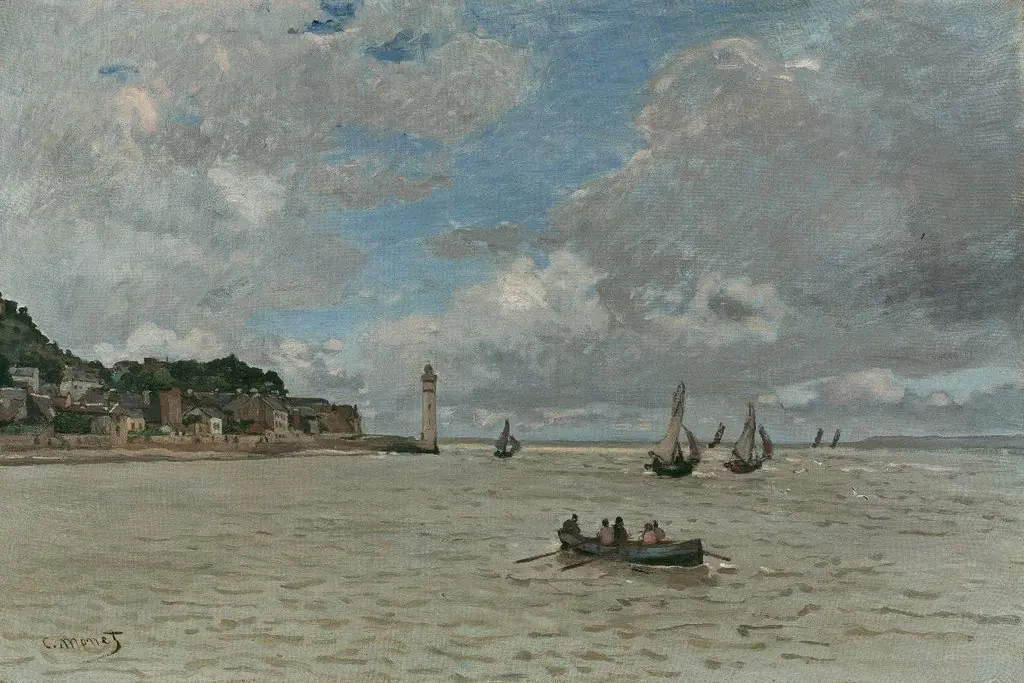
Mouth of the Seine is an oil painting by the Impressionist artist Claude Monet. It dates from 1865 and is held in the collection of the Norton Simon Museum.
About this work
Overview
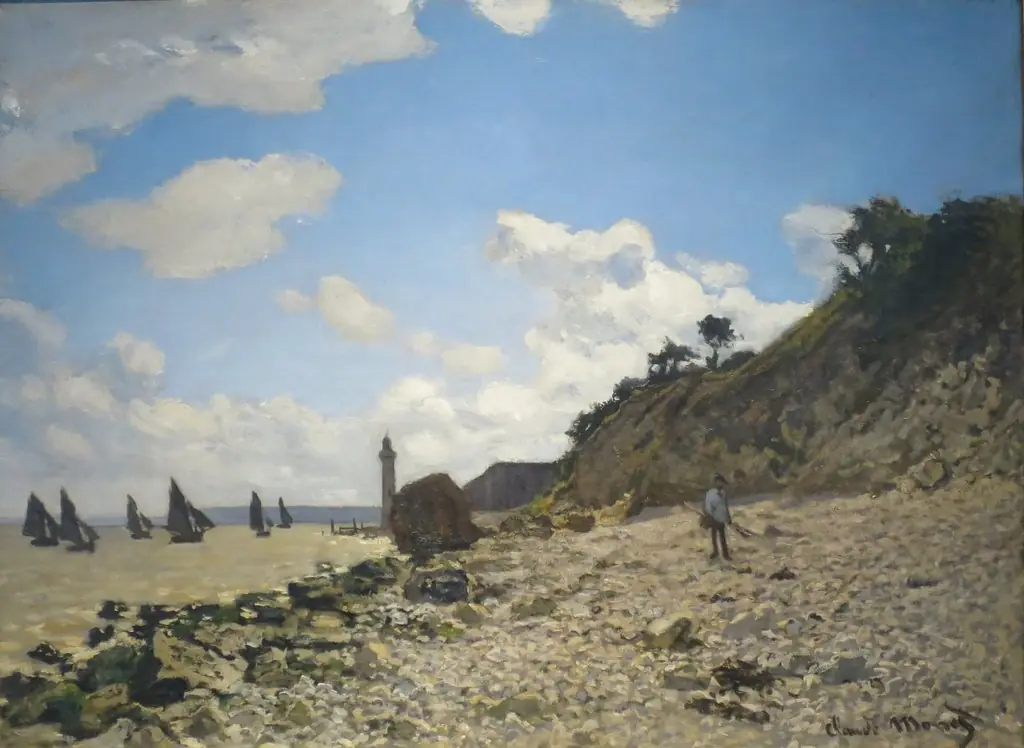
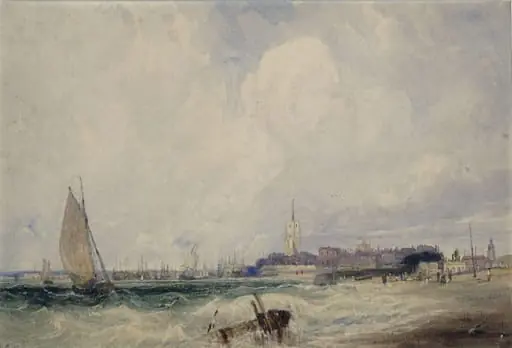
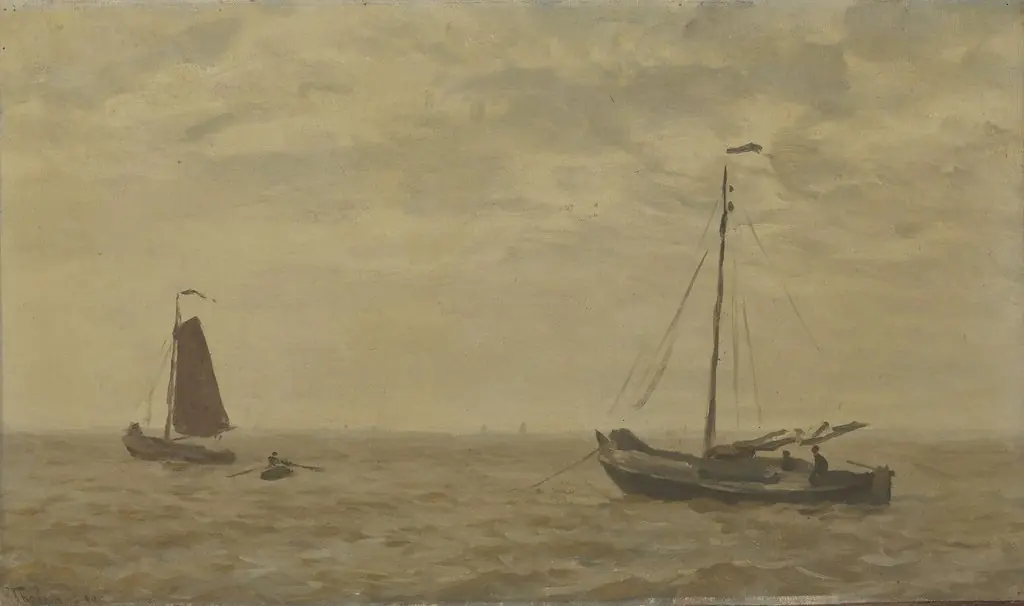
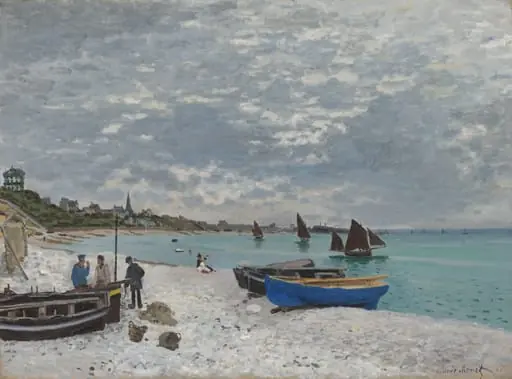
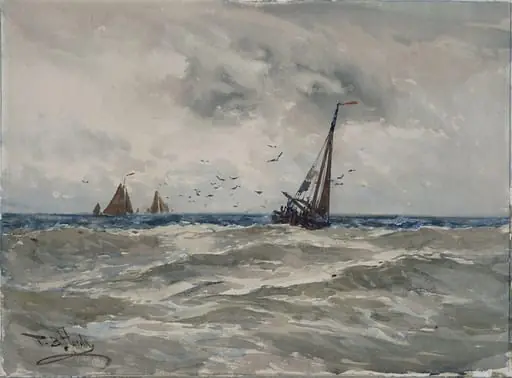
Painted in 1865, Mouth of the Seine is an oil-on-canvas work by Claude Monet that captures the estuary where the Seine meets the English Channel. The scene is neither grand nor dramatic but quietly observational, focusing on the interplay of water, sky, and light at a modest coastal location. It reflects Monet’s early commitment to painting outdoors and recording transient natural conditions.
Subject & Meaning
The painting presents a quiet maritime moment: a small boat with figures near the shore, a distant lighthouse, and a horizon softened by cloud cover. There is no narrative or symbolism—instead, the subject is the atmosphere itself. Monet conveys the rhythm of tides, the movement of wind, and the fleeting quality of daylight, emphasizing perception over storytelling.
Technique & Style
Monet employs loose, rapid brushwork to suggest the texture of water and the density of clouds. Color is applied in varied tones—blues, grays, and pale yellows—to model form through hue rather than line. The composition directs attention toward the lighthouse not through detail, but through tonal contrast and the convergence of light across the water’s surface.
History & Provenance
Created during Monet’s formative years, the painting remained in private hands until acquired by the Norton Simon Museum in the 20th century. Its early date places it before his mature Impressionist phase, yet it already reveals his dedication to capturing light and movement directly from nature, a practice that would define his later career.
Context
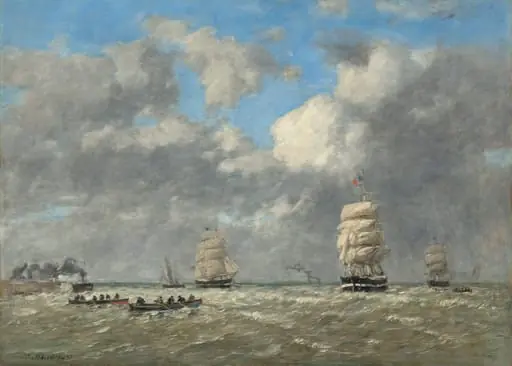
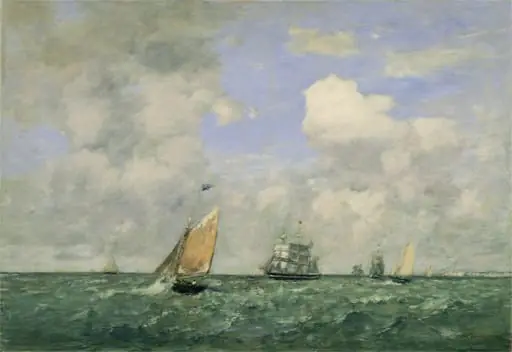
In 1865, Monet was experimenting with plein air painting alongside contemporaries like Boudin, rejecting studio conventions. The Mouth of the Seine reflects a broader shift in French art toward depicting everyday landscapes with immediacy. This work aligns with emerging interests in coastal life and the effects of weather, themes that would become central to Impressionism.
Legacy
Though not among Monet’s most celebrated works, Mouth of the Seine illustrates the foundations of his artistic approach. Its emphasis on optical sensation and atmospheric change prefigures the techniques he would refine in later series. The painting stands as a quiet but significant step in the evolution of modern landscape painting.
Own this work as a print
Artist & collection
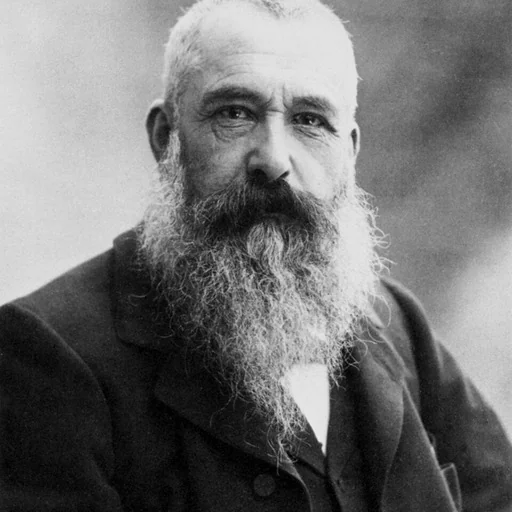
Artist
Oscar-Claude Monet was born in Paris on November 14, 1840, and raised from the age of five in Le Havre, where he began selling charcoal caricatures as a teenager.