Artwork
Boulogne Harbour
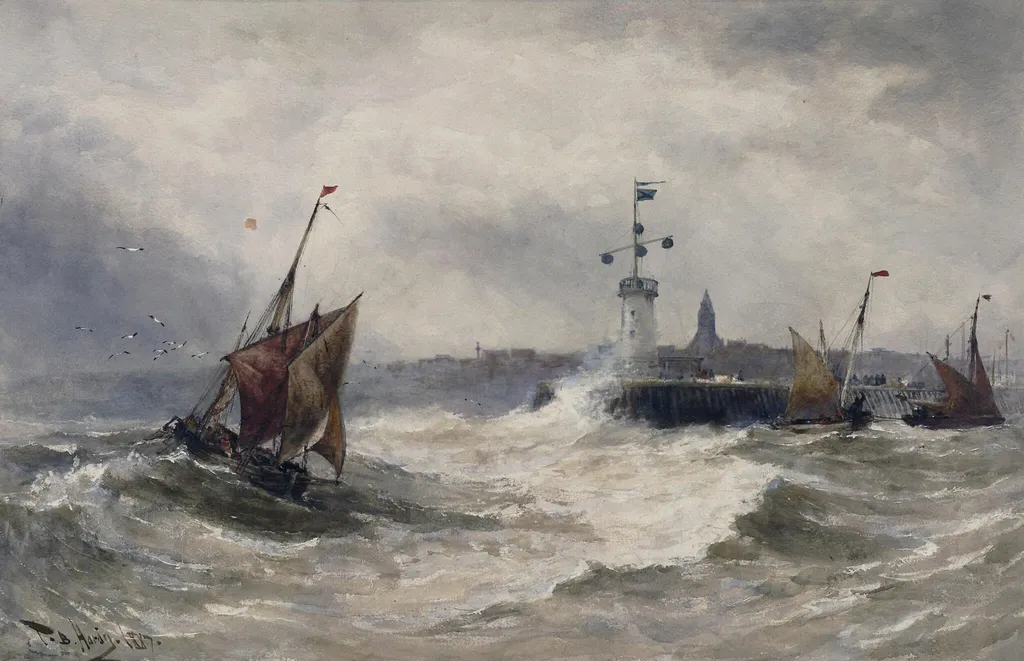
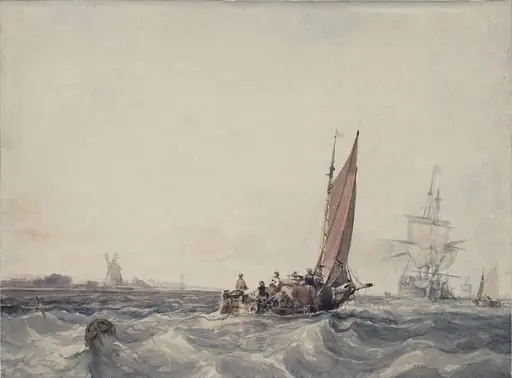
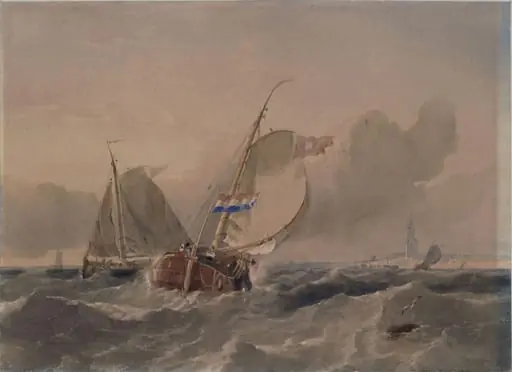
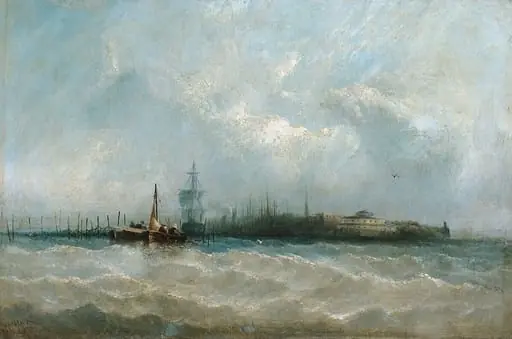
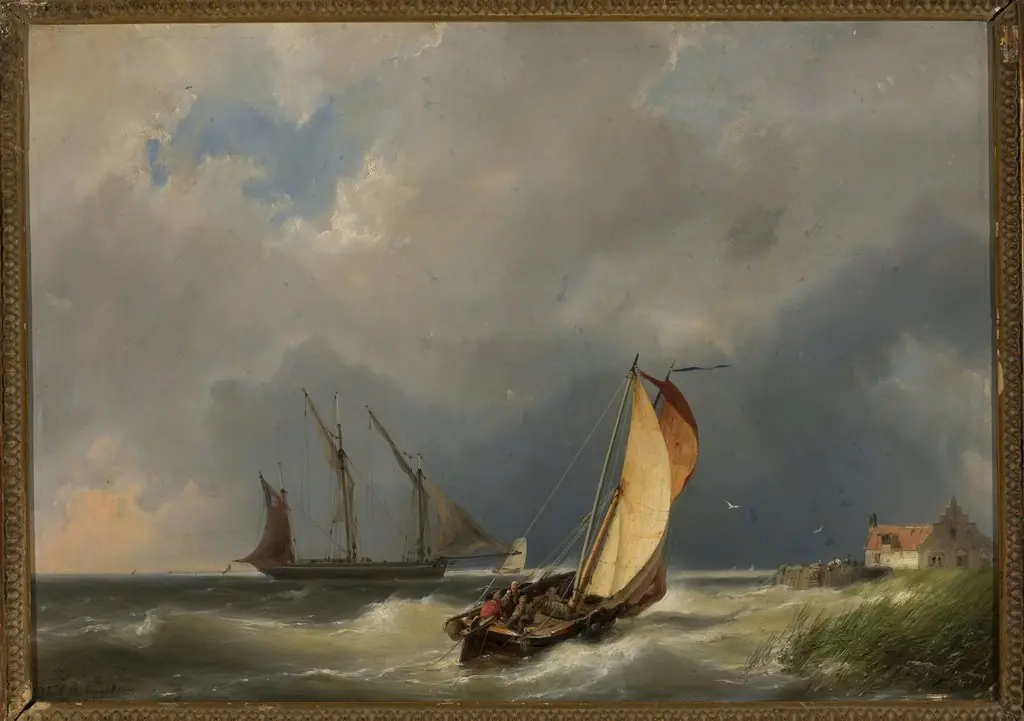
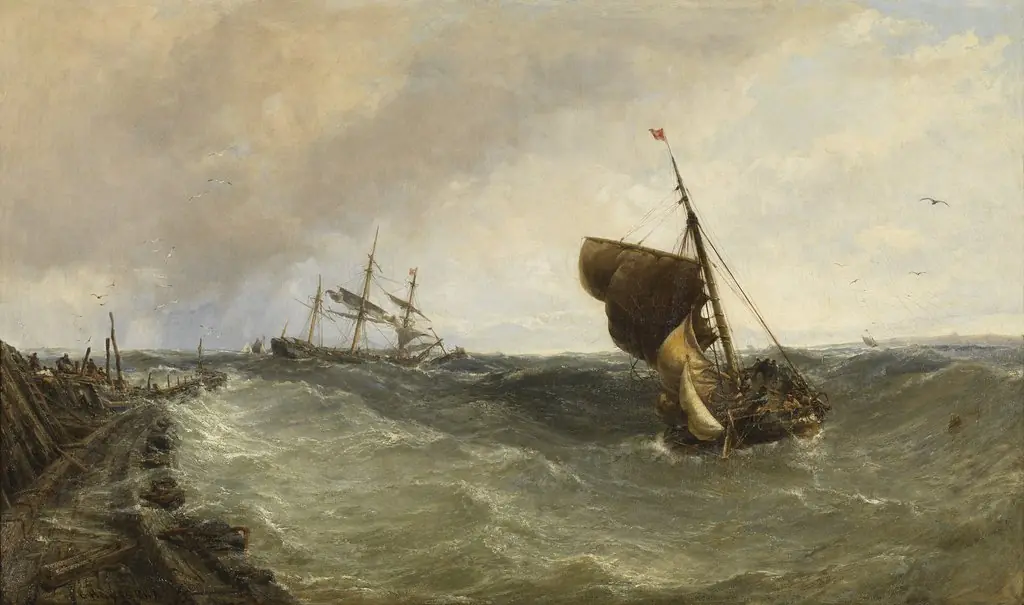
Boulogne Harbour is a watercolor work on paper by the Impressionist artist Thomas Bush Hardy. It dates from 1867 and is held in the collection of the Victoria and Albert Museum.
About this work
Overview
The work is presented in a framed, glazed state and bears the artist’s signature, consistent with his practice of marking finished works for exhibition or sale.
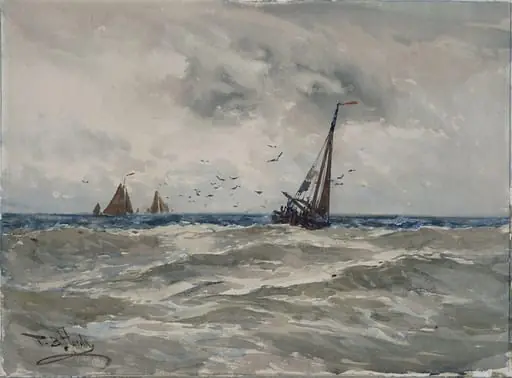
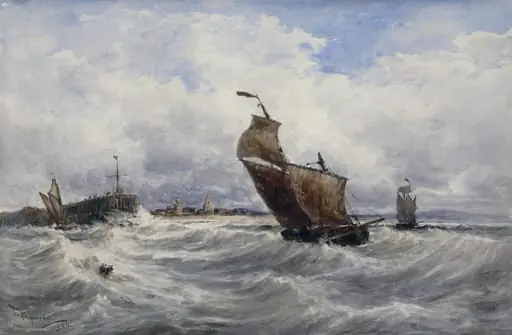
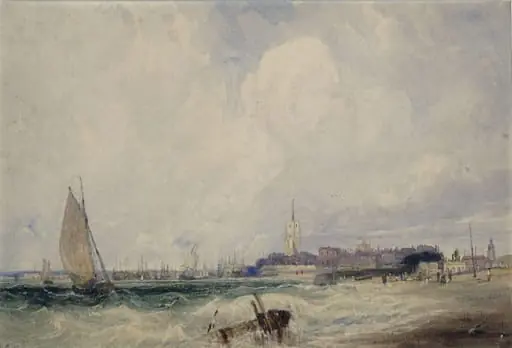
Painted in 1867, this watercolour by Thomas Bush Hardy captures the dynamic atmosphere of Boulogne Harbour. Executed with loose, energetic brushwork, the piece conveys the turbulence of the sea and the activity of vessels navigating rough waters. The work is presented in a framed, glazed state and bears the artist’s signature, consistent with his practice of marking finished works for exhibition or sale.
Subject & Meaning
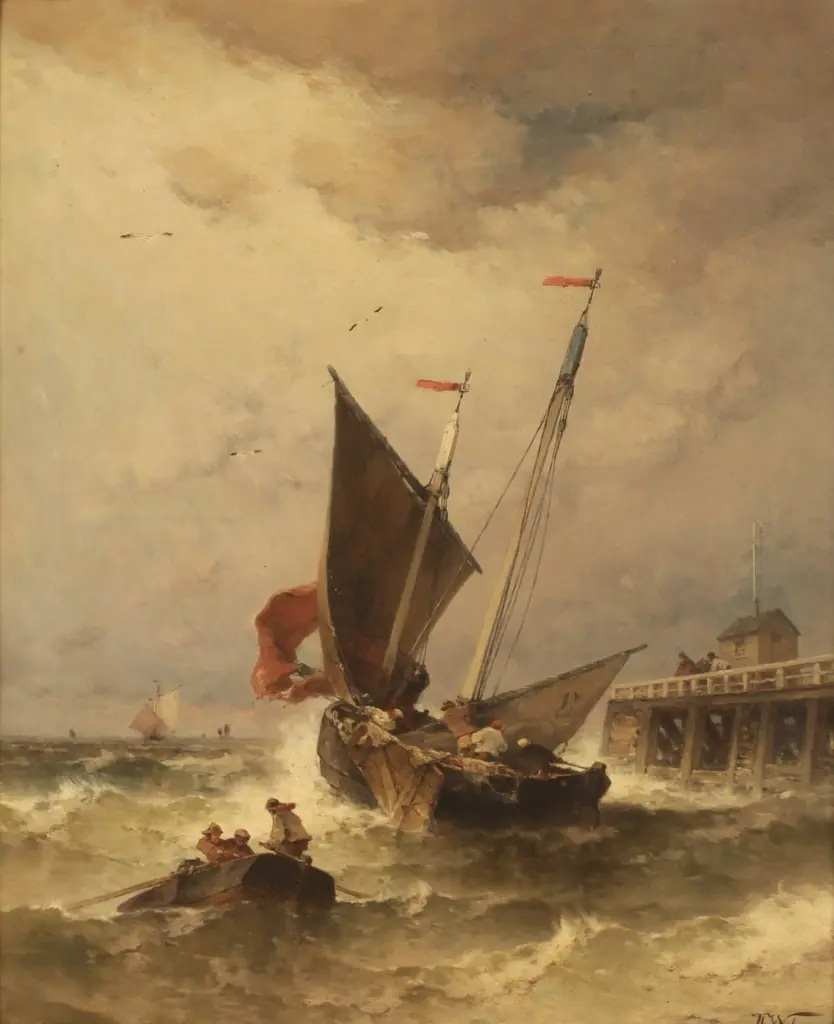
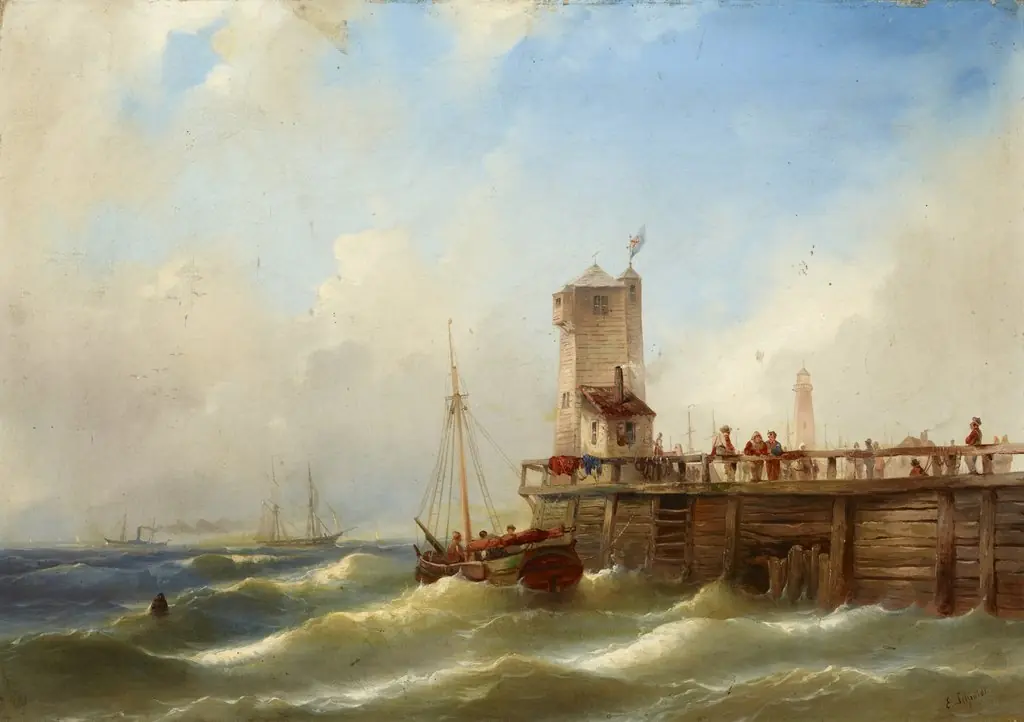
The scene depicts a working harbor under overcast skies, with small boats battling choppy waves and a distant lighthouse guiding vessels through the gloom. The focus on maritime labor and natural forces suggests an interest in the daily rhythms of coastal life rather than romanticized seascapes. The lighthouse, though subtle, implies themes of navigation, safety, and human resilience against nature’s unpredictability.
Technique & Style
Hardy employed a restrained palette of grays, browns, and muted blues to evoke the damp, wind-swept air of the Channel coast. His brushwork is fluid and immediate, using wet-on-wet washes to suggest motion in the water and wind-tossed sails. The loose handling avoids fine detail, instead prioritizing atmospheric effect and the tactile sense of sea spray and shifting light.
History & Provenance
Created during Hardy’s active period of marine studies, the painting reflects his frequent travels along the French and English coasts in the 1860s. While its early ownership is undocumented, its preservation in a framed, glazed condition suggests it was valued by a collector soon after completion. No record indicates public exhibition at the time, but it aligns with his known body of work exhibited in regional galleries.
Context
In the mid-19th century, British artists increasingly turned to coastal subjects as travel became more accessible and watercolor gained recognition as a serious medium. Hardy’s focus on working harbors placed him within a tradition of topographical and maritime realism, distinct from the dramatic Romanticism of earlier seascapes. His work responded to both aesthetic trends and a growing public interest in coastal commerce and navigation.
Legacy
Hardy’s watercolours of harbors and seascapes remain representative of Victorian-era marine art, valued for their observational precision and atmospheric sensitivity. Though not widely known today, his body of work contributed to the documentation of 19th-century maritime life. This painting exemplifies his consistent engagement with the sea as a subject of quiet endurance rather than spectacle.
Artist & collection