Artwork
La Falaise à Dieppe
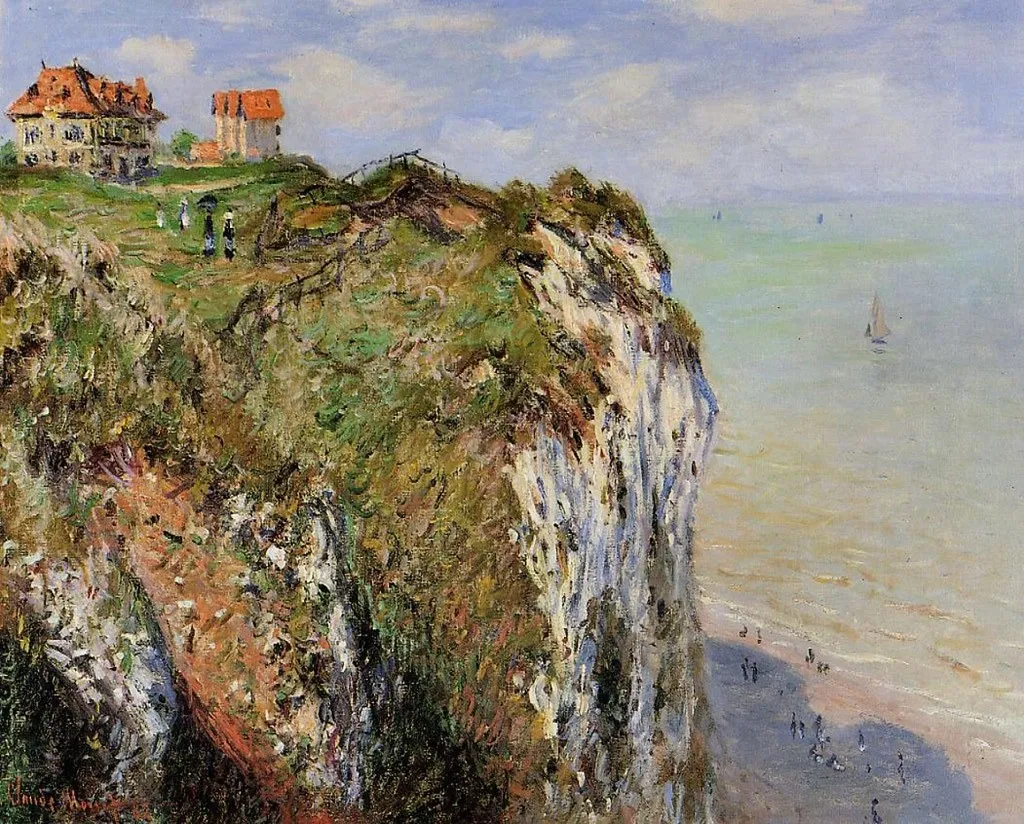
La Falaise à Dieppe is an oil painting by the Impressionist artist Claude Monet. It dates from 1892 and is held in the collection of the Kunsthaus Zürich.
About this work
Overview
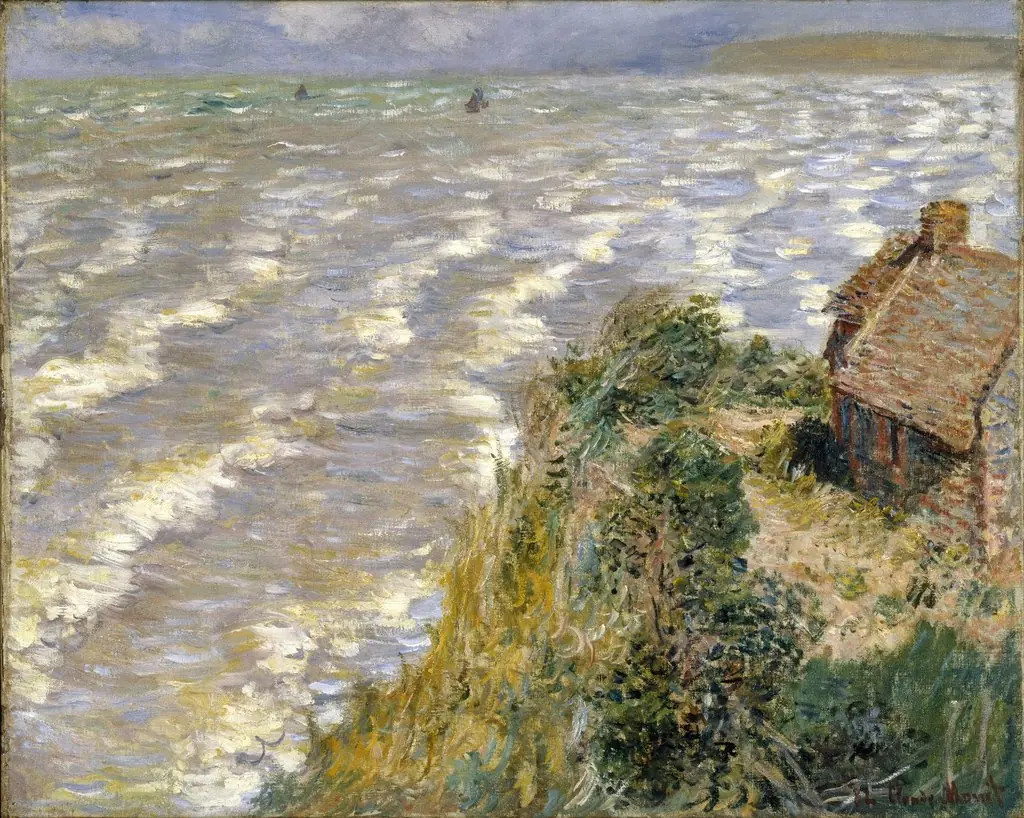
La Falaise à Dieppe is an 1892 oil painting by Claude Monet, depicting a coastal cliff near the Normandy town of Dieppe. The work belongs to a series Monet produced during his visits to the region, capturing the rugged shoreline under changing light. It is currently held in the collection of the Kunsthaus Zürich, where it remains a quiet example of his late Impressionist practice.
Subject & Meaning
The painting portrays a vegetated cliff edge with scattered dwellings and a few figures standing near the precipice. Below, the sea stretches toward a distant sailboat, suggesting quiet human presence amid nature’s scale. Monet avoids narrative, instead emphasizing the relationship between land, sky, and sea through subtle tonal shifts and atmospheric cohesion.
Technique & Style
Monet applied thick, broken brushstrokes to convey texture and movement across the cliff’s surface and the sea’s surface. The palette is restrained—dominated by muted greens, earthy browns, and cool grays—reflecting the overcast conditions of the Normandy coast. Visible brushwork and layered pigment create a tactile, almost tactile surface that resists smooth finish.
History & Provenance
Painted during Monet’s 1892 stay in Dieppe, the work was likely completed en plein air. It entered the Kunsthaus Zürich’s collection in the early 20th century, possibly through a private acquisition or dealer network familiar with Monet’s later works. Its provenance remains unremarkable, consistent with many Impressionist pieces dispersed across European collections after the artist’s death.
Context
Monet painted multiple views of Dieppe’s cliffs between 1882 and 1892, drawn to their dramatic topography and shifting maritime light. This period followed his series work on Rouen Cathedral and Haystacks, reflecting his deepening focus on localized landscapes under transient conditions. Dieppe offered a less frequented alternative to his more famous sites like Étretat.
Legacy
La Falaise à Dieppe exemplifies Monet’s mature approach to landscape: observational, non-idealized, and attentive to subtle chromatic harmonies. While less celebrated than his water lilies or poplar series, it contributes to understanding his sustained engagement with coastal topography and the quiet persistence of his Impressionist method beyond public acclaim.
Artist & collection
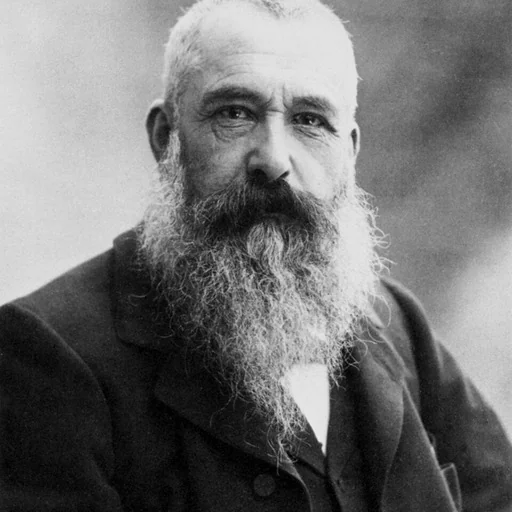
Artist
Oscar-Claude Monet was born in Paris on November 14, 1840, and raised from the age of five in Le Havre, where he began selling charcoal caricatures as a teenager.


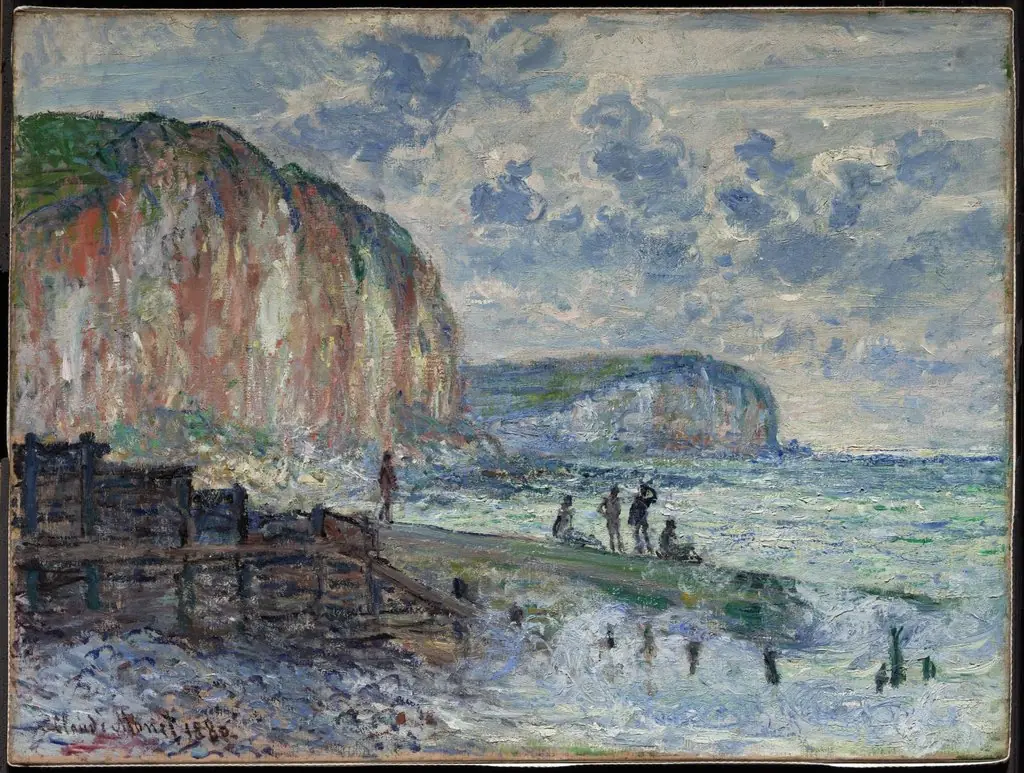 Cliffs of the Petites Dalles
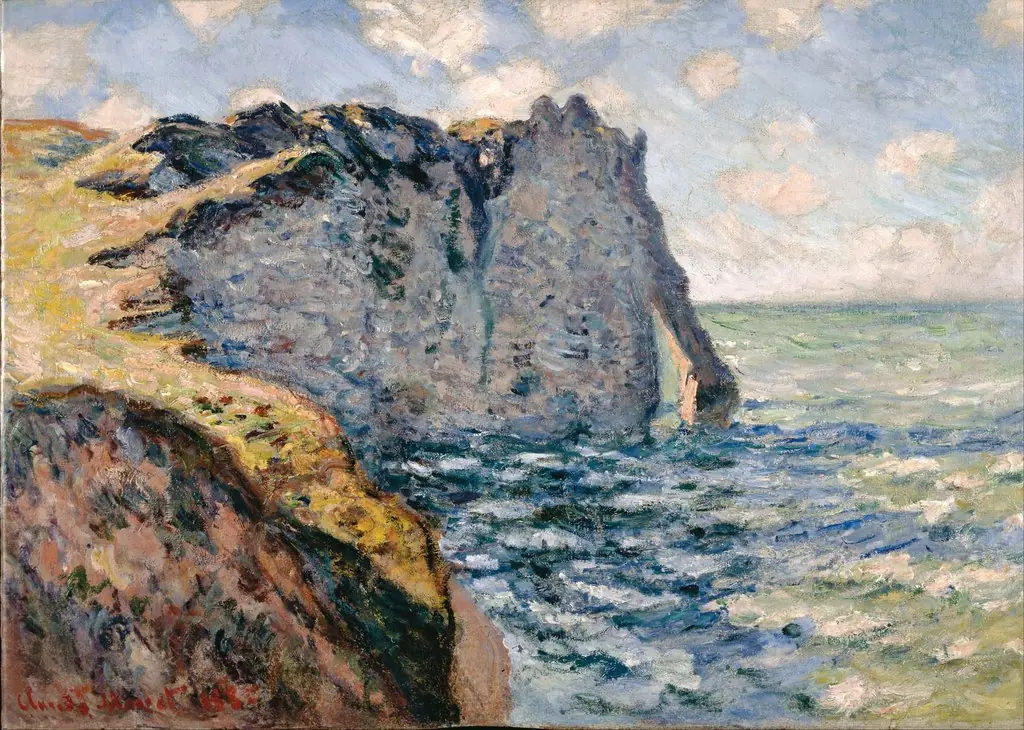 The Cliff of Aval, Etrétat
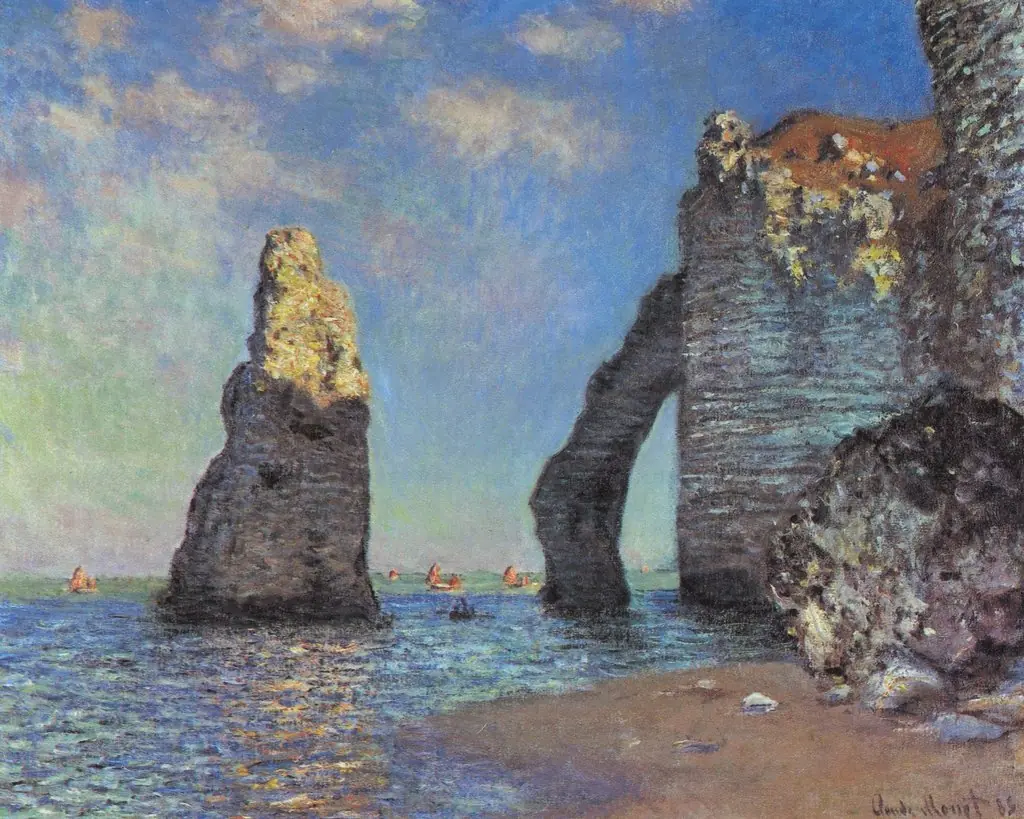 The Cliffs at Étretat
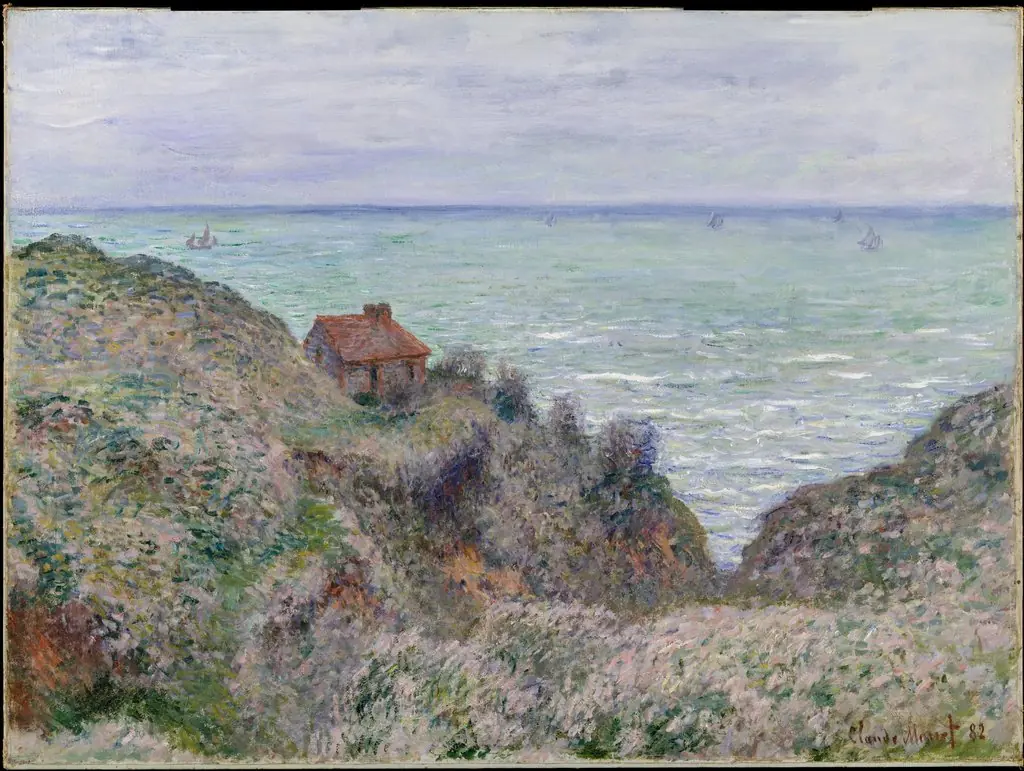 Cabin of the Customs Watch
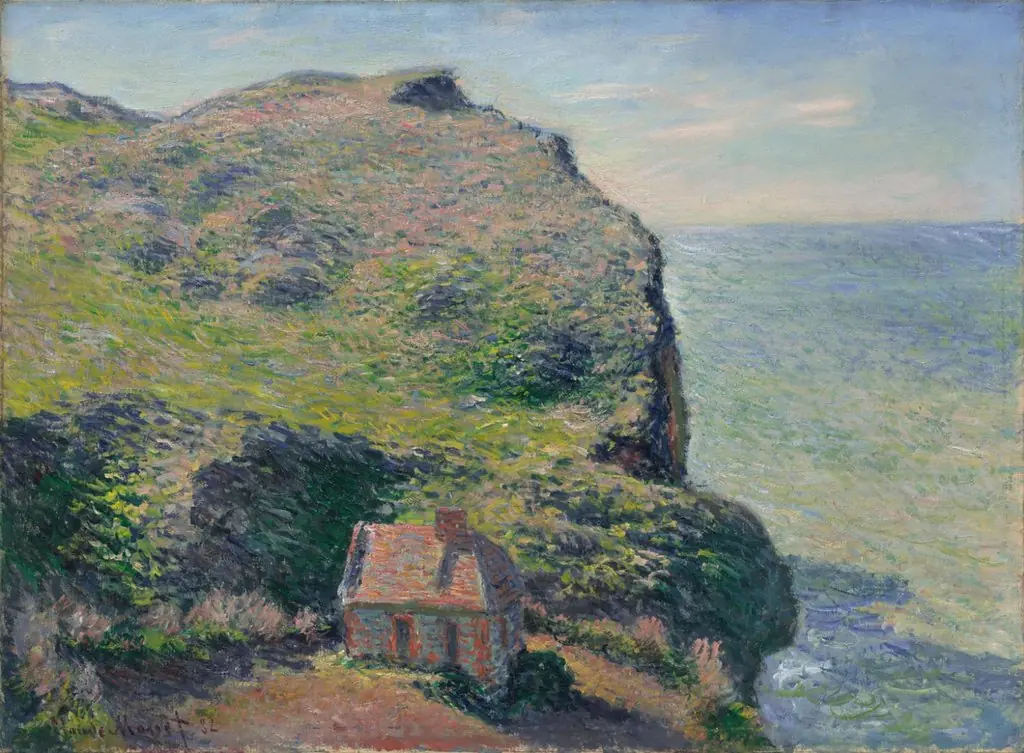 The Customs House, Varengeville
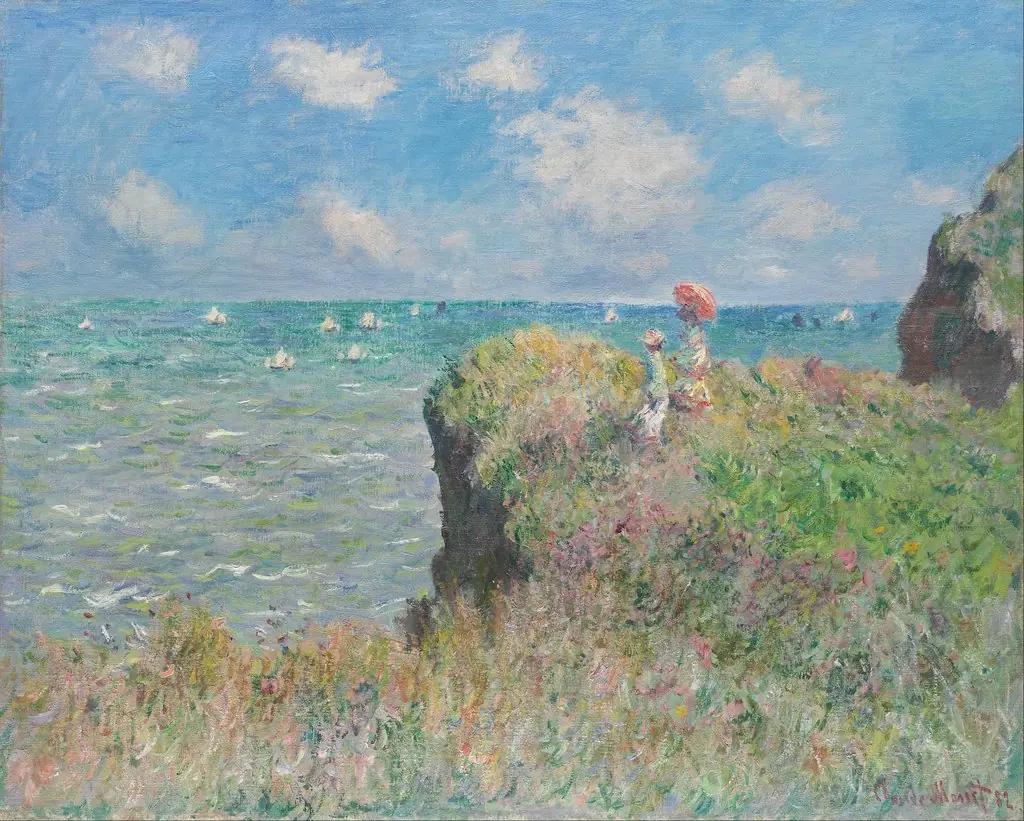 The Cliff Walk at Pourville
 Cliff Walk at Pourville
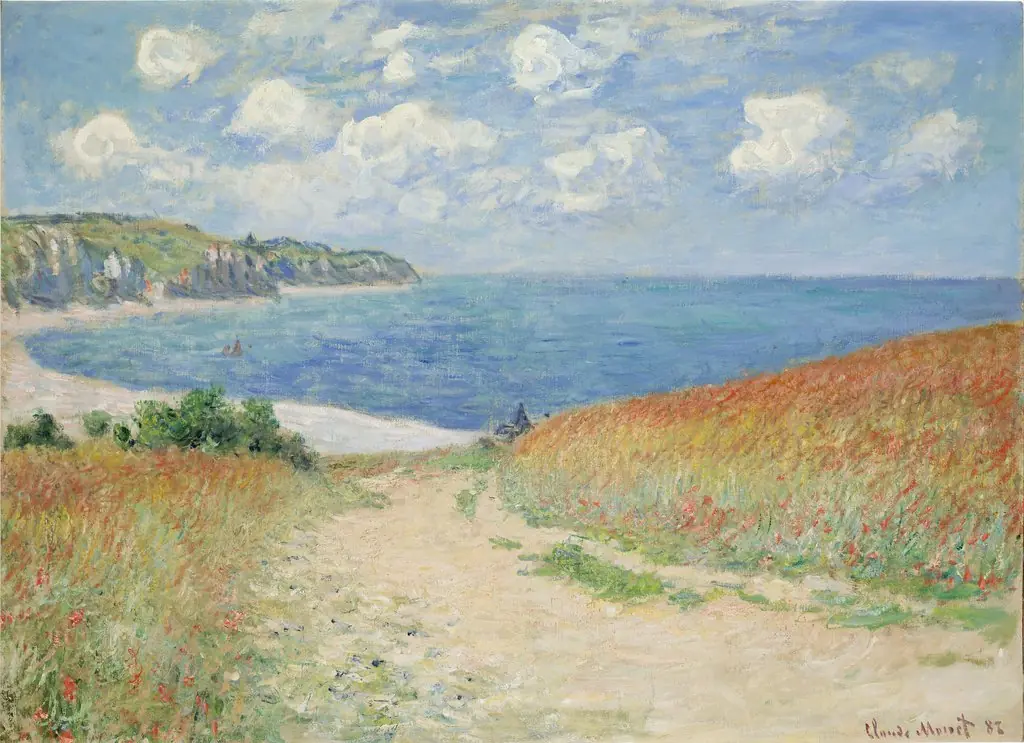 Path in the Wheat at Pourville
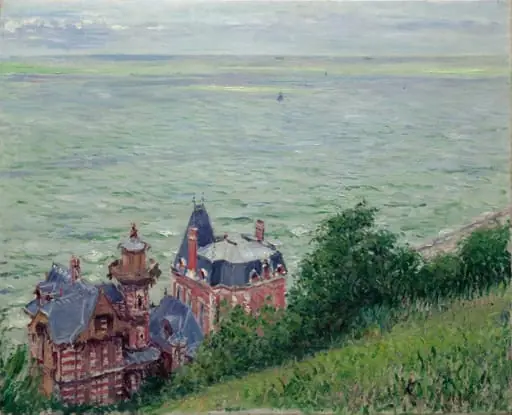 Villas at Trouville
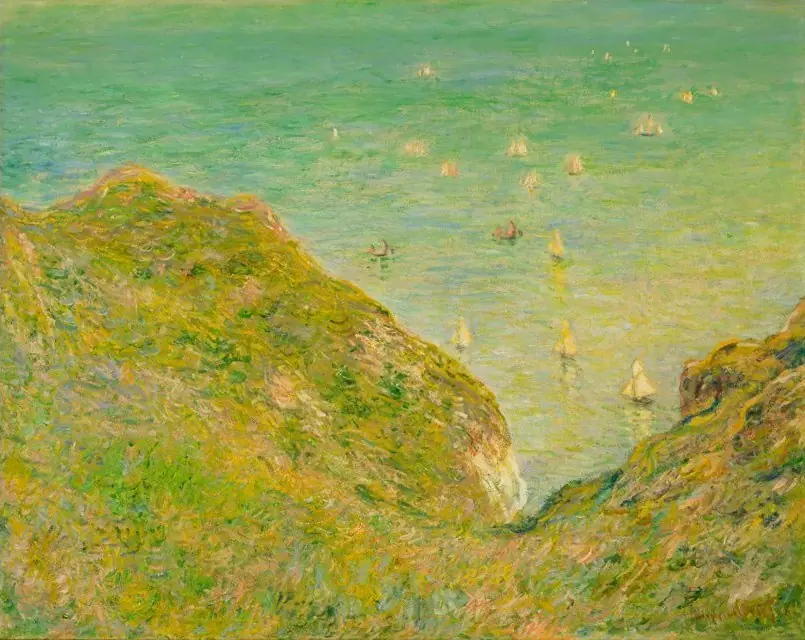 On the Cliff at Pourville Clear Weather
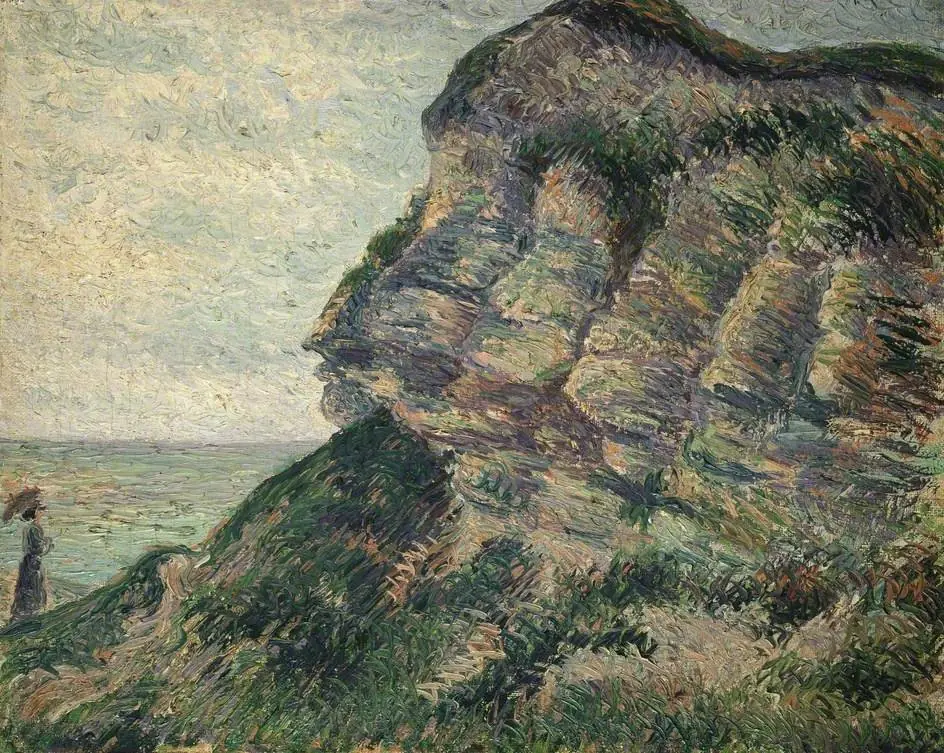 Woman walking on a Headland
 Rising Tide at Pourville