Artwork
Stacks of Wheat (End of Day, Autumn)
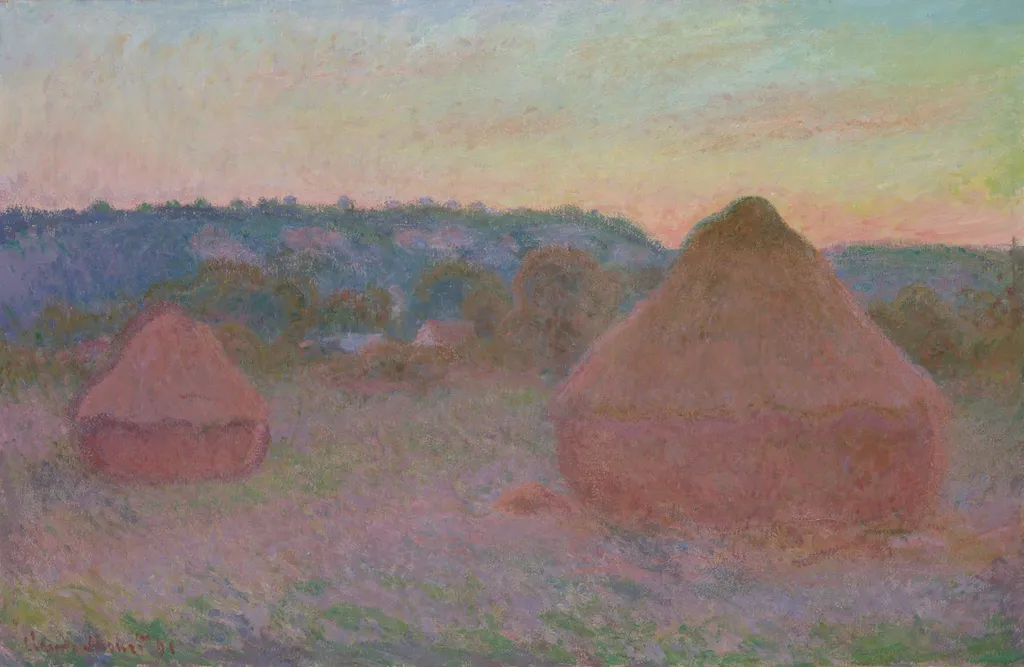
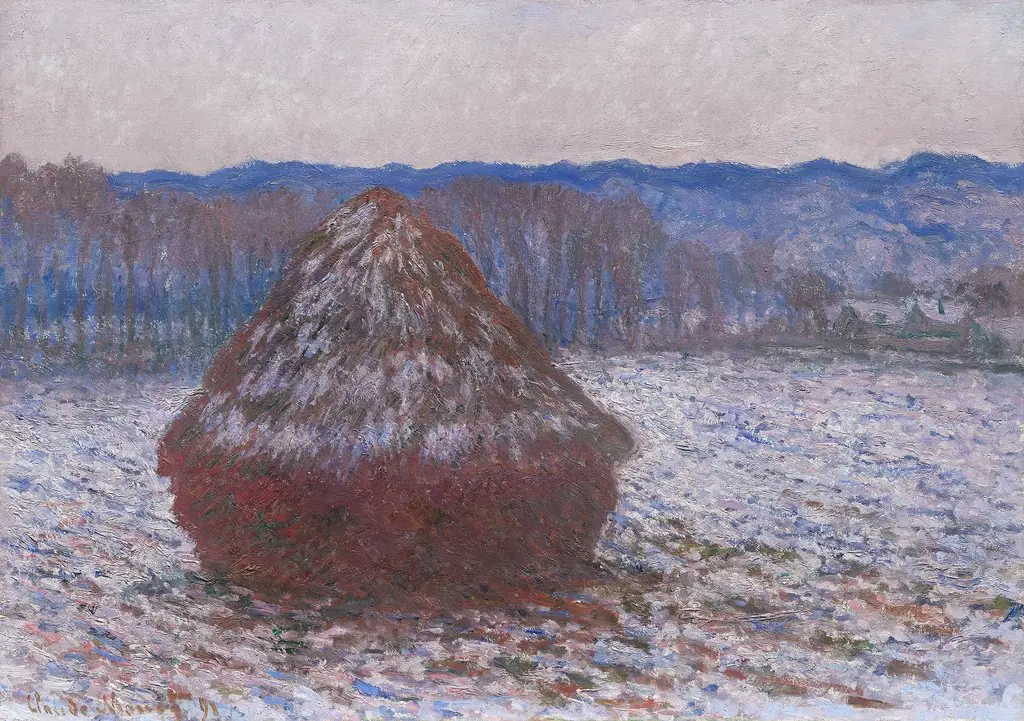
Stacks of Wheat (End of Day, Autumn) is an oil painting by the Impressionist artist Claude Monet. It dates from 1890 and is held in the collection of the Art Institute of Chicago.
About this work
Overview
Stacks of Wheat (End of Day, Autumn) is an oil on canvas painting by Claude Monet, part of his series depicting monumental wheat stacks near his Giverny farmhouse. This work captures the warm, late-day autumn light illuminating a prominent stack.
Subject & Meaning
The wheat stack, a symbol of sustenance and survival for Monet, is prominently featured, its conical top piercing the horizon and ascending into the sky. This composition contrasts with the series' winter views, where stacks are often enveloped by landscape.
Technique & Style
Monet employed his characteristic approach of working simultaneously on multiple easels outdoors and later refining in the studio. This method allowed him to explore the fleeting effects of light, evident in the warm, setting sun's glow on the wheat.
History & Provenance
Part of a series painted between 1890-1891, this piece was among fifteen hung consecutively in a small Galerie Durand-Ruel room in Paris in May 1891, achieving critical and financial success. The Art Institute of Chicago holds the world's largest collection of this series.
Context
Stacks of Wheat preceded other notable series by Monet, including poplars, Rouen Cathedral, and his Giverny garden. This series marked a career breakthrough and a significant moment in French art history.
Own this work as a print
Artist & collection
Artist
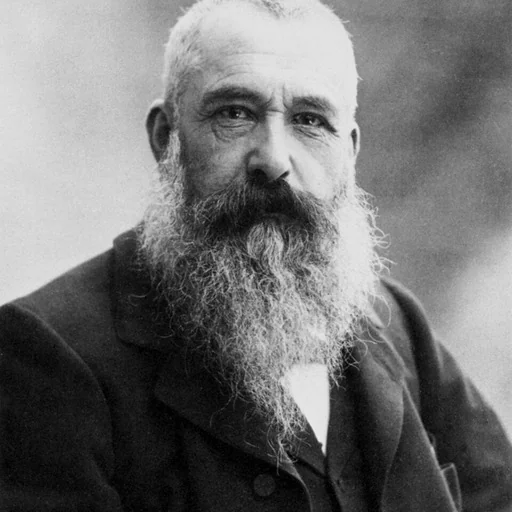
Oscar-Claude Monet was born in Paris on November 14, 1840, and raised from the age of five in Le Havre, where he began selling charcoal caricatures as a teenager.

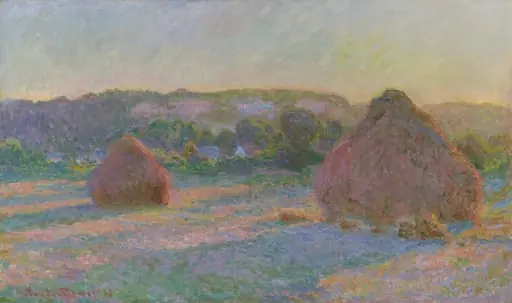 Stacks of Wheat (End of Summer)
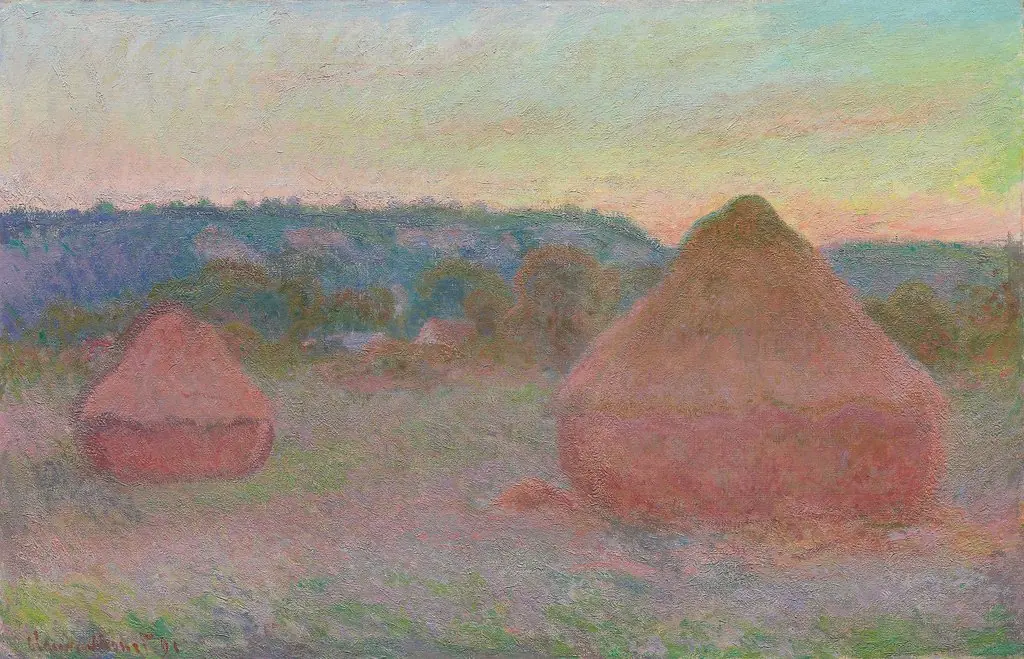 Stacks of Wheat (End of Day, Autumn)
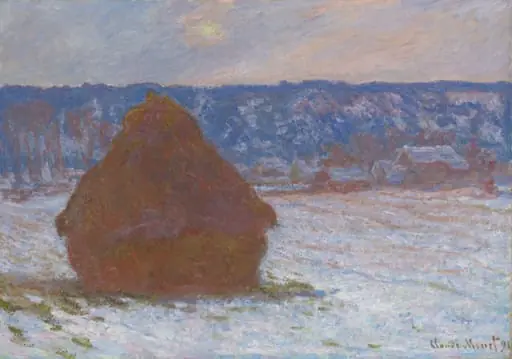 Stack of Wheat (Snow Effect, Overcast Day)
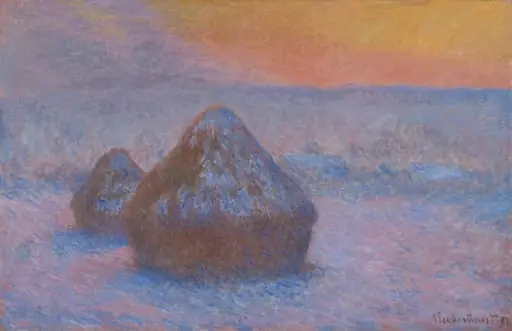 Stacks of Wheat (Sunset, Snow Effect)
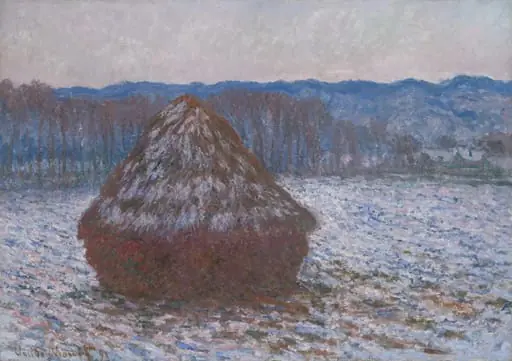 Stack of Wheat
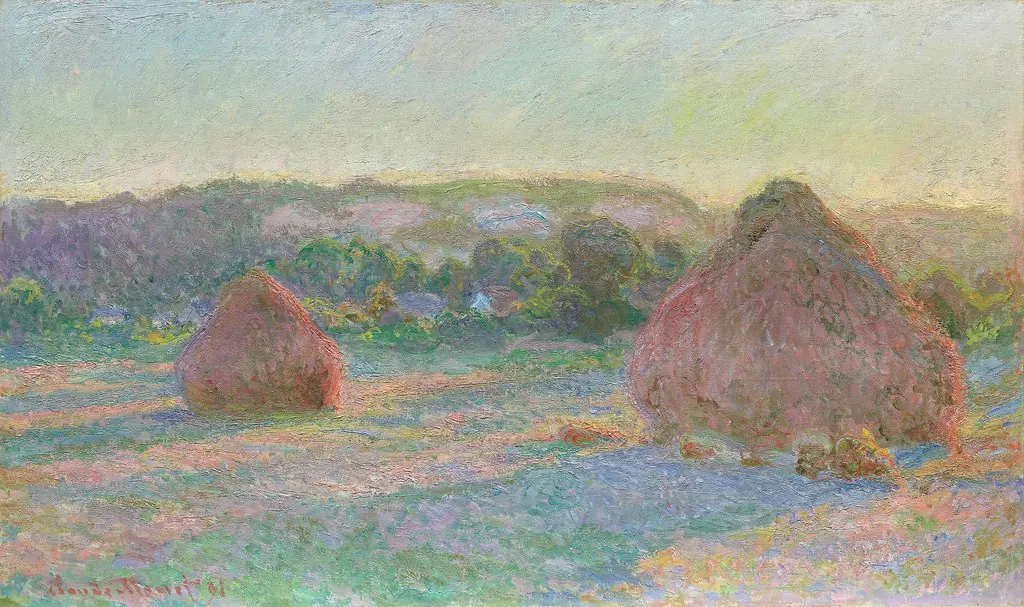 Stacks of Wheat (End of Summer)
 Stack of Wheat (Thaw, Sunset)
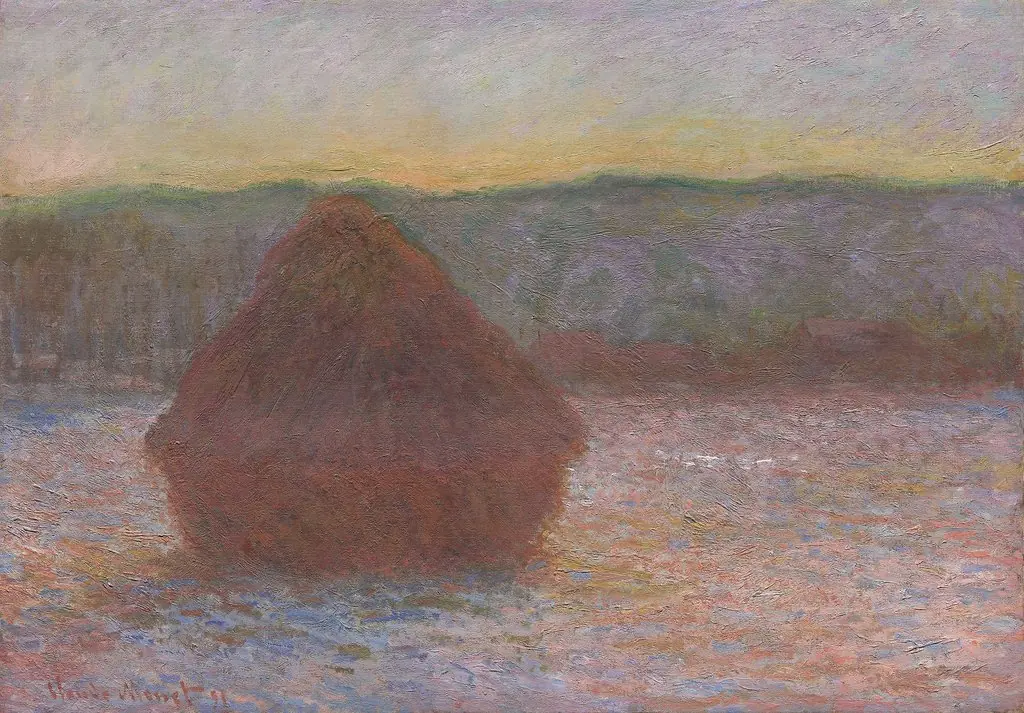 Stack of Wheat (Thaw, Sunset)
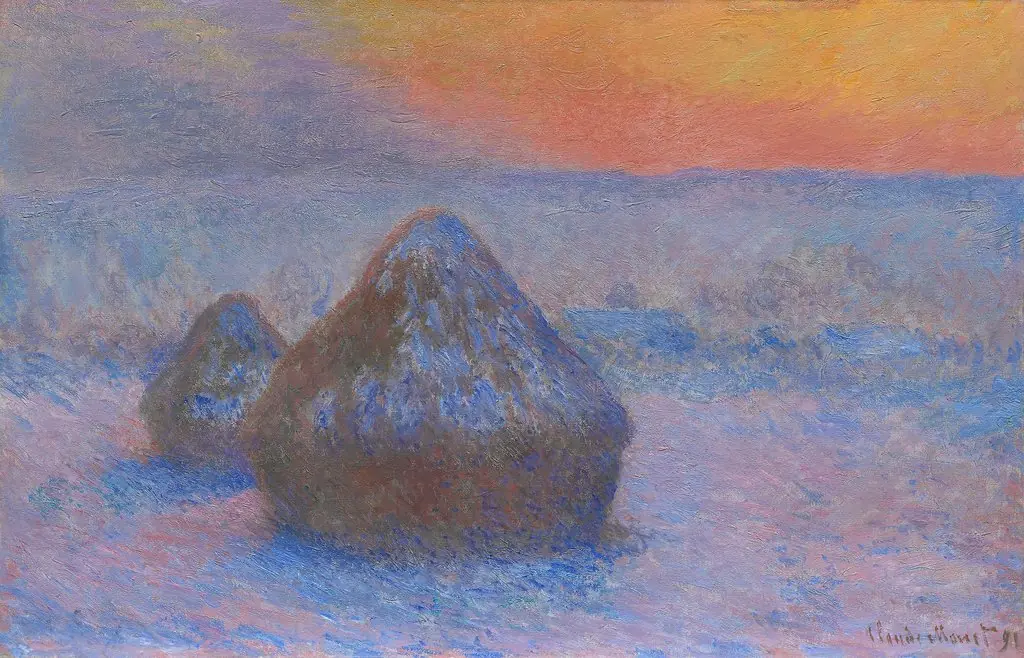 Stacks of Wheat (Sunset, Snow Effect)
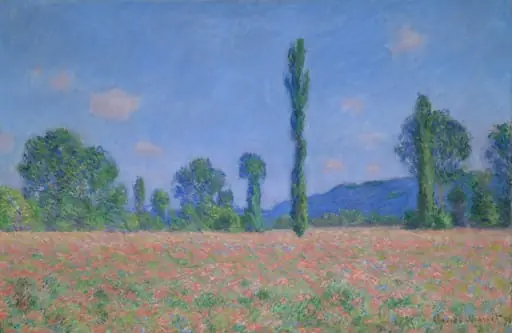 Poppy Field (Giverny)
 Stack of Wheat