Artwork
A Girl in Peasant Dress
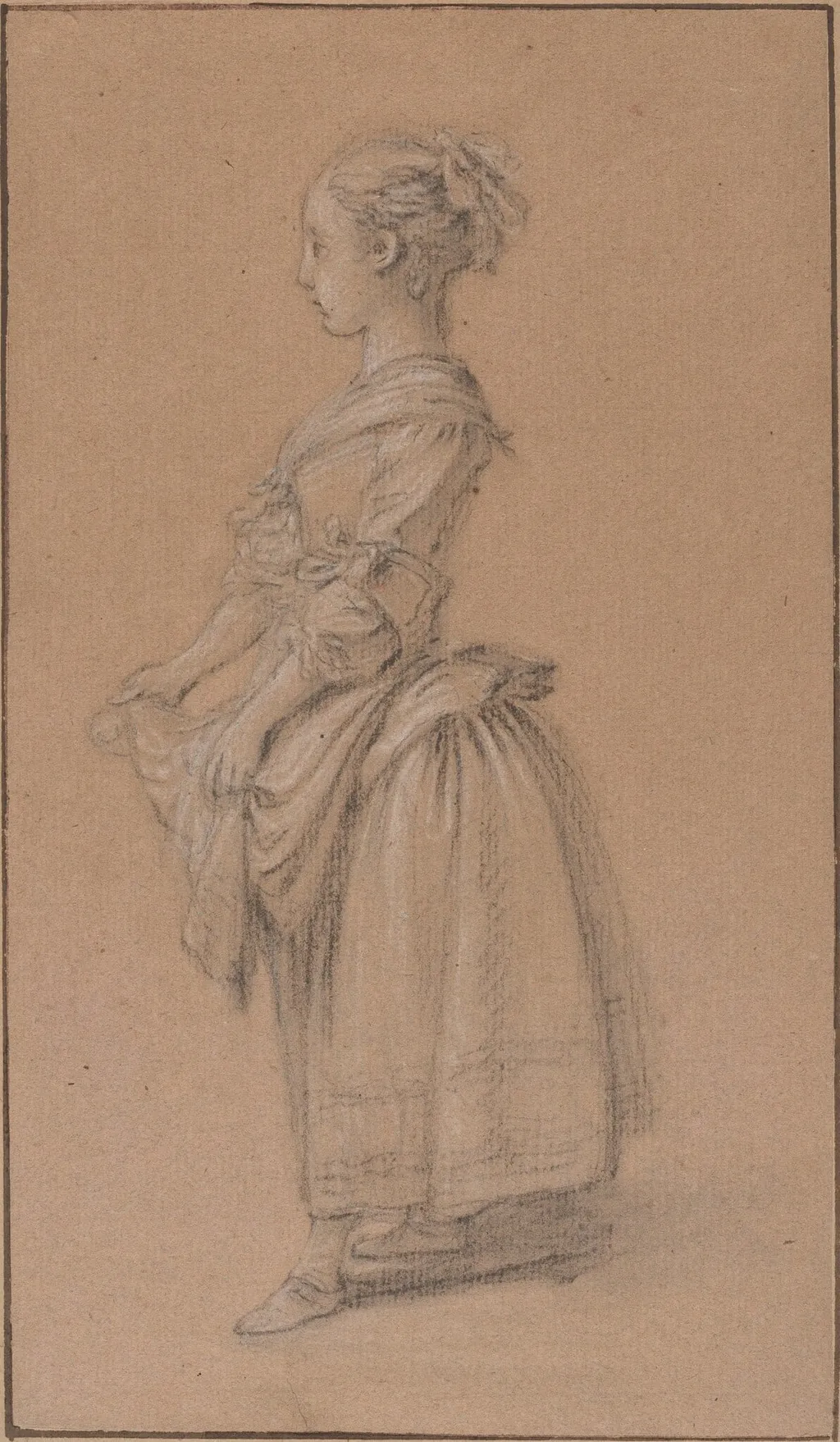
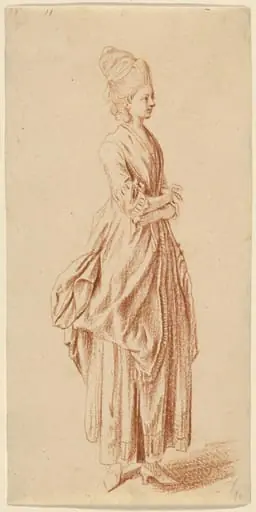
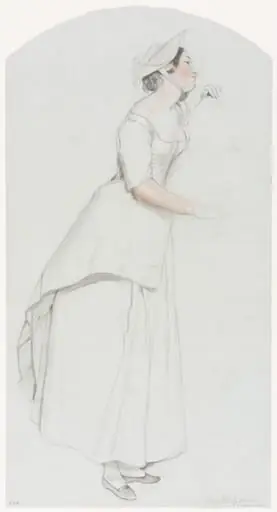
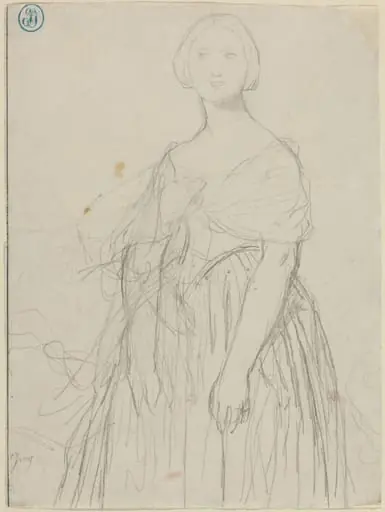
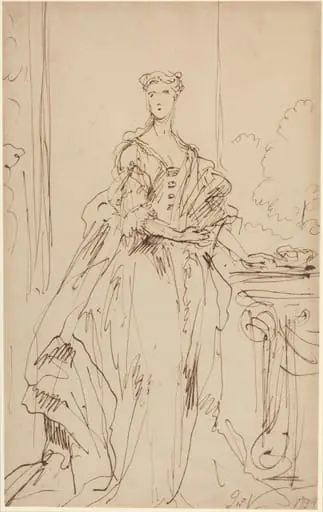
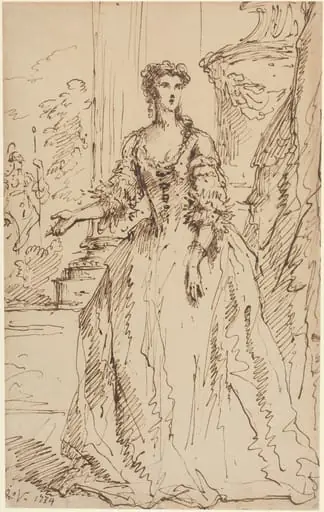
A Girl in Peasant Dress is a chalk drawing by the Romanticist artist Jean-François Clermont. It dates from 1750 and is held in the collection of the National Gallery of Art.
About this work
Overview
Created around 1750, this drawing by Jean-François Clermont depicts a young woman in rural attire, rendered in black and white chalk on pink laid paper. The work is a study in simplicity, capturing a moment of quiet stillness without narrative context. Its modest scale and unadorned surface reflect the artist’s focus on form and texture rather than elaborate composition.
Subject & Meaning
The figure is a peasant woman, turned slightly away, her posture unposed and natural. Her simple dress, high neckline, and neatly bound hair suggest everyday labor and modesty. No symbolic elements are present; the subject’s identity is rooted in social observation rather than idealization, offering a quiet testament to ordinary life in mid-18th-century France.
Technique & Style
The pink paper serves as a mid-tone, allowing the chalk to suggest light and shadow without heavy modeling, resulting in a delicate, atmospheric sketch.
Clermont employed contrasting black and white chalk on a pink ground to define form with minimal strokes. Soft, rapid lines outline the figure, while subtle cross-hatching builds volume in the folds of fabric and the shadowed contours of her posture. The pink paper serves as a mid-tone, allowing the chalk to suggest light and shadow without heavy modeling, resulting in a delicate, atmospheric sketch.
History & Provenance
The drawing’s early ownership is undocumented, but it has been associated with Clermont’s circle of academic draftsmen in mid-18th-century France. It remained in private collections until entering a public institution in the 20th century. Its preservation in good condition reflects its value as a study piece rather than a finished work intended for public display.
Context
During the 1750s, French artists increasingly turned to everyday subjects as part of a broader shift toward realism. Clermont’s drawing aligns with this trend, echoing the interest in rural life seen in contemporaneous works by artists like Greuze. Unlike grand historical scenes, this sketch values authenticity over ornament, reflecting changing artistic priorities in pre-Revolutionary France.
Legacy
Though Clermont is not widely known today, this drawing exemplifies the quiet precision of academic draftsmanship in the 18th century. It survives as a representative example of how artists used simple materials to capture human presence with sensitivity. Its endurance in museum collections underscores its role as a study in observational skill rather than a celebrated artifact.
Artist & collection