Artwork
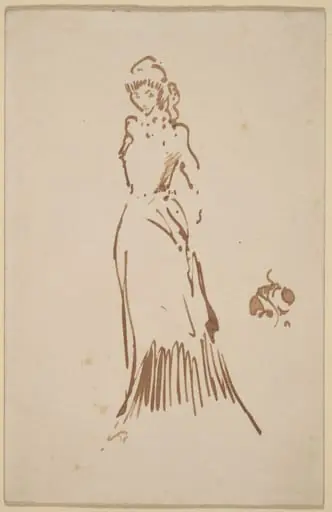
Portrait of a Standing Lady
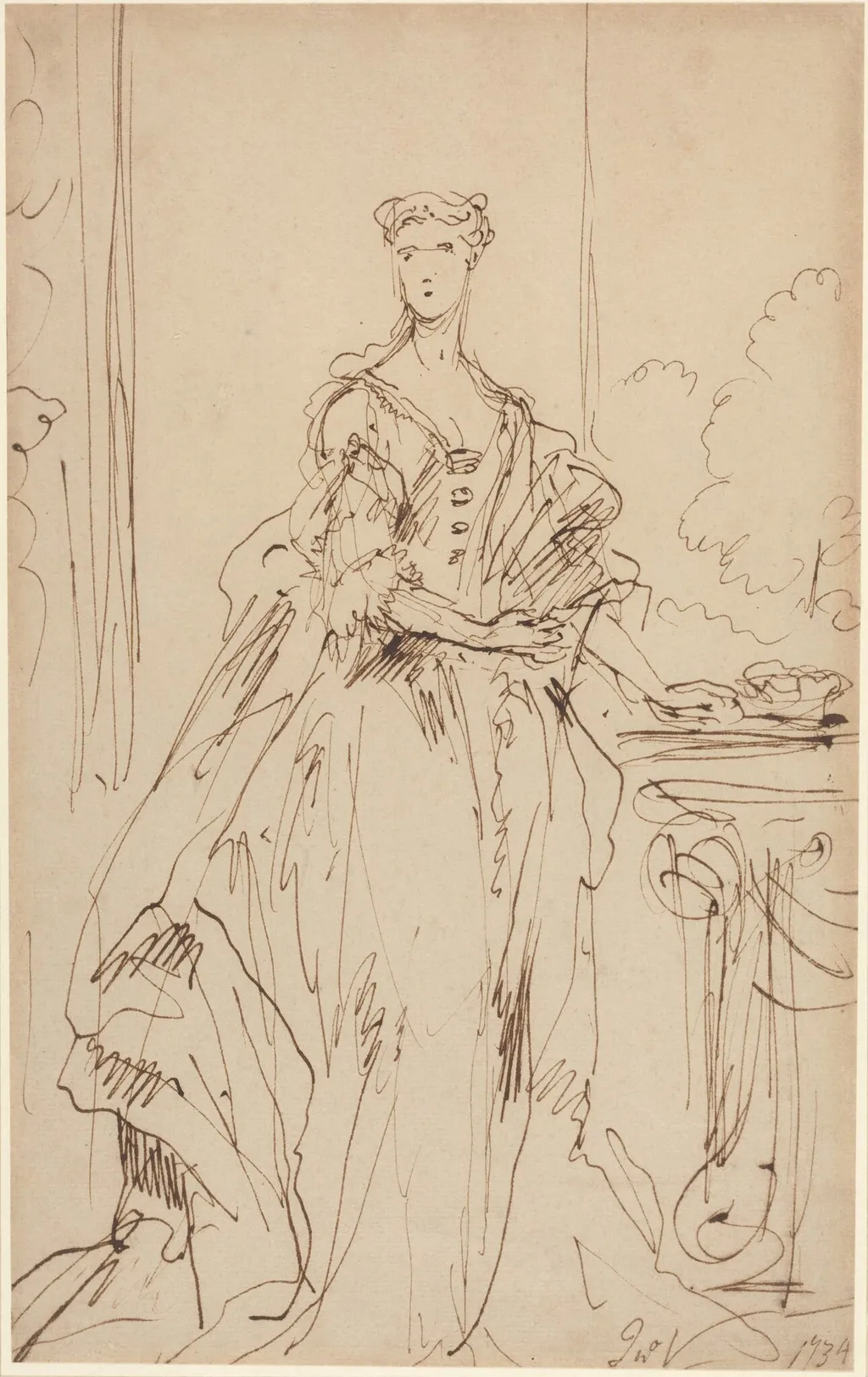
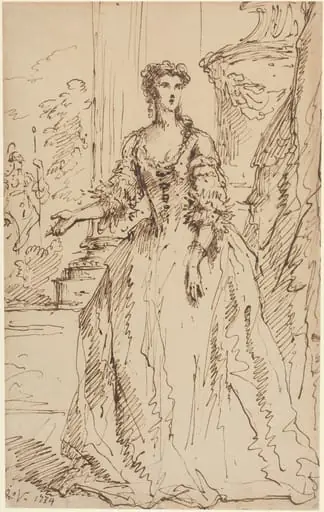
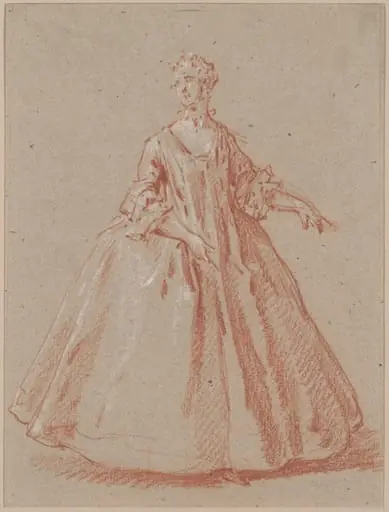
Portrait of a Standing Lady is an ink drawing by the Baroque artist John Vanderbank. It dates from 1734 and is held in the collection of the National Gallery of Art.
About this work
Overview
This 1734 drawing by John Vanderbank presents a woman rendered in pen and brown ink on laid paper. The composition emphasizes a solitary figure, her posture suggesting a moment of quiet formality. Executed with assured, fluid strokes, the work balances detail with economy, focusing on the subject’s attire and demeanor while leaving the setting minimally defined.
Subject & Meaning
The drawing portrays an unidentified woman in a relaxed yet dignified stance.
The drawing portrays an unidentified woman in a relaxed yet dignified stance. Her loose-fitting gown, adorned with a ruffled collar and front buttons, reflects early 18th-century fashion, while her pulled-back hair and modest headpiece convey a sense of decorum. The absence of overt symbolism or narrative elements directs attention to her presence, suggesting an intent to capture character or social status rather than a specific identity.
Technique & Style
Vanderbank employs bold, expressive lines to define form, using varying stroke weight to model the figure’s contours and drapery. The ink’s rich brown tone enhances the drawing’s immediacy, with hatching and cross-hatching absent in favor of direct, confident marks. Though rooted in Baroque traditions—particularly in its emphasis on movement and texture—the work also anticipates the lighter, more linear approach of Rococo draftsmanship.
History & Provenance
Created in 1734, the drawing’s early history remains unrecorded. Its survival as a standalone work on paper, rather than a preparatory study, may indicate a commission or a personal exercise in portraiture. The paper’s laid texture and the ink’s patina suggest it has remained in stable conditions, though specific owners and exhibitions prior to modern collections are undocumented.
Context
During the 1730s, British portraiture increasingly favored naturalism over allegorical grandeur, reflecting shifting tastes among patrons. Vanderbank, trained in both England and France, bridged continental and local styles, as seen here in the drawing’s blend of Baroque dynamism and emerging Rococo elegance. The work’s simplicity aligns with a broader interest in intimate, unidealized representations of the period’s elite.
Artist & collection