Artwork
Portrait of a Standing Lady
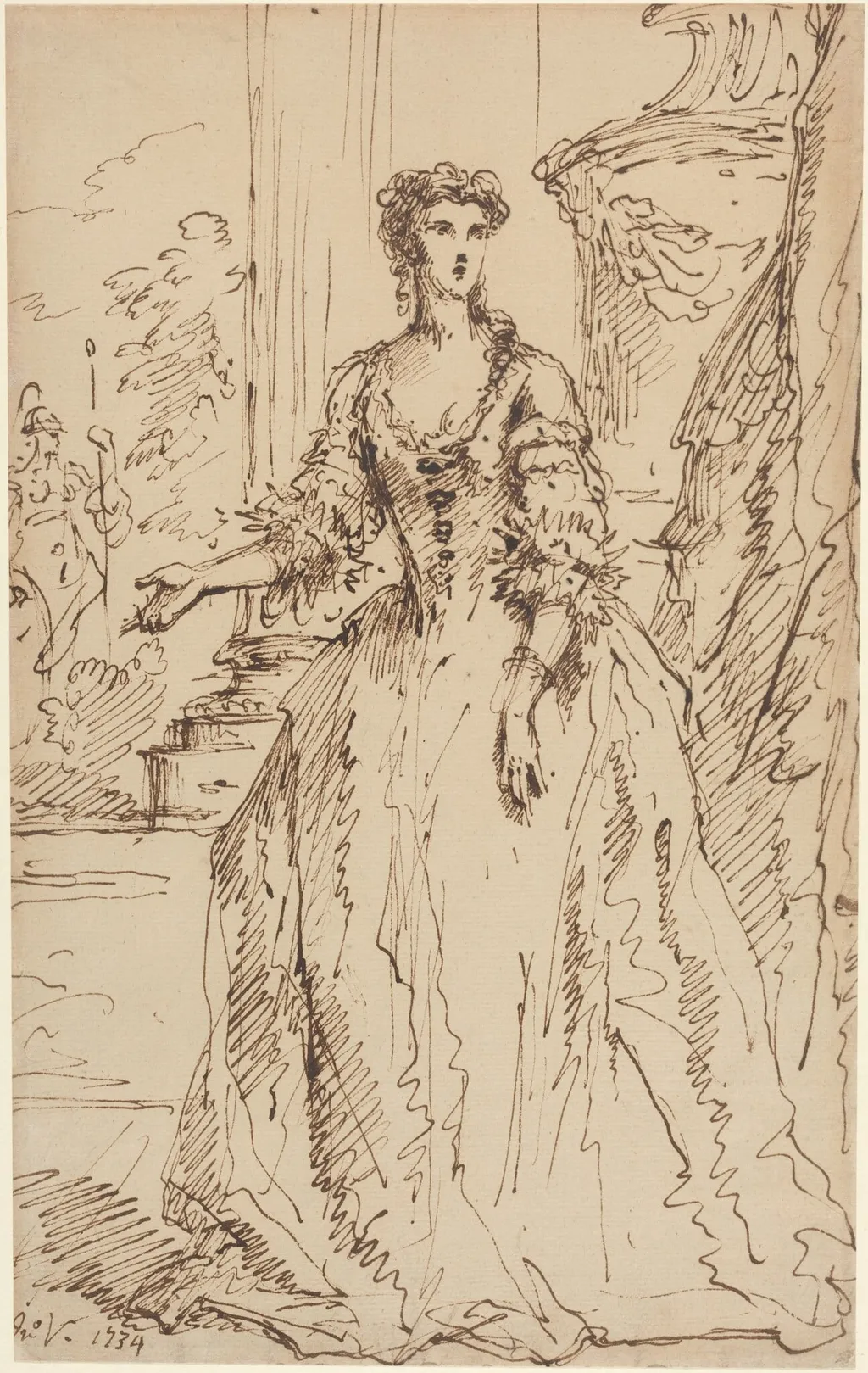
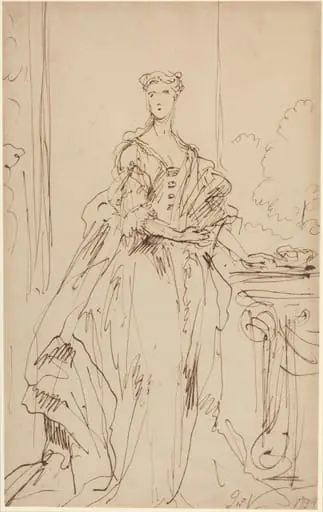
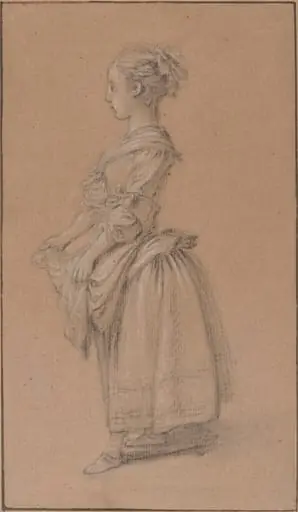
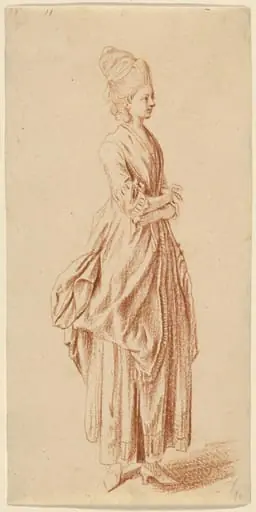
Portrait of a Standing Lady is an ink drawing by the Baroque artist John Vanderbank. It dates from 1734 and is held in the collection of the National Gallery of Art.
About this work
Overview
Executed in pen and brown ink on laid paper, it belongs to a tradition of preparatory or informal portraiture.
Created in 1734 by John Vanderbank, this drawing depicts a standing woman in a moment of quiet repose. Executed in pen and brown ink on laid paper, it belongs to a tradition of preparatory or informal portraiture. The composition captures the subject near a window, with natural light suggesting an interior setting. The work’s unfinished quality reflects its function as a study rather than a polished commission.
Subject & Meaning
The woman, dressed in a high-necked, flowing gown, holds a fan—a symbol of refinement and social poise in early 18th-century England. Her poised stance and direct gaze imply awareness of being observed, yet the sketch’s spontaneity softens any sense of formality. The drawing conveys presence rather than narrative, emphasizing individuality through subtle gesture and posture rather than elaborate detail.
Technique & Style
Vanderbank employed rapid, fluid pen strokes to define form, particularly in the drapery and hair. He built volume and shadow through dense cross-hatching—layered, intersecting lines that create tone without wash or color. The curtains behind her are rendered with loose, gestural marks, contrasting with the more defined contours of the figure. The absence of finish suggests an emphasis on immediacy and observation over polish.
History & Provenance
The drawing is attributed to John Vanderbank, a prominent English portraitist of the early 1700s known for his skill in both painting and drawing. While its early ownership is undocumented, it entered institutional collections in the 20th century, likely through acquisition from a private estate or dealer. Its survival as a standalone sheet reflects its value as an example of the artist’s draftsmanship.
Context
In the 1730s, portrait drawings like this were often made as studies for oil paintings or as independent records of sitters. Vanderbank worked within a network of artists and aristocrats who valued the intimacy of drawn portraits. This piece aligns with a broader trend in British art where quick, expressive sketches served as both artistic exercises and personal mementos.
Legacy
Though not widely exhibited, this drawing exemplifies Vanderbank’s ability to convey character through economical line work. It contributes to scholarly understanding of 18th-century British drawing practices, particularly how artists translated lived presence into ink on paper. Its unpolished nature invites appreciation for the process behind portraiture, not just the final image.
Artist & collection