Artwork
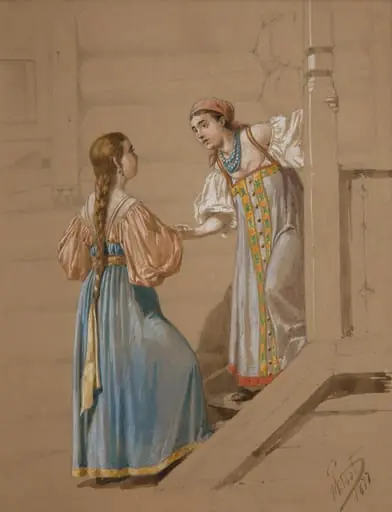
Venäläisiä kansallispukuja, (Mies ja nainen), luonnos
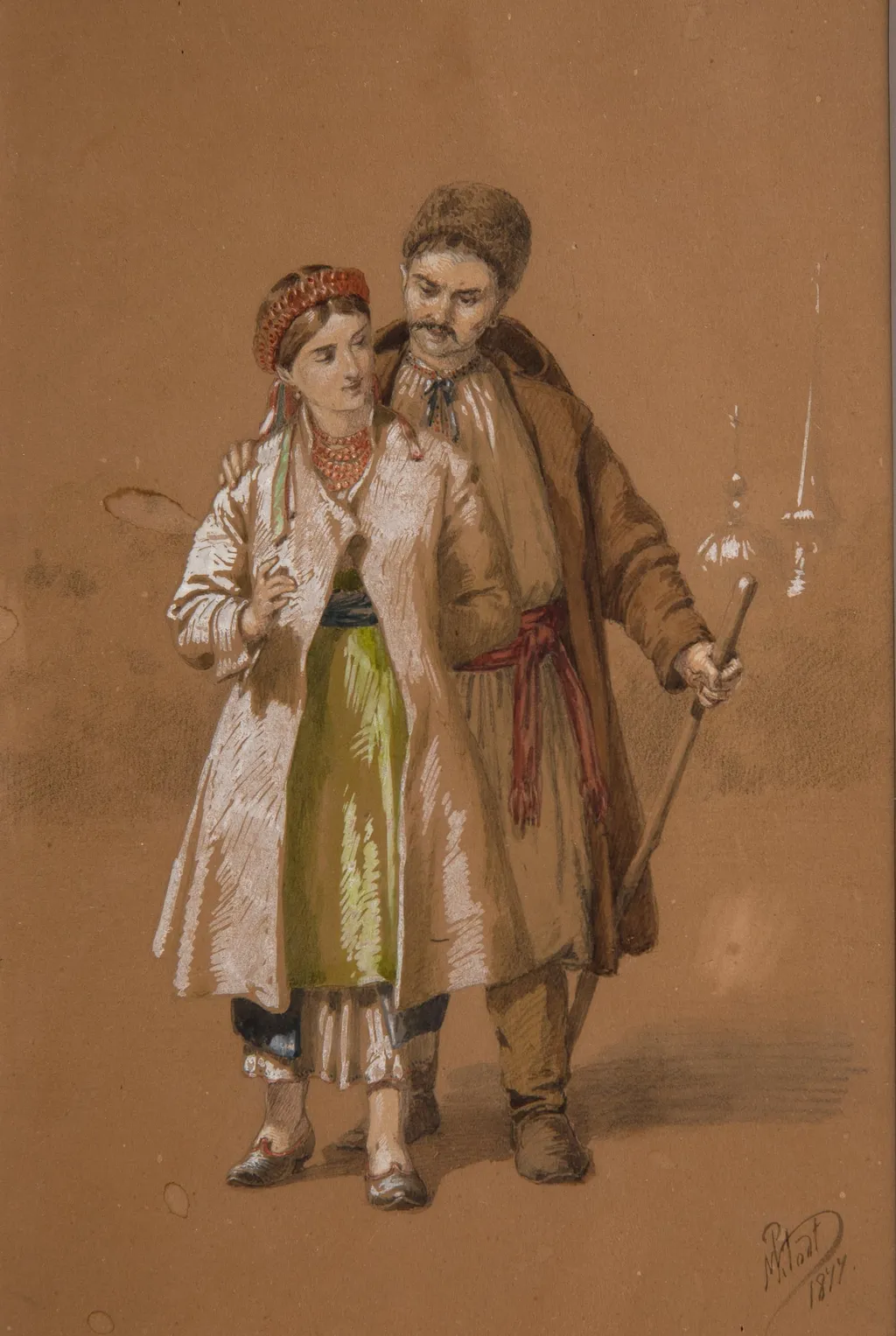
Venäläisiä kansallispukuja, (Mies ja nainen), luonnos is a photography by Mihail Petrovits Clodt. It is held in the collection of the Järvenpää Art Museum.
About this work
Overview
This sketch by Mikhail Petrovich Clodt depicts a man and woman dressed in traditional Russian attire, rendered in loose, energetic brushwork.
This sketch by Mikhail Petrovich Clodt depicts a man and woman dressed in traditional Russian attire, rendered in loose, energetic brushwork. The figures stand side by side against a muted brown background, their postures suggesting quiet companionship. The artist captures the essence of rural dress without elaborate detail, emphasizing gesture and texture over precision. The work functions as a study of national costume, grounded in observation rather than idealization.
Subject & Meaning
The figures represent everyday individuals in regional Russian dress, likely from the 19th century countryside. The woman’s white shawl, green skirt, and patterned headscarf, paired with the man’s fur-trimmed coat and red belt, reflect regional variations in folk clothing. Their proximity and simple expressions convey a sense of ordinary life, not ceremonial display. The sketch honors the dignity of common attire, documenting cultural identity through dress rather than narrative.
Technique & Style
Clodt employed rapid, fluid brushstrokes to suggest the folds and textures of fabric, avoiding fine detail in favor of atmospheric suggestion. The loose handling of paint gives movement to the clothing, while the faces are rendered with minimal features—enough to convey expression without portraiture. The plain brown background isolates the figures, directing focus to their garments and posture. The technique reflects a direct, observational approach common in preparatory studies.
History & Provenance
Created by Mikhail Petrovich Clodt, a Russian painter associated with the Peredvizhniki movement, this sketch likely dates to the mid-to-late 19th century. It was probably made as a study for a larger work or as part of a broader project documenting regional costumes. Though its exact provenance is undocumented, it aligns with Clodt’s known interest in ethnographic realism and folk culture during a period of national self-examination in Russia.
Context
During the 19th century, Russian artists increasingly turned to rural life and traditional dress as symbols of authentic national identity. Clodt’s sketch fits within this trend, alongside efforts by ethnographers and writers to record disappearing customs. Unlike academic paintings, this work avoids theatricality, instead presenting costume as lived reality. It reflects a broader cultural movement seeking to define Russian identity through its people’s daily attire and habits.
Legacy
Clodt’s sketches like this one contributed to a visual archive of Russian folk dress, influencing later ethnographic documentation and artistic representations of rural life. Though not widely exhibited, such studies preserved details of regional costume that might otherwise have been lost. His approach—direct, unembellished, and attentive to texture—remains a quiet but significant part of Russia’s artistic record of its diverse cultural heritage.
Artist & collection
Artist

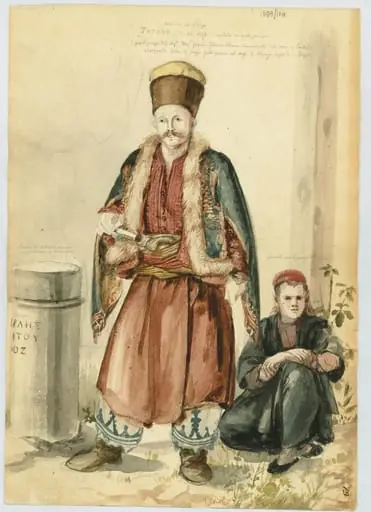 Ο τάταρος του Αλή Πασά "στην υπηρεσία του στρατηγού Adam" και ο νεαρός υπηρέτης του
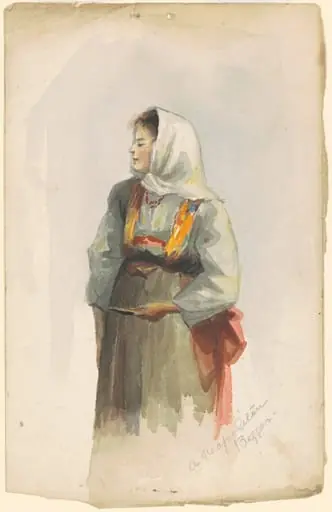 A Neopolitan Beggar
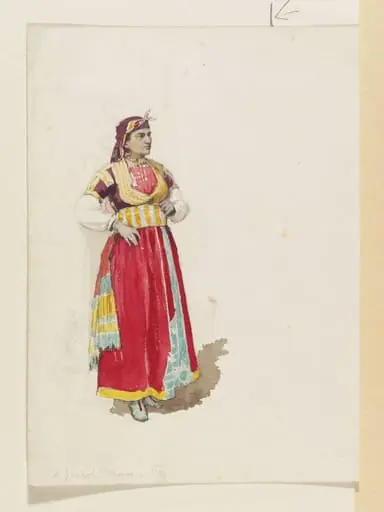 A Jewish Nurse - Fez
 La pârleaz
 A Tatar, or Government Courier
 H Beard Print Collection
 A Betrothal Scene. Interior with Dutch peasants
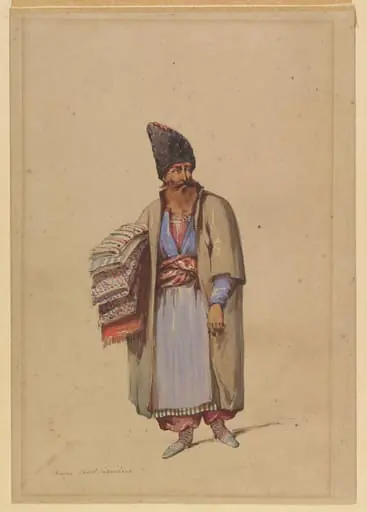 Persian Shawl-Merchant
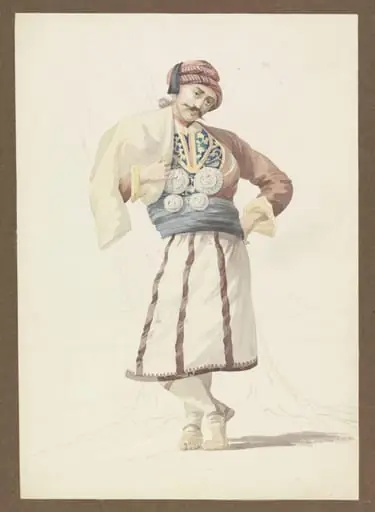 An Albanian
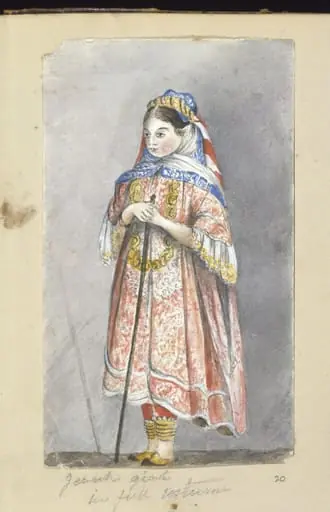 Jewish girl in full costume
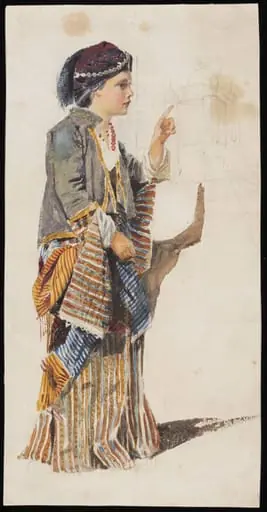 Untitled
 Venäläisiä kansallispukuja, (Kaksi naista), luonnos