Artwork
Lotja joen rannalla
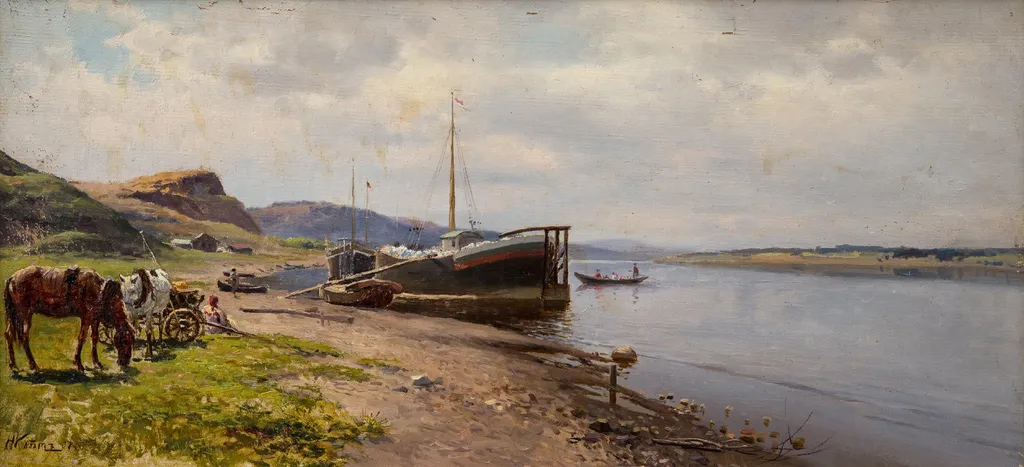
Lotja joen rannalla is a photography by Nikolai Aleksandrovitsh Clodt. It is held in the collection of the Järvenpää Art Museum.
About this work
Overview
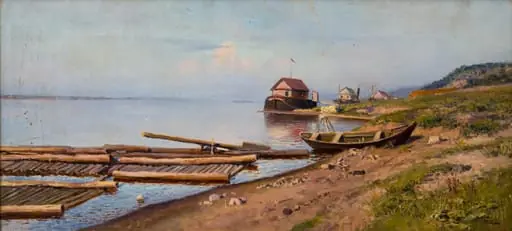
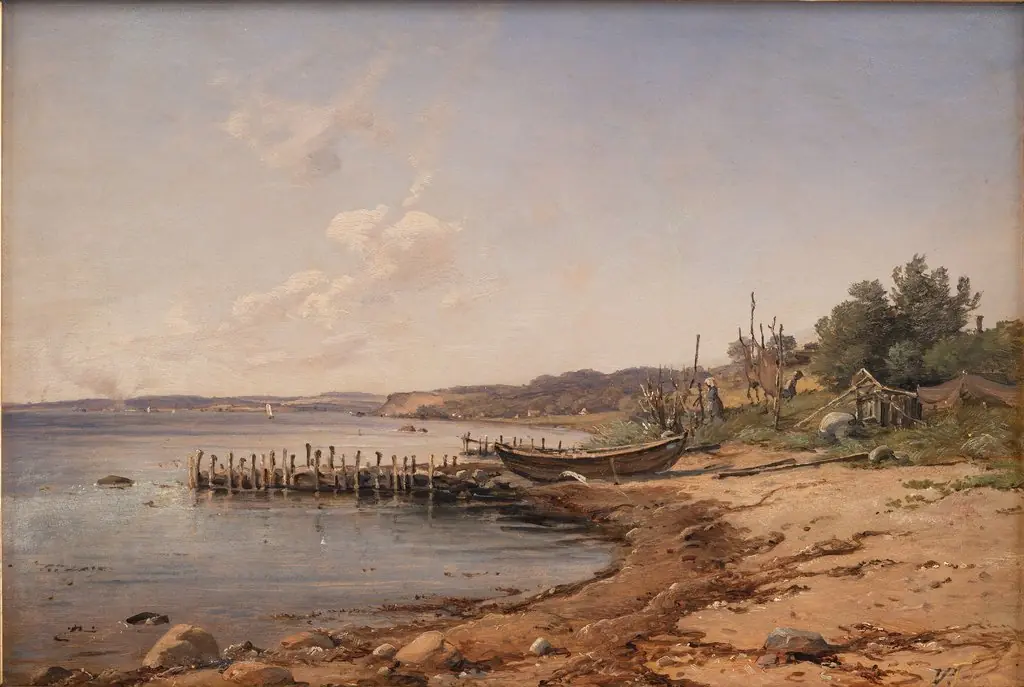
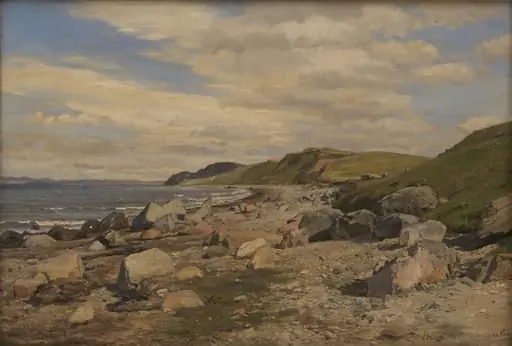
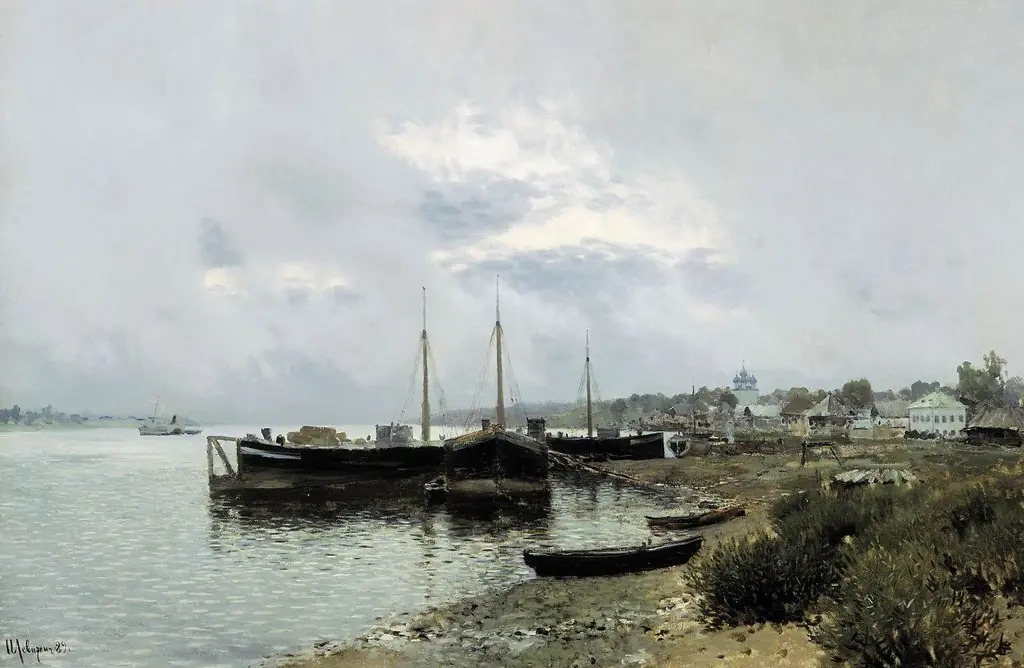
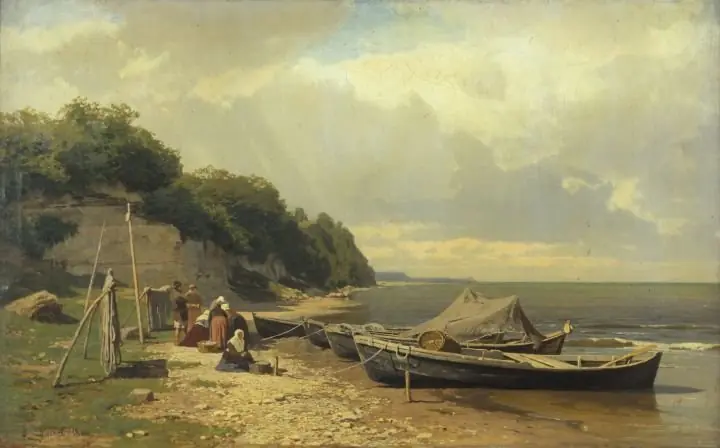
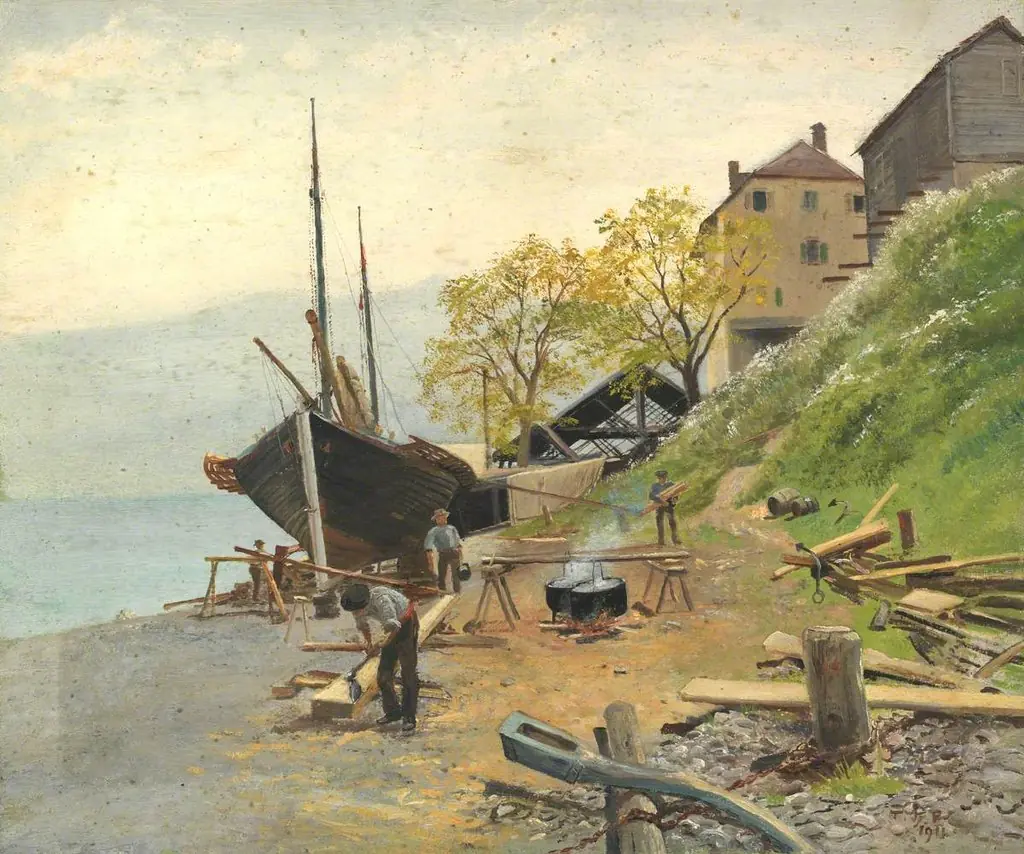
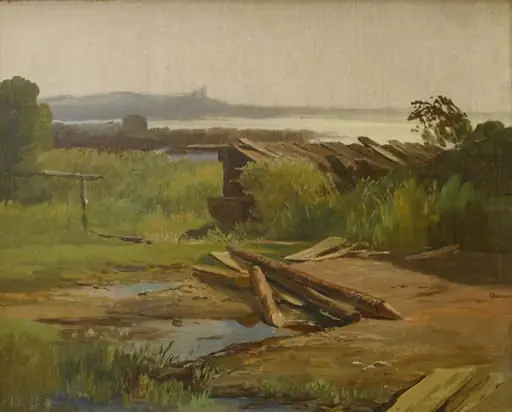
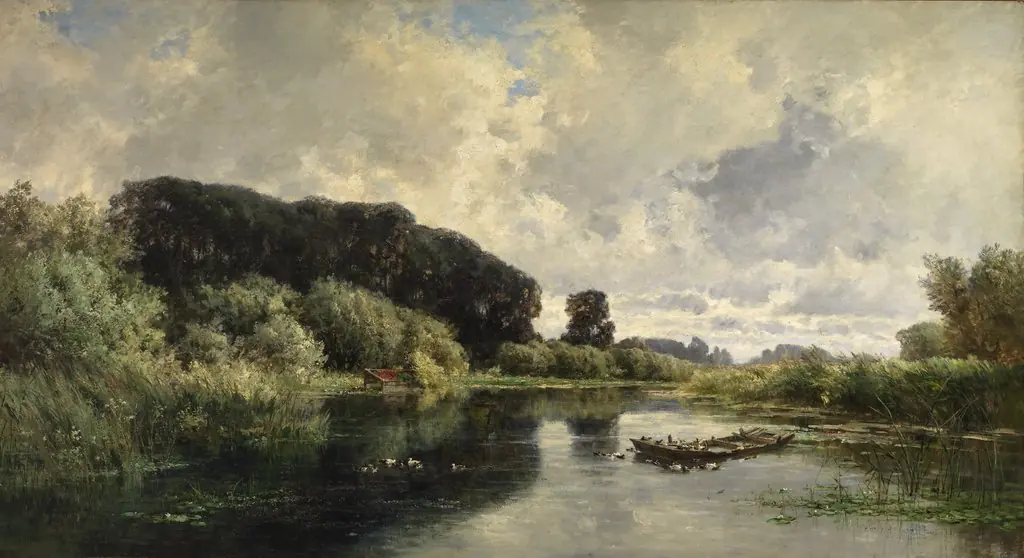
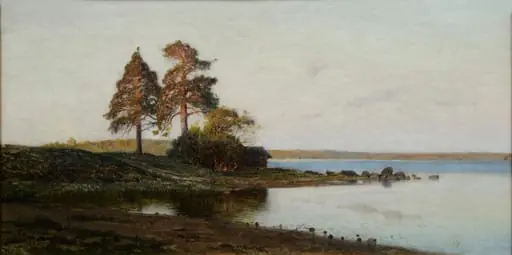
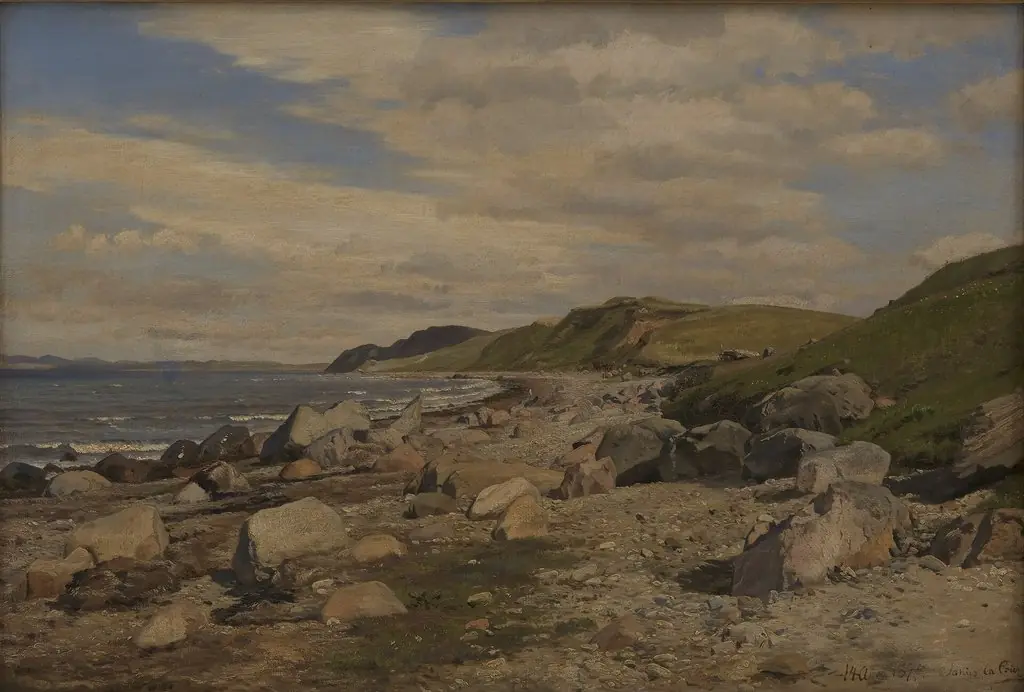
This painting depicts a serene riverside scene, characterized by a large boat moored on the shore, adjacent to a wagon with two horses on a grassy bank. Figures are dispersed throughout, with some near the boat and others in a rowboat on the calm river, set against a backdrop of rolling hills and a softly clouded sky.
Subject & Meaning
The subject is a tranquil, everyday waterfront scene, emphasizing quiet activity and natural surroundings. The composition suggests a focus on capturing a peaceful moment, potentially reflecting a desire to portray serenity in a natural setting.
Technique & Style
The painting features loose brushstrokes, imparting a gentle, somewhat unfinished appearance. The color palette is predominantly earthy tones (browns, greens, blues) with a subtle accent of red on the boat, contributing to the overall sense of calm.
History & Provenance
Attributed to Nikolai Aleksandrovitsh Clodt, a Russian artist known for his landscapes. For more works by the artist, see related entries on Clodt.
Context
Given its style and subject matter, the painting may reflect 19th-century European landscape traditions, which often emphasized serene natural environments and everyday life. However, specific contextual details (date, exact location depicted) are not provided.
Legacy
The painting's legacy is not explicitly detailed here, but as part of Clodt's oeuvre, it contributes to the broader appreciation of 19th-century Russian landscape painting.
Artist & collection
Artist
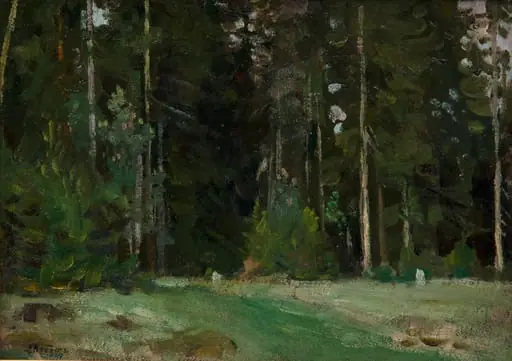
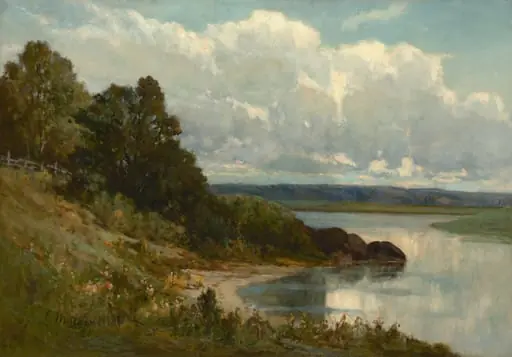
Nikolai Clodt worked in photography, framing the Finnish landscape through quiet moments like Metsä and the riverbank scenes Vene joen rannalla and Lotja joen rannalla.