Artwork
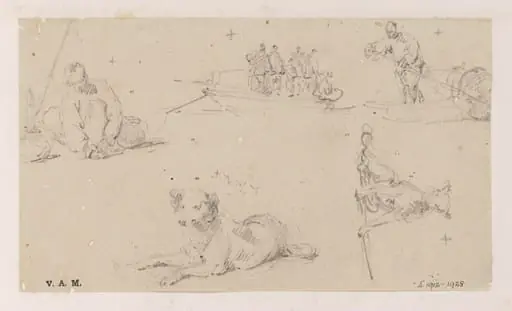
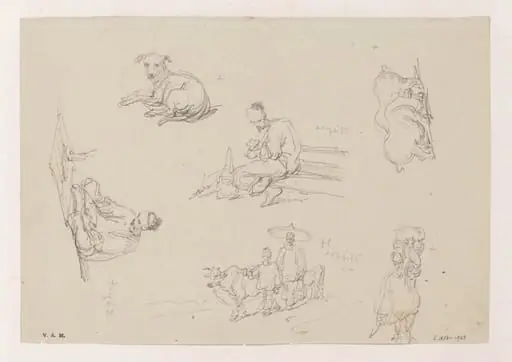
Barking Dog and Studies for "Militia Training"
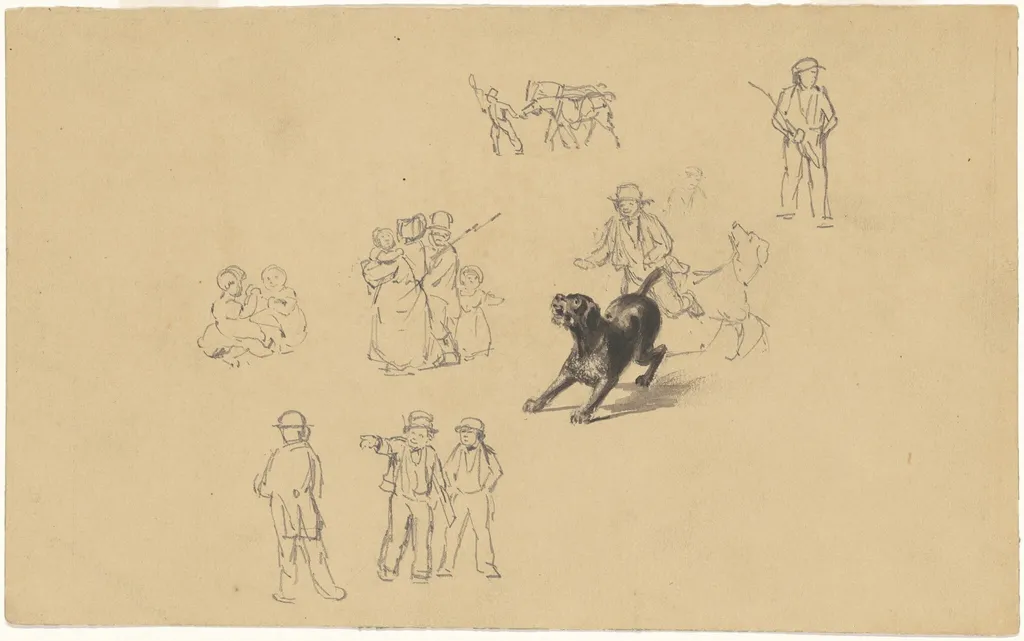
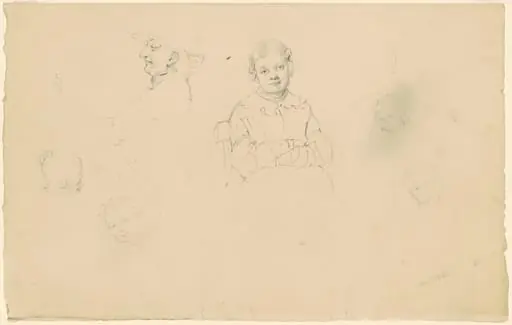
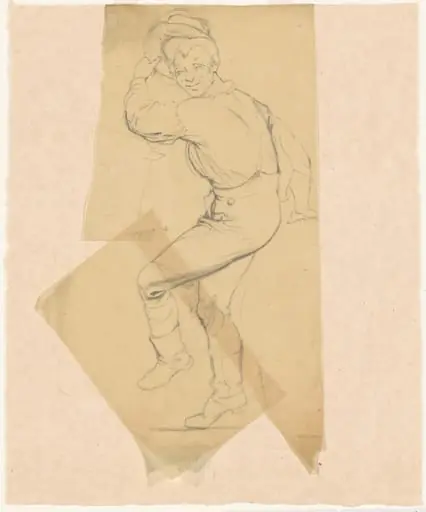
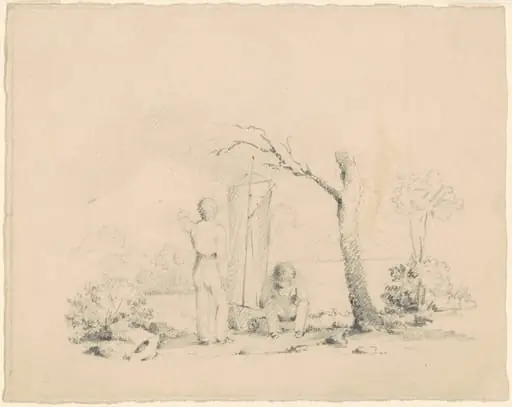
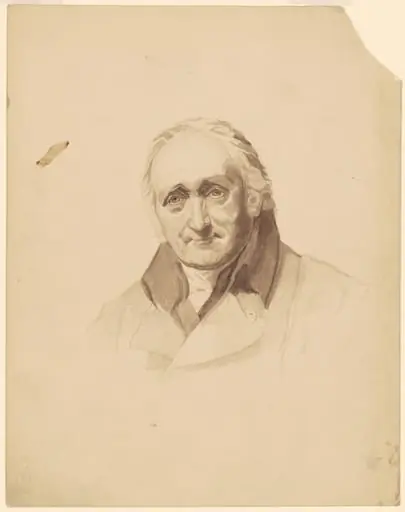
Barking Dog and Studies for "Militia Training" is a graphite drawing by the Romanticist artist James Goodwyn Clonney. It dates from 1841 and is held in the collection of the National Gallery of Art.
About this work
Overview
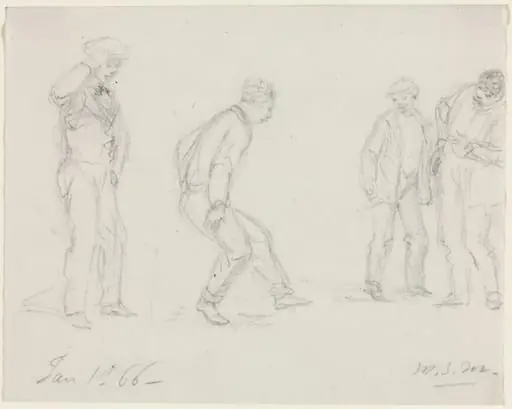
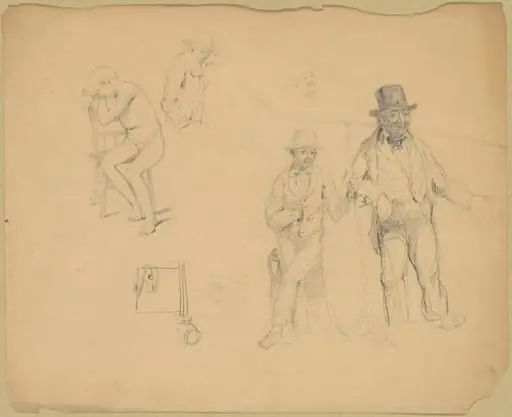
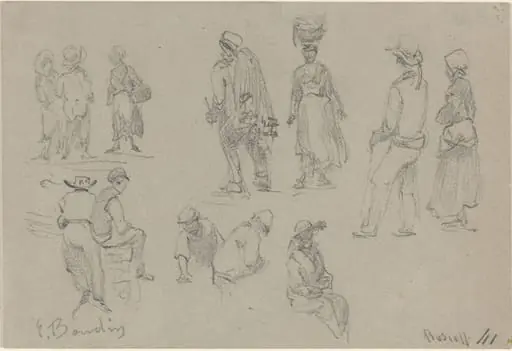
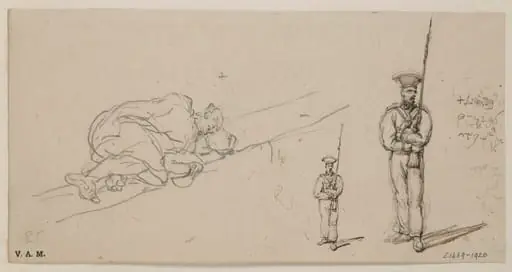
Created around 1841 by James Goodwyn Clonney, this drawing combines a study of a barking dog with preliminary sketches for a militia training scene. Executed in graphite and ink wash on wove paper, it reflects the artist’s habit of working on intimate, small-scale compositions. The dual focus suggests Clonney’s practice of observing daily life while simultaneously planning larger narrative works.
Subject & Meaning
The dog, rendered with lively detail, may symbolize alertness or rural vigilance, while the militia sketches hint at civic duty and communal organization.
The drawing juxtaposes a domestic animal in motion with fragmented figures engaged in military drill. The dog, rendered with lively detail, may symbolize alertness or rural vigilance, while the militia sketches hint at civic duty and communal organization. Together, they suggest Clonney’s interest in the rhythms of ordinary American life, subtly framing social structures through quiet, observational moments.
Technique & Style
Clonney employed graphite for precise linework and ink wash to suggest volume and shadow, creating a tonal range that enhances the immediacy of the sketches. The wove paper’s smooth surface allowed for delicate gradations, supporting his preference for restrained, detailed rendering. The composition’s informal arrangement reveals a working process rather than a finished piece, emphasizing spontaneity over polish.
History & Provenance
The drawing originates from Clonney’s personal sketchbook, likely compiled during his time in New York and Connecticut. It remained in private hands until entering a public collection in the 20th century. No exhibition history is documented prior to its acquisition by the institution holding it today, suggesting it was valued primarily as an artist’s working material rather than a standalone artwork.
Context
In the early 1840s, American artists increasingly turned to scenes of civilian life as national identity took shape. Clonney’s focus on militia drills coincided with heightened public interest in local defense organizations, while his inclusion of ordinary subjects—like a dog—reflected a broader trend toward realism. His work stood apart from grand historical painting, favoring quiet, unidealized moments.
Legacy
Clonney’s drawings, including this one, offer insight into the preparatory methods of 19th-century American genre artists. Though he was not widely celebrated in his lifetime, his sketches reveal a thoughtful engagement with social observation and composition. Today, they serve as valuable records of artistic process and everyday life in antebellum America.
Artist & collection
Artist
James Goodwyn Clonney (28 December 1812, Liverpool (?) – 7 October 1867, Binghamton, NY) was an English-born American genre painter and lithographer.

![Two Soldiers Resting [verso], by Winslow Homer](https://artifactworldgallery.com/img/winslow-homer--two-soldiers-resting-verso--989d55e6cbbf0806-w320.webp)