Artwork
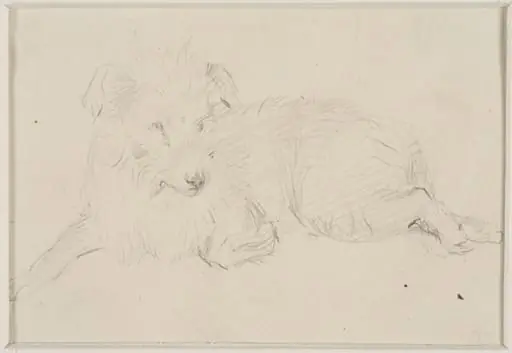
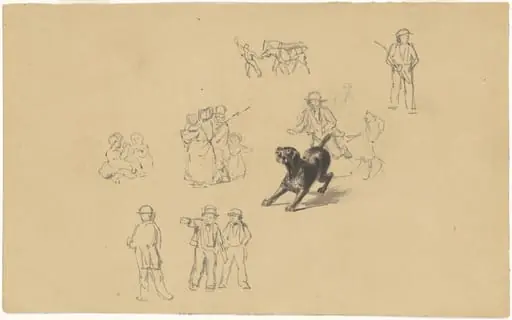
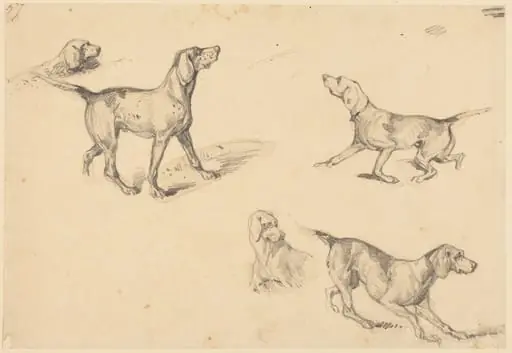
Studies of Dogs and a Seated Boy [recto]
![Studies of Dogs and a Seated Boy [recto], by James Goodwyn Clonney, graphite, 1845](https://artifactworldgallery.com/img/james-goodwyn-clonney--studies-of-dogs-and-a-seated-boy-recto--440d550e9055fba3-w1024.webp)
Studies of Dogs and a Seated Boy [recto] is a graphite drawing by the Romanticist artist James Goodwyn Clonney. It dates from 1845 and is held in the collection of the National Gallery of Art.
About this work
Overview
Created around 1845 by James Goodwyn Clonney, this graphite drawing on wove paper is a compact study of animals and a child, executed with minimal refinement.
Created around 1845 by James Goodwyn Clonney, this graphite drawing on wove paper is a compact study of animals and a child, executed with minimal refinement. Its informal scale and unpolished lines suggest it was made as preparatory observation rather than a finished piece. Clonney, an English-born artist active in the United States, frequently turned to rural scenes and domestic moments, using drawing as a tool to capture transient gestures and natural behavior.
Subject & Meaning
The drawing depicts multiple dogs in varying postures—sitting, standing—and a seated boy gazing downward, placed without clear narrative context. The absence of overt symbolism or setting invites interpretation as a study of presence rather than story. Clonney’s interest in quiet, everyday interactions may extend to the boy’s proximity to the animals, hinting at unspoken bonds between human and nonhuman subjects in ordinary life.
Technique & Style
Rendered entirely in graphite, the work employs loose, light strokes that prioritize immediacy over detail. Forms are suggested with swift, overlapping lines, and the composition is fragmented across the page, lacking a central focus. This approach reflects a sketchbook habit, where observation was prioritized over polish. The paper’s texture subtly interacts with the medium, enhancing the sense of spontaneity and direct engagement with the subject.
History & Provenance
The drawing is one of several surviving studies by Clonney from the mid-1840s, a period when he was refining his approach to genre subjects before producing larger lithographs and paintings. Its survival suggests it was retained by the artist or an early collector interested in his working process. No documented exhibition or ownership history exists prior to its inclusion in institutional collections, indicating it remained largely private during his lifetime.
Context
In mid-19th-century America, artists increasingly turned to everyday life as subject matter, moving away from grand historical or mythological themes. Clonney’s focus on animals and children aligns with this trend, particularly among those influenced by European realism. His sketches, often made outdoors or in domestic settings, reflect a growing interest in authenticity and the unnoticed rhythms of rural and suburban existence.
Legacy
Though Clonney is not widely known today, his drawings offer insight into the development of American genre art. This study exemplifies how artists used informal sketches to hone their eye for gesture and composition. The work’s unembellished nature preserves a direct record of his observational practice, contributing to a broader understanding of how 19th-century artists engaged with the world around them through quiet, repeated study.
Artist & collection
Artist
James Goodwyn Clonney (28 December 1812, Liverpool (?) – 7 October 1867, Binghamton, NY) was an English-born American genre painter and lithographer.

![Two Heads; Studies of Sheep [recto], by Paul Gauguin](https://artifactworldgallery.com/img/paul-gauguin--two-heads-studies-of-sheep-recto--d045b25e15a504f5-w320.webp)
![Studies for "Shoeing Calvary Horses at the Front" [recto], by John Singer Sargent](https://artifactworldgallery.com/img/john-singer-sargent--studies-for-shoeing-calvary-horses-at-the-front-recto--c49cae3ecf667bff-w320.webp)