Artwork
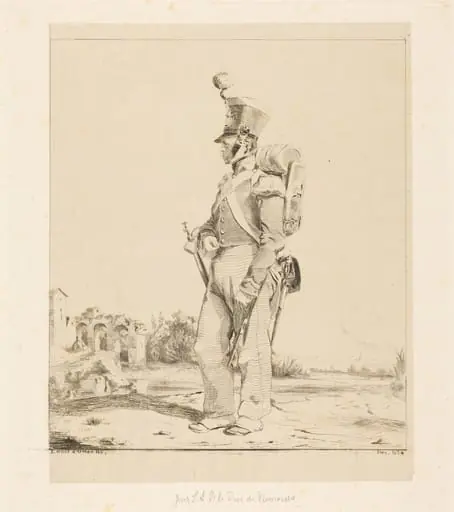
Study for "Militia Training" [recto]
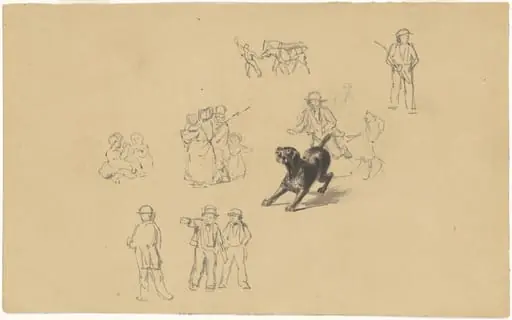
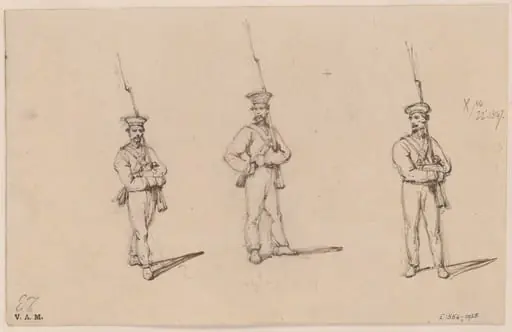
![Study for "Militia Training" [recto], by James Goodwyn Clonney, graphite, 1841](https://artifactworldgallery.com/img/james-goodwyn-clonney--study-for-militia-training-recto--a77cf113ce2ae25d-w1024.webp)
Study for "Militia Training" [recto] is a graphite drawing by the Romanticist artist James Goodwyn Clonney. It dates from 1841 and is held in the collection of the National Gallery of Art.
About this work
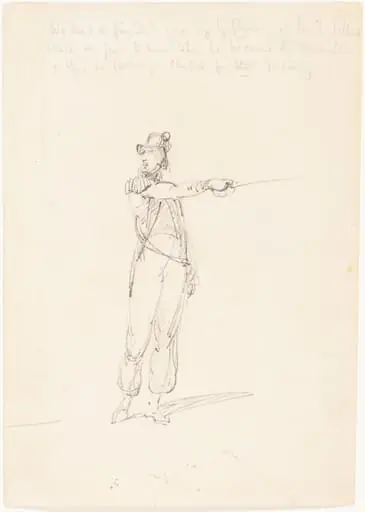
This sketch shows a group of men in old-fashioned clothes, possibly from the early 19th century.
This sketch shows a group of men in old-fashioned clothes, possibly from the early 19th century. They're dressed in jackets, hats, and boots, with one man holding a sword or stick. The drawing is done in black ink and graphite on paper.
The men seem to be in the middle of some action, possibly a fight or a training exercise. One man is lunging forward with his sword, while the others are reacting to him. The sketch has a loose, expressive style, with bold lines and shading.
The artist, James Goodwyn Clonney, was part of the Romanticism movement.
Overview
Created circa 1841, this drawing by James Goodwyn Clonney records a preparatory study for a larger composition titled “Militia Training.” Executed with black ink wash layered over graphite on wove paper, the work captures a brief moment of armed men in motion. The sketch functions as a visual experiment for a narrative scene that would later address themes of civic duty and social interaction.
Subject & Meaning
The composition depicts a small group of men in early‑nineteenth‑century attire—jackets, hats, boots—engaged in a martial exercise. One figure thrusts a sword or staff forward while the others respond, suggesting a drill or mock combat. Though the scene appears straightforward, Clonney’s interest in everyday encounters often carried subtle commentary on equality and communal responsibility, hinting at broader social concerns beneath the surface.
Technique & Style
Clonney employed a loose, expressive hand, beginning with graphite outlines that define posture and costume, then building tonal depth through a fluid black ink wash. The bold contour lines and dynamic shading convey movement and immediacy, while the wove paper surface allows for smooth transitions between light and shadow. This method reflects the artist’s habit of working quickly to capture the vitality of a moment.
History & Provenance
The study originates from Clonney’s productive period in the United States after emigrating from England, when he was active as a genre painter and lithographer. Though the final “Militia Training” composition was never fully realized, the sketch survived in the artist’s studio papers and entered a private collection before being acquired by a public institution in the early twenty‑first century.
Context
Working within the Romantic tradition, Clonney often turned to ordinary subjects to explore larger moral narratives. In the early 1840s, American art was increasingly attentive to democratic ideals and the everyday lives of citizens. This drawing aligns with that trend, using a militia drill—a symbol of civic preparedness—to subtly question notions of inclusion and collective identity.
Artist & collection
Artist
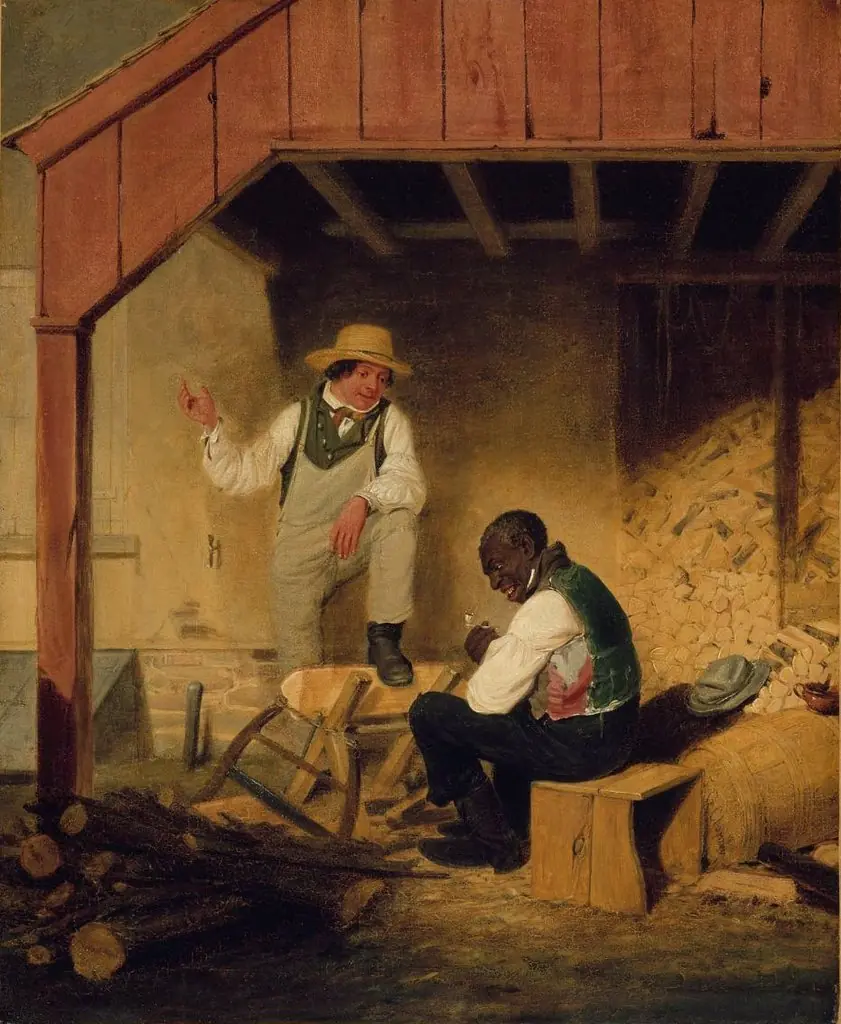
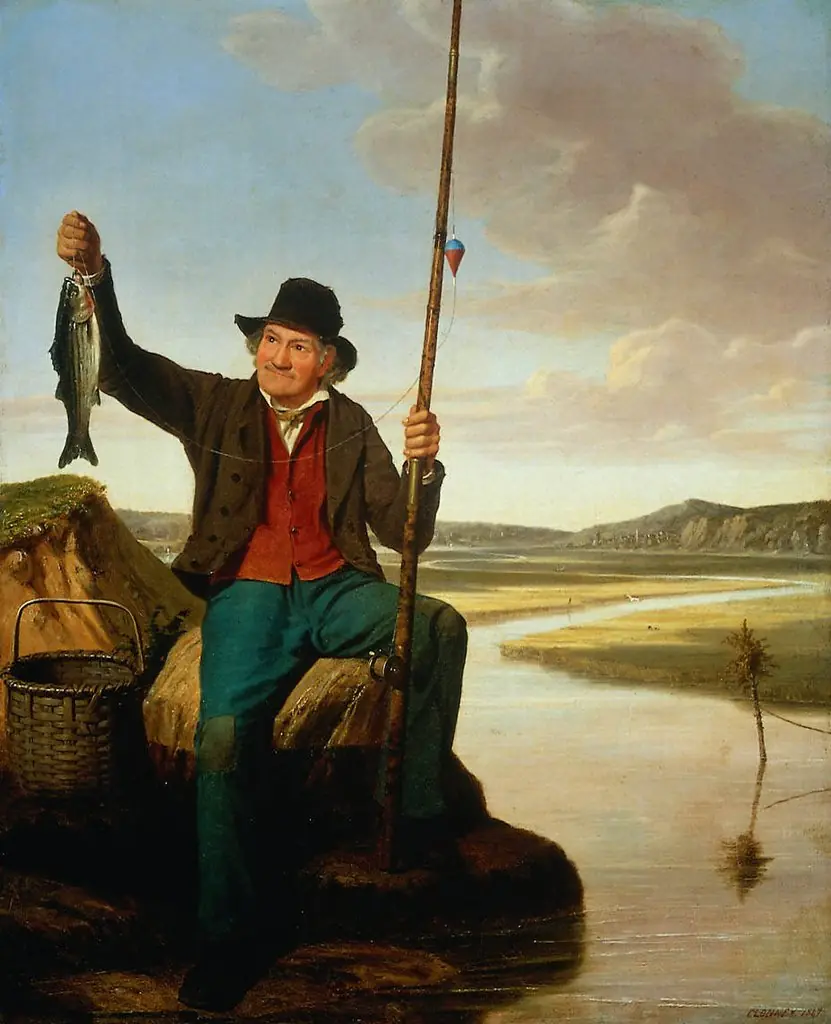
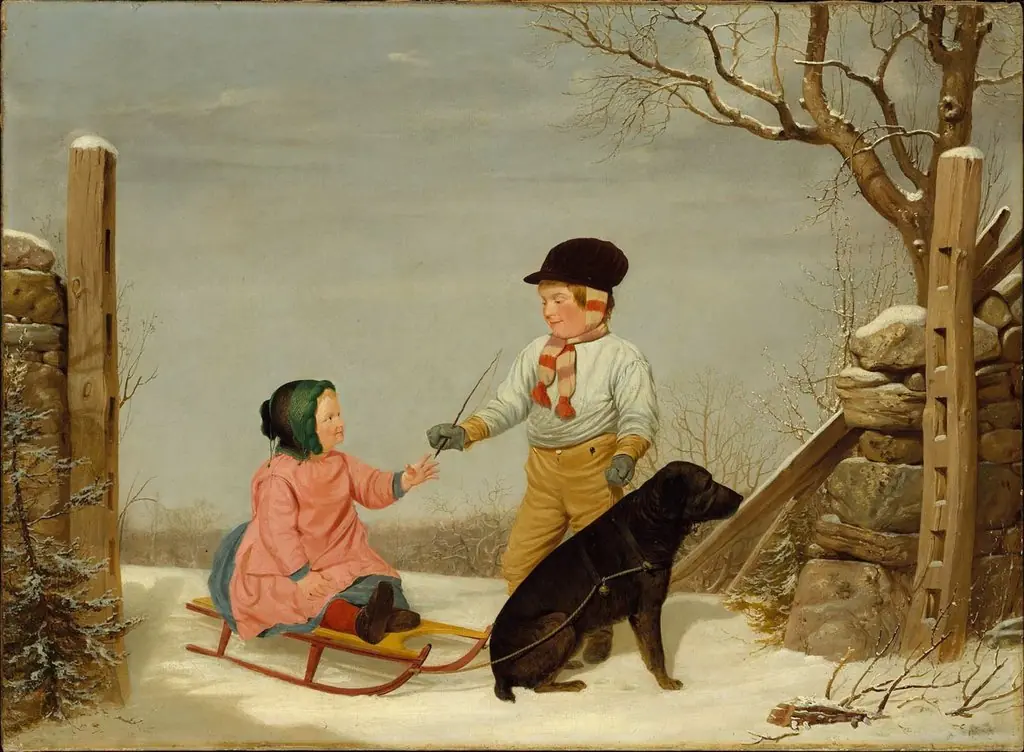
James Goodwyn Clonney (28 December 1812, Liverpool (?) – 7 October 1867, Binghamton, NY) was an English-born American genre painter and lithographer.

![Two Soldiers Resting [verso], by Winslow Homer](https://artifactworldgallery.com/img/winslow-homer--two-soldiers-resting-verso--989d55e6cbbf0806-w320.webp)