Artwork
Two Grenadiers
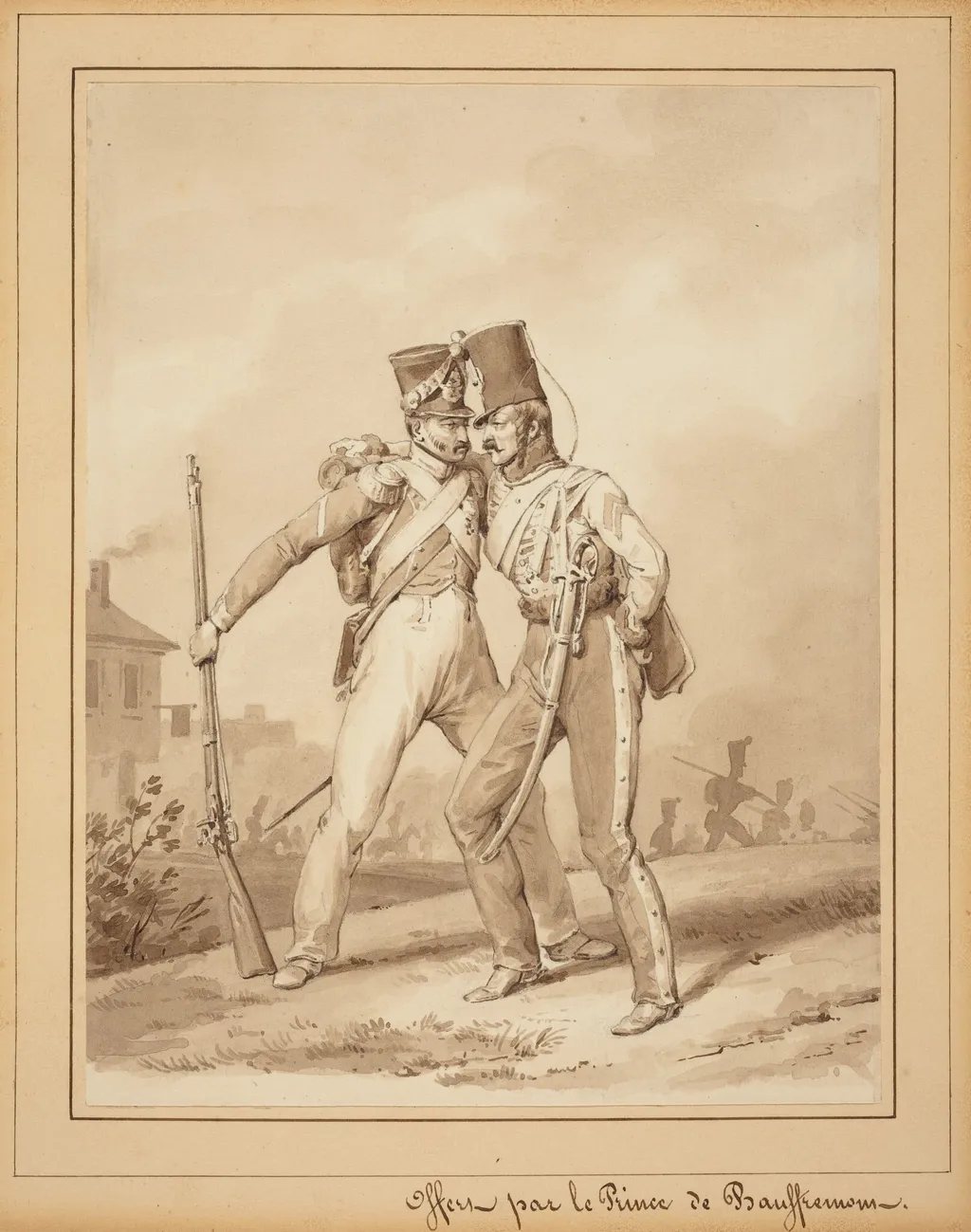
Two Grenadiers is an ink drawing by the Romanticist artist Victor Adam. It dates from 1834 and is held in the collection of the National Gallery of Art.
About this work
Overview
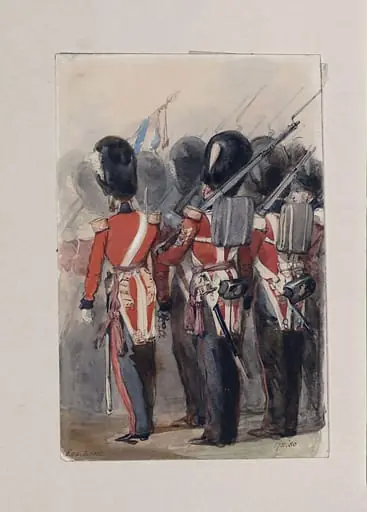
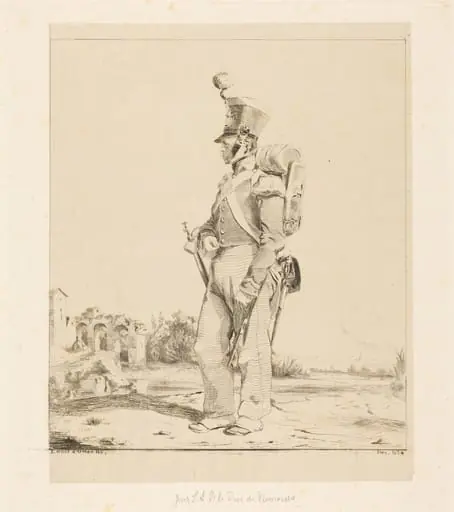
Created in 1834 by Victor Adam, this drawing depicts two grenadiers in military attire, standing side by side on a dirt path. Executed in brush and brown wash with pen and ink over graphite, the work is mounted on a wove paper laid onto an album sheet. The composition emphasizes quiet stillness rather than action, capturing the soldiers in a moment of pause amid a modest landscape.
Subject & Meaning
The two figures represent French grenadiers, elite infantry soldiers known for their distinctive headgear and role in Napoleonic campaigns.
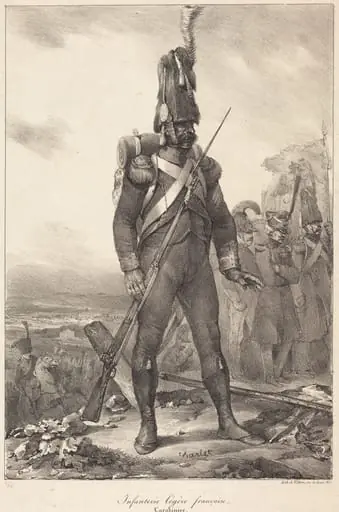
The two figures represent French grenadiers, elite infantry soldiers known for their distinctive headgear and role in Napoleonic campaigns. One wears a tall bearskin cap and carries a backpack; the other, a shorter shako and a sidearm. Their posture suggests vigilance or rest, not combat. The setting—simple terrain with distant architecture and foliage—grounds them in everyday military life, evoking dignity in routine rather than heroism in battle.
Technique & Style
Adam employed layered brown washes to model form and suggest texture, with precise pen lines defining edges and details like buttons, straps, and foliage. Graphite underdrawing guided the composition, while the ink added contrast and structure. The paper’s surface enhances the soft gradations of tone, creating a sense of atmospheric depth. The technique reflects academic training fused with Romantic-era attention to naturalistic detail.
History & Provenance
The drawing was produced during Adam’s active period as a military illustrator and lithographer, likely as part of a series documenting French troops. It was later mounted in an album, suggesting it was collected or archived rather than exhibited publicly. Its survival in this format indicates institutional or private interest in military portraiture during the July Monarchy era.
Context
In 1830s France, military imagery remained culturally significant following the Napoleonic Wars and the 1830 Revolution. Artists like Adam documented soldiers not as glorified heroes but as individuals within evolving national identity. This work aligns with a broader trend of depicting military life with psychological nuance, moving away from grand historical narratives toward intimate, observational realism.
Legacy
Though not widely known outside specialized circles, Adam’s drawings contribute to the archive of 19th-century French military representation. This piece exemplifies how academic draftsmanship served documentary purposes, influencing later illustrators and historians. Its preservation in album form underscores its role as a reference object rather than a public spectacle.
Artist & collection


![Study for "Militia Training" [recto], by James Goodwyn Clonney](https://artifactworldgallery.com/img/james-goodwyn-clonney--study-for-militia-training-recto--a77cf113ce2ae25d-w320.webp)