Artwork
The Small Carrying of the Cross
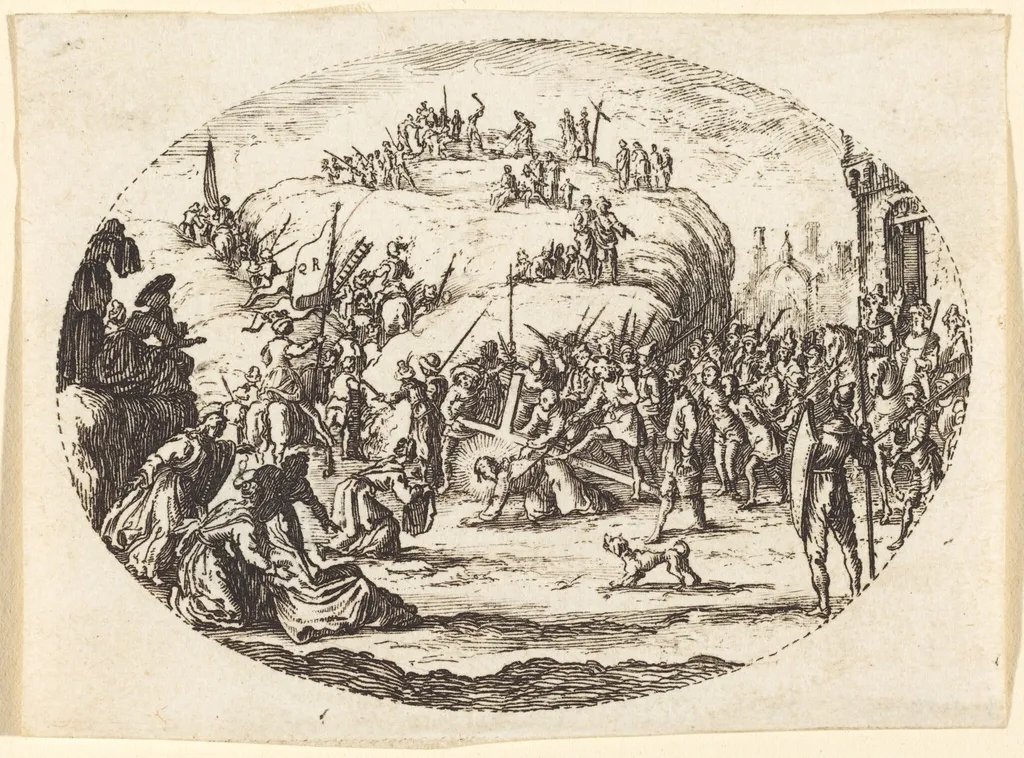
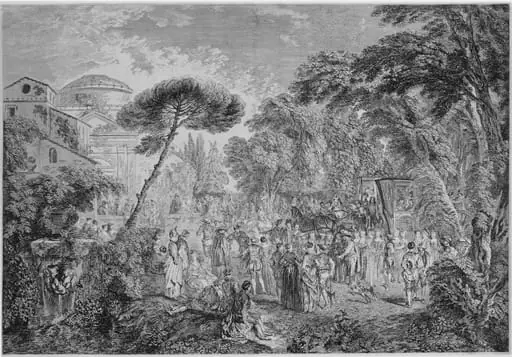
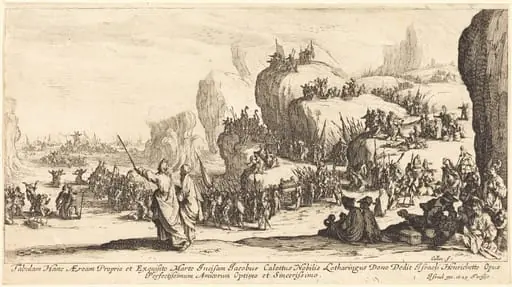
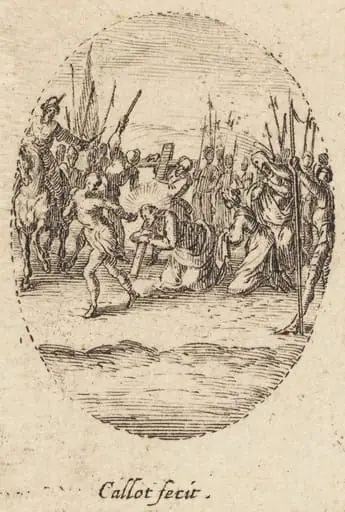
The Small Carrying of the Cross is an ink print by the Baroque artist Charles-Nicolas Cochin I. It dates from 1721 and is held in the collection of the National Gallery of Art.
About this work
Overview
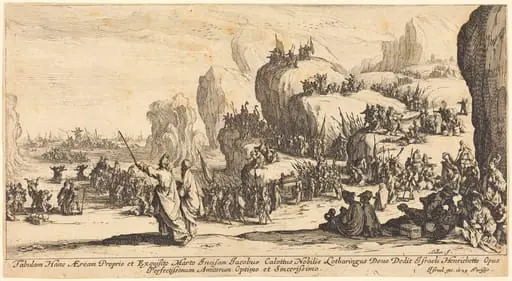
Created in 1721 by Charles-Nicolas Cochin I, this etching on laid paper depicts a moment from the Passion of Christ with intense spatial density. The composition teems with figures, arranged in layered tiers that extend from the foreground to a distant hillside. The black-and-white medium emphasizes contrast and movement, characteristic of early 18th-century printmaking practices in France.
Subject & Meaning
The scene illustrates Christ’s journey toward crucifixion, shown as a solitary figure kneeling beneath the weight of the cross amid a throng of onlookers.
The scene illustrates Christ’s journey toward crucifixion, shown as a solitary figure kneeling beneath the weight of the cross amid a throng of onlookers. Surrounding individuals—some bearing crosses, others holding banners or weapons—suggest a crowd of soldiers, bystanders, and mourners. The absence of clear hierarchy among the figures underscores the chaos and collective participation in the event.
Technique & Style
Cochin employed fine, incised lines to build texture and depth, using hatching and cross-hatching to model forms and suggest volume. The crowded composition, with figures densely packed even at the margins, reflects Baroque sensibilities favoring dynamism over spatial clarity. The etching’s rough, energetic lines convey urgency and emotional tension without idealization.
History & Provenance
The print was produced during Cochin’s early career, before his rise as a prominent royal engraver. It likely circulated among collectors and artists interested in religious subjects rendered with dramatic intensity. No documented early ownership records survive, but its technical precision suggests it was intended for a discerning, literate audience familiar with biblical iconography.
Context
In early 18th-century France, religious prints remained popular despite declining ecclesiastical patronage. Artists like Cochin turned to etching to reinterpret traditional narratives with personal expression. This work aligns with a broader trend of using print media to explore emotional and narrative complexity, bridging devotional imagery and emerging Enlightenment-era interest in human drama.
Legacy
Though not widely reproduced in later centuries, the etching exemplifies Cochin’s early mastery of graphic storytelling. It reflects the transition from grand Baroque compositions to more intimate, psychologically nuanced prints. Its influence is seen in later French engravers who prioritized narrative density and expressive line over formal symmetry.
Artist & collection