Artwork
Pompe funèbre de Polixène de Hesse-Rhinfels
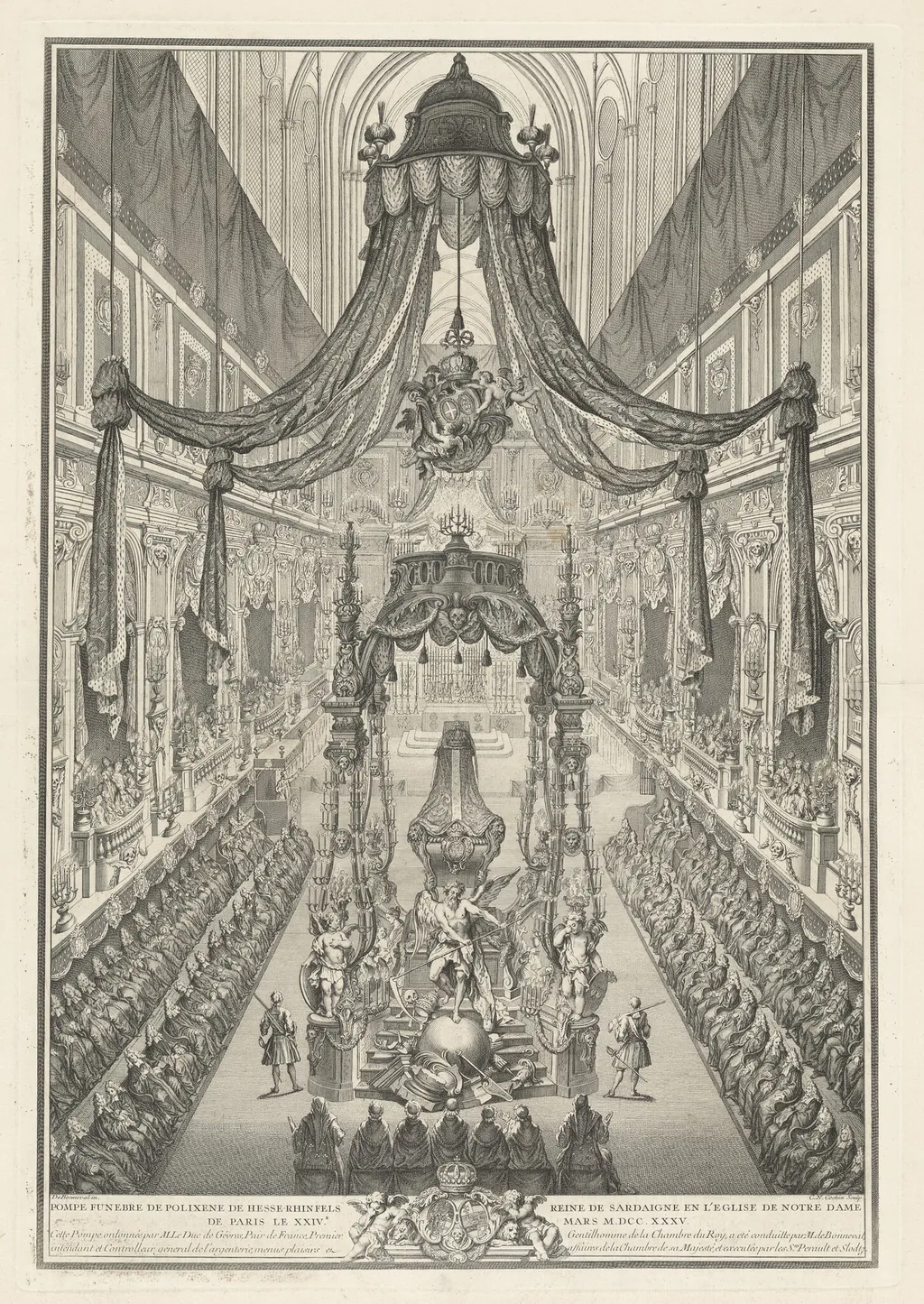
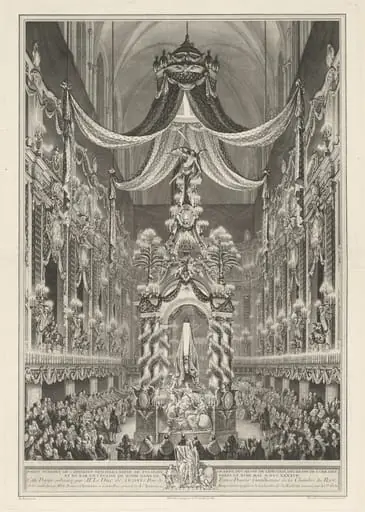
Pompe funèbre de Polixène de Hesse-Rhinfels is an ink print by the Baroque artist Charles-Nicolas Cochin I. It dates from 1735 and is held in the collection of the National Gallery of Art.
About this work
Overview
Pompe funèbre de Polixène de Hesse-Rhinfels is a 1735 print by Charles-Nicolas Cochin I, capturing a lavish funeral scene within a church, characterized by ornate details and solemn atmosphere.
Subject & Meaning
The print commemorates the funeral of Polixène de Hesse-Rhinfels, depicting a grand, mournful ceremony replete with symbolic religious elements, such as statues, angels, and robed figures, underscoring the dignity and reverence of the occasion.
Technique & Style
Executed in etching and engraving on laid paper, the work features sharp lines and expressive shadows, highlighting Cochin I's skill in conveying dramatic depth and opulence through precise, traditional printmaking techniques.
History & Provenance
Created in 1735 by Charles-Nicolas Cochin I, specific provenance details are not provided, though the work's existence suggests it was part of the artist's output during this period, potentially commissioned for noble or religious patrons.
Context
This print reflects 18th-century European funeral rituals among nobility, showcasing the intersection of religious and aristocratic traditions in mourning practices, with the church setting and elaborate decor signifying the deceased's high status.
Artist & collection


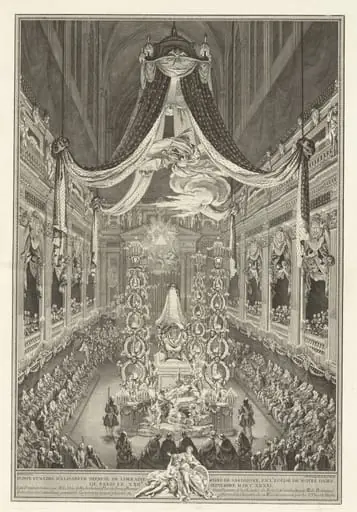 Pompe funèbre d'Élisabeth Therèse de Lorraine
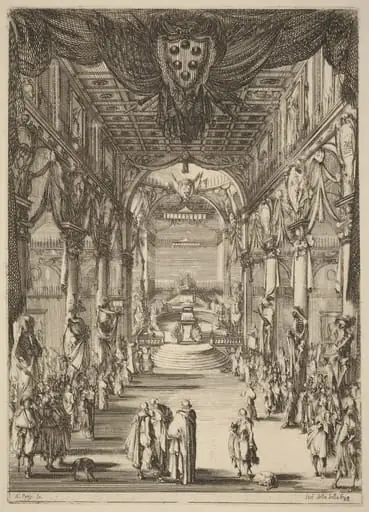 Funeral of Prince Francesco de Medici
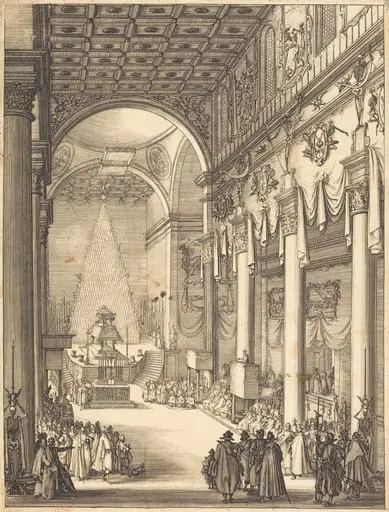 The Catafalque of the Emperor Mathias
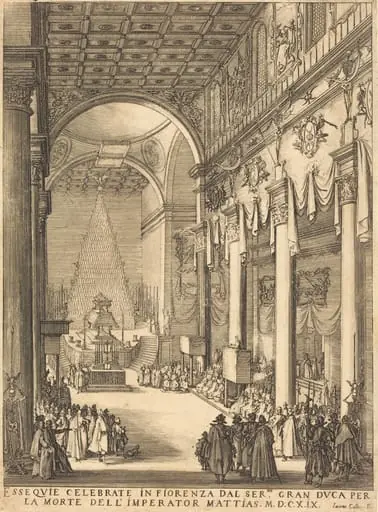 The Catafalque of the Emperor Mathias
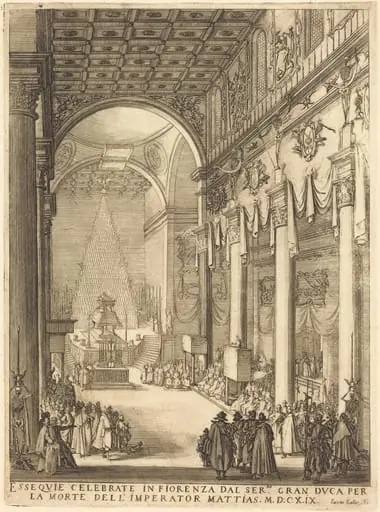 The Catafalque of the Emperor Mathias
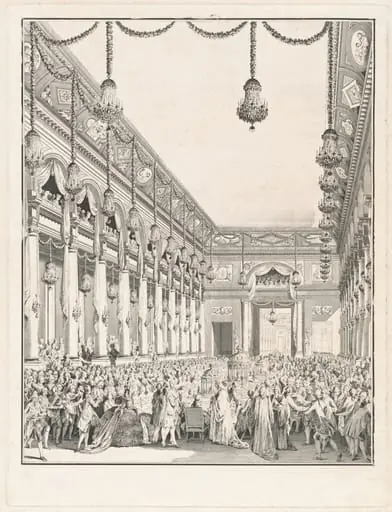 Le festin royal - Fête donnée à l'occasion de la naissance de Monseigneur le Dauphin, 21 janvier 1782
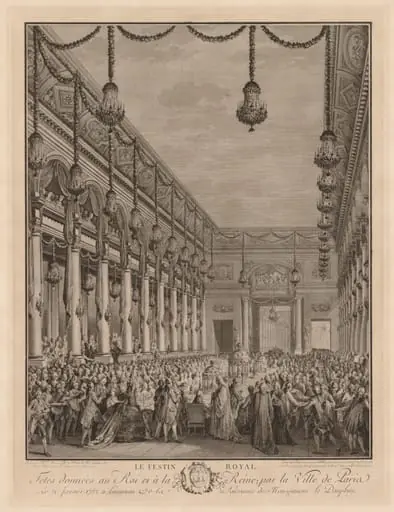 The Royal Banquet
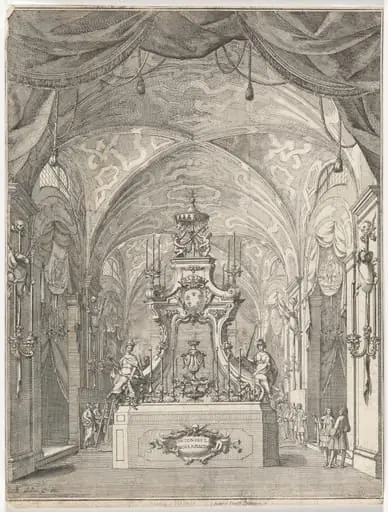 Catafalque for the Funeral of the Duke of Parma Antonio I in the Church of S. Maria Maddalena in Bologna
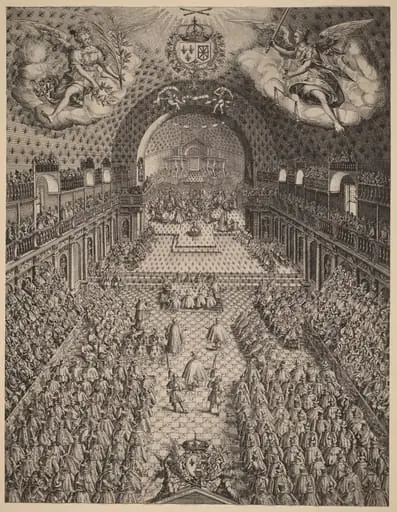 The States General of France (Les Etats Generaux de France)
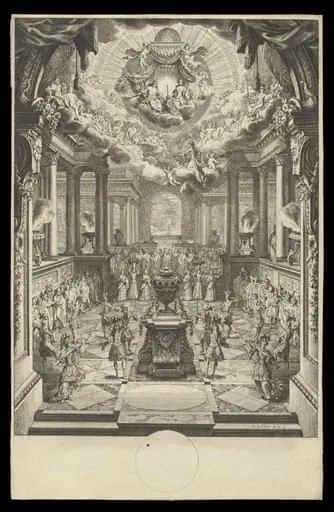 H Beard Print Collection
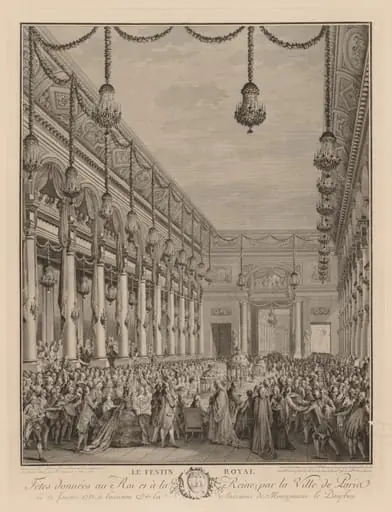 Royal Feast at the Hôtel de Ville, January 21, 1782
 Pompe funèbre de Catherine Opalinska