Artwork
The Crossing of the Red Sea
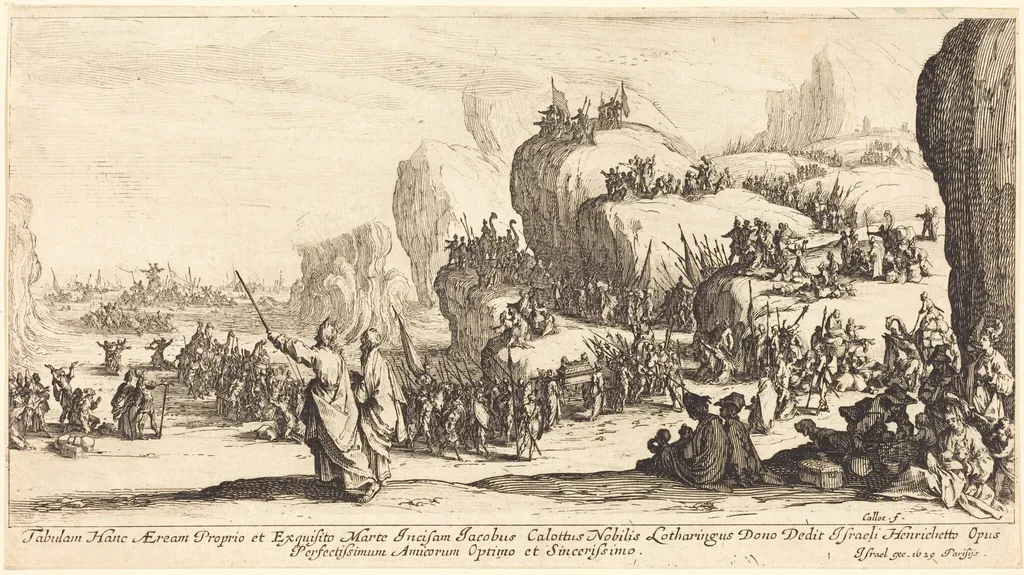
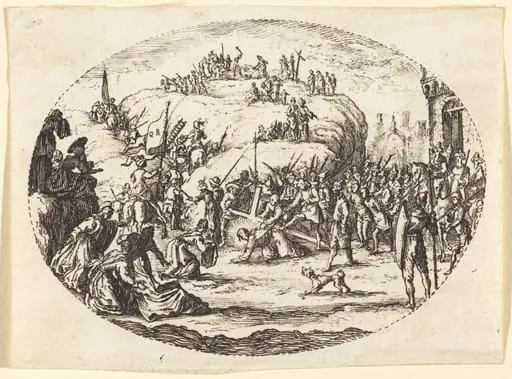
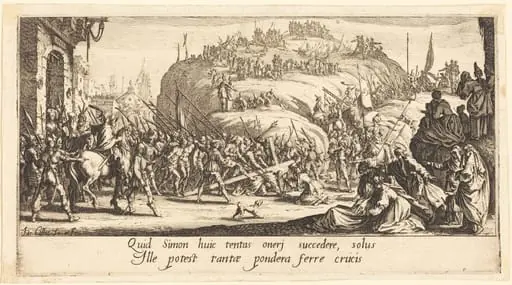
The Crossing of the Red Sea is an ink print by the Baroque artist Jacques Callot. It dates from 1629 and is held in the collection of the National Gallery of Art.
About this work
Overview
Unlike painting, etching allowed Callot to capture complex scenes with fine lines and tonal contrasts, making it ideal for narrative intensity.
Jacques Callot, a printmaker from the Duchy of Lorraine, produced *The Crossing of the Red Sea* in 1629 as an etching on laid paper. Part of a vast body of over 1,400 prints, this work belongs to his series of religious subjects rendered with meticulous detail. Unlike painting, etching allowed Callot to capture complex scenes with fine lines and tonal contrasts, making it ideal for narrative intensity.
Subject & Meaning
The scene illustrates the biblical moment when the Israelites traverse the parted waters of the Red Sea, pursued by Egyptian forces. Figures are clustered in motion—some wading, others gesturing or carrying belongings—conveying urgency and chaos. The composition emphasizes divine intervention through human struggle, with no overt symbols, relying instead on spatial tension and group dynamics to communicate the narrative.
Technique & Style
Callot employed fine-line etching to render dense crowds and textured landscapes with remarkable clarity. Strong chiaroscuro effects, achieved through controlled ink pressure and hatching, define forms and deepen spatial recession. The rocky backdrop and overcast sky are rendered with delicate, layered strokes, enhancing the drama without obscuring the intricate activity of the figures.
History & Provenance
Created during Callot’s mature period in Nancy, the print was likely produced for a private or scholarly audience familiar with biblical iconography. Few early impressions survive, but the work was widely circulated through print dealers in France and the Low Countries. Its survival in institutional collections reflects its status as a significant example of early 17th-century Northern printmaking.
Context
In the 1620s, religious themes remained central to print culture despite growing secular interests. Callot’s approach diverged from grand altarpieces, favoring intimate, crowded compositions that mirrored contemporary anxieties—war, displacement, and divine judgment. His detailed rendering of figures and terrain aligned with broader trends in Northern European printmaking that valued observation over idealization.
Legacy
Callot’s *Crossing of the Red Sea* influenced later printmakers through its narrative density and technical precision. While not widely reproduced in later centuries, it remains a key reference for understanding how etching could convey complex biblical stories with psychological immediacy. Its preservation in major collections underscores its role in the evolution of print as a medium for historical and spiritual storytelling.
Artist & collection
Artist
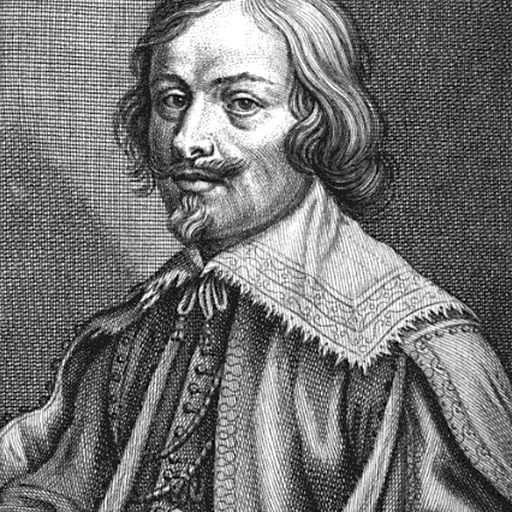
Jacques Callot was a baroque printmaker and draftsman from the Duchy of Lorraine.

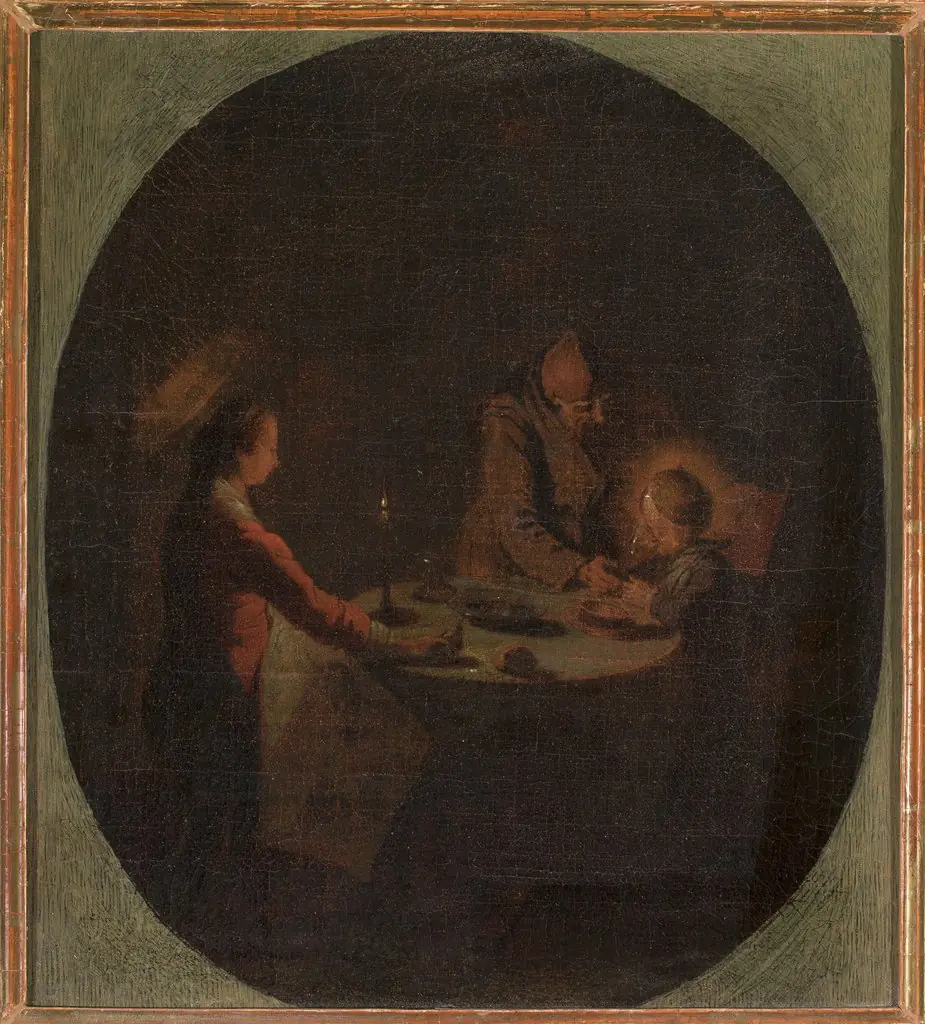 Holy Family at supper
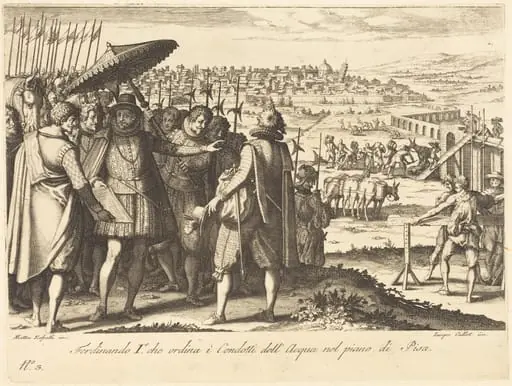 Restoration of the Aqueduct at Pisa
 Restoration of the Aqueduct at Pisa
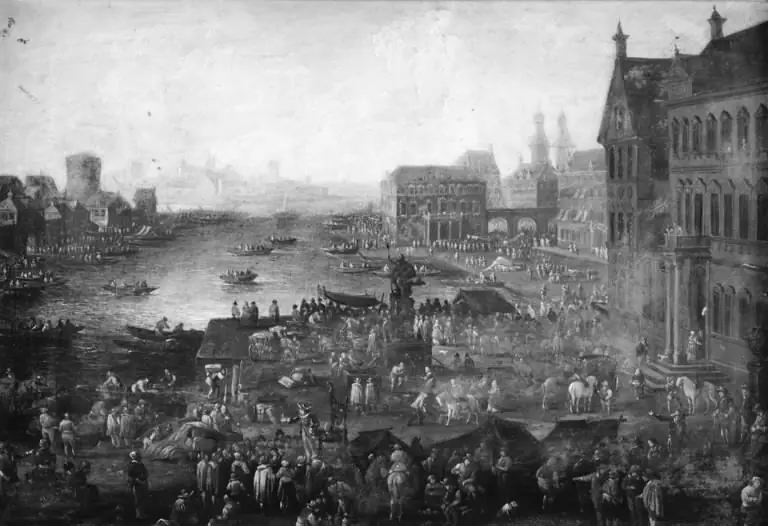 Square in Paris with Many Figures
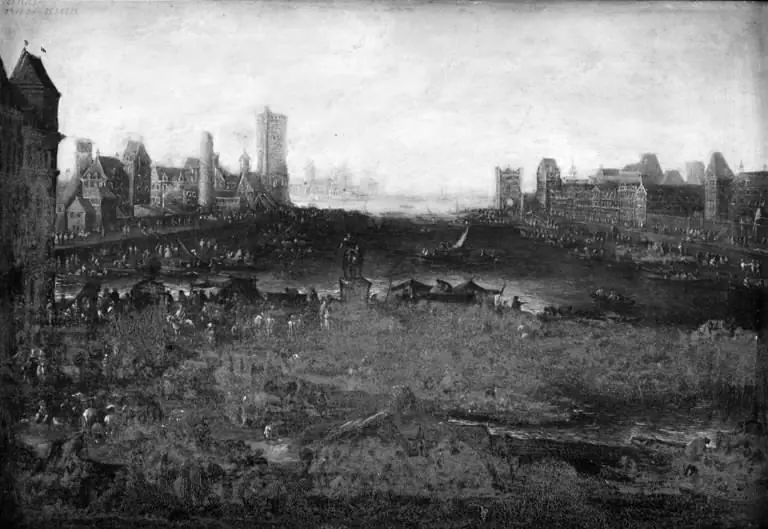 Square in Paris with Many Figures
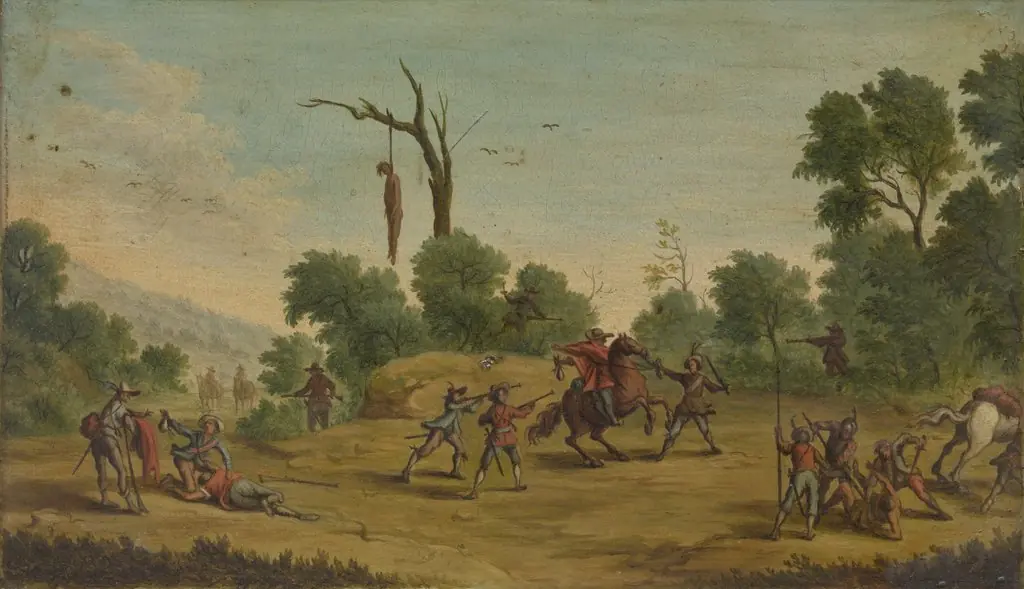 Horsemen Attacked by Robbers
 HOW WILL A COVERED PART BE CORRECTED?HOW WIKA A COVERED HEART DEED CORRECTED?
![Christ Walking on the Water [second plate], by Jacques Callot](https://artifactworldgallery.com/img/jacques-callot--christ-walking-on-the-water-second-plate--2069f3bfe4cb2126-w320.webp) Christ Walking on the Water [second plate]
Christ Walking on the Water [second plate]