Artwork
Flower Print no.1
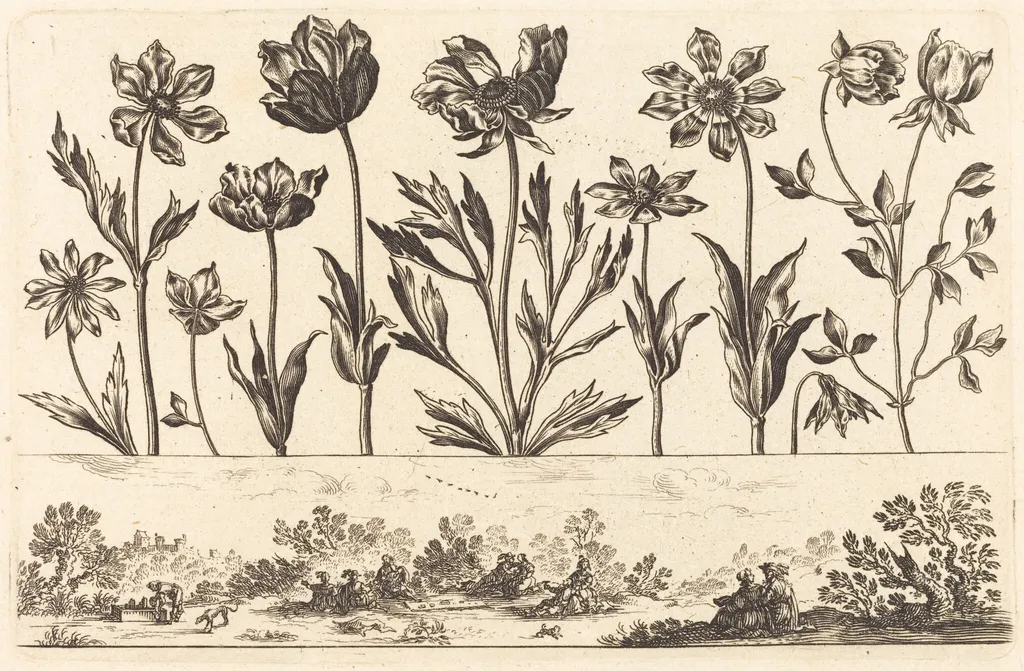
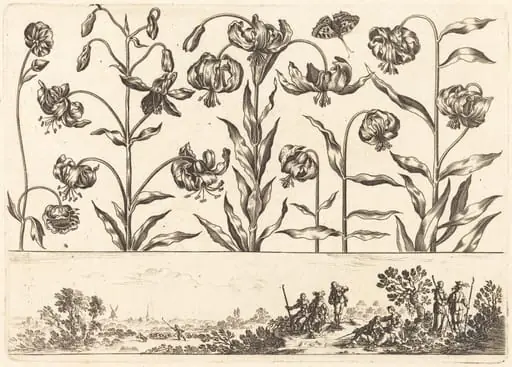
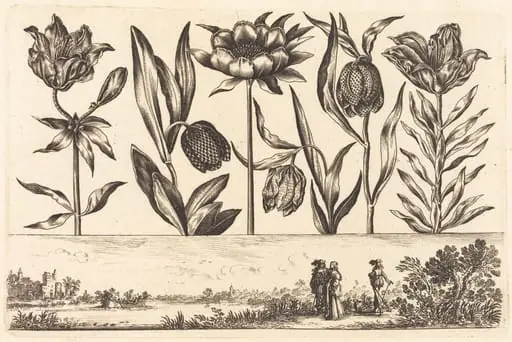
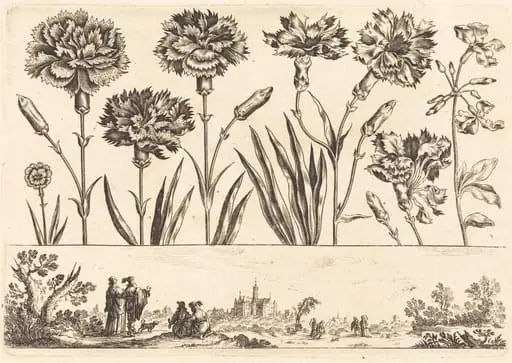
Flower Print no.1 is an ink print by the Baroque artist Nicolas Cochin. It dates from 1645 and is held in the collection of the National Gallery of Art. Flower Print no.
About this work
Overview
The work belongs to a tradition of printmaking that merged scientific observation with aesthetic refinement in mid-seventeenth-century France.
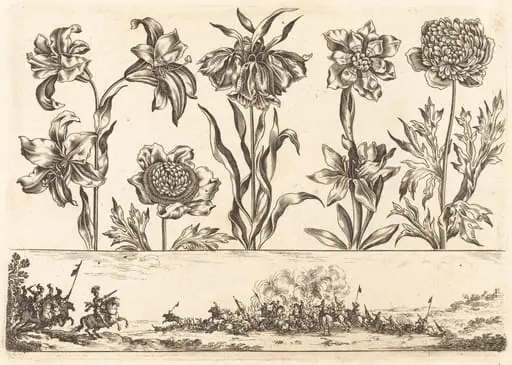
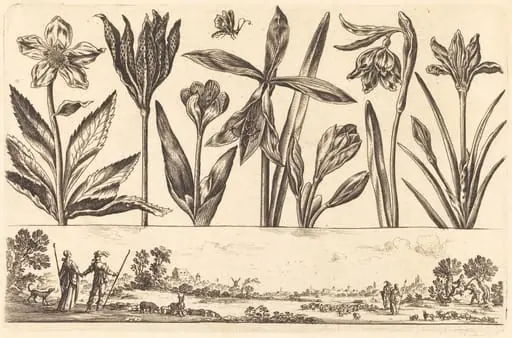
Flower Print no.1 is an etching by Nicolas Cochin, dated 1645. It presents a linear arrangement of botanical specimens, rendered with precision and restraint. The composition balances naturalistic detail with decorative order, placing flowers against a faintly suggested landscape at the base. The work belongs to a tradition of printmaking that merged scientific observation with aesthetic refinement in mid-seventeenth-century France.
Subject & Meaning
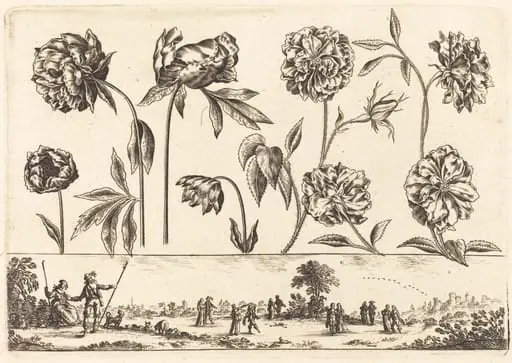
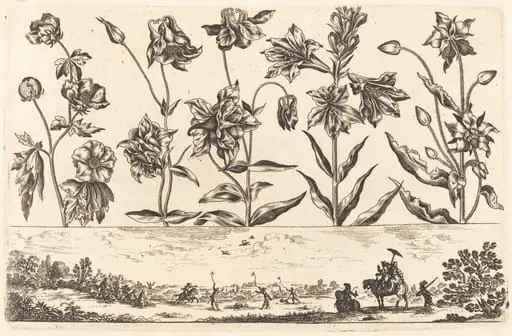
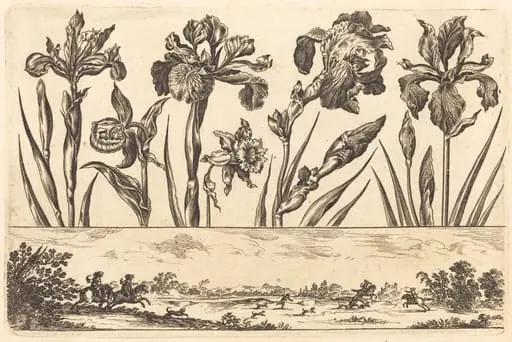
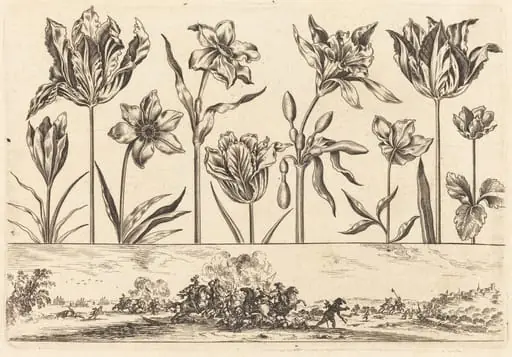
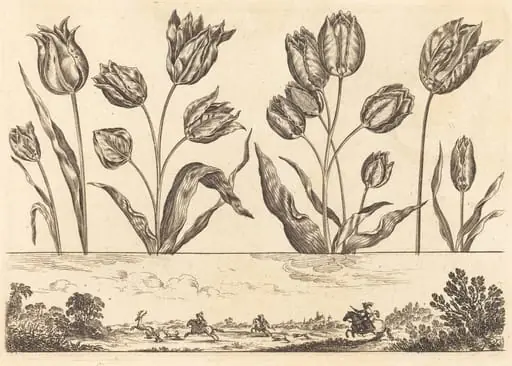
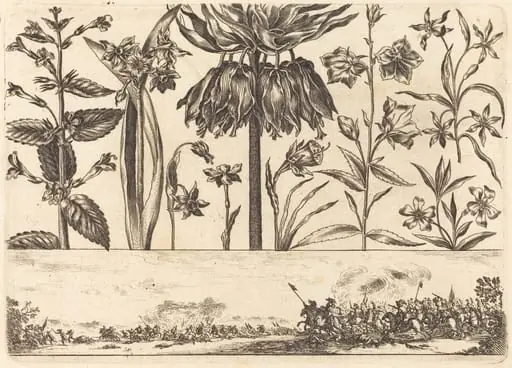
The print depicts a sequence of flowering plants, each distinguished by varying petal structures and stem forms. The inclusion of a distant landscape with figures and trees suggests a connection between cultivated beauty and the wider natural world. Rather than symbolizing specific virtues, the arrangement reflects a contemporary interest in cataloging flora, aligning with early modern botanical studies and the growing appreciation for nature as a subject worthy of quiet contemplation.
Technique & Style
Cochin employed fine-line etching to achieve clarity and delicacy. The lines are controlled and uniform, avoiding heavy shading or dramatic contrasts. Leaves and petals are defined by subtle contours rather than texture, giving the image a restrained elegance. The background landscape is rendered with minimal detail, using sparse strokes to imply depth without overwhelming the central floral motif.
History & Provenance
Created in 1645, the print emerged during Cochin’s early career in Paris, a period when he was refining his skills as a reproductive engraver. Though not widely documented in early collections, it aligns with the growing market for small-scale botanical prints among educated collectors. Its survival suggests it was preserved within private or academic circles interested in natural history imagery.
Context
In mid-1600s France, botanical illustration flourished alongside scientific inquiry and the rise of cabinet collections. While Baroque art often emphasized drama and movement, Cochin’s work reflects a quieter, more observational current—part of a broader trend in print culture that valued accuracy and quiet beauty over theatricality. This print belongs to that understated tradition rather than the grandiloquent style typically associated with the Baroque.
Legacy
Flower Print no.1 exemplifies the transition from emblematic naturalism to more empirical botanical representation in print. Though Cochin is better known for his portraits and historical scenes, this work reveals his versatility and engagement with scientific visual culture. It influenced later generations of engravers who sought to merge artistic grace with botanical fidelity in printed albums.
Artist & collection