Artwork
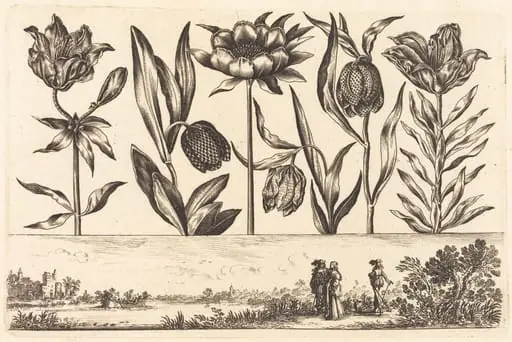
Flower Print no.6
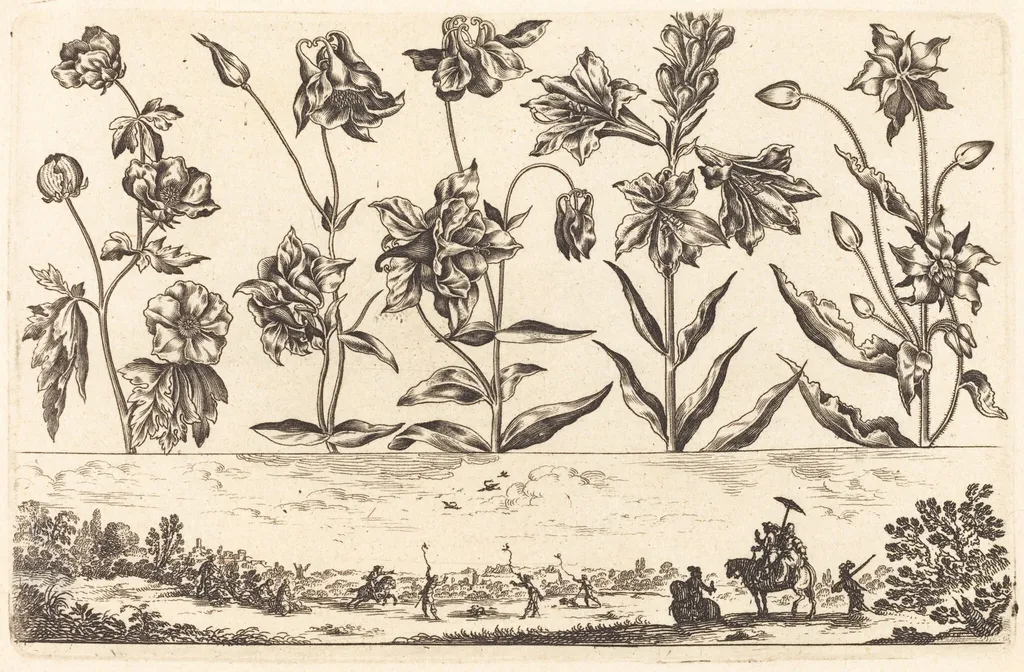
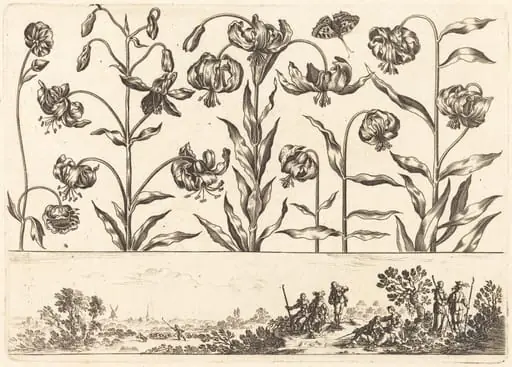
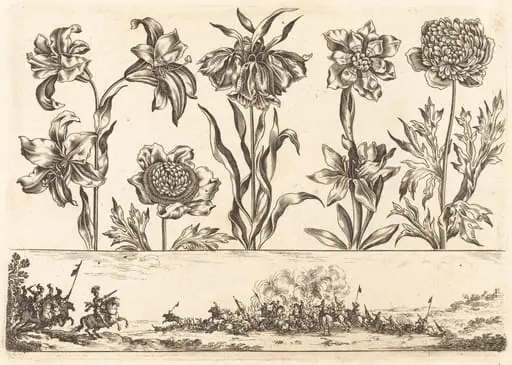
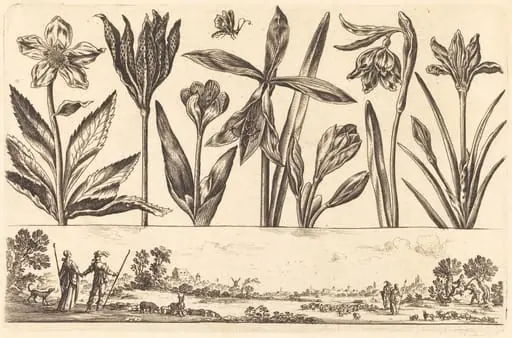
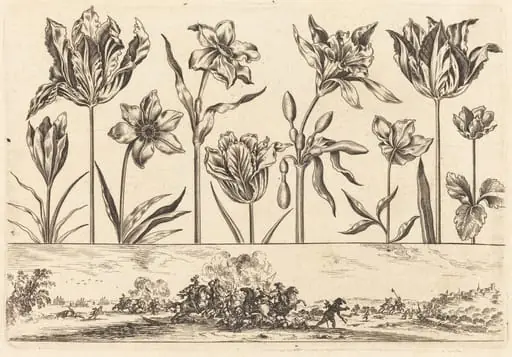
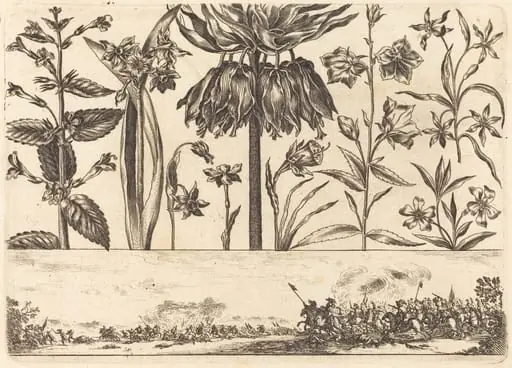
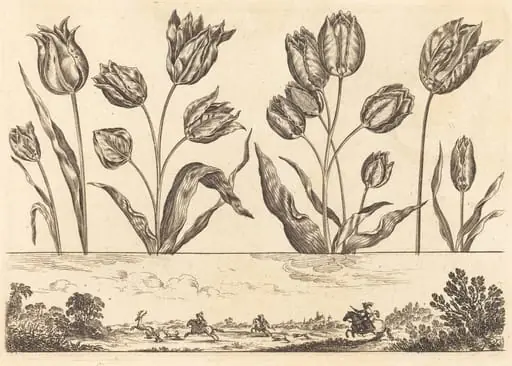
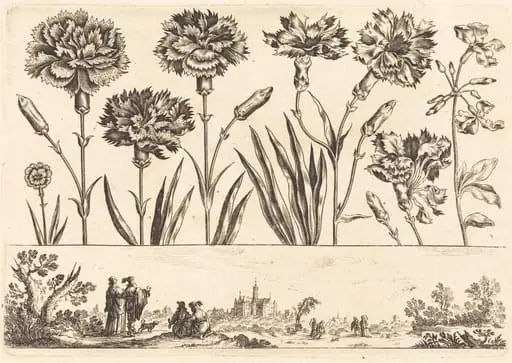
Flower Print no.6 is an ink print by the Baroque artist Nicolas Cochin. It dates from 1645 and is held in the collection of the National Gallery of Art.
About this work
Nicolas Cochin’s 1645 print shows a single white lily in sharp black lines. The petals look crisp against a plain background. Tiny dots and dashes give the flower real texture.
This is an etching, a way to carve lines into metal and print them. Cochin used drypoint too—scratching directly on the plate—to roughen the edges and add depth.
Look for the same crisp style in prints by Rembrandt.
Overview
Nicolas Cochin’s Flower Print no. 6 is a black‑and‑white etching dated 1645. The composition centers on a solitary white lily rendered in precise, linear strokes that stand out against an unadorned background. The work exemplifies the artist’s focus on a single botanical subject, presenting it with a clarity that emphasizes form over ornament.
Subject & Meaning
The print isolates a lily, a flower traditionally associated with purity and renewal, and presents it without surrounding foliage or narrative elements. By limiting the visual field to the flower alone, Cochin invites the viewer to consider the plant’s structural elegance and the subtle play of light across its petals.
Technique & Style
Cochin employed the etching process, incising fine lines into a metal plate with acid‑resistant ground before exposing it to acid. He also incorporated drypoint, directly scratching the plate to produce roughened edges and a richer tonal range. The combination yields crisp contours alongside delicate stippling that conveys the texture of the lily’s surface.
Context
The print reflects the mid‑17th‑century interest in natural history and the detailed study of flora that accompanied scientific inquiry. Its linear precision and textural nuance anticipate the graphic sensibilities later seen in the works of Rembrandt, whose own prints share a comparable balance of line and tonal depth.
Artist & collection