Artwork
Untitled
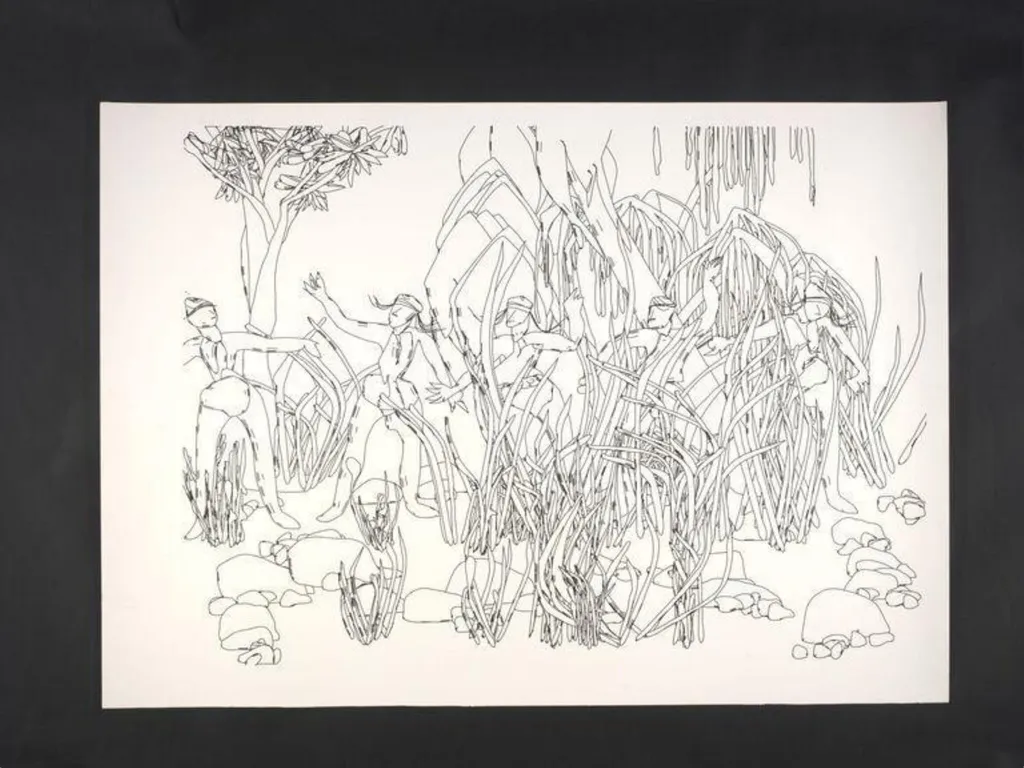
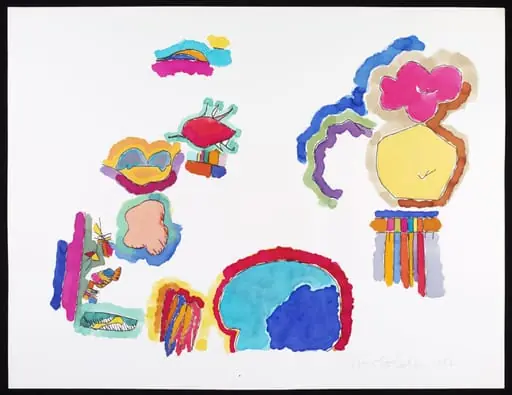
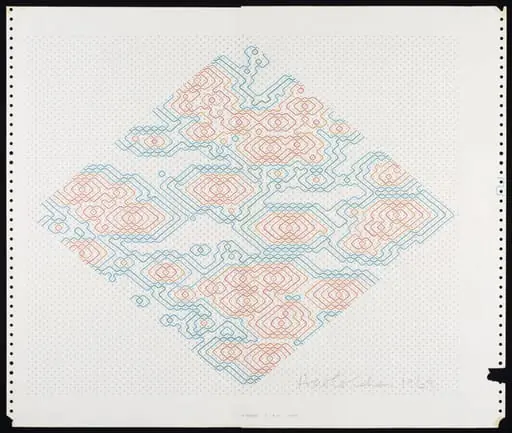
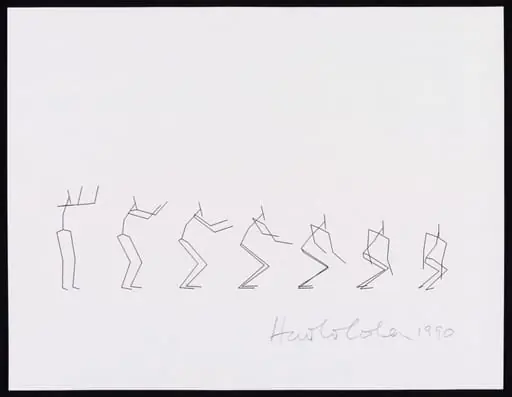
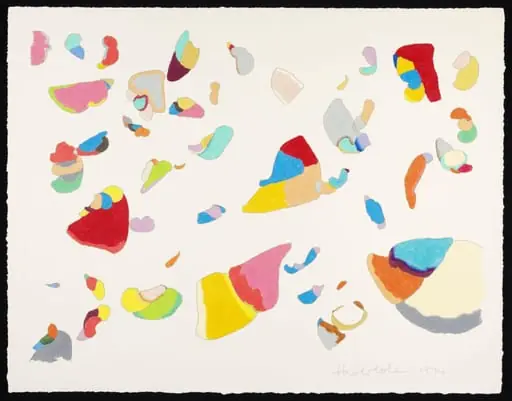
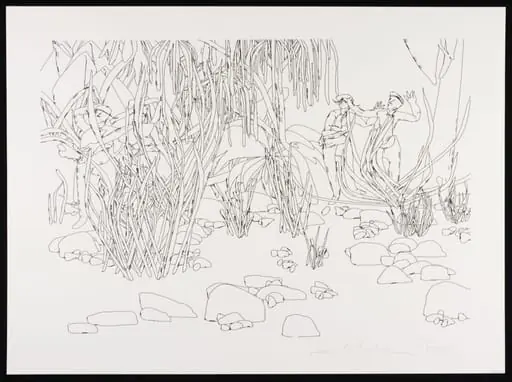
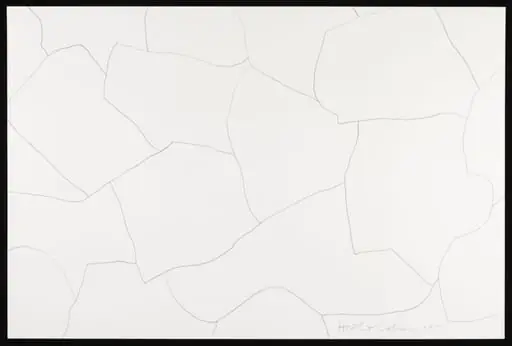
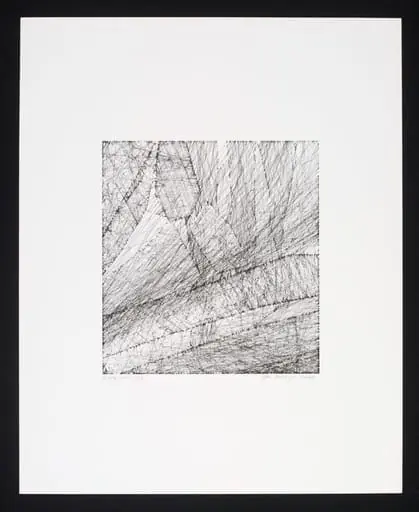
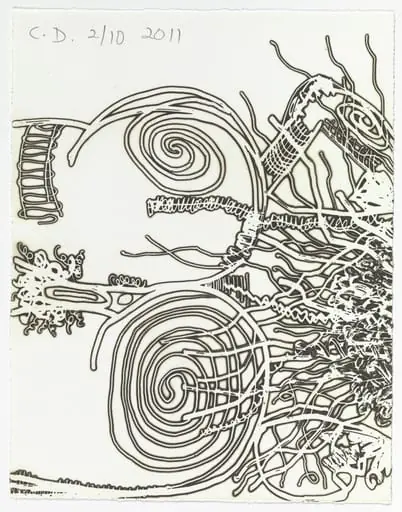
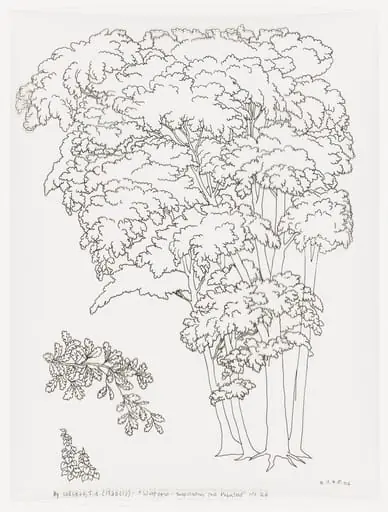
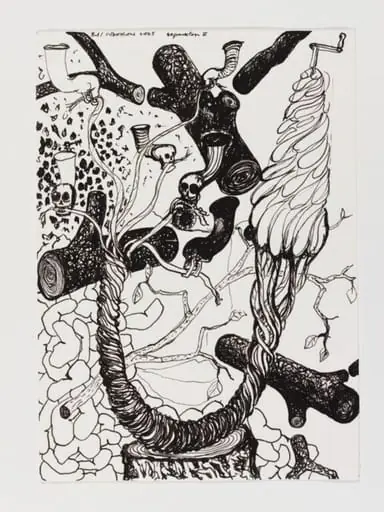
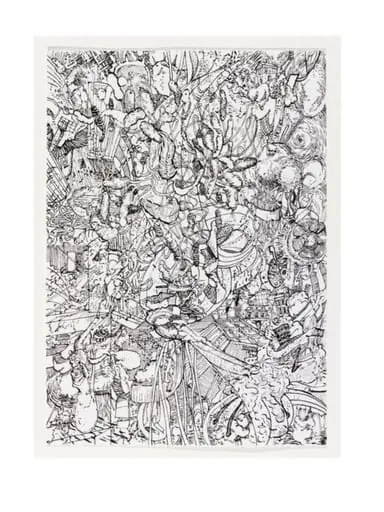
Untitled is a drawing by Harold Cohen. It dates from 1989 and is held in the collection of the Victoria and Albert Museum.
About this work
AARON picks colors, mixes paints, and even “remembers” past drawings to shape the next one.
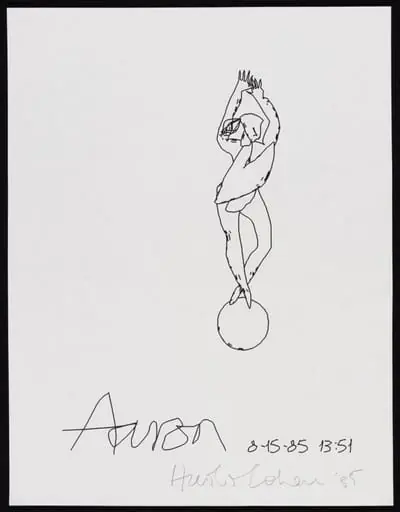
Harold Cohen’s 1989 drawing is a true oddity. It’s not made by hand—Cohen built AARON, a program that draws on its own. AARON picks colors, mixes paints, and even “remembers” past drawings to shape the next one.
Cohen started with brushes, then moved to computers in the 1970s. AARON isn’t just a tool. Cohen calls it his creative partner, the first AI to make art on its own.
Check out Cohen’s other AARON works at the Victoria and Albert Museum.
Overview
Harold Cohen, trained as a painter at London’s Slade School, shifted from traditional media to computational art in the 1970s. At Stanford’s Artificial Intelligence Laboratory, he began developing AARON, a program designed to generate drawings autonomously. Over decades, Cohen refined AARON’s rules and behaviors, transforming it from a simple drawing tool into a system capable of producing unique compositions without direct human intervention during execution.
Subject & Meaning
AARON’s drawings do not depict recognizable scenes or figures but instead evolve abstract forms through recursive patterns and structural logic. The work reflects an exploration of creativity as a rule-based process rather than an expression of human emotion. By delegating visual decision-making to the program, Cohen questioned the boundaries of authorship and the nature of artistic intention in machine-generated output.
Technique & Style
AARON operates using a coded set of instructions governing form, composition, and color selection. It references its own prior outputs to ensure variation while maintaining stylistic consistency. The program controls physical drawing tools—mixing pigments, selecting brushes, and applying paint—resulting in analog drawings produced by mechanical means. The resulting images are characterized by organic, flowing lines and layered, non-representational shapes.
History & Provenance
Cohen began developing AARON in 1973 and continued refining it until his death in 2016. Drawings produced by the system were exhibited internationally and acquired by institutions including the Victoria and Albert Museum and the Tate. Cohen often signed these works as 'AARON' with the date of generation, acknowledging the program’s role as co-creator. The system’s output has been preserved as a continuous archive of algorithmic evolution.
Context
In the 1970s, when computing power was limited and digital art was largely experimental, Cohen’s work stood apart by focusing on autonomous creation rather than digital manipulation of existing images. His approach contrasted with contemporaries who used computers as illustration tools. AARON’s development coincided with broader debates in philosophy and cognitive science about whether machine-generated output could be considered creative.
Legacy
AARON is recognized as the first artificial intelligence system to produce original, autonomous artwork over an extended period. Cohen’s work laid foundational concepts for later AI art practices by demonstrating that creative systems could operate without real-time human input. His insistence on the program’s agency, rather than viewing it as a mere instrument, influenced how artists and scholars later conceptualize machine creativity.
Artist & collection

Artist
Harold Cohen was a British-born artist who was noted as the creator of AARON, a computer program designed to produce paintings and drawings autonomously, which set it apart from previous programs.