Artwork
Alexander Hamilton
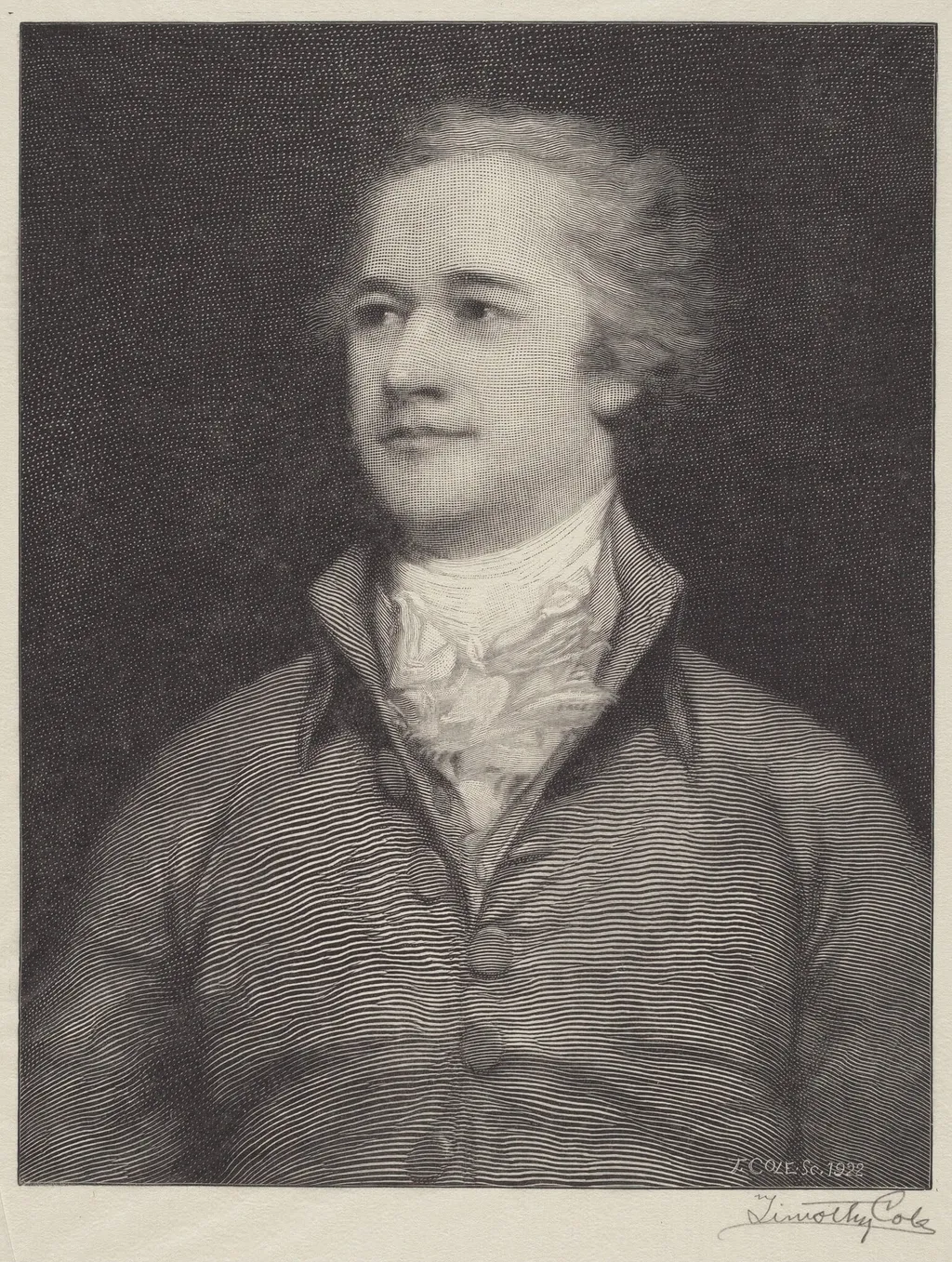
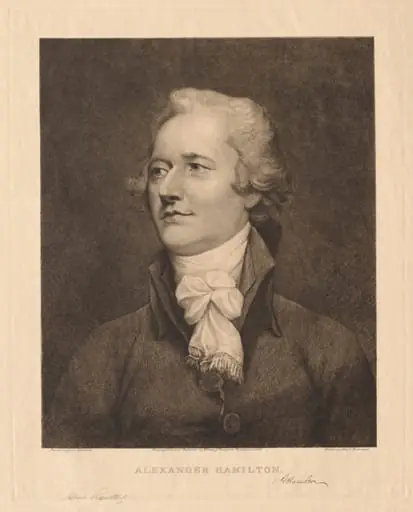
Alexander Hamilton is an ink print by Timothy Cole. It dates from 1922 and is held in the collection of the National Gallery of Art.
About this work
Overview
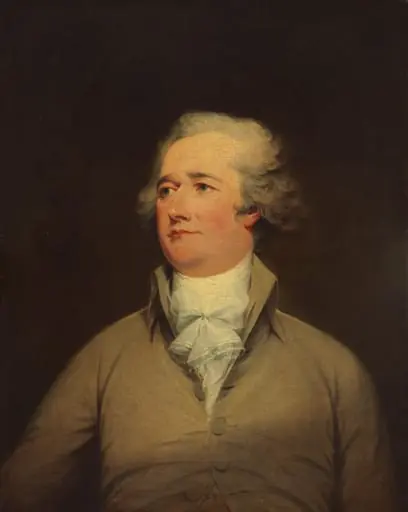
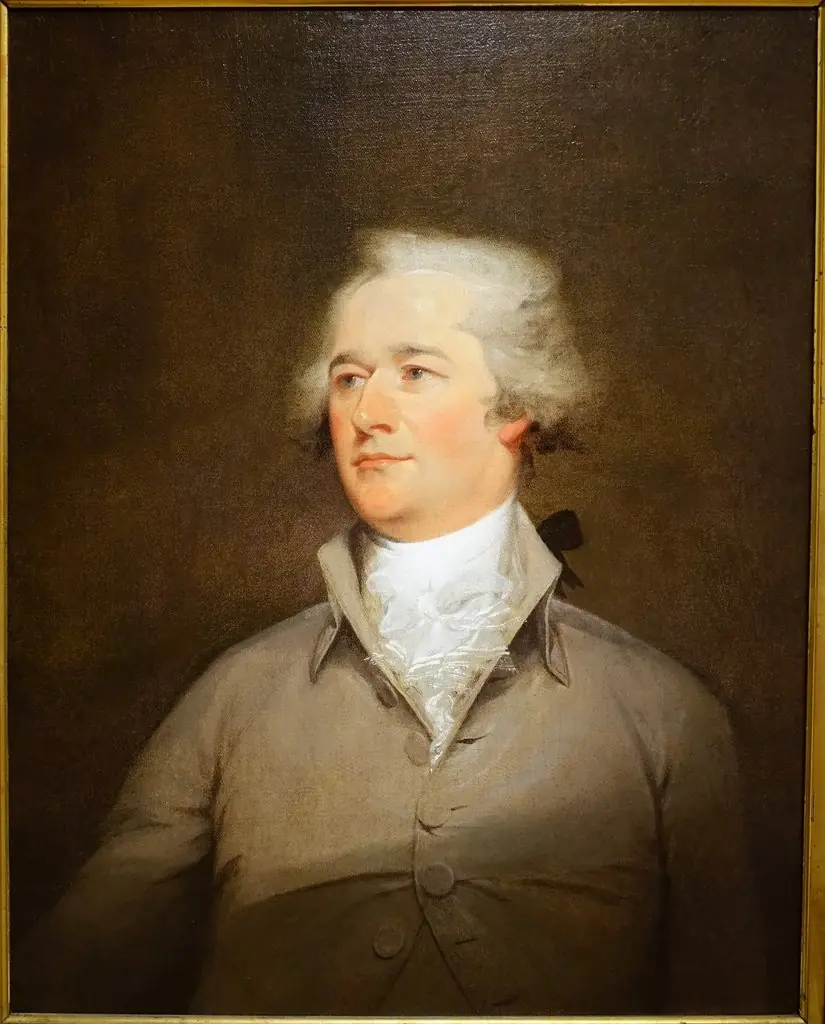
Timothy Cole’s 1922 wood engraving presents a monochrome portrait of Alexander Hamilton. The figure is rendered in a high‑collared coat, his hair short and his cravat neatly tied, set against an unadorned background that concentrates attention on his solemn expression. The image is entirely black and white, relying on line work rather than pigment to define form and contrast.
Subject & Meaning
The portrait depicts Alexander Hamilton, a foundational figure in early American politics and finance. By portraying him with a serious demeanor and formal attire, the engraving emphasizes his role as a disciplined statesman and the gravitas associated with his contributions to the nation’s financial system.
Technique & Style
Cole employed the wood engraving process, incising fine lines into a block of wood to create a matrix for printing. The intricate network of cross‑hatching and stippling generates tonal variation, allowing lighter areas to emerge against deeper shadows. This method produces a crisp, detailed image that conveys texture and depth without the use of color.
History & Provenance
Created in 1922, the engraving reflects Cole’s later career, during which he reproduced historic portraits for publication. While the original wood block’s ownership is not documented, prints of the work have circulated in collections of American historical illustration, illustrating the continued interest in visual representations of the nation’s early leaders.
Artist & collection